
FTC disclosure tour-de-force here ...
Crossovers & Spillovers
Team TRO explores motorcycle skills that follow you into the car, checks touring trouble and puts pop rivets to work. Music by Rabid Neon and Otis McDonald. Download our feed here.
Transcript
As legible as we are intelligible ...
Brian: In this episode, we've got questions from the wild in the form of corner entry, tire stability, and heat glove rain failures. We've got crossovers and spillovers, skills, attitudes, knowledge, and general life tools that cross over into real life for good or ill. And we've got fan favorite, Brian's Taney Tasty Tool Tips, where we'll talk about pop, pop, pop rivets.
Robin: Yes, yes. Opening announcements, news, corrections, banter, all that. Random song in the minute this round. If you want to hear our random songs of the minute, visit radio.tro.bike in your web browser. This round, it's Sa Plan Pour Moi by Plastic Bertrand. This is a fun, thundering, crushing tune for awesomeness. If you read the lyrics, that's not messing around. That's straight up punk. Those lyrics are dark. You have to translate to English, though.
Brian: That's some throwback. Like, you may or may not believe this, but in the 80s, in high school, in college, we were punks. Like, we walked around in leather all the time. I never grew a mohawk, but that reminds me of some of the bands we listen to, and I cannot remember names now.
Robin: Obscurity's Beautiful.
Brian: Like, The Descendants, I think they're still a well-known name. And, of course, The Dead Kennedys.
Robin: Kinks!
Brian: There's, like, this whole seething mass of little local bands around Purdue. And they're long gone. You know, there's no scene there anymore. But that sounds like really throwback punk stuff that we were listening to.
Robin: I don't think it's throwback either. That's a from back in the day tune.
Brian: That's not throwback. That's back back. Okay.
Robin: That's back back.
Brian: Nice.
Robin: Part of the beauty of it. The first time I heard that song was in The Boys, the television show about supers.
Brian: Yeah.
Robin: Dark comedy. At any rate, more announcements. The site's loading faster, thanks to a good many code revamps and bug fixes. Seems even though our image and ad stash were presenting as intended, they were always rechecking for fresh data every time instead of using the temporary cache, blah, blah, blah, tech, blah, blah, blah. Faster load times on the site. I noticed it when one of our longest articles took me about four minutes to load, and I was like, this is not good. Time to improve my skills. News, you got some awesome stuff in here, man. What do we got going on with the news?
Brian: First up, Shoei, or is it Shoei? I've never figured that out. Shoei's RF-1500 goes on presale in the U.S. By the time you hear this, It's probably actually shipping, maybe, possibly.
Robin: Nice.
Brian: Moto heads are all a quiver with anticipation as pre-sale listings for the next generation of the beloved RF begin to appear.
Robin: Beloved.
Brian: So pricing starts at a rather brisk $700 for solid colors and about $800 to $850 for graphics. So it's a step up, whatever. Inflation, yada, yada. The previous version, the RF-1400 solids dropped to $550 to clear out the old and busted and to make room for the new hotness. It's all the usual improvements, better aero, less noise, more shell sizes, more safety certifications, more ventilation, fresher breath, bold new graphics, more fiber, all that good stuff. Yeah, and the word is that the fit is pretty much the same, so if the RF-1400, works for you, this should continue that trend. Shoei is known for being very, very consistent in their fit. Late November, supposedly the actual delivery dates start. One interesting thing I noticed is that it uses the same CWR-F2 shield as the RF400 and the X15 race helmet. So if you are updating from one of those guys, your expensive shields can come with you. And one thing I'll say is. I'm really interested in this because the RF-1500 is a very real possibility for me next year. I'm going to be probably getting to where an update is needed. This current helmet, I believe, is three years old. And honestly, AGV likes to charge premium prices, but the quality of some of the components is really not there. The shield components, it's all floopy and floppy and loose and worn out after a few months and kind of over it. The AVGV K6 fits me absolutely perfectly. It's wonderful. It feels great. It's light, but I'm ready for an upgrade. They have a personal fitting system where you go to a shop where somebody's trained and they actually massage your head or whatever they do, and they figure out how to tweak the comfort liner pads to get the helmet to work for you. So I'm hoping I can get that done on a Shoei, maybe in the spring. I don't know. Can't wait to see it.
Robin: All of this just makes me want to thank Yamaha for naming one of their most popular machines, the R1 or R6, so that I don't have to deal with the RF-1500 versus the RF-1400 compared to the CWR-F2 shield or the expansion for the X-15. What system of measure allowed them to decide that these were the letters and numerics that we're going to go with?
Brian: Oh, I know.
Robin: Next up, the GV X-Space adds room without making you unpack first. This comes directly from GVUSA.com. One practical piece of luggage in GV's Milan show lineup is X-Space. An expandable hard case introduced back in May. Open the lid and its mechanism lets you add room without emptying the contents. GV says it works as either a top case or a side case with the appropriate mounting setup. The clever part is keeping the smaller shape when you do not need the extra space. That could be useful when a cool morning turns into a warm afternoon and the layer you were wearing suddenly needs a home. The shopping detail worth catching is that GB's smart security lock kit is sold separately. Extra room is welcome. Discovering the missing piece after the box arrives, less welcome. But that's pretty standard for GB. You order the number of same key locks you need, one through five, for the boxes you're setting up. If you look at these photos, they're basically telescopic.
Brian: Yeah.
Robin: You have a sealed outer shell over an inside shell and it telescopes outward, which I think is pretty cool, man. I like it. Since I'm into the sportier side of touring, I would prefer more aerodynamic visual aesthetics instead of, you know, the brick of storage.
Brian: These do kind of have that adventurer, rough and tough dirt road aesthetic, whatever.
Robin: From Hasbro.
Brian: Wow. I remember Stompers.
Robin: Mm-hmm.
Brian: I love GV stuff, and these look really interesting. I do wonder how they're sealing in between these telescoping portions. I'm sure they have it figured out. I'm not sure how that works. They're rather salty, rather expensive, but hey, that's what you get. Moving on. We have a small work light that solves a third-hand problem, or at least it's another solution among many.
Robin: I needed this the other day, man. You remember the wires, right?
Brian: I remember the wires.
Robin: I've got you on the video conference. I've got a flashlight in my mouth, and I'm trying to, like, put wires up into the dash of the bike. It was awkward.
Brian: Yeah, and magnets don't always do it, and this, like, kind of solves that in an interesting way. So, on UltimateMotorcycling.com, there's a new review that puts Olight's Oclip 2 Ultra Premium. You got all that? Olight, Oclip 2 Ultra Premium to work around motorcycles.
Robin: The Yamaha R1.
Brian: Yeah, they don't keep it simple, but flashlight nerds got a nerd. It's a really, really neat piece. The HUD tilts, the clip rotates, and magnets let it stick to suitable metal surfaces. And it's also got a clip in case you don't have anything magnetic handy. So the reviewer Bill Cranhold says that the combination let him illuminate a nut he would normally not both see and reach with his tools while using a headlamp. He found a use for it, and it worked. It's all a more useful sales pitch than another argument over maximum brightness, candelas, and lumens. In our book, a repair light earns its place when it stays aimed at a job and leaves both hands free. O-light confirms USB-C charging. That is mandatory for me.
Robin: Mm-hmm.
Brian: And this is the neat part, a separate charging dock with the premium version. So basically you get a little box with your flashlight that clicks onto the flashlight and expands the battery capacity or just charges the battery inside the light. Pretty neat. For a touring toolkit, the question is whether one little light can handle a roadside adjustment and finding your gear after dark without becoming another awkward thing to pack. And this brand, Olight, is pretty well known for high quality lights. This is about $100, if I remember right. And Olight is just one of those front runners in the whole flashlight as fetish object trend. Personally, I love it. I love seeing new and interesting things happen.
Robin: It's really compact.
Brian: Yeah, it's a tiny little booger. I like it. There's a whole world of flashlight nerdery out there that I'm only dimly aware of. Like anything else, you can spend all your money. Robin, what have you been up to, sir?
Robin: I'll keep it simple, because I didn't get a lot of sleep last night, and I went on a lengthy ride today. Yes, your middle fingers are welcome, but I am fatigued, so I'm really glad that you're running the show this round. Let's see. You and I and others now have a dedicated garage video chat setup. All you winter cave dwellers. Get yourself some kind of usable, not a piece of junk that you're just like, now I can pour a soda on it. I mean, an actual usable, but cheap computer in your garage and just open up a Discord channel with your friends and be able to work on your bikes and consult one another really, really handy and very, very therapeutic. But it's really good to see your friends be like, hello, how are you? Oh, you're working on bikes too? I'm working on my bikes. And then go about ignoring one another. The basic rule is I would like to see very specific faces on the screen while I'm working on my bike. However, if they begin telling me a story about what they had for lunch, and I'm working on soldering a wire or fixing a bolt somewhere, and I decide to disregard what they have to say, then that is completely acceptable. You just ignore everything. You just go about your business. But you have company. This is very good when you do remote things or when you're in the doldrums of winter. So I highly, I, I, we now have that set up.
Brian: Nice.
Robin: I highly recommend others do the same beyond that. Oh, so I'm warming up to it, but the Android auto module, the discount purchase brand touch and go. I'm watching the return policy. I'm looking at the max date for when I can return it, but I'll tell you what today. Yeah, not too shabby, not too shabby at all. One thing I don't understand is that ride with GPS is not Android auto compatible.
Brian: Oh, okay.
Robin: I find this really quite surprising, got to say.
Brian: You know a guy, right?
Robin: Well, we know a guy, but they've been asked many, many times. They're like, no, no, no, no. We're going to focus on phones. We're going to focus on web. We're not going to worry about the Android Auto. And it's like, well, it's just a presentation model. It's like, it'd be really good to have. But fortunately, apparently I can export and then I can import into Osment, which I've done before. Hell, I wrote the article on it. So I'm going to be getting to know Osment again. And quite frankly, I'm kind of excited about it because I haven't looked at that software in a minute. And I know it's open source.
Brian: It's gotten a lot better. Yeah.
Robin: Yeah, this is going to be cool. And lastly, Trip7s. I got decisions to make, man. Trip7s, the 777 tour is a priority that I've not prioritized and need to. How are you doing? Is there anything at this point in time that might stop you from going all the way over to Berea, Kentucky, where it's, you know, dank and fall?
Brian: Well, yeah. If you want me to go to Berea, Kentucky, the answer is hell no. The forest rats are in full gallop right about now. Almost to the day, 13 years ago, was my third broken leg, thanks to Bambi's idiot cousin. So, no. I've learned that right now, early November is the height of the rut in Indiana. I rode to a lunch meeting today. I rode around town. I'm not just holed up in the house with the blinds drawn. I'm certainly not going to go ride a motorcycle out in the countryside for a while longer, probably around Thanksgiving or after Thanksgiving, you know, when you get a warm day. So, yeah, I pretty much hole up for a while. And what I didn't know at the time was that was the time when deer are the most active and they're standing in the roads and they're chasing each other around and all that stuff. And then in December, they kind of go back into hiding a little more. Deer are always a danger. They're ever present. They're always there. They're always dumb. They're always doing dumb stuff. but your odds are much worse right about now. So, yeah, scouting is going to have to wait.
Robin: Good on you.
Brian: Also, just kind of planning out the winter projects. So, yeah, I need to decide, you know, when I'm going to do some motorcycle stuff and when I'm going to do house crap and getting it all figured out, scheduling and so forth. It was funny today, a friend of mine stopped by to show off his brand new pickup. And it just started me thinking a little bit about how, over time we started shifting our priorities around so now, you know the whole reason when one of us in my kind of inner circle buys a vehicle it's because oh this can tow motorcycles on a trailer, and it has to have this capacity and oh yeah it has to have room for my friends and room for our crap and so forth in some ways we've turned into trailer queens and we just have to accept that I do really enjoy traveling by motorcycle. I enjoy traveling there and going through the countryside and seeing the world, but I don't have time. And you show up and your tires are all squared off, you know, that kind of thing.
Robin: Well, when you do have time, you do. And when you don't, you don't, if that's applicable here. It's like if you have time to take a big trip that involves some square off, okay, have some fun, go have an adventure. But that doesn't have to be every time. Happiness is the goal.
Brian: Having options is good. And don't get me wrong, like I can put together a route that's got like 20 minutes of boredom. I mean, I can put together a great route to get from Indiana to North Carolina and Tennessee to, It's one of those where you need to take two days each way because it can be a lot of fun. You don't want to have that get there-itis going on.
Robin: No FOMO while you're behind the handlebars. What else?
Brian: Are you ready for questions from the wild?
Robin: I believe we are. If you'd like us to field your questions, visit email.tro.bike in your web browser and send us a message. First one up. After a loaded bike near miss, what needs fixing first, the setup or the corner entry? An XSR 700 rider on a tour says, The rear tire lost traction in a right-hand corner, then caught again with a bump. Fortunately, there was no traffic nearby. The rider admits entering too fast, okay, and using too much rear brake, okay, but also describes the suspension as sluggish, with about 66 pounds of luggage in the panniers and a duffel.
Brian: Good Lord.
Robin: Beyond slowing down and being gentler with the brake, what should change before the next mountain road day? I'm going to say logic and sensibility.
Brian: Yeah.
Robin: Visually assess what they're putting on this machine and think, was this a good idea? But 66 pounds is a lot.
Brian: We've got three things here. We've got skill, technique, judgment, the mental side of it, what the person did with the controls. And I don't know if we need to go into a lot of more detail on that. They know they screwed up. That's a lot of weight on what is a fairly small naked bike. So there's a judgment factor there. And that's a lot of weight. And it's probably soft bags. I don't know if it was hard bags or whatever. And maybe it was wiggling around.
Robin: Oh, there's video. It's not what you might expect. It's just the actual slip. And then he pulled over and stopped on the side of the road because I think he was freaked out.
Brian: New Endura moment. Okay.
Robin: Well, you're going to ride the bike after you set it up. So how about you get the setup right? And then when you go to ride in the corner entry, why don't you practice that? Practice your corner entry and your technique before you're putting any weight on the bike. Then put the weight on the bike and then practice again. At the same time, the video shows that they recovered, yeah, but were they relaxed enough? Were they loose? And I think keeping the elbows loose is a big deal. I always say, sitting on a bar stool, type in an email. You want to center your gravity directly downward, keep your arms loose enough, and your fingers should be relaxed enough that if you wanted to type, you could. You can't type if you're leaning on your hands.
Brian: Yeah, the other part I would stir into that is that this motorcycle is not really, safely equipped to carry an adult and 66 pounds of luggage. So at the very least, I would look into upgrading the rear suspension to something that's going to work better. Because obviously the rear shock was overwhelmed, was probably way sagged and may have run out of travel and also ran out of rebound damping. You kind of get a pogo effect. All that mass is kind of overwhelming the damping ability of the shock. So really an upgraded rear shock would be a really good place to start. I mean, you can tour on anything, and this is a fine, naked, sporty looking machine. But if you're going to load it down and be an adult human in gear at the same time, upgrading some rear suspension would be a good idea. And, of course, getting some springs in the front forks would be about the minimum as well to match the intended usage. There's room to spend some money and help solve some problems, something with better damping, something with spring rates that are more suited to this, and technique, and, of course, your mental game.
Robin: Ohlins might make something like this. I believe our own Tim Clark did this back in the day when he was riding that very same bike and he did tour it. He got some Moscow moto kits set up for it and he tore around on it. I just texted him. We'll see if he responds back while we're recording this. See what he has to say in the matter.
Brian: All right. So here's the question. A new rear tire feels unstable above 35 miles per hour. What evidence clears the bike to ride? So a rider reports that a newly mounted rear tire feels wobbly above 35 miles per hour. After a second visit to the same retailer that day, the rear wheel is back on the bike, but the rider still describes the handling as unstable and asks whether the installation looks right. And there was some video and photos and so forth. The post does not really establish the cause. But the question of wider interest is how do you distinguish a new tire, a different tire profile, something feels a little different from a mounting, balancing, or wheel installation problem without turning a road test into a big gamble?
Robin: That might be an unseated bead. A lot of comments went directly to, why are you going to cycle gear to get work done on tires? And I would agree and disagree. It depends on the person, you know what I mean? So you would expect that when they get their bike back, the tires would be installed in the correct direction. Also, they might be balanced.
Brian: It could happen.
Robin: Don't get me wrong. I have put on the occasional Pirelli Angel ST that has been perfectly balanced on install. You get the light point at the heavy point and the heavy point at the light point. And when you check it in every direction on the balancer, whoo, you did it. You got that tire perfectly balanced right off the freaking shelf. That's pretty cool. Doesn't happen to be often though. I think it's happened like two or three times total in every tire I've ever bought. Odds are you're going to want to see some wheel weights on your rim. And odds are you're going to want to see the tread pattern going in the right direction. Well, these are signs that things could have gone wrong. And there are places out there that will do that to the customer and be like, yeah, well, that's just how it goes. Thanks for the money. Thanks for giving me $50 per wheel.
Brian: In this particular situation, it seems clear that the bead was never seated on the wheel correctly, which is a basic, basic, basic error. No shop should do that, but it happened. It's happened to me a couple of times before I was willing and able to change my own tires. Part of what pushed me into that decision you know it's like I'm the only one who cares about my ass mm-hmm. I'm going to figure out how to do this. So yeah, looking for the bead. If you get something back, one of the inspections you need to make is the tire on facing the right direction. Did the person who changed the tire have information about which way the thing spins? It's not always obvious. I don't know if the chain drive is on the left or the right. I don't know if the speedo drive is on the left or the right. So you need to offer some hint as to which way is correct. Maybe it's the direction of the old tire, things like that. So yeah, is the tire arrow in the right direction? But that's a quality sign to look for. Is someone paying attention? Did they put this on the right way? Or were they just some tire monkey that wasn't paying any attention? Second thing to look for is the valve stem. If it's a rubber valve stem, was it replaced? Does it look good? Is it correct? Is it straight? Things like that. If it's a metal valve stem, is it one that's replaceable? Or is it on there straight? That kind of thing. Does it look okay? Are the bearings okay? hey, did anyone think to check the bearings while the wheel was off? If there are bearing seals, are those still in place? Is the wheel all cabbaged up and looks like someone attacked it with a chisel or there was a badger or a wolf green or something? Is their tire mounting lube slopped everywhere so you're going to have to wash the thing off before it's safe to ride? All these are quality indications. And yeah, I don't see a way around this, but you have to get the wheel onto something, put an axle through it, and spin it to make sure you don't have any defects in the tire, like a bubble or a lump or a wave in the tire itself. And also, so you can see the bead and make sure it's seated evenly all the way around. And I think in this person's case, the bead was not seated.
Robin: Yeah, that's what some of the photos from even the comments showed that it happened to them too at different locations.
Brian: And you're like, dude, this is basic. The other thing is balancing weights are usually a quarter ounce. If you see more than an ounce of weight on a tubeless tire, sometimes tube tires take more than that because the valve stem is pretty heavy. But if you see more than about three or four weights on a rear tire, something may not be right. And if you see crap like there's weights over here and then weights over here, that's totally off. That's totally wrong. Weights should be in one location. There should not be a ton of them on there. But evidence of someone paying attention when they were balancing the tire is important. The most accurate balance you can get is static balancing like we do in our garage. Or I do in my garage, you do on a dirt road or whatever.
Robin: Thank you.
Brian: MotoGP uses static balancing that works exactly like what I'm doing in my garage with these two crappy stands and some bearings. The computer balancers are supposed to be faster, but they are not more accurate.
Robin: Mind if I read this next one?
Brian: Absolutely. Hit me.
Robin: Three heated glove failures after light rain. What do you troubleshoot? And what is the backup? So one rider has gone through two pairs of RST Paragon 6 heated gloves and one pair of Machna RTX heated gloves. The right glove failed on both RST pairs. The left failed on the Machnas. Each failure followed a ride in very light rain. Even though the rider understood the gloves to be waterproof, swapping the battery into the working glove did not reproduce the failure, what would you do to investigate before accepting another replacement and heading out again? I don't know. Look at the reputability of these companies. I haven't actually looked up these products, so I'd have to find out.
Brian: There are two places my mind went first. Is the failure like in the heating elements and the wiring inside the glove build quality issue, or was the failure in the control modules and the electronics and the gloves that, take the energy from the battery and dispense it into the glove.
Robin: Does he not know the difference between a motorcycle and a jet ski?
Brian: It's just a light rain. So we don't know if like the electronics got wet, if that's a problem. I don't know either one of these brands. I've never heard of them before. What I can say is that making heated garments that last is extremely tough. The companies that do it and have done it in the past have gone under, from what I know. I think there's one left, maybe Gerbing's, if I remember right.
Robin: They bought out guide.
Brian: These plug into the motorcycle. They're built very tough. They still have problems. Heating wires are just very thin. You're moving a lot. Heated gear is great. It really is wonderful. But the problem is if your right glove fails and you are on the other side of that mountain and it is 30 degrees, what do you do? What are you left with? Carry a backup plan with you of some sort. It's one of those things that's nice to have. That's not something that you should utterly depend on for your safety. Whether that means stopping more often to warm up your hands, having bulkier gloves that you don't like, but they'll work to get you home, that kind of thing. Heated gear is just a very difficult problem. Quality matters a lot. Quality is very expensive. I don't know anything about these brands. Failures are part of the game. And in this case, it's really impossible to say what happened, whether it was inside the glove or the electronics.
Robin: Nitrile gloves underneath winter-rated motorcycle riding gloves with a little wiper on them and all that stuff. Also, charcoal foot and hand warmers are a really nice thing to just have sitting around. They're cheap. They're dumb. They have tape on them. And they work. Don't put them on your bare skin, though. I mean, they have a designation that goes over an active layer. So put them under your socks, over top of the nitrile gloves on the inside. You can keep warm. Anything beyond that, you really got to rethink what is your goal? Why are you even writing?
Brian: You can get those little hand warmers pretty much anywhere in winter months.
Robin: In bulk.
Brian: Box of 100 in Walmart or something. Yeah, a little field expedience like that. Those can help a lot.
Robin: Again, if you'd like us to field your questions, visit email.tro.bike in your web browser. Send us a message. We'll mangle the answer. We promise. Brian.
Brian: What we have today, segment one, crossovers and spillovers. The thesis here is a discussion of the skills, attitudes, knowledge, and general tools that cross over from motorcycling into real life and vice versa. What motorcycling things make you better at other things, or a better person, or more skilled, or blah, blah, blah, and vice versa, what other things cross into your motorcycling life. We'll start simple with one. This is a question that you'll see debated online quite a bit. Do people who ride motorcycles make better drivers? I like to think so. Next question. No.
Robin: We have to say it depends on the person, but then again, even the worst form is going to be better for having that much attention to what's going on around them. I imagine myself riding a bike and all the concerns I have, and I'm going to get into a car. My concern becomes how much more difficult it is for me to look around and see everything out in the open.
Brian: That's true. Yeah.
Robin: I have to find my way through the cage of everything and be like, okay, so I work harder, but I know that I'm doing, I feel myself making the effort. So that's not a bad thing, I would think. Attentiveness, I suppose.
Brian: Yeah. That survival skill that you have to have when you're on two wheels, I think that translates over pretty directly. Someone's lost or, you know, I can tell 10 seconds before they know when someone's getting ready to just yank a lane change. And that comes from motorcycling, comes from a lot of experience, comes from a lot of survival. That awareness really does carry over. And you touched on something interesting there though is sometimes getting into a four-wheeled vehicle is.
Robin: It's a lot
Brian: Uncomfortable it doesn't feel right you can't see it leans the wrong way this is not very agile this thing is way too big there are times I feel more in control on my motorcycle than I do in a minivan yeah.
Robin: I wouldn't throw a rally car out of bed for eating crackers, but it's a completely different mindset when you're driving for sport.
Brian: There are like some superpowers you get as an experienced motorcyclist that absolutely do carry over into driving no matter what you're driving. There are also things that are a big adjustment. For example, I drive a minivan, as I've mentioned, and there are times when, you know, I really should not have gone through that roundabout at quite that velocity in a Toyota minivan. Or, wow, that pass was a little sketch. I really have to consciously recalibrate. You know, if I'm at a stop sign waiting on traffic, don't get me wrong, this is quick for a minivan. This thing's actually pretty quick. But it's certainly not a leader bike or anything. Oh, I need more space to get up to speed so I don't get run over here. There's a big adjustment in riding and driving. You come back from a track day where you're used to having company. I need to be further away from you people here on the street. You should be over there. And no, I'm not going to hang out here. That can be kind of interesting.
Robin: Our hands should not be able to touch.
Brian: Don't touch other motorcycles or cars with your motorcycle. That's the rule. That's a good one.
Robin: That's a great rule. But then back to the task at hand, I do think it makes people better drivers, for starters, in that you're getting a variety of perspective and geometry, what's surrounding it. You adjust your spatial awareness to suit the vehicle you're driving, and you're considering the space available that you want to fit your atoms into, as opposed to somebody else's being there at the same time. It doesn't really work. I call that the Illinois lane change, by the way, when they just decide they want their atoms to occupy the same space as yours. They don't look. They just begin changing lanes before signaling, you know.
Brian: No telepathy, no nothing.
Robin: Yeah. So there you go right there. As a writer, you are reacting to those situations where you're like, oh, man. And then you don't want to be that person, of course. So while you're focusing on your own response to the unexpected, you're also doing your best not to be part of the unexpected. And if you know they can't see you and you practice riding your motorcycle in a way where you assume they cannot see you, then you're going to drive your car the same way just because you're you. You're you. You care about your body all the same. That covers one side of this.
Brian: Defensive riding, defensive driving are kind of the same thing.
Robin: I'm going to start an offensive driving school.
Brian: Oh, absolutely. Your logo is like a raised middle finger.
Robin: You were talking about vision and awareness.
Brian: One of the biggest things is looking where you want to go, and again, that's basic to operating any vehicle, tractor to semi to race car whatever, but, the distance of your vision, looking way, way ahead, using every photon you can gather from as far as you can. And again, that's a skill you need in a car just as much as a motorcycle. But in my case, it's a skill that I've honed mostly on motorcycles. You're leaned over and your eyeballs are just scraping up everything they can get from as far ahead as you can get to plan ahead and so forth big data gathering the data getting it in, and being used to your perspective changing as you lean and so forth i think, that carries over and you learn how to compute a little better i think in other situations so i think riders make better drivers if they can, resist those urges that come from being on a far more powerful far more agile vehicle because there's some places you just can't take a minivan yes.
Robin: I will take this moment to interrupt the current scheduled program and say that Tim Clark confirmed that, yes, he did, in fact, replace his rear suspension with an Ohlins shock, but the front was stock. So he left the front as it was, and that should take up some of whatever the legacy was going on with all the 60,000 pounds or whatever that guy was hauling. Where were we?
Brian: I think another big one that we are orbiting is the whole idea of a risk management mindset. That's tough for a lot of people to understand in a lot of situations. And I think it's not something a lot of people bring to their driving, but it is something we have to bring to motorcycling. We have to understand and accurately evaluate and accurately make decisions on what of many assorted risks we're willing to take and what we're going to do in any given situation.
Robin: Now, risk management means risk assessment. So what Brian's talking about is integral to surviving the unexpected that's created by the stupid around us or the stupid within us, depending on the kind of day you're having. But the risk assessment is not only remembering risks you've had to manage as a result of arriving at a situation, it also means using that memory to keep your preload and preemptive, proactive foresight doing its job. Basically knowing what could happen to the extent that you can and being prepared to deal with all those things all at the same time.
Brian: Having a plan yeah proactive is a great word proactive riding that's just how you live yeah, To be blunt, that's just how you get through the day.
Robin: Totally agree. Yeah, man.
Brian: You have to be so proactive. Sometimes that means being assertive. Sometimes that means being not there, being somewhere else, taking space, defending space, that kind of thing. But having a plan is kind of the big idea, having an escape route. Or at least I remember back when I, that's something they talked about in MSF was having an escape plan for various situations. I don't know if they still do that, but be ready because anything can and will happen. Nobody sees you, but they're also trying to kill you. The blind ninja paradox.
Robin: Nice.
Brian: And again, that carries over perfectly into driving. The more you can plan ahead, the safer you're going to be, the further you're going to be able to go. And also things like managing your personal minimums and your risks. Like, okay, it's nighttime, it's snowing, it's raining, it's icing. I feel like this. I'm tired. I'm angry. I'm happy I'm sad someone's here to talk to me you know someone's not here I've got a good podcast on about motorcycles, that I need to listen to there are all kinds of other things but managing risk factors is part of managing risk, it's not just the active stuff you see on the road in your vehicle and so forth, it's managing yourself managing your vehicle and understanding what you're taking on from the world around you.
Robin: I think a certain ratioed amount of positivity comes into it as well, where when you discuss what you practice as a rider, it does matter, even on the lowest level. I remember when you joined the show, the first joke I made was, oh, we don't call it a kickstand. It's a sidestand. We don't kick things around here. And we played off of that for a long while. That kept coming back. But I do remember somebody mentioning how they said, you know, I was practicing panic stops. And that's a really shit description. Of practicing stopping the vehicle. Okay, step one, panic. That's not how control works. You don't mash buttons like you're playing Nintendo 64 and hope that you're going to beat your nephew. It's futile. You're going to lose at Nintendo with your nephew. You're not going to practice panic breaking. You're going to practice threshold breaking.
Brian: You have to be an optimist to get on a motorcycle in the first place.
Robin: So, oh, what is it? This is a tank full of fuel? Where's that? Oh, that's next to my crotch. Oh, fantastic. That's, okay. Where's it exploding? Oh, down there? Oh, perfect. That's going to be right next to my legs. Okay, excellent. That's great.
Brian: You just have to be ready to accept that. Having a positive spin on the skills and so forth, it's subtle, but I think it can be powerful. It can put things more into the realm. Oh, this is a thing that I've practiced and I will now calmly execute. So maybe I can put a little more positive spin in it. It's not a crash helmet. It's a helmet. We're not kicking things. We're not crashing here. But I think there are some physical things going on here. Like I have much better balance than most people my age and my size, just because I'm balancing two wheels everywhere I go.
Robin: Watch Brian put a motorcycle on a lift. Three broken legs. He's got a very particular stride. His strut is unique to him. There's a lot going on with that. All right. Things have happened, but you watch him put a motorcycle on a lift. Where does it end up? On the lift with grace. And there are people out there that we know who were wondering how do they manage to choose the right side of the glass when they sip from it.
Brian: Like if I'm walking down the driveway and it's icy and I start to fall down, there's something that kicks in the enhanced balance and sensory apparatus I have. Like I said, I may be overstating. I'm not sure. I think it's there. Like you go up to Robin and you push him down the stairs, he's probably going to recover a lot better than someone who doesn't ride motorcycles.
Robin: I mean, I'm not a Russian gymnast, but I get what you're saying. The act of being a motorcycle rider over time has had an effect on how you respond to the unexpected discombobulation of things where you're just looking around like, oh, no, no, no, find it, find it. And you probably will.
Brian: Yeah. And that's a lot of it there. Maybe it's just physical coordination. When you're riding and you're riding well, it's a full-body physical workout. You have to coordinate everything you're doing, and the more coordinated you are, the better you can be. But operating a machine, being in a lot of different attitudes, your head's over here, your head's over there, your next turn like this, all that stuff, that's good practice, I think, in a lot of other situations in life.
Robin: Yeah.
Brian: I can tell you, though, that I am a really, really bad skier. I cannot ski. I have never figured it out.
Robin: It's a lot like a car.
Brian: I've had people try to teach me and I can't ski.
Robin: It's raising in the wrong direction, same as before. It's a lot like the cage.
Brian: Getting out, getting your body moving, the high degree of focus that you need to achieve, the mental focus, the escape and so forth, it's all incredibly good for your mental health. Getting on the bike is just good for your brain function, good for your emotional regulation and all that too. Yeah. That's one of the reasons we love it. And I'll also add, I think when you, transport yourself via motorcycle from point A to point B, whether that's 100 miles away, 10 miles away, or 1,000 miles away, I think, or I know, on motorcycles, you have a greater connection to the world around you. You connect more to the air, the people, the smells, the sights, the sounds, the environment, and everything around you and along the way. You have a much greater connection than you do sitting in a cage with air conditioning running. I don't know if it's a stretch to say. I think that's one of the things that makes motorcyclists some of the best people I know. You have to be connected and you're forced to be connected. And so maybe that helps people be a little nicer to each other as they go.
Robin: Yeah, man. Well stated. I'll send this one off with an additional bid here. And that's that a heightened state of awareness is its own muscle. I'm not talking about adrenal surprise where all of a sudden you find yourself uncomfortable, confused, not sure how you ended up where you are socially, mentally, physically, whatever it is. I'm not talking about fight or flight. I'm talking about a regular, self-imposed, voluntary decision to put yourself on a machine that requires that you immediately take on a heightened state of awareness the instant you pick up your feet, because if you don't know what you're doing, the thing just falls on its side. So I challenge you to think about how you receive information that you're looking at, even when you're not looking directly at it. Here's the challenge. Get a post-it note out and then write any letter from the alphabet or some word. It doesn't matter. But write it big enough that you can read it and then tape the post-it note to your right thumb. Then hold your left hand out in front of you and lift up your left thumb. Okay, so now your right hand is pointed to your far right. You can't see the post-it note, let alone the text on it. And your thumb is directly ahead of you and you are focused on your left thumb and you do not deviate focus. How good are you really?
Brian: All right.
Robin: Now, while you are exercising complete focus on your left thumb, you are slowly bringing your right hand in towards your left thumb, all right? Your arms are fully extended. You're bringing your right hand in, and eventually your thumbs are going to meet. At what point, if you are actually focusing on your left thumb, can you read the text on the post-it note that's on your right thumb? It's an ugly truth to what people are actually able to process with exacting focus. Peripheral, subconscious, they're equally important. The abstract of it is all about what are you able to assess from the blurry mess of random letters falling all over the place around you that you're not looking at. I can tell you this much too. everybody else next to you in a cage with a lot more armor around them than that two-wheeler that we're all on, they've got the exact same set of tools you do. You don't know if they've got the heightened state of awareness. Maybe they do, maybe they don't.
Brian: I do like what you said about the heightened awareness, the flow state that you can achieve and access in motorcycling. No better way to get there, I think.
Robin: I need some tool tips, but I don't need big tool tips and I don't need like flavorless. I need Brian's tiny tasty tool tips. One or two per episode.
Brian: Nice. Alright. Everybody talking about pop pop pop rivets. Alright.
Robin: Yeah, they are. They really are.
Brian: You would not believe.
Robin: I'm gonna Michael McDonald the shit out of this. I am your backup singer for this entire segment. Go.
Brian: You don't know me, but I'm your brother. Ha ha. All right, so if you need to permanently attach two pieces of sheet metal, sheet plastic, or plastic to metal, pop rivets that are also known as blind rivets can be a great option to have in your arsenal. I will say if you need a threaded connection, something you can take apart again, then go back a couple episodes where I talked about thread inserts or rivnuts, where you can actually put a thread in a sheet of a material.
Robin: Yeah, all of my Milwaukee Pacquiao racks are installed on our truck using rivnuts, thanks to Mark Hein. Shout out to Mark Hein.
Brian: To visualize this, I would say go to the great Google editor or go to YouTube, and you will get all the visuals you need for how a pop rivet works. briefly. There's a top hat shape of a rivet and a stem sticking out one end. You drill a hole. You put the top of the top hat through the hole. Let the brim hit the outside of your hole. Add a washer on the other side of your second layer material. And then you use a tool that yanks the stem. As the stem comes up through the top hat, it expands the top hat, presses it tight up against the material. And then the pop part is that the stem breaks off at a certain predetermined force.
Robin: Is there anything we can do to refer to the stem as a monocle since it's wearing a top hat?
Brian: It's a cane. I don't know what you call it.
Robin: Mr. Peanut.
Brian: So basically you end up with kind of a mess on the blind side. Okay. I'll admit that because you've got this expanded material and so forth but on the outside of it you've got, a slight dome but you've got a pretty clean connection something you could paint over whatever it looks fairly decent on the outside, so the cool part about pop rivets is that you can get them in many different sizes and you can get them in most of them are aluminum but you can also get them in steel and, What's really fun is you can get pop rivets in plastic if you're attaching two pieces of plastic together for whatever you're sticking together. One of the pro tips that I will pass on is pass up the $5 pop rivet tool and spend $20, $25 at least. If you're standing there in Harbor Freight, they really do have a pop rivet tool that's about $5. It's horrible. Don't do that.
Robin: Two shelves up from worst.
Brian: Yeah, just go up a shelf, please. If you're doing a lot of pop rivets, if you really get into the whole pop, pop, pop thing, they have air tools that are pretty inexpensive that make it really easy. And they also have different configurations of the tools. Some of them have the handles coming straight out, so you need about a foot of space. Some of them you can get in at a right angle, that kind of thing. Just look around and you'll see what you need. Second tip is to make sure you're drilling the right size hole. So when you put the top hat of the pop rivet through the hole, make sure it's a close fit, so that when the rivet expands, it'll make a nice tight connection so it won't move around.
Robin: Ask us how we know.
Brian: Little little rattle, rattle, rattle. Pop rivet tools come with different nose pieces for different size rivets. So make sure you have the nose piece that matches the diameter of the stem of the rivet that you're using. Plastic pop rivets come with a different tool and a different set. Really inexpensive to get a set of plastic pop rivets, but they are really super handy. Like if you're doing some engineering and prototyping or figuring out like a different shield or something on your motorcycle it might play into that i've used them on cars to kind of repair and reattach shields, that go over the wheel arch things like that can be very handy. So the biggest tip is to practice and experiment in scrap material before you, dive in making these pop rivet connections for real. Make sure you understand what length you need. Sometimes you can get like a really flat washer and get some soft materials to work, that kind of thing. Get a feel for how it works, what the forces are, how hard you need to hold things together, how hard you need to squeeze before it pops, that kind of thing. So before you do anything for real, make sure you practice with it first. Everything is really cheap here, so just yeah, go nuts. The last thing I will pass on when we talk about pop rivets, you're going to screw it up, or you're going to need to redo it, or you're going to need to take something apart. There's kind of an art to drilling out rivets, but you'll need a good drill bit. Drill just a little bit. You don't drill the whole thing out, because then it'll just spin. But you drill a little bit to get past the deformed area, and then you use a pin punch, knock out the rest of it, and then you can pull the rivet out. There's a very specific technique to it. YouTube is your friend here. Poprovitz can be a very clean and handy way to put things together and make sure they stay together.
Robin: Well done. I feel better informed. First off, I want to say thank you. I've got like very little sleep and rode a good 180 miles today.
Brian: Screw you!
Robin: It was epic, but yeah, it's a lot of work to like activate when you're not quite all there. That's a lot to take on. So Brian, And you've handled all the charisma we needed this round. I do sincerely appreciate it. And you brought something up that inspired me. And that's two things. One, backup plans. And... At a lesser level, how it is that simple is better, so much more manageable. Some things get our attention and on further review, they need a backup plan. And sometimes the backup plan is better than the original investment. So I want to explore that. Give me an AeroStitch suit that doesn't look like an ADV statement. Give me an AeroStitch suit that looks like a sport bike rider wants to wear it and let me just climb into this invisible car that is now protecting me from weather and armored and i can just put my helmet on and the helmet's already wired up for all of my communications and the communications are on the bike and they're already ready to be keyed on when i turn the key simple is better we want to be able to get on the bike and get riding yep let's talk about that
Brian: Fantastic idea there's two ideas there and they're closely related i like it i got all kinds ideas as they say.
Robin: We can riff on that yeah yeah can we get out of here
Brian: Let's get out of here.
The Gist
Brian takes Crossovers and Spillovers from motorcycle survival skills to a Toyota minivan that would appreciate a little less corner speed. Looking farther ahead and keeping an escape route carry over nicely, provided the driver remembers which vehicle he's in. The connection to people and places survives the trip better than the urge to pass like a liter bike.
Robin retires panic from braking practice and gives threshold braking the job instead. A Post-it note on one thumb exposes how little detail peripheral vision actually delivers, making awareness something to practice rather than brag about. His proposed offensive driving school already has a raised-middle-finger logo, which probably won't help with accreditation.
Questions from the Wild puts an XSR700 hauling 66 pounds of luggage, a wobbly new rear tire and rain-defeated heated gloves through a discussion of setup, inspection and backup plans. Brian's Tiny Tasty Tooltips then tackles pop rivets, covering hole fit, tool quality and removal technique while Robin supplies backup vocals. Practice happens on scrap, the five-dollar riveter stays on the shelf and Mr. Peanut somehow gets dragged into the explanation.
Announce, Acknowledge & Correct
Code revamps and cache fixes have improved TRO.bike's load times.
Kit We're "Blatantly Pushing You To Buy"

27:1 HIGH-LEVERAGE SYSTEMThis pop rivet gun uses a 27:1 leverage ratio to multiply hand force for smoother, controlled riveting, helping reduce effort during repeated automotive, sheet-metal, and repair work. TOOL-FREE CHANGE & ANTI-LOSS STORAGEKnurled one-piece nosepieces change by hand without a w More ...

Pop Rivets Assortment Kit - 200 Pcs Aluminum Blind Rivets,8 Sizes
Pop Rivets Size: This aluminum blind rivets assortment kit includes 40pcs 1/8" x 1/4", 40pcs 1/8" x 5/16", 30pcs 1/8" x 3/8", 30pcs 1/8" x 1/2", 15pcs 3/16" x 1/4", 15pcs 3/16" x 5/16", 15pcs 3/16" x 1/2" and 15pcs 3/16" x 5/8". Premium-Quality: The pop rivets are made of aluminum grip and steel man More ...

Ultra Lightweight and One Hand Operation: Weighing only 353g (0.78 lbs), our riveter is 50 percent lighter than standard metal rivet guns. The ergonomic PVC grip ensures comfortable one-handed operation, even during prolonged use. 90 Degree Right Angle Design for Tight Spaces: The low-profile head f More ...

Quality Material: this aluminum pop rivet washer is made of quality aluminum material, which has a nice corrosion resistance and rust resistance, not easy to break or deform, ensuring a long service life. Indoor or Outdoor Use: aluminum rivet washers can be applied both indoors and outdoors; Especia More ...

The high quality chrome-vanadium steel, These Pin Punches are heat treated, drop forged, hardened and knurled steel for greater durability, workability, and overall performance. Roll Pin Punch Set is a great set of tools designed to remove and re-use roll pins without causing major damage to the pin More ...

Various Sizes: 13 sets of drill bits include 1/16", 5/64", 3/32", 7/64", 1/8", 9/64", 5/32", 11/64", 3/16", 13/64", 7/32", 15/64", 1/4", can meet more needs. M35 Cobalt Drill Bit: The M35 cobalt drill bit is a durable, sharp and robust drill bit suitable for cutting stainless steel, iron castings, c More ...

Motorcycle Wheel Balancer for Static and Dynamic Balancing Designed for motorcycle wheel maintenance, this balancing stand supports both static and dynamic balancing to help identify wheel imbalance and achieve more accurate balancing results for motorcycle wheels. Compact Design for Easy Setup and More ...
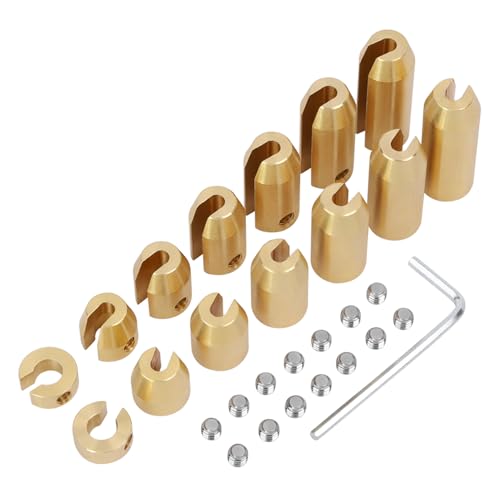
Balance Weights refill kitEach weight features a stainless steel set screw to keep it securely in place. The set screw clamps to the spoke, work with outer spoke rims. Simply use supplied Allen wrench to install, remove, or adjust weights. Premium Brass Construction- Made of premium brass, corrosion More ...

4-Layer Construction for Weather ProtectionWindproof outer shell, water-resistant breathable membrane, thermal insulation padding, and long-fiber fleece lining work together to provide protection against cold and changing weather conditions. Hard PVC Shield Protector: The motorcycle winter gloves fo More ...

CONTAINS: 40 Pairs/80 warmers. 11 HOURS OF LONG-LASTING HEAT - Prevent frozen fingers from interrupting your outdoor activities or workday. Whether youre at a football game, skiing down the slopes, or spending hours outside working, these heat packs for hands deliver up to 11 hours of long-lasting w More ...
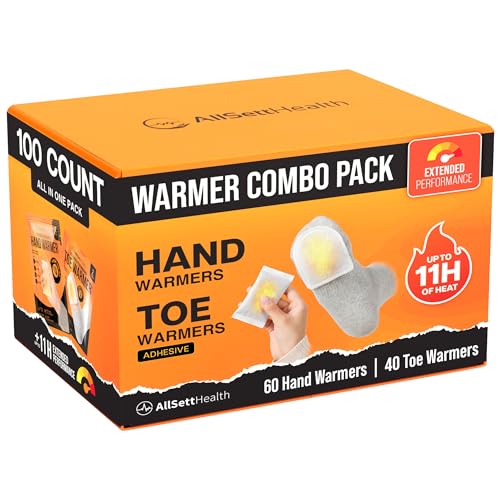
100 PIECE HAND AND TOE WARMERS COMBO PACK: This hand and toe warmers combo pack includes 30 pairs of hand warmers and 20 pairs of adhesive toe warmers, giving you a full season supply of hand and foot warmers for skiing, work, travel, stadium events and emergencies. LONG LASTING HEAT PACKS FOR COLD More ...
Did We Miss Sump'm?
Sixty percent of the time, we're right every time. What would you add to the conversation and why? Your input is invited. Leave a comment and/or write an article!
Share Link ...

Thoughts gone wild? Write an article!