
For kicks, check out our FTC disclosure here ...
Electronicus Mysticalis
Team TRO chases locked-away ABS tools, top-end valve specs, rider proverbs and Joey Dunlop's 1977 Isle of Man rise. Music by Rabid Neon and Otis McDonald. Download our feed here.
Transcript
As legible as we are intelligible ...
Brian: In this episode, Electronicus Mysticalis, Why do I need to call an astrophysicist to bleed my ABS? Catchphrase, the proverbial proverbs of the proactive writer. And finally, Jordan Liebman's continuation of the Joey Dunlop career saga. Can't wait.
Robin: Opening announcements, news, corrections, and banter. First off, announcements. And this is an announcement, not a correction. I'm no longer going to refer to Joey Dunlop as William, which as I know it, Joey would have preferred in his youth out of respect for his late nephew, whose actual name was William. Having just watched the movie Road, a 2014 documentary narrated by Liam Neeson, I'm now better educated. More on that when Jordan's feature segment lands towards the end of this episode. But as for news, let's get on with, there's some darkness in this. This is dark.
Brian: Yeah. You're acting like we're going to tour the graveyard, but it's more a celebration. A couple of departures in the last few weeks. Prolific traveler and moto journalist Clement Salvadori died recently at the age of 86. And the word is that he died in his garage among his motorcycles. And I can't ask for anything better than that. And he's one of those guys that was really influential in the 80s and 90s 70s too i guess, you know he had a really interesting life traveled the world did a lot of like secret squirrel stuff and then ended up traveling the world on a motorcycle, in that era when ted simon was out, doing the things that would lead to the book jupiter's travels clement was out there doing adventure writing long before the term kind of turned all cringy and weird and ended up at Starbucks. He's one of those people that inspired me and a lot of other riders and just wanted to say thanks to whoever's out there. And also, Mert Lawell just died also at the age of 86. He was one of the riders featured in on any Sunday. Need I say more? He was a very accomplished racer in the late 60s and 70s, later became a really talented mechanical engineer. You know, the people that have gone before us that built motorcycling, built motorcycles, built the technology, moved everything forward. Just worth thinking a little bit about those guys and what they did for all of us. All right. Now we're out of the graveyard. We're going towards this shining tower in the distance. What are you talking about next?
Robin: To complement what you just said, consider this. A lot of you may be arriving at your first bike, or a lot of you may be arriving with a freshly confused mind about your own bike. One of the questions I asked early on, I asked this of Jordan, actually. Who came up with all of the engineering required to do something like this? And everybody in the room said, nobody did. Many people did. Given any inventive, mechanical, or electronic decision that was made to benefit the world of motorcycling, consider that one item, that minuscule thing on the engine, and ask yourself, who spent the time to figure out that solution? Because the two gentlemen that Brian just mentioned may have had something to do with it. All right, so in flashy newscaster news, Battery swapping is starting to look like the real electric motorcycle workaround. Two very different stories point at the same practical fix. Stop asking riders to wait around for batteries to charge. Radian is showing the bike-side version with fast removable packs. Honda and LG are testing the city infrastructure version with swap stations in Hanoi. Electric motorcycles keep running into the same old trip problem. Range is one thing, sitting around while the bike eats electrons is another. Radian's 30-second battery swap enduro and Honda's work with LG in Hanoi, their swap station trial, are both nibbling at the same answer. Maybe the future is not always bigger batteries. Maybe it's treating batteries more like fuel bottles. With more lawyers and fewer fumes. On to the next. Motorcycle navigation is becoming its own cockpit problem. Rider Nav's add-on CarPlay slash Android Auto Screen shows the gadget side, while the Vietnam Navigation Study shows the rider side behavior. Riders increasingly want route optimization, voice guidance, traffic updates, and rerouting without turning the bars into a phone store accent. Navigation is going from strap a phone somewhere and hope to a real motorcycle interface question. We've brought this up before with Joanne. She had a lot to say on the matter. Rider Nav's 7-inch Universal CarPlay slash Android Auto Display is one answer for bikes without modern screens. And a HEAR study says two-wheeled riders are already learning hard on route optimization, voice prompts, traffic, and rerouting. Useful, yes. Also a reminder that the best cockpit is the one that helps without demanding a committee meeting at 70 miles per hour. And then lastly, PennDOT, as in Pennsylvania Department of Transportation, is offering free motorcycle safety courses. Free training is practical, especially because Pennsylvania includes beginner, intermediate, advanced, and three-wheel courses. PennDOT is using Motorcycle Safety Awareness Month to push their free rider training. The good part is that it's not just a beginner class boilerplate, what with having the refresher and advanced options too, which is exactly the kind of unglamorous thing that keeps a good touring season from getting stupid.
Brian: Nice.
Robin: We've done our part. We've done our job. Now we can quit and sloshily meander about our own ways. Brian, we'll do this in reverse order. They've heard enough of me. How are you doing?
Brian: I'm good, man. Well, we'll go through some of the what's new stuff a little later. So Robin's got the song of the week he'll get to in a minute. It's great, I'm sure. But I need everybody to know that if you go to YouTube and you type in how to tune rubber chickens, this is going to be knowledge that you really, really need. So how to get your rubber chickens to squawk in the right key. It's very important.
Robin: Take my money.
Brian: Yeah, and I think and we'll kind of go over some a little bit later, some of the things I've been dealing with in the last week. But I can say that Robin and I and some other friends and loved ones are dealing with logistics that would cramp a battalion commander. I mean, we're putting together plans and distances and charts and navigation resources. We're caching water along the way. We're setting up Pony Express. We're getting horses set up.
Robin: 3D chests with multiple moving boards.
Brian: And all toward the cause of doing more writing. So that's why it's relevant. But yeah, it's going to be a great summer.
Robin: Yeah, so then I just watched Road as narrated by Liam Neeson. What a movie.
Brian: What is Road about? The Road Racers was specifically about Joey Dunlop. I'm not familiar with it.
Robin: It's specifically about the Dunlop dynasty. Yeah, multi-generation and some of us know how that goes, but pulls zero punches, zero punches pulled on exactly how tough and reserved the Irish are when it comes to their territories and their road racing. It is spectacular and not for timid eyes in many regards because of the many, many incidences that took place. Incredible amounts of loss in the name of all that is risky and at the same time, free. Freedom in its own right. The point is, it's changed my perspective on a lot of things that Jordan talks about. Been finalizing the details in that ValveCheck article. It is 5,000 words.
Brian: Oh, it could be 7,000 or 8,000, I'm sure.
Robin: That's how detailed I opted to be. You're welcome, fellow GSX-8R Gixader owners. I'm pretty sure only a fraction of you can actually read. Kidding, but not kidding. My truck is decked out with all new kit. All of it needed to happen. And for some reason, the only one I want to really talk about is the suspension. Got a whole new set of shocks on the truck and you can feel it's awesome. So looking forward to hooking back up.
Brian: You get some mud flaps and those chrome mud flap women and lots of lights and a CB antenna that goes, which, which, which, which.
Robin: I get more compliments for that big, dumb truck remaining bone stock than any disco cowboy is ever going to get for his 24s. I mean, my truck actually is intended to do the job it was designed to do. I haven't changed it. I've just situated it for my own use. So I'm not even a truck guy, man. And I just have it because we live this way.
Brian: So you put on the hat and you start pulling.
Robin: Yeah, that's it. We're returning to the Midwest toward the beginning of next month, if all goes as planned. So I am truly hoping to make Brown County, but I got to be safe. I got to be careful.
Brian: That would be awesome. Don't, don't like bust a blood vessel or something, but damn, that would be cool. That would be so cool. Yeah. And that's part of the logistical mysticals that are occupying. There's messaging there's signals flying all over the ether it's amazing anyway yes.
Robin: In preparation for this episode i ate as i always do my ritual i ate three scoops of peanut butter ice cream and poured myself a glass of wine because i thought maybe brian would be running the show tonight that's touch and go i think it's my turn but brian is spearheaded segment one and these are the random songs of the minute for this first one i want you all to go find your favorite rock and roll loved one to listen to this song with. Go to YouTube and look up 32 Teeth in My Head. It's a wonderful, upbeat tune with a real positive message by Carter Vale. Check them out. Follow them on Instagram for sure. He actually does a lot of comedy as an interlude to the fact that his music is actually serious stuff. He's brilliant. High praise to that guy. That's for before the ride. After the ride, kick back, pour yourself a glass. You got nowhere else to go for the remainder. Put on sneaker pimps, six underground. It's just been a while.
Brian: 32 teeth, six underground. Okay, got it.
Robin: Listener questions.
Brian: If you'd like us to field your questions, visit email.tro.bike in your web browser and send us a message. First listener question. This is a simple one from KB. Moisture-wicking balaclava or neck gaiter, what's your preference? One word.
Robin: One word, neck gaiter. Balaclavas do not fit under the helmet correctly.
Brian: I happen to agree with every word of that one-word answer. I mostly have a neck gaiter unless it's pretty warm. And oftentimes I'll get like a thin neck tube. I forget what it's called. Once in a while I'll have one of those to kind of block noise and block wind a little bit and block sun when it's warm out. But yeah, pretty much neck gaiter. And I never have figured out how to get along with a balaclava either.
Robin: They're really more intended for skiing.
Brian: Now, I do want to say, if you are someone who wears a balaclava, you do you. You go right ahead. You king or queen. You rock. It's fine. But that was the question. What's your preference? That's my preference. And both of us happen to have the same preference. That was a lot of words for one word.
Robin: There is a loose tip that maybe you could wear a balaclava with the eyelet pulled down so that it's more like a neck gaiter with the helmet on. And then when you stop, if you're really riding in the cold weather, you take your helmet off. You can flip that up and be warm for the moment. But I still feel like that would be kind of uncomfortable.
Brian: CR-ass. And I'm going to skip a little bit. There's some blah, blah that where CR makes it clear that he or she is working on a modern shim under bucket valve sport bike.
Robin: Sporty bike.
Brian: Sporty bike. A lot like the Gixader. Same idea, you know, a lot of bikes, almost, you know, almost every modern engine is shim under bucket. Blah, blah, blah, blah, blah. Okay, here's the question, and I think it's a good one. Would it be advisable to adjust the exhaust valves toward the maximum allowable clearance of blah, blah, inch? I don't know why he used inches, by the way. These are metric engines. Use millimeters, damn it.
Robin: Yeah, I already used that in the article. I was like, for you weirdos in the inches, I actually gave those variables as well. If somebody's coming out with a 19 16th, trying to figure out how to 17th it.
Brian: Yeah, yeah. Put that grandpa stuff away. Anyway, to continue with the question, my assumption is that since valve clearances tend to tighten with mileage, setting them toward the loose end of the specification may allow them to remain within spec for a longer period before the next adjustment. That is exactly correct. In-spec is in-spec, according to some, but I prefer to do things to a higher standard. And so setting things, if you can, if you have the shims, if you can, in at least the top half of the range is good practice and worth doing. So I agree with that. And I assume you agree, too, unless you want to start a fight or something. I don't know.
Robin: No fighting coming from me. I will say that I only just recently learned how to do shim under buckets with Brian. So do I understand the logic? Yes. In fact, I grafted out and tattooed it into my eyelids so that I remember from now on. You have to remember, and I guess it's just additional. The replacement shim size equals the installed shim size minus the lowest common denominator, that is the top end of spec minus the measured gap. So top end of spec minus measured gap in parentheses. subtract that from the currently installed shim size and then round down as you see fit so you are within spec not above it That's the general math.
Brian: Yeah, most specs have a range of 0.10 millimeters. So 0.10 millimeter is the range, and the shims come in 0.05 millimeter. So theoretically, you should always be able to get it in that upper half of the range, which is a better place to be for longevity of your adjustment. Okay, so CR is exactly right here. Second half of the question, would the same approach also be recommended for the intake valves, or is it better to keep the intake clearances closer to the middle of the specified range? And my answer, having done a lot of valve shim adjustments on a lot of engines, my answer would be it's pretty much the same as exhaust. It's just a little less urgent, perhaps, because intake valves don't, close up nearly as fast as exhaust valves so i think it's still good practice, first time you're in a new engine set those set those intakes set the exhaust both of them to the upper half spec you will likely find that the intakes never move again or very rarely move unless you put a, crap ton of miles on the engine or whatever so yeah you really won't have to but it's still good practice to set those in the upper half of the range and of course in exhaust valves they get hot, the clearances change faster. So those definitely need to be at the upper end of the range. Again, if you'd like us to field your questions, visit email.tro.bike in your web browser to place electronical signals into our brain cavities.
Robin: Because you wrote all of this, let me try to present it. These are Brian's words.
Brian: I will see. And these are extremely sketchy notes. There's a lot more here than you see. So let's get into it, see what happens.
Robin: Segment one, electronicus, mysticalis. My fridge was not cooling. Trust me, I'm going somewhere with this. Unrelated to that, I do need to bleed my bike's brakes. And this involves activating the ABS unit using handy-dandy Yamaha diagnostic tool 9890-03231, which, as it happens, doesn't exist. $900? So then there's a link here. Tell me about the link, man.
Brian: 2015 Yamaha FJ09. I need to bleed the brakes because they're pissing me off, and, you know, squishy, squishy lever and so forth. So in order to do a thorough job of this, you need to activate the ABS unit to make it pump on its own for a little bit. And you're supposed to use this handy Yamaha diagnostic tool, which, as stated, does not actually seem to exist anywhere. Scour the internet and only a few little droppings of information are out there. There are two different Chinese tools that claim that, to be able to trigger the ABS on Yamahas in their broken AI-generated English, that may or may not have anything to do with reality. So there's these tools that may or may not do anything. They may, you know, they may brick my bike. I don't know. Nobody seems to have ever used these. And on top of that, the internet forum for the FGO9, it was Tracer something, tracer900.net, the FGO9 forum is gone. It disappeared. I don't know if it wasn't making somebody enough profit or something, and so it's gone. And so I'm exploring ways to get around this. One piece of advice is to bleed the brakes as best you can and then go find some wet grass and nail the front brakes or gravel. And then nail the front brakes to activate the ABS. That doesn't sound like a good idea to me.
Robin: It doesn't sound like it's per the factory service manual, I'll tell you that much.
Brian: And yeah, the factory service manual is like, use this tool to activate it. And that is it. That's all it says. The one thing I haven't really explored is going to an actual Yamaha dealer and saying, yo, can you do the ABS thingy and bleed the brakes? And they may have the tool. Oh, yeah, I think we got one in the drawer. I don't know. Here, you want this tool? We've had it in a drawer. We don't know what to do with it. So by contrast, like my refrigerator stopped refrigerating. And upon exploration I found that the the coils in the back were all iced over in the back of the freezer hold.
Robin: On hold on wait please let me I'm
Brian: Going somewhere with.
Robin: This I need this just say just say hello
Brian: Hello.
Robin: Hello, sir. Is the refrigerator running?
Brian: Why, yes, it is right now.
Robin: You better go catch it. Womp, womp, womp, womp.
Brian: Okay, so back to the damn fridge. And there's a point here, and I promise. So what happens is there's a timer on one side of the fridge. Every certain period of time, it triggers these heaters in the freezy part of the fridge to melt the ice off the coils. And then it turns the fridge back on, this little timer. So what happened with my fridge and this has happened before it happened happened eight years ago and it happened three years ago, the the heaters burn out nobody knows why they just do that they're 20 bucks throw a new set in and at the same time replace the timer which is also 20 bucks, and you're good to go the point is these are, very simple understandable systems you can look at them with your human eyes and you can poke them with your fingers you can see what's going on like oh this part's all black and crumbly maybe that's not good and then you can implement a fix, i've got some parts on the way we'll get it fixed it's fine and also robin has a tale which we've gone into in detail about, mystical electronicals that get abandoned by the manufacturer, the triumph that decided it was always being stolen or something whatever i don't know what decided. And then the problem there was everything was a black box. There was no way, there's no workaround. There's no way to get in and deal with the problem. And Triumph just sort of goes, eh, I don't know. We don't know. Nothing we can do about it. Bye.
Robin: Yeah.
Brian: I'll figure out how to bleed the brakes on my bike. You know, if you just run enough fluid through it, you'll get everything and that's fine. The thing is, there's a contrast here. There's something that's actually fixable and working and so forth. And there's something that is troubling because there's not a fix. And what if I, you know, what if there's some other function I need to diagnose and this diagnosis tool that no longer exists isn't available? The bike is 11 years old. So there's always that fear. Like my GS850, I can probably, you know, with enough money, I can probably keep that thing going forever and ever until I have to park it in the kitchen work because I can't ride anymore.
Robin: Put it on a rocking seesaw. Yeah.
Brian: I used to ride that carnival ride. The point is I'm not, I'm not like old man, points and carburetors over here grumping about it. I really like ABS. I like electronic ignition. I like digital displays are cool and stuff like that. The problem is not so much that we have these new complex systems. The problem is, is that they are locked away from us. And every company is doing this. Triumph, Yamaha, Honda, everybody is doing this. And it's a bad idea. It's a bad thing. And I get emissions and so forth are a problem. You know, you have to lock. You can't allow people to fine tune mixtures and so forth. at least not easily. So they have to kind of lock it away.
Robin: But welcome to police state automotive.
Brian: Yeah, it's to say, you know, things that aren't, things that don't need to be locked are locked. I really don't understand that decision. You know, can it really be like, oh, we want to force people to go to the dealers so the dealers make more money? Is that really that much of a force? I'm not sure what the answer is there. It's annoying.
Robin: I certainly have some fucking words for this shit.
Brian: So the point is some newer bikes actually do have OBD2, which is the standard that cars use and some new some newer bikes do actually have an obd2 connector so you do have access to some of this data, although the manufacturers of cars and motorcycles are locking away more and more of it but you do have access to that but yeah there's these in between things, where it's not obd2 yet the diagnostic connector for my yamaha is just this four pin thing it has to translate somehow, still looking for a solution for that i would love to find something and know that the same you can't do the same you can't jump or the wires like you can with a super tenera i've looked into that yeah, casey when's out there going i know what to do it doesn't work.
Robin: Pee on the circuit board and spin around three
Brian: Times i'd love to.
Robin: Flick a booger 50 feet
Brian: So you've had experience with the good and the bad of all this.
Robin: I have in fact in multiple environments yeah Everything started after the bandit. These are my words. These are not Brian's words. These are not TRO words. These are my personal words. Dear manufacturers, I will respectfully appreciate your struggle with surviving, Even with sales, the difficulties that are imposed because of the need to improve our world, to be greener, to be more caring about such things. I, too, feel that way. Motorcycle, motorsports in general are the devil on my shoulder. All of the good doing that I try to accomplish is the bad side of my psyche is all about the motorcycling, and I've made a hell of a life of it. I do appreciate what you go through to make motorcycles available. That said, fuck you. There is no reason for you to separate us from that which we own in a way that forces our hand to some inaccessible subscription service. There's no explanation. You cannot tell me we do that because we have to for the this and that. Fuck you. So what happened when you stranded my wife, I brought in a friend and fellow co-host of this podcast who designs circuit boards to peel it apart and investigate the situation before describing to me that, yeah, this thing's melted. It's shot. You got trouble. And that falls on the manufacturer. For that, full on, fuck off. You did it. You didn't have to. You chose to. Probably because you couldn't insure yourself Around it that landed in our lap In the price tag okay I get it but Now, here I am with the BMW R1200RS at the time and little things like we put the TPMS inside of the rim. You didn't have to. You chose to. And it was a disaster. And you overcharged for the part. We can't replace the hand grips. You have to replace the entire heated unit, which is a total of some $300 to $600. Fuck off. I'm saying it a lot. Not for Brian. And he's not speaking for me, and I'm not trying to represent his perspective. I'm representing myself here when I say that that's why I went back to Suzuki. And even then, after I led demo rides for the Suzuki Corporation to sell their machines, one of the on-site engineers who was there to tell people about the machine, I let him know. I said, hey, man, I'm excited to buy one of these. And since I'm going to own it, I need you to go ahead and tell me, how do I reset the wrench icon on the dash? Because I'm allowed to because it's my machine. And the answer was, well, If you keep doing this, you're going to lose. I only require two modern tech standards on my machine. That is fuel injection and ABS. And honestly, fuel injection could be mechanical. If it's going to be electric, you're going to need a computer. Fine. Okay, cool. Whatever. But get out of our way. We bought it. We're subscribed to you. We're supporting you. We love riding your machines. We embrace them as an extension of ourself. Let us complete our personal connection to it with our own ability to maintain its status. That's my rant. Too much? Perfect.
Brian: Quit locking away stuff that we as owners should be able to control.
Robin: I will fight you on this.
Brian: What's that?
Robin: I want analog. I don't want the TFT display. I don't want the disco ball. Oh, really? I don't want the laptop. I want analog dials. I want as much of it to be mechanical as is feasibly possible while still trying to do better for environmental standards. Does that work?
Brian: That's a good point. You can get that if you like floorboards.
Robin: Are you ready for segment two
Brian: Let's go to segment two this is going to be a weird one.
Robin: This is catchphrase the proverbial proverbs of the proactive writer i wish i had taken more time to write these down as i've gone about our travels because i bump into so many people with so many catchphrases a few of which i've included in this some of you are going to know who you are i'll start with kelly howard the first one being you go ahead and complain all you want we just ranted about all that stuff about our motorcycle ownership yeah of a loud fast awesome two-wheeled constant focus hobby you know complaining about the industry who are providing us with these amazing toys to play with in the words of kelly howard all god's children got problems, Robin. I love that line. But the real trick is just that. So there are some amazing words that we've heard people say over the course. Some of you will get recognition. Some of you are the ones who hit me to those who should get recognition, and they're not going to get recognition. But let's enjoy them and take these to heart down the road with you. The first and most important one in my world. Listeners, the goal is to die young, as late as possible.
Brian: I love it. You have to get old. You don't have to grow up.
Robin: Keep pulling fingers and farting.
Brian: I'll pick one out that I heard, and I'm not getting the, this is an exact quote from someone like Teddy Roosevelt or somebody in that era, somebody in that mind space. And I'm having trouble finding it on the interwebs, but people love tales of adventure and an adventure is someone else having a hell of a bad time somewhere far away. When things happen that are unexpected perhaps even could be perceived as possibly maybe negative it's just going to make a good story.
Robin: What's the other version of that adventures always suck while you're having them
Brian: Yeah that's the modern version of that one you know how many tales have we told here on this show yeah of things that kind of sucked in the moment but made a great story later.
Robin: Here to tell the tale. Sort of bridging off of what I said before, I think this is my way of reminding everyone out there that it's okay to feel what you're feeling and it's okay to put it into words with care and respect and appreciation. But the fact of the matter is that life is finite. And this is the phrase, one of the hardest truths about life is that none of us are getting out of this alive whatever time is allotted that's the time you got you don't need to accelerate that process but at the same time do appreciate every moment that you have with as much gratitude as you can muster and also appreciate in hindsight those moments when you could not source that appreciation sometimes you can handle it sometimes you can't nice Cheer us up, Brian. Cheer us up.
Brian: This has actually happened early in the day. Well, it could be worse. What if it was raining? Later in the day in Wisconsin, this happened. Could be worse. What if it were snowing?
Robin: Oh, God.
Brian: And then, honest to God, later in the day, could be worse. What if it were snowing and it got below 20 degrees?
Robin: Did this happen in Wisconsin during a scouting run?
Brian: Not during a scouting run. During a rally. I don't know what year it's been an age. I swear to God, it started out 80-degree day. It was a little chilly in the morning, like in the 40s. So that happened. I guess it could still get worse, but I don't even want to name that which may happen. Anyway, it was also a very weird day. We hit the Illinois border. Suddenly, it was like 50 degrees. It was dry and 50 degrees. There was something that wanted us to leave Wisconsin. Get out.
Robin: Yeah, I hear you, fibs.
Brian: And I'll throw in one bonus one. And I heard this was a couple days earlier on that same ride. Somebody was riding a Hayabusa for what reason, I know not. And then somebody else said, man, how fast are you going back there, dude? You know, he kind of like very slowly said, I don't know, man. Busa speeds, man. Yeah. I don't know. That really stuck with me.
Robin: This one, I don't agree with. I like it for anyone who's trying to be careful in their later years.
Brian: Oh, yeah.
Robin: But I don't agree with it. Here's the phrase. There are old riders and there are bold riders, but there are no old, bold riders. I think it's a great self-governing phrase if you need it. I know way too many legitimately bold, old riders. Who would never admit to whatever they were doing as being bold. Take that for what it is. And then I'll double up. I see the one you got here. You want me to try to tell the story?
Brian: Yeah, I put a related one in there. Okay, go for it. Yeah, it's a good story.
Robin: Shout out to my Motivid people. This is the first time I ever heard this phrase. And I even invented a story that didn't happen to describe it to other people in hopes that it would be more effective for them. Never be afraid to ad lib. Never be afraid to adapt. Be ready to tell a story in a way where it's receivable. When you get to the turn, turn. Meaning do not deviate from the skills you use to practice the activity that you are practicing. When you get to the turn even if the bike's gonna low side keep on turning just keep doing what you were taught what you understand and whatever works when you get to the turn turn i'll give you one more and then we'll move on to jordan here's the baton
Brian: So related to that story, This one's simple. When in doubt, throttle out. It's one you hear, you hear it everywhere. It kind of reminds you Mr. Throttle is or can be your friend. It can help you manage your weight transfer. So I love that one.
Robin: Absolutely.
Brian: This is another, I don't know why I've come up with Wisconsin stories. I was just there, I guess. So we've used this one actually many times in many places. Because the story is, you know, when milling around in the morning and your, people are asking questions and things like that, what happens when you have a lot of people around, a lot of riders around is that a lot of them want to give up their agency and they want someone else to decide things for them. And what I found is very crucial to do, you just have to force people to become, humans again and think for themselves and get on their bikes and go do something. The shorthand for that is, you know, when there's a situation or there's, you know, nobody, oh, I don't know where to ride with or where are you going? What are you doing? What are you doing? You know what I do? I leave. And we've used that. Just leave.
Robin: Yeah.
Brian: I've got a plan. there are some people that may or may not, want to come with me Robin's often in that group often I'm in Robin's block or whatever just leave just get get it make it make everybody else turn back into an opposable thumbed being and and figure it out but sometimes, yeah just leave yeah.
Robin: What are we going to do? I just go, who's a fat old fast guy? Bye.
Brian: Oh God. Yeah. That guy.
Robin: Don't say anything. Just slowly leave.
Brian: Yeah. I've been at a rally or something and, and I'll see like somebody newish and they'll be talking to other people and they'll look over and they'll point at me. And that is my cue to GTFO.
Robin: Yes.
Brian: No, no, no, no, no, no, no, no. Don't ask. You go be an independent human being. Bye-bye.
Robin: It wasn't the first time you and I had interacted. It was the first time that I was presented with friendly options and you and I didn't necessarily know each other very well yet. It was made clear to me who you were, what you represented for the forums. And I made the, it was a total personal decision. No, I'm not following this person. I'm not there yet. I'm on a 400cc Yamaha Seika. No, I'm not there yet. And I followed somebody around that I knew would go pretty quick and I learned a thing or two. And eventually here we are. I'm going to conclude this into Jordan's segment by mentioning a couple of artistic things that I believe some of you out there might appreciate in a way where you can apply it to the music of motorcycling. I say artistic from some of the great musicians of the world. The first is there are two kinds of music, good and the other kind. You're either writing well or you're not. Take that to heart. Also, good artists create, great artists steal. So if you can nab a map or a technique or every one of the phrases that Brian and I just poured on to this segment, steal it, use it, go forth and do better. Even if you're still adapting it yourself. These are phrases that people could use a good listening to that will give them their own perspective of self, which is going to get into what I want to talk about next episode if I decide to go that complex.
Brian: Very mysterious. I look forward to it. Segment three, moments in motorcycle history with Jordan Liebman. So Jordan just left off where Joey Dunlop went from needing to stop and wait for other riders to pass him so he knew where to go to passing and outriding his own mentor. That's got to be one hell of a feeling, a sort of uh-oh moment that's only exaggerated by the speeds at which true-to-form professionals compete at, under the awestruck eyes of us normal, everyday rotors.
Jordan: When locating a place to film from at a jump over a bridge, Davey Wallace stopped to ask a race fan nearby where he should set up his camera. The race fan answered him, and it's basically summed up Joey, that he was just this disciplined. Seeing dozens of racers on this race course, he says, they land all over the place except Joey. Wherever you see Joey land on lap one, you could put a coin down on the spot and he'll hit it on every lap after that. But imagine that. He's jumping over a bridge, and these guys are flying all over the place. You can never guess where the front wheel's gonna land after jumping over this bridge, and every single time Joey's front tire lands in exactly the same spot. That's how Joey raced. Joey was fast and fearless, but he didn't fall off that often. You can't afford to fall off. You're pretty much paying for everything yourself. Merv and Frank did most of the falling off, and both of the latter spent most of the 1977 season on the sidelines. Joey had to carry the flag for the team. At the 1977 Cookstown 100, Joey beat Ray McCulloch, Joey's hero again, fair and square, in the Premier 500 race. Until then, being ahead of Ray McCulloch made Joey think he was in danger. So it is at this point that Joey's actually beating Ray McCulloch, and it scares the shit out of him, because if he's beating Ray McCulloch, he's, in his mind, doing something really fucking dangerous. Like I probably shouldn't be I should not be up here and so it made Joey think he was in danger like he must be going too fast and was apt to make some kind of mistake but After that race of the Cookstown 100, Joey didn't think that way anymore. And after the Temple 100, this is another race, and beating Ray McCulloch for the third time, this is his hero, Joey swore out loud that he'd never go that fast again because that scared the shit out of him. He's realizing that he's pushing the envelope of his own ability on these. Now he's riding race machinery. He's not riding his Tiger Cub 200, and he's not riding the Suzuki Invader, He's not riding the AJS-7R, and he's not riding the, what did I say, the Air Mach-E and the AJS-7R, and he's not riding the junk. He's riding quality machinery, and he's able to now beat his heroes. He said Joey was never going to go that fast again, but Joey would go that fast again many, many times after that. So you start by pushing the envelope, by scaring the shit out of yourself, and then realizing the envelope is deeper than you thought it was. At the 1977 Northwest 200, he takes second place to Tony Rutter. But In that race, he still forced Ray McCulloch into third place. So he didn't take first place, but he beat his hero again. After the Northwest 200, Armoy Armada went to their second Isle of Man TT, again on a rented fishing boat per Joey's insistence. Joey didn't like to fly, and he didn't like to trust his equipment to anybody else. He got a fishing boat and loaded everything on there, and his tools don't leave his sight. That's the way it was. And so Joey goes to the Isle of Man for the second time in 1977. Now, the Isle of Man TT had been stripped of its world GP status, and there was a lot of pressure to make a spectacular showing of it among the racers to keep its popularity. The ACU, the Auto Cycle Union, backed by the FIM, the Federation Internationale Motorcyclismo, whatever, had a new concept and they announced three new world championship classes formula one formula two and formula three to make up for their lost gp status okay so you see this kind of shit happening at the ama here all the time too right they changed the rules For some reason, and it's usually financial, or to help somebody out that has favoritism, they do this shit. But this is something that was supposed to help the Isle of Man keep its fan base and keep the money rolling in. So they had Formula 3, which was two strokes over 125 cc's and up to 250 cc's, and four strokes over 200 cc's and up to 400 cc's. That's Formula 3. Formula 2 is two strokes over 250 cc's and up to 350 cc's, which covers all these Yamahas and a couple of Kawasaki and Suzukis. And four strokes over 400 cc's and up to 600 cc's. Now, this is 1977. At 1977, we have yet to see the Japanese embrace a 600 cc class, which was huge in the 80s. And Formula 1 was called Premier, and that's two strokes over 350 cc's and up to 500 cc's and four strokes over 600 cc's up to 1,000 cc's. So you could race a 350 to 500 cc two-stroke against 1,000 cc four-stroke. In 1977, you had a KZ1000. You had other bikes in the 1,000 cc class, right? And you're racing 500 cc two-stroke. Maybe it's a Suzuki Gamma 400 four-stroke. Look that one up. This is wicked toolage here for a racetrack. A two-stroke square four engine. Liquid-cooled, I believe. Just wicked toolage. Race that against a four-stroke four-cylinder. All right, so imagine you got a six-sided die and the number four is facing up. Those are your cylinders. And it's basically front to back, a pair of engines sandwiched together. They don't have to fire kitty-corner to each other. It depends on how the cranks are set, but you have a two-stroke engine that's really compact and liquid cooled, and you're packing it into a small space. 500cc, you could make a 500cc two-stroke inline four. The TZ500 wasn't inline four. They were sandwiched side to side. It's like two parallel twins front to back. You could look up the Ariel Square 4, which started, I believe, as a 600cc bike and made 1,000 eventually in a Mark V. That's kind of the idea, but this is a two-stroke. There are all kinds of different iterations of how to make a multi-cylinder two-stroke. And there were triples, there were fives, there were sixes. You know, I don't know if there were seven, but there were just all these, this is, they let the scientists loose in the laboratory to see what they could come up with, you know? So like the RG500 Gamma was one of them and the TZ500 and, you know, Kawasaki had theirs. Type in RG500 Gamma engine. Look at how the engine looks. The rear exhaust face backwards like how compact can you possibly make this because they're just trying to win races I mean it's Short of just making it a lump of metal with no moving parts, this is as close as you get. And you mount it low and it's canted forward, you know, probably 35 degrees in the frame. That's really low and makes a shit ton of power. How many horsepower did the RG500 make, you know, against a four-stroke thousand? And the whole bike soaking wet's probably 305 pounds. And like I said earlier, when we talked about the Daytona races, Giacomo Agostini won Daytona, I think it was 75 or 76 after Dick Mann on a TZ750. But it took years for the tire technology to catch up with the horsepower technology. The old tire technology could not hold up to that kind of horsepower. And those kind of stresses and the tires literally exploded. They were probably just beyond bias ply at that point. It's just an example of what they could do with a two-stroke. How compact can you make it? It is a knuckle underneath the pair of nuts in between your frame tubes. There's no weight. High up in the frame. And it's making gobs of power. And probably the race version has made more power. That's my guess. And they change all kinds of things on there. They change timing. They change valve timing. They got spark advance. Quote from Mick Grant. He didn't approve of the new classifications of the Isle of Man. He says, how can you take a world championship seriously when it's only one round? Okay, so this was the thing. The new Isle of Man, Formula One, Formula 2 and Formula 3, you raced it once and you either won or didn't win, right? So everything's got to start somewhere. So Mick Grant, it wasn't a world championship, in my opinion, in the early days. I took every race I entered seriously, but to sit there with a smug look on your face, thinking you were a world champion after one round, I think that would have been embarrassing. If that was my only claim to fame, I'd certainly be embarrassed. But everything's got to start somewhere and once it got going and had a lot more rounds it was a different ballgame
Robin: Outstanding episode as I see an Africa twin rider roll in on a lowered Africa twin. Strange. Yeah, man, Jordan, I think we have one more episode. So now is the hard part. I got to start casting the freaking shark fishing line to get him to sit down, booze up with me again and talk some shop. That'll be fun. Afterwards, I've got some ideas for the next episode. Hear me out here. One is extremely philosophical and complex. The other is simple and fun. I'd rather do the simple and fun, which means we should probably do the ornate and complex. Things to talk about next time. I like this subject, but only in front of the bathroom mirror. Self-awareness, self-assessment, and what amount of our writer mindset makes it into public view. I run into this a lot. I'm not going to say in what environment, whether it's writing or training, do with that what you will, but maybe a little bit of both, maybe more specifically one. Can we catch ourselves when we are listening to respond? How do we determine when it's time to receive advice versus doling it out? In those instances where someone is overconfidently trying to undermine our better advice, how do we a confirm our take to be the better of the two or b surrender to the structure of their comments proving to be a new mental path worth considering the point So many writers out there will hear this and say to themselves, yeah, oh, yeah, totally. I am the writer with the advice that they should hear. They just don't get it, you know. I hear you, Robin. I sure wish them dare peoples would hear my legend in my own mind status. They need to learn something from someone who doesn't know they have social toilet paper stuck to their shoes. People that think, they're so certain, you know, that whole, like, what I like to do is listening to response mechanism or inability to determine. There's a lot of talk about how people in certain environments need to be the recipient of new information without knowing whether or not their information is the right information they just want to be the person who knows the thing and if you don't receive it well they smirk and Lead a horse to water kind of vibe when they just don't know that it's not good info or just not a big enough deal to make such a hubbub out of or to critique somebody based on. Then again, truth is sometimes it is worth noting. They did nail it. And it's very difficult to gauge this. But everybody that I've heard talk about this subject wants to be the one who provided the superior truth on the given subject. And all too often I discover it's just bloated overconfidence because you might run into two people who have very differing opinions about that exact thing. That means that one of them is going to claim that they taught you everything you know about what you agree with, and the other is going to snicker and walk away thinking you just don't get it. And that is at every intersection of every conversation, which is, I got to be honest with you, why I'm always trying to outrun everyone because i don't want to fucking hear it so maybe we should talk about that
Brian: There's a lot of different topics in there.
Robin: Yeah. Or we could talk about how I really want to make an enclosed trailer garage out of a flatbed. Maybe that'll be good.
Brian: You're going to be one of those guys towing a trailer with a trailer.
Robin: Absolutely not. This place where we stay is so beautiful and there's so many gorgeous... You've been here. It's just lovely. They have sites that have sheds. They're 12 by 12s. Steel frame, tin roof, concrete mounted awnings and things like that. And the truth of the matter is we could take any site here and be absolutely happy if we didn't have to say, make sure it's got a shed. I'd like to have a trailer that I leave in this park in the storage area, which is next to no cost on a monthly so that I can get here, drag that thing to any site, awning, shed or not, and have everything I need in terms of a garage. I'm looking for something that is eight feet by 16 feet that is either sub $5,000 and doesn't look like hell. I don't need to make it street legal or a flatbed that I can build into a little garage shack that doesn't look so bad. They want to kick us out for being trailer trash, such as the concept. What do you think, Brian?
Brian: I like, I like the first one.
Robin: Damn it.
Brian: But there's, there's a lot there.
Robin: Yeah.
Brian: There's a lot of stuff we've talked about before. Being receptive, being open, beginner mind. And there's a lot about social interactions, being worried about how you're perceived and why that's BS, that kind of thing. I don't know, chew on it and surprise me next week.
Robin: This might be one of those ones where you have to shut down all operations, record it, zero anything, just that topic front to back and let it become whatever it's going to become. But the conversation needs to happen.
Brian: Or we just do alliteration grab baguette about six times and call it an episode, that would actually be kind of fun.
Robin: That would be so we've got three concepts for the next three episodes are already done we got this covered satisfied beautibous you ready to go
Brian: Let's go.
The Gist
Brian drags a squishy-braked 2015 Yamaha FJ09 into the black-box confessional, where a factory ABS bleed apparently wants Yamaha diagnostic tool 9890-03231. His refrigerator, somehow the more transparent machine, becomes the comparison point: cheap heater, cheap timer, visible failure, fixable problem. The real gripe is not ABS, fuel injection or modern displays (it's useful technology locked behind tools owners can't buy).
Robin brings news from the practical side of the machine pile in the form of battery-swapping electric motorcycles and Rider Nav screens. He also sharpens the valve-clearance math for shim-under-bucket engines, aiming exhaust and intake clearances toward the upper half of spec instead of worshiping "in spec" as a finish line. Then the manufacturer rant arrives in full: Triumph gremlins, BMW TPMS and heated-grip wallet surgery, Suzuki wrench icons and the simple owner request to let the person who bought the motorcycle maintain the motorcycle.
Jordan closes the shop door and opens the next Joey Dunlop chapter, with 1977 turning from apprenticeship into proof. Joey beats Ray McCulloch, scares himself, goes back for more, hauls the Armoy Armada to the Isle of Man by fishing boat and lands on the same coin in every corner. The class breakdown gets properly weird from there: Formula 1, 2 and 3, two-strokes against four-strokes and KZ1000s against RG500 Gamma/TZ500-style science projects.
Announce, Acknowledge & Correct
Out of respect for the late William Dunlop, Robin won't be referring to Joey Dunlop's early-era preference for the moniker.
Kit We're "Blatantly Pushing You To Buy"
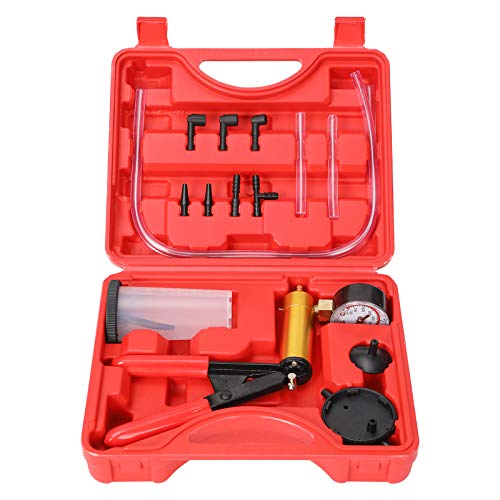
Multi-Functional Professional Testing KitThe handheld vacuum pump kit with a vacuum pressure gauge enables precise pressure readings, covering a measurement range of 0-30 inches Hg (0-760 mmHg). Equipped with accessories for brake bleeding and automotive diagnostics, it is suitable for testing and d More ...

Compatible with diagnostic system outboard and connectors for Yamaha YDS 1.33 Diagnostic software,Supports all models up to 2017, compatible with Yamaha All HPDI OUTBOARD MODELS, compatible with Yamaha All EFI 4-Stroke Models, JET-BOAT MODELS. This package contains everything you need to communicate More ...

CEL Doctor: The ANCEL AD310 is one of the best-selling OBD II scanners on the market and is recommended by Scotty Kilmer, a YouTuber and auto mechanic. It can easily determine the cause of the check engine light coming on. After repairing the vehicle's problems, it can quickly read and clear diagnos More ...

7. 48mm Complete shim kit. 1. 20mm-3. 50mm in 0. 05mm increments with 3 shims in each size, Perfect for all your valve maintenance needs. For Models: 2007 - 2018 Honda CRF 150R Bike, 2007 - 2018 Honda CRF 150RB Bike, 2013 - 2018 Honda CRF 250L Bike, 2004 - 2017 Honda CRF 250R Bike, 2004 - 2017 Honda More ...

Carhartt Force All-Season Neck Gaiter, Black, One Size
UPF 50 Sun Protection: Blocks 98% of harmful UV rays to shield your skin from sun damage. Moisture Management System: Force and FastDry technologies wick sweat and dry fast to keep you comfortable. Versatile Design: Offers 10 wearable styles including neck gaiter, headband, balaclava, and beanie. Co More ...

Windproof & Warm: Say goodbye to wind chill as it keeps UV rays, cold air and snow out, allowing you to fully enjoy your outdoor activities in comfort and warmth. Adjustable & Secure: Features high-elastic fabric for a snug customized fit. The secure closure ensures the balaclava stays in place duri More ...

The Tire Problem You Can't See Catch It Mid-Ride A slow leak or rising heat gives no warning until it's already a problem. The LCD shows front and rear tire pressure and temperature in real time PSI or Bar, F or C so you spot trouble while you ride, not after you stop to check by hand. 7 Smart Alarm More ...
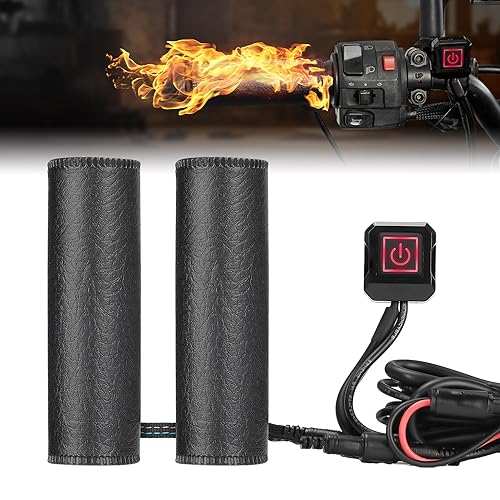
5-Level Adjustable Temperature: KEMIMOTO motorcycle heated grips have 5 different heating gears. So it can adjust to different temperatures for heating from 50C to 85C. The new heated motorcycle grips allow you to easily find the temperature to keep your hands warm and comfortable while riding in co More ...
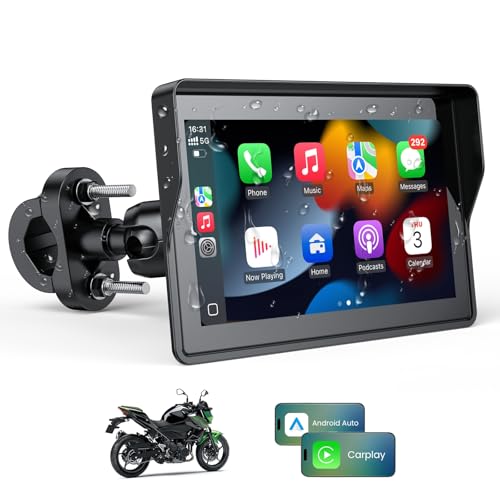
Seamless Wireless CarPlay Experience: Stay fully connected with wireless CarPlay, enabling hands-free navigation, calls, music, and voice commandsperfect for urban riders and touring enthusiasts. Android Auto for Every Adventure: Streamlined Android Auto for motorcycle support offers real-time GPS, More ...
Did We Miss Sump'm?
Sixty percent of the time, we're right every time. What would you add to the conversation and why? Your input is invited. Leave a comment and/or write an article!
Share Link ...


Thoughts gone wild? Write an article!