
Tag along for our FTC disclosure saga here ...
Practice and Resolve
Team TRO restores riding motivation, resets streetcraft after a close Missouri call and files damaged Honda threads back toward usefulness. Music by Rabid Neon and Otis McDonald. Download our feed here.
Transcript
As legible as we are intelligible ...
Brian: In this episode, we say goodbye, we nerd out, and we get electric news. The Missouri report includes an educational fresh underwear moment. Next, we discuss distance, then we mojonate our moto-motivation, we map maps the curvature, and we round things out with the thread files.
Robin: Announcements, news, corrections, banter, the lot. Random song of the minute, this time around, Coat of Many Colors. A beautiful song for a beautiful lady who did beautiful things in this world while she was part of it on to motorcycly things we're fine-tuning the cyborg says portion of the weather page making a regular blood sacrifice to our ai overlords, truth is we're using open routers free options to output the content and when they rando shuffle the model sometimes it would just return the system prompt nerd i know nerdery nerdy okay but we've made the tweak we made the adjustment so now you should get some good stuff as well as on, the gypsy obsession, which is at the bottom of the site.
Brian: Nice.
Robin: Lastly, social media links at the top of our site are updated. We now have Facebook, Instagram, TikTok, and YouTube, and one lonely dollar sign icon that is a way for you, readers and listeners, to make sure me can eat. Bust out that wallet. Show us you care as much as we do. On to news. First up, free electric two-wheeler route planner estimates the battery left at arrival. This comes from thepack.news. So the free two-wheel route planner adjusts estimated consumption for speed, elevation, weather, payload, battery health, and a rider set reserve, It handles multi-leg trips and road eligibility, but it does not read live vehicle telemetry That's hard to say The iPhone app supports iOS 17 and later, while the web version uses OpenStreetMap-based services, An Android version is planned Dang, okay Gas riders get a fuel gauge and a gas station every few exits electric two-wheelers need the route itself to do more math. This is useful precisely because it admits it is an estimate, then shows the rider what is eating the battery instead of flashing a magic range number.
Brian: Interesting. Nice. Next up, Livewire cuts the 1 to $13,999, less than half the original launch price. Interesting. So Harley's flagship electric motorcycle fell from a recent $16,499, that's US dollars, to $13,999 Freedom Bucks, compared with $29,799 when the Harley-Davidson Livewire launched in 2019. Yeah, who bought... Anyway, it still claims 146 miles of range, 110 mile per hour top speed, and a one-hour DC fast charge. The catch is that the EPA last certified it for model year 2023. So motorcycle.com suspects this may be a remaining inventory clean out rather than a fresh production run at 14 grand it's a little easier to start taking seriously But the price cut also raises the question, how old is the battery? Who services it? And is this really a bargain or is it just a closeout and closing sale for Livewire's first chapter?
Robin: They make it so easy. We've come up with, quote, new innovations in things that came out 10 years ago. We're going to charge you three times the price of what those things costed when they were first introduced. But because it says our name on it and America, it's worth more. No, nope, it's not. Sorry. I dig the concept when it happened, but the price, it was a joke.
Brian: By all accounts, the bike itself was pretty good. Yeah. If that sort of thing is the sort of thing you want to sit on and go places on, it was actually a pretty decent electric motorcycle. A little different than, you know, the sport or dual sport or whatever others are making. But yeah, the 30 grand was, you got to be joking. And then, so anyway, now's your chance, folks. Get out there, get to your Harley dealer. Tell them to dust off the live wire i have seen two of those sitting in a dealer with a sold tag so people were buying them good luck to them i i and hopefully they can iterate and come back with something that makes more sense
Robin: Meet the need all right next up norman hyde rides 81 miles without navigation to raise dementia funds, this comes from visordown.com the 81 year old triumph engineer and former world sidecar speed record holder is living with dementia. He completed an 81-mile North Cotswolds ride without sat-nav or electronic navigation, joined by 20 industry friends. His Ride to Recall campaign invites riders to try their own 81-mile navigation-free rides during 2026. We spend plenty of time asking which screens route best, and hell, We've done that a lot on this show. Hyde flipped that into a ride about memory itself. Could most of us still make a good day out of 81 unplanned miles? Or has the glowing arrow replaced the little stack of roads we used to keep in our heads?
Brian: Nice.
Robin: That's it for the news. Brian, what's good?
Brian: Basically, I just got back from a little, you know, a little jaunt, a little poodle around the countryside in Missouri. Lucky. Robin couldn't make the logistics logic this time around, but, you know, that's all right. We had me, Dale, Ron, and a guy I hadn't met before, Danny, all the way from Louisiana. He drove about 10 and a half hours to get there and ride with us.
Robin: Did he have the accident?
Brian: No. We interrogated him on this point. And I was like, are you sure you're from Louisiana? And indeed he is. And he grew up there and has lived in Louisiana most of his life and somehow escaped sounding like someone who, you know, just had an alligator for breakfast. Very cool, dude. And it's one of those things, you know, like this ride is basically the vintage Suzuki crowd. And he showed up on an absolutely wonderfully minty 1100GK, which has been nakedized. And if you don't know what a GK is, it's basically Suzuki's early 80s answer to the Gold Wing. This came before they released the Cavalcade later in the 80s, which was a fully faired Gold Wing, except Suzuki, basically. So they took the 1100G, which is their early 80s standard motorcycle, and then put bags and a fairing on it and turned, you know, and heavier forks and some other heavy-duty bits.
Robin: They Aspen-cated it.
Brian: They sort of did. And then what he was riding was a GK that had been nudified again. So basically they took all the bags and everything off of it and turned it into a standard-style motorcycle. It looked wonderful, ran good, had a Delcovich system on it that sounded amazing. It's really funny how the vintage Suzuki guys and ladies are all incredibly cool people. I don't know what it is. It was really a little weird going from... So basically, we did the track day, and then it rained here in Indiana for like two weeks solid. So I had about 30 miles on my bike before I trailered to Missouri. Yes, I trailered Illinois. The less time I spend traversing Illinois, the better. It's really weird to switch mindsets like that. I don't know I hadn't really realized before yeah it is a transition and so you're in Missouri which is basically laden with racetrack quality pavement better actually and you have to switch back into street mode but it's also really interesting contrast because you know every time you go to a track day every time you do something like that you learn a lot you get more precise and that was interesting to feel and see like, oh yeah, I'm, I'm on that inch I want to be on.
Robin: I just had this conversation. I spent about an hour talking to Murray Haynes. He's been on the show twice now. He volunteered the concept and the information that there are a lot of dedicated track riders that just can't ride on the street.
Brian: I can understand that.
Robin: You know, it's like they have a perfect canvas with perfect, repetitive, you know, uniform, consistent circumstances. Listen to all my big $10 words go by, blah, blah, blah. But the point is that like they get used to that uniformity, that reliable pattern that doesn't involve the unexpected so much. So even the nine-year fine, 10-year mine rule, that's a common gag about, you know, getting pulled over. It's like stay under 10 and you'll be all right. They won't arrive at that either. There's just too much moment by moment intake where everything is completely different, there's no repeat effect and there's, no eliminating the unexpected. The unexpected is a constant ingredient, even when you don't arrive at it, if that makes any sense.
Brian: Yeah.
Robin: I found that pretty legit.
Brian: You do what's appropriate for your environment. But I do know, yeah, there are a lot of, none of the top racers ride on the street ever. Nicky Hayden was killed in a bicycle accident. He was actually doing some physical training. There are things to be wary of in myself already even though i've only done four track days there are things to be aware of in myself like oh yeah i can't do that here we don't do that here but there are also a lot of improvements that i notice every time you know there's a so i do notice more precision more ability to judge distance and time and things like that but But yeah, street craft is a very different science than track craft or track riding, than just controlling the machine. You know, I don't know anything about race craft. I mean, that's an entire different psychological swamp of managing things. I don't think I'll ever race. I think I'm past that point. Entirely different mindset. Speaking of street craft, we had a little talk, had a little, and I thought it was an interesting moment. And for me, it was a teachable moment. As a friend of the podcast, Dale, put it afterwards, he had a front row seat. He said, There's a conversation to be had about sight distance, and yes, he's absolutely right.
Robin: About sight distance, go on.
Brian: Sight distance, yeah. There was no disaster, everything's fine, but I screwed up. So I came barreling around the curve at a somewhat entertaining angle, and there was a truck that said, Fah. Directly across the road. Basically, a truck was coming towards me and they were turning their left on, they were turning to my right, crossing my lane to get into a driveway. They're going about their perfectly lawful, normal, ordinary business in a perfectly sane and wonderful way, getting stuff to people. That's great. And yeah, basically I had overridden my sight distance, I think. I didn't know this truck was there. And also there was a truck, there was a pickup right behind that truck. So there was no escape into the other lane. You know, stood up, got on the brakes, real, real, real hard. You know, on the back, wiggled a little bit. The ABS popped a few times on the back. Pretty much, I'm about 90% sure that I would have been okay. It would have been able to stop if like at the FedEx truck had stopped right there. But it was real close, real close, a lot closer than I ever liked to. Fortunately, the delivery, the deliverator, as I put it, continued into the driveway. They continued. They didn't know I was there, probably. And then I, you know, I let go and went on and everything was fine. Totally my bad. I should have known they were there. I should not have been going the speed I was without knowing what was there. And it's a reminder. I'm kind of at a point. I've got a lot of experience, and Robin does too, where I don't get surprised very often. And getting scared is pretty rare. And I think you're kind of, yeah, like you don't, I don't like to be scared. I don't do things to get to scare myself. And I don't get surprised that often. I'm hard to fool. That's my reminder. Point taken.
Robin: Now and then we bump into the boundary, right?
Brian: Yeah, now and then. And also, I think my reaction time, like I should have reacted and seen that closer. I'm not sure what, I wasn't looking at my screen or anything like that. I knew where I was, but I was, Like it was there and then there was a, there's more of a moment than there should have been. I don't know if that was fatigue. I think I slept pretty well, but it, you know, it wasn't perfect. First night in a cheap hotel, you know, or maybe I was just thinking through what I was, what I was going to do next, that kind of thing. But yeah, it's a reminder to all of us. Hey, you can always be surprised. Things can always happen. Don't. Override what you can actually see. Lesson learned.
Robin: Are you open to feedback on that?
Brian: Absolutely.
Robin: I'm writing an article about this subject matter right now, not involving necessarily the threat level you experienced, but sort of self-forgiveness and get back in the game immediately after. It's a good way to eliminate the idea of the emotional scar. You keep the takeaway, but you immediately return to the process. That's a whole separate matter. Where I was feeling all the feels was about what you were saying about track day. We were saying about track day versus street. And then what could have led to this moment, certain things come into play. One of the greatest takeaways as street riders, and I would say that we are by default street riders who go to the track to maintain a better understanding of certain limitations. Sidebar here, no rabbit holes for very long. Reason for you to no longer do novice, Brian. You need to just go right to intermediate every time. You were beyond it the first track day. So it was just a matter of knowing the environment and the process. And at some point, I think that with predictability and the will to pass, you're well into the advanced stuff, which I was just telling a friend. I personally am not quite where I have the gumption to make the pass, even though I know I can do it because I don't know what's behind me. And I don't know what the person ahead is going to do it. Let me rewind this or reel it in as it were. One of the greatest takeaways from a uniform environment where you can really put pressure on the bike while being ready to react to whatever it does that you did not expect. One of the greatest takeaways is that you will know the limits of the bike, not necessarily your own. It's good that we don't necessarily go to the track to find our limit and push it over the line and maybe with a dedicated track bike.
Brian: Danger zone, right?
Robin: And like people really monitoring your every move, but. As our minds go, we don't necessarily want to press on limits that are beyond what we're comfortable with outside of the fact that we showed up there and are trying to do our thing. But knowing more about the bike's limitations, meaning I'm going to go for this and if I feel the bike chatter the wrong way, I'm going to bring it back in. You learn more about like, what are my brakes capable of? You learn more about what is my rear tires grip when I really suddenly drop a gear and nail the throttle. You bond with your bike at a track day really intensely. So then you put yourself back on the regular street. Now you just have to dial down the reactions. I love the delayed apex. I see it every third episode, the word delayed apex, where you float in the outside corner so that you can look deeper, and then you chop harder. Whatever happened on that day, I wasn't there. but whatever it was it sounds like the track day mentality, had contaminated some of the normal street priorities you said the odds are good that i'm gonna be fuck and that's how.
Brian: Yeah yeah and on the flip side of that it's quite possible that without that recent experience of pushing learning the bike better and what the bike can do better and what i can do better there's a there's also the possibility maybe I would not have calmly stood up clamp and smoothly brake to what would have been a stop in time.
Robin: Yeah, you brought refreshed knowledge of your bike to the incident, and that probably got you out of it, but you had to then reset perspective on where you were and what you were doing.
Brian: My brakes are fine, Dave.
Robin: All right.
Brian: All right. So what have you been up to, Robin what do you where'd you go what'd you do who do you talk to what's happening
Robin: I decided not to go to the rally with you because I was invited to meet with a friend at Northwest Indy, Annapolis. Yeah. Let's say that again. I got to go meet my friend, Chicago police Sergeant Robert. That's all we're going to say. No last names for what was going to be a damn fine burger and turned into some damn rubbery pizza. But we had a, it was a, it was a great hang. We had a great time. So got to kick back, catch up with a friend. They're doing great. They've left motorcycling for however long seems appropriate for them and bought themselves a nice new convertible and I'm happy for the guy. And it was just a great hang. Just a good time. That's how I'm doing. That's it. The ride back though. We'll talk about the ride back. Remind me during a segment two to discuss the ride back.
Brian: What could there be to discuss? Okay, excellent. Let's move on. All right, next up we have listener questions.
Robin: If you'd like us to field your questions, visit email.tro.bike in your web browser and send us a message.
Brian: Question one, question the first. Do sport touring tires with tread left deserve a 6,000 kilometer vacation or should the trip start on fresh rubber? Option B, next. Okay, anyway. So the scenario is thus. A Tracer 9 GT Plus, love that bike. It's the later development of my FJ09, have 7,500 kilometers on its two-year-old original tires. I think that's around 4,000 miles.
Robin: I will do the calculator right now.
Brian: The rear is beginning to flatten, but grip still feels good, and there appears to be useful tread left. Before a 6,000-kilometer trip through highways, the Alps, Dolomites, and Balkans. Good grief. Oh, my God, that sounds awesome.
Robin: Yeah.
Brian: Should the rider install fresh tires or leave on the current set and plan to replace them somewhere in Europe if needed?
Robin: Replace the tires. Yes. They're two years old. They seem to have a little bit of tread left, and there's some new metal tread appearing. I think I'm going to be fine. No, new tires.
Brian: That's kind of a no-brainer. Yeah, that's about 4,600 miles on the tires already. Robin and I wear out a set of tires in 3,000, maybe 4,000 miles on a regular basis. It's not a heavy bike, but it's probably going to be loaded and so forth. And I'll just say this one. My rule of thumb is if I'm thinking about the tires, I change them. I want tires away from my brain so I can focus on what I need to do.
Robin: Damn it. I'm at that point right now where either I calm the hell down with my tires and save them for Berea, or I beat the living hell out of them and swap them out before. My hope is they'll look like absolute shit by the time I arrive.
Brian: Yeah, I don't have a new set on hand to compare yet. I probably should order some.
Robin: Next question. Should a returning rider use a 50-hour coast-to-coast challenge as his first real long-distance test? The premise, two riders recently returned to motorcycling on GSX-8R. Holy crap. Look at that. And a CBR 650. They have 2,000 and 5,000 miles on the bikes, but no serious high mileage days. They're considering an Iron Butt Association 50cc Quest, roughly 2,400 to 2,700 miles coast to coast in under 50 hours. Are the sporty ergonomics the main obstacle, or is the missing endurance experience the real warning? I'm going to say that the, okay, so I've done this. My answer, and I'll pass the baton quick, is go find out. And the instant you feel like it's just too much, freaking stop. That's all. Get on the bike. I'll tell you, since I do know the bike very well, the GSX-8R is my current daily rider, my personal favorite machine. I love the bike. Like, if I were going to do this, first thing, $800 gets you a really nice seat. Get the Corbin first off. Maybe even get the Madass Inflatable to go on the Corbin as well. Why not double up? You could get the peg lowering kit that doesn't actually lower the peg or the clearance. It simply flattens off the base where the peg begins. Then you just get gel inserts for your boots, right? Carry the smallest and simplest risers in your top case, and you're going to want a top case as well as luggage. Once you do all this, once you kit yourself out to actually say, I'm going to do this, you know, go out there and don't know what you're doing. Just make sure you carry everything from our packing checklist. Go to TRO.bike, mouse over DigiTools, and click on the packing checklist. Set up your settings. Are you going to be camping? Are you going to be going to hotel rooms? Get everything itemized as much as possible. And then start. And when you arrive at, oh, damn, stop. Just stop. and just be like, no, this is where we're at. This is what I know. This is who I am and I can get better.
Brian: I guess we live in Davenport, Iowa now. Yeah, okay.
Robin: Take a couple of days to figure out what Davenport's all about and go home. That's my answer.
Brian: I like that answer. My take is this sounds like something young and dumb people would do. And if you're young and dumb, go for it. If you're older, then yeah, you may want to work up to it or you may want to just, yeah, do what Robin said and go find out. You're really not going to find out until you go try it. If you're 20, your butt can survive anything, though. Maybe later in life, you might need to plan ahead.
Robin: Just remember, the goal is to die young as late as possible. Last question, Brian. What do you got?
Brian: Is electronic suspension really a long-term reliability liability? All right. Is there an echo echo in here? Or just expensive anxiety? So this rider has avoided motorcycles with electronically adjustable suspension because the extra motors, pumps, sensors, control hardware, computers look like future failure points. Actual owner horror stories seem rare, though. So what tends to fail? What happens when it does? And should long-term service costs meaningfully affect a sport touring purchase?
Robin: I know this one. I know this one.
Brian: What you got, Robin?
Robin: The Beamer was cool. It's really about, is the brand reputable? There are brands coming out with active electronic suspension now where they're reacting to sensors and like they're using some kind of radar for whatever's up ahead, predetermined adjustment. The new tech is apparently incredible, but is it tried, tested? I will say that with the BMW, the bike before my GS6 8R, and that electronic suspension, the ESA, which was not active, it was dynamic. You had to adjust it yourself and be like, I'm doing this, I'm doing that, I'm two up, whatever. It never failed. And it was always incredibly good to me. So if the brand is reputable and maybe even check their current stock position, make sure that they're not going anywhere near the world of bankruptcy, so long as they're going to be around, it's not really a bad idea. It's a pretty cool concept. It's one of the few proprietary gizmotronics that I was like, all right. What do you think, Brian?
Brian: I really don't have experience working on bikes with electronic suspension or owning. So maybe that indicates something good, that it's mostly reliable and works well. You know, people said the same thing about fuel injection and throttle by wire. I would not be the first adopter of the first year that a motorcycle's got some fancy stuff. And also there are differences in systems does it have like a really complicated gear box you know to just spring preload on the fly or is it a little motor that just a little stepper that spins a needle to adjust rebound damping that kind of thing i you know i would lean towards things that are a little more complex i'd lean towards things that have been in production a little bit longer i would lean towards the major brands, BMW, Suzuki, Yamaha, Honda. You know, Honda in particular is really good at innovating and making things reliable. And also, if you really want to, you could think about, okay, look at this system. Is this something that's so integrated into the bike that it's unrideable without it? Or is this something that in the future, if I replace this shock with a more or less standard shock, like if I turn this into a track bike, can I mechanically conceivably go to something that's more of a standard setup.
Robin: Will the bike allow you to start it if you do? If no, maybe you call upon them to explain. Do explain.
Brian: Like there's some really complicated stuff coming from Ducati. Yeah, is that going to be working in 10, 20 years? I don't know. Ducati's making very high quality stuff. They're making very reliable motorcycles now, believe it or not, but they're also expensive. They also change things frequently. Parts could end up being a problem. So lastly, I would just say maintain it according to spec, you know, change the fork oil, things like that to make sure to make sure it's going to continue to function the way it's supposed to. New tech has come along in the past and everybody's been fine with it. This is just the latest new tech.
Robin: If you'd like us to field your questions, just visit email.tro.bike in your web browser and send us a message, which brings us to segment one.
Brian: We're talking about motivation.
Robin: Motivated.
Brian: Motivation, tradition versus newness versus learning versus money versus motivation and mojo. This came to mind because we're hitting that dopamine overload segment of the season. We have done, I have done, you have done some awesome riding, some amazing riding this year. We have had a hell of a year. It's August right now, in case you're listening in the future.
Robin: Yeah, we ain't done.
Brian: You know, looking back upon thousands, upon thousands, upon thousands of miles of tire shredding awesomeness. I'm kind of tired. And I'm not complaining. I'm grateful. Believe me. Getting ready to go to Missouri. I had a moment. I was like, do I want to do this? I could cancel the hotel room. I've got a few more days. I could just say, sorry, guys. I need to stay home and live in my garage or something. But I loaded the bike. I loaded the van because nobody needs to ride across Illinois. I went and I did it and it was awesome. Yes, it always is. That kind of thing. The other thing about Missouri that's kind of interesting is that good friend Joe put a lot of work in. He made several trips to Missouri to work out the best roads and the best routes, starting from Farmington, Missouri. We have some amazing routes and roads and so forth. And every time I've tried to improve on his routes, I end up in a creek bed. I end up riding on a dirt road. You know, I end up on an interstate highway that's perfectly straight. All of a sudden, oh, I'm on a fan boat and there's armadillos screaming at me. You know, I hate to admit it, but I wouldn't say boredom is the feeling, but it's like, yeah, we've mashed these roads flat. What else you got? That kind of thing. You know, how do we keep this thing fresh? And so that's part of it, too, is like when you have this massive smorgasbord, how do you make those decisions outside of restrictions of life, of duty, of money, of career, family, and all those other things that get in the way of writing? Aside from that, how do you decide, okay, what are the many things on this smorgasbord? What morsels do I put on my plate? And what do I do with them?
Robin: Something happens when you have a series of collective writing seasons that are indescribably good, such as like to the new writer. You can't put into words. You can't even begin to like. Put into their perspective, just one of these events. New to it, they're going to be blown away. So here we are riding these intensely incredible roads, geographically speaking, very different, known to us through experience. Maybe they're not fresh, but we are preemptively aware that these are going to be a good time if our head is in the right space. But consecutive seasons, no matter how many roads are involved or how many states, you know, we've got the Brown County rally, a couple of track days, Missouri Ozarks, Berea, Kentucky, New Mexico, trip sevens, all of these riding environments, in consecutive repeat order, you begin to see the pattern and any given one of them may have put interesting new perspectives in your head, about life, about writing, about, you know, just is a deep, shallow, it doesn't matter. It's all getting collected. And now and then you need time to process that. The reason I'm saying all this is that this past year, for the first time, where we consider to be home has become incredibly personal to me. I know it. I love it. It's part of me now. And this past season, I didn't really ride that much while I was there. I rode so little. I rode enough that I had a damn fine time, but I rode little enough that when Burleson came down to go run the New Mexico three-day tour, I mean, I blew the first seven corners of Devil's Highway. I just could not get a rhythm.
Brian: It was a shit show.
Robin: I was like, how do motorcycles work, right? But the point is, I couldn't convince myself that whatever distraction from motorcycling was in front of me was less important than riding itself. And it was a health move, a subconscious health decision. I just didn't ride it. I needed to breathe for a second. It's okay. It's allowed to happen. we're allowed to give ourselves that space if you do that if you at least allow yourself to do that you can arrive back at this environment knowing full well god i've ridden this road a thousand times okay well, do it again and this time roll off the throttle just long enough to let it get ahead of you so that you are catching up to the pleasure of going on that ride.
Brian: Yeah something Something like that. Yeah, just kind of, it's about you recognize where your head is and so forth and get back to the good part. And it really touches on the part of motorcycling we fumbled around trying to talk about many, many times. But the fact is, it is pure mental health. It is pure mental health. Pure reset. This is a high-level actualization activity, and it's an incredible reset. It's a brain scrub. You are forced to put aside everything for a while, and it is amazingly good for me.
Robin: But it is not therapy, and that's actually what I'm working on right now. It is a practice.
Brian: It's meditation, yeah.
Robin: Now and then I dump it. I'm like, okay, fuck it. It's therapeutic. It's just a way of saying I feel better after. I mean, no disrespect to the, therapy community, but you feel good enough after that you get lazy with your words. Oh, two-wheel therapy, blah, blah, blah. Not a thing. Practice and resolve.
Brian: That's a, yeah, that's a great way to put it. Like the yoga term, it's a practice. It's a high speed physical meditation of some sort. And yeah, it just kind of cleans the body and mind a little bit, I think. The thing I've found is that it's always worth it. Like when we were getting ready for the track day, there were a lot of questions, a lot of logistics, a lot of obstacles and things to think about and discussions and so forth. And I think we both came close to bagging it a few times, but we pushed through and it was an amazing experience.
Robin: It's a damn fine time. When we come back for next year's season, which is a divided plan, I think this round we're going to set up in Farmington.
Brian: Oh, okay.
Robin: That means you're still going to see the same amount of me, but we're going to have access to Putnam, you and I, We're going to do that. And we're going to ride Circuit of the Ozarks.
Brian: Yeah, I would love to get on that one. Sometime this winter, you should go to that grabastic all comers track day that they have in New Mexico.
Robin: I will.
Brian: It looks like an absolute cluster foxtrot. I don't know.
Robin: I will report back.
Brian: And I will say sometimes that you have to trade, you have to trade things around. And I guess that's partially real life and it's partially like to, you know, to reserve your, not just your resources of money and time, but also your resources of mojo, if you want to call it that. And I think a lot of it was time away is a lot more difficult for me. This year, I basically traded New Mexico for the 777s. And the 777s didn't happen, but then some other riding happened anyway, and it was all cool anyway. So that's good. There have been a few times where I've seen weather coming or there's something like that, or I'm just like, I'm going to bag it, and I ride home a day early, things like that. You don't have to punch a clock and show up. I guess I got to ride this awesome road again. I'll just another freaking gallon of ice cream and blah.
Robin: If you bag a ride, are you also still happy? If you are, nothing to worry about. Like, I'm not going to ride today. I'm going to write an article about riding because I enjoy the philosophies that I get from it.
Brian: People get disappointed, but I've never really let myself get too pressured into like, oh, well, people are going to be disappointed if I don't show up. Super grateful. And I know most people, I feel like I have a more awesome life than almost anybody I know because so many awesome people are in it. So we have, you know, all these people I ride with are amazing and it's always great to be around them. One year, my leg was, I'd broken my leg and I showed up anyway in a car. I've done that a few times, you know, show up anyway and, you know, and I can't, I can't go ride, but I can hang out and enjoy the company. Take what works for you. Don't do what doesn't work. Push yourself a little bit. Like for Missouri, I pushed myself a little bit and it was totally worth it. It was fine. And we mixed things up. Like one of the routes, I modified it a little bit, just not to go on different roads because that's been set up. But we rode it backwards and then did some different things at the other end, that kind of thing. So it made it a little more interesting. I've ridden those routes in Missouri at least 10 times. And I didn't have any idea when I was riding it backwards. I didn't have any idea where the next, where the next gas was, where the next rest stop or the next, you know, I had no idea. So that was, that made it interesting. It made it kind of fun.
Robin: I think we need to blow up Berea.
Brian: Yeah. That's going to be a hoot.
Robin: Any direction East, like just go.
Brian: Oh yeah.
Robin: I really think that the numbers need to be absolutely inflated for this. We got to do it. It is, I'm going to make no plans. I don't know that I intend to follow anyone. I think I won't be doing that much, but I will invite a really good friend to, disappear to the east and just go why should every rally be well here are your.
Brian: Routes it should
Robin: Be let's go freaking scout on.
Brian: Site that way see what we find figure it out
Robin: Yeah man there's just too many roads this is the core of all things let's not talk about it those roads are paved moon shining let's go make the most of it you know what i mean.
Brian: Gonna be awesome so yeah we talked about keeping things fresh and and and mixing things up on the routes you know change things around i'll give an example for for several years with the vintage suzuki guys we all met in robbinsville and we kind of did the same things and then that sort of drifted apart and then we started uh some of us started going to newport tennessee which is on the other side of the smoky mountains and there there are you know no nobody on a motorcycle really knows about it but the roads are just as awesome. And we also, like, we usually alternate dirt year with a street year, that kind of thing. You know, just... Mix it up, keep it fresh, keep sending out the emails, you know, and, and, and seeing who shows up and it's always a good time. I'm incredibly lucky and I'm incredibly grateful to have all these people and all these opportunities and, and, and the time and the motorcycles and the, and the stacks of tires and all that to, to do all these incredible things. I'll, you know, it'll be, it's, it's fantastic. You have to pace yourself. I think, you know, if you, if you're going to eat ice cream all day, every day, you have to pace yourself. You have to do your exercises, you know, and get through it. but God, it's worth it.
Robin: If you have to step back long enough to get a taste for it again, give yourself a week or a month or whatever, go ahead. Just don't let the, don't let the skills fizzle out.
Brian: Yeah. And like every year, you know, about January, February, you know, we're physically shaking because it's, I got to get out and enjoy it when you can take what you can, when you can get it or do what Robin does and go somewhere warm. Go hide, go hide somewhere warmer. Absolutely. All right, let's move on to Segment 2, Maps to Apps, Curviger Edition.
Robin: And we'll do this. You said Curviger, Curviger, I don't know.
Brian: Which one is it?
Robin: Curviger.
Brian: Is it like Swedish or something?
Robin: Curviger.
Brian: Curviger.
Robin: I'm going to bang this out because I think Segment 3 is more interesting, but I wanted to at least get warmed up to what I want to do with the apps out there. You know, and I do really think I like that idea about the 81 miles of zero app. You know, maybe you put some music in your helmet if you want. Do whatever you like, but go explore. Use your eyes, use your ears, and feel something new. That's not what this is about. This is about when you return to the tech, which, hey, it can be pretty dang handy. Potato, potato, whatever feels good, what doesn't. Curviger edition, here's the deal. I've used Curviger in the past. When I first learned of the website, that's all it was. It was a very weird, hodgepodge, geocities sort of slapped together.
Brian: It was like
Robin: The MySpace era of, we'll build a route for you. And all it did was basically analyze known legal lines of what was the equivalent of a road and try to come up with a way to either find the direct route, find the slightly curvy, find the moderately curvy, or find the absolute twistiest. Of course, I went right to the absolute twistiest. In a word of our good friend GBW, if your motorcycle has three riding modes and the top mode is nuclear, are there really any other riding modes that you're ever going to use? Exactly. So in this case, here's what I have to say about Curviger as it stands now. The website has improved. The app, is existing and it has navigation on a turn-by-turn basis, TLDR, out of five stars, I give it 4.25. It's really doing it. They've got it, but they're also kind of honest and you've got to be honest with yourself. They limit the interaction with what they do to a level where it's like you can feel the risk and that's okay. It aims to be fast on the route generation and it succeeds it really does succeed in generating, a solid route pretty quickly now with the right pavement landscape meaning places where curves really happen where they're plentiful right 90 excellent.
Brian: That's a trick that's a trick yeah
Robin: It does a great job it's like okay are you in a place where there are turns and you would like to do something different it'll find something different that you may not have known about be like this is lesser known and it's still paved Don't worry about it. But it had to be built. The road was necessary and people might not know about it, but there it is for you to go check out. It was built just for you. Go have some fun, right?
Brian: Yeah.
Robin: But I'm going to say right now, 10% demotion, which is what arrived at my, you know, 4.25 by a single event on the way back home from Indianapolis after meeting Officer Robert, a good friend. It's got a quick and dirty method to generate a solid ride, and it's pretty damn good. And if you don't dig the result, you can export the GPX file and import it into your favorite GPX editing environment or GPX import compatible environment and improve the result. Now, the downsides, it's pretty tedious to traverse, mostly backwards. I go generator route to my freaking mailbox. Right now, I am west of Cordon by a good few miles. 62 is still a lot of fun. I just want to go to my UPS box. I create the route, and the result is pretty damn good. The downside to that is that I couldn't really get it to accept the address that I wanted it to accept. It's a legitimate address, but they're just like, nope, too complicated. Well take it to floyd's knobs though right i get there and now it's time to stop navigation and to stop navigation i have to, stop navigation okay continue ride no finish ride okay do you want to save the route, i didn't want to save the route to begin with but don't worry because in the top right-hand corner there's an, x it's hard to see because it's the same ratio of size to your screen as the, Earth is to the sun. And I don't know if you know this, but when you actually look at the real physical size of our planet compared to the sun, you can barely freaking see it. You have to do all that just to get back to the next move. So kind of a process there. That's a downside. It could use some options for fine tuning.
Brian: Sure.
Robin: Are you doing 75 miles an hour in 40 feet? Turn right. The zoom points are a little bit off and it can be a little bit too creative in the flat lands. If you're in a flat state, it will maybe try to use somebody's living room as an apex. Get to know it. If you're in a flat state, use it. Love it. Appreciate that it exists. Export the result, edit the result to your needs elsewhere, import into a different, turn-by-turn direction app and go about your business. I'm giving it 4.25 more once I learn it a bit better. I think it's cool. I would never rely on it for any of our commercial tours. That's a real effort there, but mostly I think it's fantastic. And the only down for me that demoted it to that level was when it found the good 15 miles of gravel that it thought were paved. And I'm on a street bike that I do not want to mess the paint upon. So there you go. Nice.
Brian: Yeah, it's a great idea generator.
Robin: Which brings us to what I've been looking forward to most. Segment three, Brian's Tidy Tasty Tool Tips. One or two per episode. What are we calling it?
Brian: We're calling this the Thread Files.
Robin: Files, files, files.
Brian: Friend of a friend got in touch and he had an old Honda that he had put new wheel bearings in. But there's old Hondas have this weird retainer mechanism where there's a big aluminum disc and it's threaded around the edge. and it threads into the wheel. No one knows why. The bearings are a press fit, just like they are in any other motorcycle, and on millions of other motorcycles, the bearings have never gone anywhere. But anyway, Honda figured you needed to have this screw-in retainer, aluminum thread on aluminum thread, and then it's staked into place. It's just doomed. Decades later, you know, he got the plug out, and the threads are kind of mangled, and he couldn't get the retainer to thread back in. New retainers are really hard to find. They're very expensive when you do find them. It's a common problem. Anyway, that was the situation. So we had a thread that was not a bolt or a standard diameter. It was a very large diameter, and it was a 1.5 millimeter thread pitch. It was a standard thread pitch, but it was a really weird non-standard diameter. We had a part with threads on the outside, and we had a wheel with the threads on the inside.
Robin: Weird. So we have a term that we laugh at in the music industry called jazzical.
Brian: Yeah.
Robin: The most rigidly boring people from the realm of the beautiful world of classical music compose their improvisations to be played over bad swing grooves. Then they bring actual jazz musicians in to perform this shit. It's the most terrible blend.
Brian: Yeah, what was Honda thinking? I don't know. Especially back in the day, they had the world's finest engineers and why they felt like there was a problem that needed to be solved here. So we solved the problem. How do we do that? I want to bring to your attention a tool that most people don't have and most people don't know about, I've learned, called a thread file. And this is a thread file. I'm holding it up in front of the camera. Maybe we can get a picture of it. It's rectangular or it's square and cross-section and it's a long, It's a stick, and on each of the faces, so there are eight different faces, top and bottom, and it has a jagged edge that you can run over threads to clean up anything that's in the threads and to help kind of massage The metal back into place and also file off any extra metal or burrs or anything like that. There's one kind of thread file that's really common, and you use it on external threads. So if you need to clean up, like a common use case in motorcycles is if your rear axle threads are all messed up, or if you're working on the swing arm and you had trouble getting the pivot bolt out. If one end is kind of mushroomed or the threads are kind of messed up, you can take this and you can file around the threads and get those cleaned up and get them working again. However, if you have internal threads and they're not a standard type where you can get a tap that fits them, then there's another kind of thread file called an internal thread file. And this has a little barrel on each end with different thread pitches where you can actually stand it up in the thread and then go around in circles to clean out that internal thread. Anyway, you should be aware these exist. If you have non-standard threads where you don't have a tap or you don't have a thread repair tool that fits that hole specifically, I got my internal thread file from McMaster Car, and it was expensive. It was about $70 to my door, about $55 for the thread file and in tax and shipping. But yeah, if you're getting into work on vintage bikes, if you're getting into kind of some advanced work on motorcycles, getting things working where you may not be able to get spare parts, you know, having at least an external thread file, they're pretty cheap and they're easy to find on Amazon. Getting an external thread file will bail you out of a lot of situations, help you clean up a lot of threads. And then getting an internal thread file is kind of that next step. I didn't have one until this problem presented itself. I knew I needed one, but that was my motivation to order it. And there are other thread repair tools out there. There's taps and dyes, and then there are thread restoring sets.
Robin: That's the trick. Is that the chaser?
Brian: Yeah, like you can basically get sets of chasers. So it looks like a set of taps and dyes, but they're a little gentler. They don't really cut the metal. They kind of move it back into place, and they'll also kind of scrape out any thread lock or gunk or burrs that are in the threads.
Robin: Let's say that they do that. You've compromised the metal. There's fatigue involved. You can't throw caution in the wind anymore with it. What does compromise mean in this case?
Brian: If you're removing metal or if you're smoothing out where metal was damaged, yeah, you're losing some strength. So you really have to evaluate that. Like if you're restoring the threads on something like a rear axle and they were pretty mangled and you had to move and remove a lot of metal, there's a lot of margin in most threaded fasteners. Like they're many times stronger than they need to be to, to be safe and hold the object. There are times, yeah, where it's a safety critical item where there's a lot of torque on it, where, you know, okay, it's time for a new part here, that kind of thing. For example, like if you're working on kind of cleaning out the threads in a clutch cover, there's probably eight or 10 other fasteners holding that on. So basically, as long as you can get that fastener to thread in and hold with some level of torque, it's going to be fine. It's not going to be safety critical. This stupid retainer on this Honda, frankly, it probably doesn't need to be there at all because millions of other motorcycles, including later model Hondas, don't use these stupid retainers. So, you know, just for completeness sake, we wanted to fix this. You know, we wanted to do it right. And so that one has, there's like no stress on it at all. It just needs to thread in and stay there. And so, yeah, you do need to think about that. If you chase the threads on a spark plug hole, for example, you can reach a point where, okay, this is too mangled. even though I got the chaser in there, a lot of shavings came out with it. I need to think about doing a better repair. And that's when you would move to something like a time, like a solid thread insert where you drill it, you tap it, you screw in an insert, and then that becomes your new threads for your, happens with drain pans a lot. So thread file is not a good solution or a thread restorer is not a good solution for drain pans a lot of times because yeah, when those strip out, there's too much metal that's gone. So you'd need to replace the threads with an insert or replace the part. That's a good point. Look up thread files. Get yourself at least a basic one if you do any work on vintage motorcycles or whatever. Those are the thread files. Go out and get yourself a thread file. We could go on for days about thread inserts. We could go on for days about thread restorers. We could go on for days about thread measuring, but we won't. Get yourself a thread file. It's not just a tooltip. It's tiny. It's supposed to be tiny, damn it. All right. It's time for the wind down. We think about it. We talk about it. We've chewed it over. What are we going to talk about next?
Robin: Motorcycle society and philosophies behind that. Those who don't need to be learned nothing gooder to those who have properly contained themselves within the exact diagram of the curriculum that they've, fully subscribed to and no other curriculum. This is a hard world to witness. I would like to come up with an optimistic way to go about discussing training culture as it applies to being the student from the perspective of those who would do the training. It sounds complicated. It's a lot. This is hard. The Motorcycle Safety Foundation, I wrote an article that it did some upset work for some people about like, I'm upset.
Brian: Anyway, go on.
Robin: The rider coach guide specifically states that all motorcycling means there's so much more to relatability. That's a previous episode subject where I went on my rant. Are curriculums bubbled off? I'm going to see this writer coach tour this weekend with a good friend. My question is, do MSF writer coaches know that it's a culture? Do they know the ineffectiveness of belching back curriculum rhetoric whenever they're challenged by a subject. Before I say any of this, I really hold the curriculum high. It is my go-to for all things brass tacks truth, but there are nuances to the conversation that can take place if people will let them. And I brought this up. A certain level of laughter and applause and a massive level of stoicism where, I know MSF rider coaches who can ride, many laps around me with skill, whether it's at the track or in a cone course or in a stunting environment, they're just better. And on the other side, I know people who are capable of judging your performance and deciding whether or not you get a license waiver, who I look at and I think, you've got a license? You've got a license to ride a motorcycle? If these are the boundaries, if the boundaries are superheroes by my standards, versus the lowest common denominator, with a badge, is there a way to communicate to the entire collective that, the only difference between the students and the instructor is the person holding the cards? The message isn't just for the students. It's for us. It's for the person reading them. We may be better at processing the information or relaying the information, expressing the information, whatever the situation needs. But are the morons aware? You know, this gets into Dunning-Kruger stuff. That they are also the student. I'm like average. I am amazingly like, wow, you'll be impressed with how average I am. Are the people 20 shelves above me still self-aware enough to know, yeah, these cards mean something to me as well? It'll be open discussion. I'm not even sure I'll outline it. I just want to have the talk. Most importantly, and this has been hard for me, is when I see people that I hold in high regard who I feel they know more than I do. I feel they see me as a clown. Is it beneficial for any of us to challenge the established, quote, no knowns, unquote, of any curriculum? Are people capable of handling and relating to whatever is new to them? This gets into the Pink Floyd Rush shit I was telling you about. If only these kids would learn about Pink Floyd and Rush. Reminds me of Rush. Reminds me of Pink Floyd. You know, shut the fuck up. Are you capable of being authentic and relatable? Let's have that discussion.
Brian: That's interesting. Yeah, in a lot of fields, coaching is an entirely separate skill from doing whatever you're teaching.
Robin: It's a whole different handle.
Brian: There are probably people who can't ride a motorcycle or don't ride a motorcycle at all that are fantastic. I bet there's fantastic writer coaches who do not write at all.
Robin: It's absolutely true.
Brian: Just because you can write around in circles, you know.
Robin: And people that can't relate to people who are incredibly good writers can't relate the information that's written right in front of them. You flip the coin right there. It's complicated. That's what I want to talk about next.
Brian: All right. Robin, you ready to get out of here?
Robin: Let's get out of here.
The Gist
The LiveWire's fall from $29,799 to $13,999 makes its launch price look stranger than ever. Norman Hyde clears the screens entirely with an 81-mile navigation-free ride for dementia fundraising. Listener questions weigh fresh tires, a 50-hour coast-to-coast run and the long-term anxiety of electronic suspension.
Robin gives the riding calendar permission to breathe (a string of track days, tours and rallies can turn excellent riding into homework). He trades "two-wheel therapy" for practice and resolve, says a skipped ride is fine if you're still happy and proposes blowing up Berea's tidy route sheet in favor of scouting whatever lies east. Kurviger earns 4.25 stars for quick curves, GPX exports and one gravelly lie while its microscopic stop button sends interface design into solar orbit.
Brian returns from Missouri having witnessed a mint Suzuki 1100GK, refreshed track-day reflexes and one ugly lesson about overriding sight distance. The brake save worked but the "Fe" truck proves that knowing a motorcycle's limits doesn't cancel streetcraft or surprise. He finishes by rehabilitating an old Honda wheel with external and internal thread files, explaining when damaged metal can be massaged back into service and when the correct tool is a replacement part.
Announce, Acknowledge & Correct
Our weather page's "Cyborg Says" portion is re-tuned, the Gypsy Obsession remains at the bottom/right of the site and social links now point to Facebook, Instagram, TikTok and YouTube. The dollar-sign link still helps keep Team TRO fed.
Kit We're "Blatantly Pushing You To Buy"

Reywoo 3-Pc Heat-Treated Thread Restorer File Set, Metric SAE UNC UNF
COMPLETE SET: The thread restoring file set includes 3 thread chaser files. SAE UNF file: 9, 10, 12, 16, 20, 27, 28, 32. SAE UNC file: 11, 12, 13, 14, 16, 18, 20, 24. Metric file: 0.75mm, 1.00mm, 1.25mm, 1.50mm, 1.75mm, 2.00mm, 2.50mm, 3.00mm. WIDE APPLICATIONS: Our thread file set easily restores d More ...

BGS 1922 | Thread File | internal and external screw Threads | Metric 0.80-3.00 mm
Package weight: 0.15 kilograms. Design & durable. Value for money More ...

Lang Tools 2584 15-Piece Metric Thread Restorer Set, Black , Gray
Contains 7 metric rethread die sizes, M6-1.00, M8-1.25, M10-1.25, M10-1.50, M12-1.25, M12-1.50, M12-1.75. 7 metric rethread taps sizes, M6-1.00, M8-1.25, M10-1.25, M10-1.50, M12-1.25, M12-1.50 & M12-1.75. 1 metric restorer file 8 pitches: .75, 1.00, 1.25, 1.50, 1.75, 2.00, 2.50, 3.00. Made in the US More ...

STRONG & DURABLE - Engineered for robust performance, this helicoil set ensures the effective restoration and replacement of stripped or damaged internal screw threads, guaranteeing long-lasting results for bolt, motor plug, and spark applications. EFFORTLESS USAGE - User-friendly design makes this More ...

1. Universal Fit & Warm Reminder Please measure your motorcycle seat before purchasing to ensure a perfect fit and avoid size mismatches. This seat cushion is designed to adapt to most motorcycle models, with a humanized fit that caters to the hip curve, helping reduce riding fatigue and keep you in More ...

Dimensions: 12.6 x 10.24 x 7.09 inches (L x W x H). This motorcycle seat tail bag is designed for most motorcycles. It can be used as motorcycle tail bag, shoulder bag and handbag. 1 main compartment has 10L capacity to store your carry-on items while you're riding, such as your phone, wallet, cable More ...
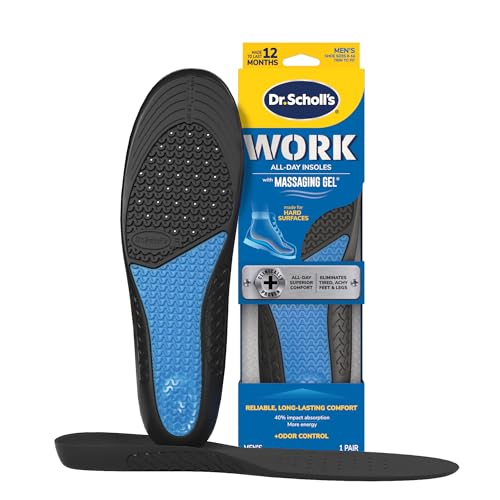
Dr. Scholl's Work All-Day Superior Comfort Insoles (with) Massaging Gel, Men, 1 Pair, Trim to Fit
CLINICALLY PROVEN ALL-DAY SUPERIOR COMFORT: Dr. Scholls Work All-Day Insoles for Men deliver proven comfort throughout the day, for hard-working feet. Designed for those with physically demanding jobs and active, on-your-feet lifestyles. ELIMINATES TIRED, ACHY FEET & LEGS TO STAY ENERGIZED: Distribu More ...
Did We Miss Sump'm?
Sixty percent of the time, we're right every time. What would you add to the conversation and why? Your input is invited. Leave a comment and/or write an article!
Share Link ...



Thoughts gone wild? Write an article!