
FTC disclosure tour-de-force here ...
Cyber Recon
Team TRO welcomes Kurtis Minder for Cyber Recon, scouts Kentucky's four-digit roads and checks the fine print inside a helmet bargain. Music by Rabid Neon and Otis McDonald. Download our feed here.
Transcript
As legible as we are intelligible ...
Robin: In this episode, we sit down with Curtis Minder, author of Cyber Recon, to expand on modern vehicle hacking concerns. Then, Joanne Don shines a light on the exacting details of manufacturer model specifics, meaning how to buy your brands. But before any of that, Brian and I have a lot to unpack after riding the gnarliest four-digit roads of Berea, Kentucky. Opening announcements, news, corrections, banter. Random Song of the Minute this round. If you would like to hear our random songs of the minute, visit radio.tro.bike in your web browser. This time around, it's All Hits by the Night Marchers. Here's a backstory to why I chose this song. A friend posted to social media, you walk into a room, your theme music starts playing. What is your choice of a theme song? This is my choice. Check it out.
Brian: Sounds deeply personal. I like it.
Robin: On the news, Topdon's new motorcycle scanner puts the dealer tool question in your garage. This comes from topdon.us. That's T-O-P-D-O-N.us. Topdon has launched the OneMoto, a $1,950 diagnostic tablet with claimed coverage for more than 100 motorcycle and ATV brands. On supported machines, it offers live data, bi-directional tests, and service functions such as ABS bleeding, Brian, and maintenance resets. Two years of updates are included. Continued updates are listed at $499 per year. Coverage is not the same as every function working on every bike. The useful question isn't whether it can clear a light. Can it finish the job that otherwise sends your bike to a dealer? It's really about model-specific compatibility, independent shop access, and whether a multi-bike household could ever justify shop tool money. You know, it's like, you got to check the exact bike and function before buying. At that price, it's like, how many of our friends would we need to go in on it? Should the GS Resources own one?
Brian: And everybody's going to be like, well, that's why I have a vintage bike. I can, you know, whatever. But pretty much everybody also has a modern bike. I think the last few holdouts bought Triumphs and Yamahas or something.
Robin: Yeah.
Brian: So a couple of things. Top Don is a really well-respected brand in scanners and the automotive world, that kind of thing. The other thing is $1,950 is, good Lord, that's a lot of money. That's the MSRP. The actual selling price, I'm sure, will be, after a little while anyway, I think the actual price, the street price is going to be somewhat less. But damn, it's still going to be a lot of money, even if it's discounted.
Robin: Divided by 10. Let me see here. $2,000 divided by 10. Math is hard. 200 bucks a man. Let's just get 10 people.
Brian: Now, the neat thing about it is it does come with a connector kit because motorcycles, most motorcycles, are using OBD-II like cars, which is all standardized across everything. But a lot of bikes are still using like weird little connectors and you need an adapter and you need a connector like my Yamaha, for example. A lot of Triumphs are using OBD-II. So anyway, it comes with a kit of 36 connectors. So hopefully that means that we will cover and get it to check and see, make sure it does the ABS reset and all the two directional stuff, like activating your EVAP and blah, blah, blah, and all that crap that you need to do. Interesting. I'm in no danger of accidentally buying this anytime soon, that's for sure. And I did notice, you know, like when I was looking into it for ABS bleeds on my bike, there was about a $900 tool that would do it, among other things.
Robin: So just double that and everything will be great.
Brian: Yeah, that'll be great. Now, what was the old ad for Motorcycle Institute? It was something, you know, watch your friends and neighbors gather around to watch you tear down and tune up all kinds of motorcycles.
Robin: You'll be the talk of the neighborhood.
Brian: Nobody talked to me. Seems interesting, and I applaud this, and I want to see more of this happening for less money. All right. So what we have next is a stick-on medical ID for the helmet you already own. Interesting. Twice Me and Parts Unlimited have announced an adhesive NFC tag for existing helmets with U.S. dealer network availability planned for later this year. Twice Me says a responder can tap a phone to retrieve the rider's chosen medical information and emergency contacts directly from the chip and the sticker without internet access. So we're turning ourselves into cyborgs here. So Setup uses a free app, which also offers check-in and alert features. And it's a good way to add some useful information without replacing a perfectly good helmet. So the question is, would responders recognize the tag? Would we keep it updated? Would we be comfortable with the information on the tag and the chip on the tag? It's an interesting idea. Yeah, it would need to become a little bit of a standard. And what happens to the medical information? You know, can anybody just walk up and get your info? So that's kind of, you'd have to know more about. So we're interested. We'd like to know more. The app has some alert features, you know, whether that's anything, you know, that's not really a satellite rescue beacon. That's kind of a different gadget altogether. I could see where that would be useful. Interesting. Let's see what happens.
Robin: Yeah. If I can't speak for myself, I would love to know that there's something that medical practitioners observe and recognize that can. That wouldn't be so bad.
Brian: Like chips and cats and dogs became pretty standard. You know, you can chip your dog and every vet's got a reader. You know, that, I mean, obviously there's a lot of work behind that, but that became standard. So something like that could, you know, could be standard for motorcycle riders or anybody. That could be really interesting.
Robin: Let's talk about something a little bit more important on the cyborg level. More important than our own safety, three recovered bikes make a case for the people behind a tracker. This comes from MotorcyclePowerSportsNews.com. A new report describes FIN-assisted recoveries of three stolen motorcycles in Virginia and Maryland, including a Suzuki GSX-8R.
Brian: Who the hell would steal that?
Robin: Oh, give me a break. This is newly published recovery coverage, not three thefts from this week. FIN credits its tracking hardware, recovery team, and cooperation with police. These are company-reported examples, not an independent recovery rate study. The interesting purchase isn't just a dot on a phone. Who answers when your touring bike disappears from a hotel lot? Who works with police and what coverage service fees apply? It's worth comparing the recovery process and limitations, not just the gadget itself, But a tracker is another layer, not a replacement for locks or a promise that the bike comes home. Put a tracker on my helmet. Put a tracker on my bike. I'm down. Go for it. The last four digits of my social security are now good.
Brian: Yeah. Witness me.
Robin: All right. What do we got next?
Brian: Next in happier news, assuming you hang on to your bike and your cranium, fall color reports beat picking the weekend and hoping.
Robin: Yes.
Brian: From ultimate motorcycling.com. So they have a fall writing guide that collects color report links for Michigan, Wisconsin, Minnesota, Iowa, Illinois, and Ohio. Timely trip planning resources rather than just another scenic road list. And of course, weather can move the color window. And a route that works on a long summer day may finish in darkness now. So you still have to do some work. But you could build a day around the current report and a daylight return and then decide which roads are actually worth the detour. The question is, what changes first in your fall plan? Departure time, mileage, or the gear you pack? Yeah, if you're later in the leaf season, the leaves are going to end up on the ground, on the pavement leave room for low sun and of course wildlife activity increases in the fall and yeah i've done this a time or three where suddenly it's five o'clock shadows are getting along and we're still two hours from the hotel so take that into account in the fall
Robin: But the beautiful thing about this is listeners we're trying to hook you up here if you have a significant, carving, snarling beast attack-riding posture that we usually find ourselves taking on. Bring somebody you want to impress and light up their eyes. It'll be something, you know, that's just one of those things. And every now and then you got to do, you got to dial it down for a little bit, have a good time. And remember, the adrenal gland is waiting after, and that's fine.
Brian: I was going to say, it's interesting they don't go any further south of the leaf reports because I've also learned in the, like in the Smoky Mountains, In North Carolina and Tennessee, they have a spectacular leaf season, and it's layered because it goes by elevation.
Robin: Oh, nice.
Brian: So leaf season in the mountains is more complicated, but it's also really worth seeing. Really gorgeous. What's been going on, huh?
Robin: Here's what's going on. New Mexico or bust. We are here. We were in Indiana. We had three days early before it was even time to start packing up. I was like, we out. Let's get out of here we gotta go let's just not be in indiana anymore, so brian in indianapolis greetings from new mexico along the way we stopped in a couple of really nice places but the one that stands out is santa rosa, which is where we stayed for the past three nights just to, sort of wait for our reservation to open up at our regular park so santa rosa, is a really nice hub along route 66 and while, the majority of Route 66 is gone, dilapidated, or just, not maintained in any particular way. Santa Rosa is doing a fairly good job in that they have things that you can go see. There's a couple of hotels. There's a couple of old signs. And then there's, for example, there's one thing called, don't laugh, it's called the Blue Hole. It's a random cold water spring or something. There's something going on underground where a cave system is full of 15 degree water. It is freezing. We went to see this and lo and behold, it just goes straight down in the ground. It's probably about the size of like a basketball court and just goes down lower and lower until there's all these caverns and caves and stuff. And divers like to go there. So we went and saw that and the people looked, wow. We saw people jump in from the cliff side. And the first thing I heard a guy saying over and over was, I'm still warm. I'm still warm. I'm still warm. No, that's not, that's not reassuring. They also have an amazing auto museum, the Santa Rosa auto museum. It's right across from Bozo's garage, which still exists. I just, it was so fun to have that entire place to ourselves and just walk around looking at all these incredible cars from the start of the automotive revolution all the way up to like the late seventies, mid eighties. It was really cool. So I took a whole bunch of pictures. Hopefully I'll get those posted with this episode. We'll see. But yeah, that was really cool. So just cruising around Route 66 and just the two of us having this entire town to ourselves, eating barbecue and smiling. It was all right. But by the time the listeners hear this, I'll hopefully have surprised our friends down there who think we aren't arriving for at least another week. Now, this already happened. And I did surprise them. Shout out to my friend Will. I wasn't exactly received with, yay, it wasn't a lot of that. I was just like, oh, hey, man, wow, hi, let's have a beer, which was pretty cool. That's how I'm doing. So your turn. Catch me up. What's good? What's your world all about? Talk to me.
Brian: So, yeah, it's funny. After Kentucky, a discussion coming, my tires were like down to the wear bars. I think I got 2,200 miles out of this set.
Robin: Wow.
Brian: So set number seven of the Pirellis went on and changed the oil, changed the tires, went to the track day in Putnam Park, went to a trip to Missouri, had several rides with you here in Indiana, which are not gentle, and then Kentucky, and they were roached. And they led an exciting short life, edge to edge, like no chicken strips, absolutely roached very happy tires very tired so anyway yeah this is set number seven of the amazon pirelli's angel st and still happy they still work and they are still a bargain even though i beat the hell out of this set normally i get around 3 000 i think you were getting a little little more you know it depends on usage quite a bit
Robin: 2800 if i'm being really well behaved about 3,300 and yet, the last set that I had before this one I made the 4,000 mark wow I made 4,200 miles on that set of tires which doesn't really happen not regularly yeah so it just tells you the kind of season I had when I was in my off time most of the vengeful riding was done with you.
Brian: We have witnesses and yeah right now like today I was at a conference downtown Indianapolis standing and schmoozing all day and and is a brutal way to live but you know you got to get out you got to see people you got to got to make contacts people got to learn to trust you got to got to look them in the eye that kind of thing yes and in some weird quirk of scheduling i've ended up with two conferences back to back so i am head we're leaving saturday we're going to drive out to denver and make i make half vacation half conference work thing out of it but we're going to go spend a week in denver recording logistics and you know what's going to go where and when we're going to do laundry i mean every detail it's going to be it's also going to be a lot of fun and Open to get together with a gear chick, Joanne, and maybe have a drink.
Robin: Some high five. I like it.
Brian: Maybe high five, have a drink, make Robin jealous.
Robin: Well, are you ready for some questions from the wild?
Brian: Sure.
Robin: Now, if you'd like us to field your questions, visit email.tro.bike in your web browser and send us a message. First one, when a fork seal starts leaking, should you repair stock suspension or pay for an upgrade? A Yamaha Tenere rider in Germany has a leaking fork seal and sees the repair as a chance to improve the suspension. The rider weighs about 205 without gear and splits riding between commuting and off-road trips beyond simple fire roads. A full Olin setup is outside the budget, leaving, I guess, these brands, I don't know, Andriani Rally cartridges or a K-Tec revalve with stiffer springs under consideration. When does combining repair and upgrade save money and when does it become paying twice? Huh, interesting.
Brian: Yeah.
Robin: I am going to let you feel this one to death because I'm not even sure how to conjure an answer. The wallet changes, the options shift around, and as bikes get older, the options begin to disappear. So what is your take on it?
Brian: First, I had to very quickly Google a picture of a Tenera 700. This is a Tenera 700, yes. If you have upside down forks, which I believe the Tenera 700 does, Then basically the labor for doing fork seals is pretty much have to completely disassemble and so forth. So what I was getting at is on right side up forks, a lot of times, you know, it depends on the fork design, but sometimes you can replace fork seals without doing a complete disassembly and so forth. But I think in this case, in most cases, it's kind of the same amount of labor. If you're delving into the fork seals, it's pretty much, it's going to be a complete disassembly. So you might as well, when you put it back together, hey, throw these parts in. That said, sometimes parts, like sometimes fork springs are just a direct drop in. Sometimes you're going to have a little extra time in setting up the fork space or that kind of thing. And also things vary for cartridges or revalves and things like that. You know, it may add to your labor cost. But overall, yeah, I mean, as long as you're in there anyway, depends on the forks, depends on the modification. Yeah, it could save some money and so forth. The larger point here is that the money is kind of beside the point. You're going to end up with much better working forks. And that's worth something right there. You know, you're going to forget about the cost. I mean even just dropping some springs in this person is a little heavier than average Japanese test rider so they're going to need if they do nothing else drop in some heavier fork springs and that will vastly improve things
Robin: I've always enjoyed investing in Racetech or Works springs like Works suspension, and Racetech suspensions have always treated me quite well.
Brian: Let's see you can spend $5,400 here I'm looking at this mxt complete forks by enduro spec you know it comes with everything like you don't even use your any of your old front end you can spend all the money on the forks so choose what you can spend i would say yeah the fork seals and the labor is almost a really minor consideration compared to some of these upgrades that they were thinking about so but yeah it can make sense to do that it makes sense to combine that and you get it back and you don't have to worry about the fork seals i say go for it man
Robin: Pull the trigger do it do it do it you know you want to.
Brian: All right
Robin: The next question up i like this one would heated gear controls in carplay simplify touring or add another distraction a 2019 honda goldwing dct rider already has gerbing jacket and pant liners, gloves and insoles controlled through a wireless two knob remote i have this stuff i do have these remotes. The rider wants a phone app that appears in Apple CarPlay and adjusts the heated gear over Bluetooth from the motorcycle's display. The question is whether consolidating the controls would improve the setup or just bury a simple adjustment behind another screen. I think it's not the way to go.
Brian: Yeah.
Robin: I've arrived at the point where there are certain things that absolutely belong on a physical knob or even more so a physical wire like action cams. I'm getting more into the idea of having a front and rear action cam that is a physical line and there are those that would be better in a wireless format, the reason i was inspired by this question is there's a lot of people that, buy gps units for their motorcycles or they have a motorcycle that came with one they bend over backwards to move the gps up in their line of sight over the windshield so they can see it more easily, Personally, I want the opposite of that. I'd never want anything. I want to see the horizon, the road. I want to see as little of the tech in my bike as possible and let that be a glance down. So for me, I know where everything's at. So I look down and back to it. To have to look down and traverse a screen to find the temperature, that's a moment where I got to pull over and stop. Whereas a physical dial is something I can look at for a second, find, feel, and twist to adjust to my liking before carrying on without needing to.
Brian: Yeah, I agree with all that. And the other consideration is what happens in five years. Yeah. Is any of this crap going to work? Yeah. Right.
Robin: We've upgraded the software to where you need to sign up for it again.
Brian: Yeah you're gonna have to subscribe to your heated grips you know or your heated socks or whatever the hell and it's also i don't it sounds like this app does not exist like he's he's kind of like wouldn't it be great if this existed where i could i would have to like tap and then use my finger pull my glove off and in it. No.
Robin: It's a pain in the ass.
Brian: Bah humbug, you know.
Robin: You want it to be more complicated, just get a Raspberry Pi, figure it out.
Brian: So if you'd like us to field your questions in such awesome style, visit email.tro.bike in your web browser and send us a message. All right.
Robin: Segment one. Now, normally we put our VIP segment here, but we've decided to save the good stuff for segment two. Stay tuned. We've got something special in store for you. So this wrap for segment one, Ringer and I got to get some things out of our system about the amazing, epically high bar riding roads that we attacked with vengeful intent during the Kentucky rally. Let's get to the blah, blah, blah. It was like an episode or two ago that we were like, okay, here's what we're going to do. We're going to show up. We're not going to plan anything. We're going to try to just explore. And the morning of you at the desk, no interest in improvisation. I mean, we sort of did, but the whole idea was let's at least have a baseline. And if I want to get you revved up to talk about it, the first thing I'm going to say is that that was an awesome rally. Like Berea is part of the last day of trip seven. So I just wrote it backwards, and discovered, huh, I hope that we can find more exciting stuff in Berea than what I just experienced. And I knew we would. I knew we would. I showed up, parked the bike, got everything situated, and it was time to like sip drinks and talk to everyone. The next morning, there we were.
Brian: That was one of the first points I was planning on making too, is like, we had talked about let's not play. And it's like, you know, we have X amount of time here planning needed to be done. And I'm really glad I did because.
Robin: It expedites the experience.
Brian: Yeah, really glad. Like if I lived there and I was retired, I had nothing else to do. Yeah, I would spend two weeks poking around and learn a lot and have a, just have a blast. Yeah, we kind of planned things out, planned out a route. Some things went right. Some things went wrong. Everybody had a really good, safe weekend. One of the interesting things that happened is we had eight riders show up, which is like, that's a lot.
Robin: That's pretty good for an invite-only event. That was a private event.
Brian: Yeah, just impromptu. Here's a couple of weeks beforehand. Here's where I'm going. You know, if you're there, great. If not, screw it. You know, very unorganized type of thing.
Robin: And everybody said, yeah.
Brian: Everybody's like, yeah, that sounds like a good idea. So anyway, we moved, we kind of, this year we shifted further south to Berea. And I think that was, that was the move. It was excellent. No, no commuting to get to the good stuff. No city to get around, that kind of thing. But one of the first things that happened that was really interesting was the, the eight of us split into two groups, like very naturally and without even much discussion. So the retirees formed a group and then the working stiffs
Robin: We all know each other.
Brian: Yeah we all know each other we've known each other for years And this is one of those rides, like I only, you know, like you, I really, you know, we all really have to feel like we know and trust people quite a lot in order to, because this is probably the hardest riding of the year, I think.
Robin: It is.
Brian: Like maybe the mountain roads in New Mexico are a different kind of hard, but this is, it's not so much the operating the motorcycle part, it's the street craft and the road craft because it's so challenging. You know, a couple of these roads were so narrow, it was kind of a mistake. But we just, we did it anyway.
Robin: Well, so let's look at that. First off, I want you to hear me say that I think you did a phenomenal job, not just organizing it, but taking action to at least make things happen. I knew what you were doing. I understood what you were up to. I just didn't want to be the one having to do it. You've seen me do it before. You know I'm capable of it. You know, you were getting locked into planning and people were just like, what are we going to do, man? And I really compliment the result of your efforts there. I think that only two things went wrong. So let's get those right off the table real fast here. First one is when you zoom out in your map planner, make sure that you know that if you're looking at the earth from the moon every road looks twisty but then you zoom in and realize you've selected a main truck route, that is there's nothing to enjoy about it and you've selected like 20 miles of that and then you look down so we were riding along this road together kind of realizing you know, it was there was no harsh there was no negativity we just sort of realized like yeah Yeah, no, this is, we know we're not doing the right thing here. And we look down to the right and you see the road that's next to it. That is like 20 times the curves for no reason. Yeah. We should be down there. Acknowledged, observed. And it was only about, I think it was about 15 miles, and then 15 miles out of 250 in an entire day. We'd already had so much fun that it was just dusted off your shoulder to keep going.
Brian: There was no rest.
Robin: There was no rest. Day two, the opposite happened. So I kept on egging Brian on about a certain secret that I know about Kentucky, that he also knows about Kentucky. It's also risky. And that's the four-digit roads. So the four-digit state roads in Kentucky are amazeballs. They're the ones that are the most rural in Ridgeline and Country Bumpkin and Hillbilly and Moonshine still. And as Brian said a couple episodes ago, they followed the cow home and dropped pavement behind them. The odds are good that if you get on a four-digit road in eastern Kentucky, we're talking about a four-digit state road, you're going to have a damn good time, very likely. However, the risk is there that some of those roads are like the lost highway. They just begin to disintegrate and disappear before your very eyes, and they get skinnier and skinnier and skinny. And then all of a sudden, there's a massive beast of a car in front of you coming over the hill, and they're confident in what they're doing. They know that road, and they sure as shit don't care whether or not you're there or not. It's not that they don't expect you. It's that you don't matter because ain't nobody going to find you after you go off the cliff. Yeah, that can happen. So scouting is one thing. Every four-digit road in eastern Kentucky looks great on paper. Not every road in eastern Kentucky is going to be a documented must-ride again. Something to keep in mind. That also happened. Those are the only two moments where we were like laughing it off and being like, okay, well, we got that wrong. shift and it's off the desk.
Brian: One of the things that was really challenging was to find a damn functioning gas station because we were remote i mean two words re and moat we were out there there was a point where we had to fill up with 87 octane in a tank and you know what it was fine didn't make any difference
Robin: Well we ran out the entire tank at the same day so it doesn't matter.
Brian: Yeah And so that's one of the challenges of route planning is you do have to touch a town once every 100 miles or so. If you work at it in Kentucky, you can honestly not see a town. You can honestly not see a working gas pump, you know, and well over 100 miles. So it's fun and it's also very challenging. They're out on Saturday next to Squabble Creek. It's like 2022, a four-digit road, into a town called Buckhorn. Don't ride on that one, folks. People live there. People drive their F450 dually diesel coal roller machine in the opposite direction. That was the sketchiest bit of anything I've ever seen. It was fantastic. Also, I cannot really recommend the lunch there. I can also specifically from Friday, Pee Weasel's Grub.
Robin: Yeah, that place was great. I remember getting some chicken wrap and some fries and some mac and cheese. The donuts, man. I just, you weren't going to stop me. Knock, knock. Who's there? Diabetes.
Brian: Pee Weasel's Grub, and it's in Hazard, Kentucky, in case anybody is in Kentucky and wants some good grub. There are also some other roads. I'm not even going to try to figure out where they were, but the turn, you come up on the road and you see there's like a little, it's pavement sort of, and you see a sign that says public access. My route went through there, but I wasn't sure if it was going to just be a boat launch into water or if it's a, or what. But yeah, it turns out there's like a little bridge and that's where you can put your canoe and it's literally a creek. I don't know why you would put a canoe in there even. But stuff like that those little discoveries are just it's just delightful it's fun and you're like what the heck is down here you know oh okay I guess this is gonna work let's go gotta be on your loose surface game gotta be aware there's gonna be an F-350 with dual rear tires behind every corner, and they're going to be in the middle. They're just going to be there and you're going to have to deal with it.
Robin: Sure. I think the trick was this, is that if you're going to plot your route first, go ahead and design the route you want. Go ahead and build the exact route. Use all the wishful thinking in the world, and then analyze and analyze some more and then make sure you have access to fuel, food, society. Yeah. Make sure you're going to be safe and then make sure that you are using extremely defensive riding tactics at every turn. But man, what an event. That really lit up the conclusion of my summer. That was the way I wanted it to go. Like, all right, we're doing this and I'm out of here. Thank you for leading an excellent ride.
Brian: And thank you for being there. And also one thing that was a lot of fun is we were able to switch off who was riding in front. And that's a lot of fun too.
Robin: Yeah, that was pretty good.
Brian: You know, chasing your pals around is just a hoot. Following Robin around is always fun. Just had a blast.
Robin: I do like your new logic on the dual leadership role, which is whenever whoever's in front looks back at everyone and flips in the bird, you are now leading because they are no longer part of the group. Oh, wow. They are gone, gone.
Brian: That's true, yeah. We needed to sort that out. Like, where'd Robin go? And like, okay, well, he's seven miles ahead, and I guess he's his own thing now. All right, let's go.
Robin: Seven miles sounded like a lot to me. It made me laugh. I was like, wow, okay, okay. I probably should have mellowed out on that one, but it was a good time.
Brian: We weren't sure if we missed you at the turn, so we stopped and waited a while.
Robin: Oh, yeah.
Brian: Just to make sure you didn't actually stop, and we missed it, because it was complicated.
Robin: Well, that was a little bit of an, there was a, yeah, that got complicated. I think that when all the bikes were running and you didn't get the middle finger, but we stopped in that gas station where we were getting ready to turn that left. And then another rider decided to meander towards their bike slowly with, they kind of did some soft shoe dancing while they were on their way to them. And as they did this, then an entire parade of Zillow took our spot up front. That's when I decided, okay, once I'm around these guys, I'm gone after that. I'm out and was. That was my conclusion to day one of those two awesome, awesome days. However, now it's time for segment two. Like I said, normally we'd put our VIP segments up front, but we decided to get some stuff out of our system about that. Segment two, Cyber Recon. Some of you may remember an episode where we sat down with Curtis Minder and company to discuss vehicle hacking. That was back in 2017. Well, since then, Curtis Mender has written a book. So I sat down with Curtis, ransomware negotiator and fellow motorcyclist to discuss his book, Cyber Recon and the less charming possibilities of putting computers in everything we ride. Curtis deals with actual cyber criminals for a living. So I figured he could survive another round of my questions. Here's how that episode went. Thanks for being here.
Kurtis: Yeah, of course.
Robin: Been a while. Good to see you.
Kurtis: Likewise.
Robin: I'm going to say, quote, motorcycle a lot in these questions because, of course. But in reality, we both know what I really mean is vehicle. And beyond that, I think the word target would suffice. But let's go with motorcycle for mutual entertainment, not just because we both ride, but because every now and then, the exacting priorities of the individual might demand all of what you've accomplished with this book and shine a light strictly on their little world. Are you good with that?
Kurtis: Yeah, that's awesome.
Robin: Motorcycles all day.
Kurtis: All day. I don't know if you want to conclude this, but the motorcycle, I don't remember if I talked about this on Wes Fleming's podcast or not, but it played a big role in my career. The very first customers we got, we won those customers because somebody at the conference room table was wearing riding boots and so was I. And we ended up talking about motorcycles. The very first giant contract we got with FireEye to be an OEM to FireEye, one of the major cybersecurity companies, that happened because the product manager who was in charge of making the decision rode motorcycles. And I showed up in the meeting on my GS. Just trust, right? And this happens throughout my whole career, so much so that my business partners, I made them make signs and hang them in their office that said motorcycles equals dollar sign.
Robin: Go get your license if you don't have one. Go learn to ride right now.
Kurtis: I had a bunch of video calls today. I show up today wearing a Bellstaff jacket to every one of my video calls.
Robin: Anybody else ride? It's a little bit of outreach and a little bit in an invite, you know?
Kurtis: Yeah.
Robin: It's a bonding thing. Yeah, motorcycles, in the words of Melissa Holbrook Pearson, shout out to Melissa, motorcycles are magic.
Kurtis: They are.
Robin: I love seeing the pile of Ducati photos that you now and then introduce to all things social. Plenty of envy there. You've got two pentagales, right?
Kurtis: They're both limited edition. I've got a V2 and a V4. Fantastic i have a sickness
Robin: Have you managed to track either of them.
Kurtis: No um and i don't know if i will because they're limited edition i don't want to screw them up oh yeah you know honestly they don't they don't make a whole lot of sense to own it all because you can't really ride them on the road much the way i describe it to people they say they're both fun you feel like batman for like 10 minutes and then you got to put them away because they're miserable after that
Robin: That's not a commuter vehicle.
Kurtis: No.
Robin: Well, I've got 10 solid questions. I've been prepping for this. You're a busy man. You do busy guy things. So we got follow-ups if we want to take them. But in the meantime, let's see if I can read through these. My first question is, last time we talked, we stopped at OnStar tire pressure sensors and plugging a GS911 into a BMW. And now CISA, C-I-S-A, says somebody could pair with certain zero motorcycles over Bluetooth and change the firmware. Did reality finally catch up with our old conversation and how ugly and malicious, can motorcycle firmware get prospectively? Flash take.
Kurtis: It's funny because thinking back to that, I was on a cross-country trip with my friend Brandon when we saw each other next. Last when we did this podcast interview, I was on my way to the hacker conference DEF CON with our bikes, and they had a car hacking village which we were parking the bikes in. That was... The type of sort of proof of concept demonstrations they were doing where they would use ZigDee or whatever that wireless protocol they use between the TPM and the actual ECU. And they were able to jump in there and send commands to the ECU. And the ECU is really stupid machines, right? They just, whatever they get the most messages for, that's what they do. And so if you had a car, for example, that had like the auto parking feature or self-driving features. Back then they had it, I think there were two cars in the market back then. I don't even remember what year this was, this is so long ago. There was two cars that had the auto parallel parking feature. It was a Prius and the Ford Escape, I think, were the two cars that had that. At that conference that I was on my way to when you interviewed me last, they demonstrated the ability to intercept that traffic between the tire pressure monitor and the ECU and make it turn its wheel and turn on the windshield wipers. That long ago, they proved that was the thing you could do. You could sit across the parking lot and do that. And the idea of software and embedded devices in our lives, starting with automotive, it expanded. And so now at DEF CON, they don't just talk about the car hacking village, but they also have the healthcare device village.
Robin: Oh man.
Kurtis: So the same thing applies for if you're a diabetic and you have a little pager size thing that you put on your belt and it's permanently attached to you. And it's like monitoring your blood level and inserting insulin. It has Bluetooth and it's talking to your phone and telling you about your insulin levels on your phone. They proved that they could intercept that traffic and just dump somebody full of insulin or, you know, mess it up. And same thing with pacemakers. Pacemakers have Bluetooth signals as well. It's a pervasive problem. It's been a decade, I guess, or more. Since then, there's been some improvement from the manufacturers that recognize this problem. There's even been some regulation. A friend of mine, Bo Woods, became a senior fellow at the FDA. He pioneered some of the laws that made these device manufacturers, like the insulin manufacturers, test cybersecurity as part of their certification, not just the drug administration. And similar regulations for aviation and automotive are sort of coming into place, but the manufacturers aren't really doing it on their own. I think the newest thing, just kind of going back to your original question, is they're finally encrypting the communications on the ECU.
Robin: I was about to randomly drop, let me see if I can involve myself and say, MD5, shot one.
Kurtis: Right, right, I know. It's basic stuff that we've been using in normal tech forever, but these guys aren't, they're not tech people, they're just automotive manufacturers. They're starting to do that, and a number of manufacturers are now encrypting those messages. So you'd have to be able to intercept and decrypt, do basically a men in the middle attack on that encryption. That makes it more difficult, not impossible, but much more difficult to achieve.
Robin: Good. By the way, thanks for reminding me that it was 2017 when we did our last interview.
Kurtis: Yeah, it was almost 10 years ago. Yeah.
Robin: Here we go. So every state maintains vehicle title records, and those states feed information into, what is it, NMVTIS? Does that sound familiar?
Kurtis: I'm not familiar with that database, but.
Robin: If somebody compromises one state system and creates a clean title for a stolen motorcycle, how far do you think that could go to poison the record travel before everybody else starts treating the lie as truth?
Kurtis: Interesting concept. I hadn't thought about that, but I suspect that's entirely plausible. The only thing going against it is the interstate communication of these records is not great. Maybe adjacent states sometimes would have a sharing, but like Virginia and Washington state probably aren't sharing much of their DMV information. And if they do, it's tactical. Like there's like a national warrant out for somebody and it goes out to all the states and they know what to look for, that kind of thing. I actually, you know, I do a lot of work on collection security and stuff like that. And right now, I mentioned before the interview that we are working on this Colorado River security project, what has to do with municipal water. One of the things that is like the double-edged sword of the United States is like a pro and a con is that it's very segmented. So like right now you hear on the news, you hear about Iran's attacking water systems, but you just like, it's this little town over here and this little town. Because we're so segmented, it's extremely difficult to make a major impact on the United States at scale because everybody's got different systems. Every single municipality has a different system. And same thing with the vehicle record stuff. It's just a podge podge.
Robin: I imagine that also the tech there is so old and so bad that anybody malicious would think they can't possibly be that dumb. So I'll definitely go bigger and it just doesn't work. But let's make that personal. The paper title says I own the motorcycle. My lender and insurance company say I own it. The DMV suddenly says somebody I've never met owns it. Who owns the bike while everybody argues over which version of reality is real? Now, that could be in-state. That doesn't necessarily mean bridging from one to the other.
Kurtis: I would say that the title is the source of truth there, which is a problem.
Robin: It's on the paper, right?
Kurtis: Right, right.
Robin: Signed in, Cran, in my case. So, riders already flash ECUs. I mean, nobody we know. I mean, But writers already flashed ECUs for more power, different fueling, fewer electronic nannies. Firmware modification is not necessarily science fiction. Basically Tuesday. How does a motorcycle distinguish my authorized tune from somebody else's weaponized firmware without using cybersecurity as an excuse to kill right to repair?
Kurtis: I don't think it does. That's one of the biggest risks in downloading firmware that somebody put on the internet, right? It's like, there is no checksum or source of truth for the firmware. And if there were, it would be the firmware that came from the manufacturer and it wouldn't let you flash it at all and that's what they do with there's technology that's built into your laptops and stuff now like i don't know intel started it with this concept of trusted execution i don't know if you're familiar with txt but the firmware that went on all the little chips on the motherboard there was a there was a specific fpga or a chip on the board that contained a database of md5 checksum of the authorized firmware and all those chips and every time the machine boots up txt would check all of them to make sure it matched they've been doing that for years in normal computers yeah they should also be doing it on cars probably yeah
Robin: It's good to be that time right.
Kurtis: Yeah
Robin: Ransomware is loud. Title fraud can remain quiet for years. From the criminal side, is it more profitable to shut down a DMV and demand money or quietly convert stolen motorcycles into legally marketable motorcycles one title at a time?
Kurtis: The problem is they have to monetize those assets. I think, yes, you're right. Ransomware gets a lot of press. But if you're talking about titles, what brings to mind and what I see a lot of is not vehicles, but homes. What the bad guys have figured out is that all of these little title companies that you transact with when you buy a home, they're bad at cybersecurity. They break into their email and they just watch them communicate with clients. And as soon as they send an email saying, wire money, they insert another path in there and they basically redirect the money so that it goes to their account instead of the bank's account or the buyer's or the seller's account. And that's happening all the time. That's a cheaper thing because then they don't have to monetize the asset, right? They just, they just take the money in flight and they're doing that every day. I still do a lot of pro bono cases. Investigations and stuff. I just worked on a case, and I was working with the law enforcement folks. They were kind of thinking this lady had been hacked, and I was like, I will place money on the table that if she was not hacked at all, I did some investigation on the title company, and they were just completely compromised.
Robin: I feel rude for not having done this. I didn't even mention the book yet. You wrote Cyber Recon, which I read front to back, took notes, tried to make some points of it was truly impressed with everything i read i'm impressed with what you did i know the kindness of your heart now through the pro bono work you made a point and you just mentioned it which, it's a kind gesture just to know that if somebody needs it you were there, i do remember one story was that you and a friend where, you found your way into the cross communication of a, tech support or maybe it's like a warranty company where you got them talking to each other and you got them to basically speak to one another using all the stuff they were trying to that you figured out the leak.
Kurtis: It was my colleague taylor banks who did this and what i was trying to show in the book the human element is almost always the easiest thing to manipulate it's much easier than the computers themselves and what they would do is call a call center and then they would immediately call the call center the three-way call and then call the call center again and then put the two call center people on the phone with each other but they would just do this over and over and they would say nothing they would just sit there and listen and these people would talk and they'd mention people's names and they'd talk about the systems and they'd write down all the system names all the people's names all the and they would do this over and over and over again they were the call center people became convinced that the call center was broken that this was happening by accident and so then they were able to pose as an it person drop names system names people's names everything and say hey we're working on this known problem and then sent them a piece of software to load on their computer to troubleshoot And that software basically gave him a backdoor into the network.
Robin: And then it was done.
Kurtis: Then it was done. Super clever.
Robin: All of a sudden you have a new gig.
Kurtis: Yeah.
Robin: Well, first off, again, great book. I thoroughly enjoyed it. Fantastic work. I also like a lot of the mentions of the various people. It was a lot of these are the people in your neighborhood going on with the people that you work with to protect us from the end results that can sometimes be unavoidable.
Kurtis: That's the goal.
Robin: If an attacker encrypts a title database, you restore a backup. If they subtly change owners, liens, and salvage brands, the backup may contain the lies, too. How do you recover from an attack on the integrity of any records when nobody knows exactly when the truth stopped being true?
Kurtis: That's challenging, but there's technologies that do this. There's technologies that do the equivalent of checksums of the data sets inside the databases and things like that and match them against known good. Unfortunately, I don't know that the DMV is using these technologies, right? And to your earlier point, well, they're expensive. Like I said, we were just talking about how fragmented everything was. They don't have huge budgets sometimes. So not just expensive to license, but expensive to also operate. There's not a whole lot of cybersecurity talent that's affordable to a DMP and that sort of thing. But to your earlier point where like a database gets encrypted and they restore, unfortunately, like the ransomware guys, they don't just do one system. They do the whole thing, right? They do the whole thing. And the problem with that is, and this is, I do a lot of sort of executive tabletop exercises for companies. This is one gotcha because I've experienced it in actual incidents. I've done hundreds of ransomware incidents, response incidents. And what I witnessed was, even if they have really good backups and the bad guys didn't manage not to get to them, when we do business continuity, we do them in kind of in a vacuum. It's like, how do we restore that system if it goes offline or that office is offline? How do we bring it back up? What we don't test or what we don't practice is everything's gone.
Robin: Everything.
Kurtis: What I learned in the real world was that the dependencies on which order you bring things up is super critical. And people don't know what those dependencies are. In their head, maybe, but like in the real life, they don't know. They think, well, it might take us three days to bring everything online. It ends up taking three months because they stumble and stumble and yeah, it's a mess.
Robin: It's sort of like the order of giving instructions, where some people who aren't good at giving instructions, assume that you're going to know some gray area in between details or the order of those details when actually it needs to be ornate. It needs to be verbose in some cases.
Kurtis: Very quantitative. Yep.
Robin: Your first chapter. Now that draws a hard line between collecting data and producing actual intelligence. If cyber crime against motorcyclists, remember I'm singling out motorcycles so much because that's what we do. Let's just say cyber crime against anything, right? But if it became one of your intelligence requirements tomorrow, what would you start watching? Stolen DMV credentials, dealer access, VIN and title packages, firmware keys. What would make you sit up a night?
Kurtis: The idea behind intelligence is that you would know that you were a target before it happened. We would already be watching all of the forms where this type of data was being discussed and monetized. Dark Web and Telegram and things like that. So we would see it coming. We would see them saying, hey, I'll pay X for this kind of data. And this guy goes, I can get that. Do you know their motivation? Do you know what they're looking for? And if you're doing good cyber espionage work, you'll also know what their capabilities are. You would then go back and adjust your defense mechanisms to support defending against that. I'm not suggesting that they get on the dark web and monitor bad guys' conversations.
Robin: You might want to get good at it first. Go talk to this guy. You wrote an entire chapter about negotiating with the enemy. If a state's title system is held hostage and nobody can legally buy, sell, or register a vehicle, who really has the leverage? I know that's question one, and it's a double-edged.
Kurtis: Yeah.
Robin: Is the criminal negotiating with the state, its technology vendor, the insurers, or all of them at once?
Kurtis: I mean, I guess it depends on who was actually managing that system, but it's likely the state that they would be dealing with. But you wouldn't want anybody at the state actually handling the negotiation. That's why people like me exist. The insurance companies and the law firms involved bring people like me in because we know how to negotiate with bad guys. And of course, the bad guys have all the leverage. It's an extremely difficult situation. If you think about chips on a table, they've got 90% of the chips, right? You're kind of screwed. So it's a difficult endeavor to negotiate with these guys.
Robin: You mentioned that multiple times in the book. It's like spread very evenly throughout that. Look, when this happens, you're going to pay. It's not a matter of, well, we've got to stop this. It's already happened. It's already done. And now it's just a matter of what keeps you afloat or, you know. Now, question number nine, say it with me. If malicious firmware can affect throttle response, regenerative braking, contactors or battery safeguards, What does a trustworthy repair look like? And is reflashing enough? Or do we start replacing controllers, signing keys, and anything else the attacker might have touched?
Kurtis: That's hard without knowing the actual technical architecture of an ECU. I assume it's very similar to a normal motherboard, and it's going to have multiple chips. Have different sets of firmware on it. So I would think swapping out the actual hardware would be the safest thing to do. You can't really check every single one of those chips easily to make sure it hasn't been messed with. I would swap out the actual ECU itself.
Robin: Remind me to tell you what happened with the Triumph after this.
Kurtis: Okay.
Robin: Okay, your book gets into sock puppets. God, that was fun reading. I'm sorry. It was just a mission impossible in my world. Your book gets into sock puppets and building credible false identities. Could someone spend two years becoming a trusted member of a motorcycle forum, then release the quote-unquote perfect ECU map, diagnostic app, or firmware tool with one extra surprise sort of built inside of it?
Kurtis: Yeah, 100%. In the book, I'm using it to spy on bad guys. I'm using it for good. But you can also use those exact same tactics for evil. You know, it's just building trust over time. And then nobody questions you. If you're a regular active member of the forum and participating in the forum and joking with the people and so on, that goes on for years. When you post your firmware, they're not going to wonder if you put some bad stuff in there. They're just going to be like, thank you, download it.
Robin: You hear that, Brian Ringer? You hear that? I know it was you. I know it was you.
Kurtis: Sorry, Brian.
Robin: Now, my closer question, and we can stretch it if you want to after. If you could harden only one layer tomorrow, DMV identities, dealer systems, connected bike apps, or firmware signing, which one prevents the most motorcycle misery for the least money?
Kurtis: That's tough. All of those are plausible. The identity stuff is probably going to have the most bang for the buck. That's how they're getting in. That's how they're manipulating things. That's, you know, so if you can take that chip away from them, I think it would make their job a lot more difficult.
Robin: An answer of some kind has been presented. A reputable source has made a plausible answer. That's all I got. Now, I do have my own personal notes here from reading the book. We talked about this a little bit before we started recording. Like the definition of intelligence is the ability to acquire and apply knowledge and skills. Did you say that in the book or did I make a note of it so I could tell you? What kind of a jackass would I be?
Kurtis: I'm sure I defined it in the book. I don't remember if I used those exact words.
Robin: Yeah. You mentioned the nonprofit stuff. I thought at one point GroupSense was a nonprofit, but you were saying it's called GoodSense.
Kurtis: We started a good faith program where the employees, we would allocate their time and they could use that to volunteer. They could use that to do pro boner work like I'm currently doing. Put a brander to that. We called it GoodSense. And then we spun that out as an independent entity and a 501c3 nonprofit, which was later folded into another entity. It originally just started as a mission inside the company to help others for free. And then we turned it into a nonprofit. Groupsets was always a for-profit company.
Robin: The most important question I've got. I need to know, are you running Ostefy tests on my website, please?
Kurtis: No, I am not. Absolutely not. Okay. I don't have time,
Robin: Man. He's Curtis Minder. The name of the book is Cyber Recon.
Kurtis: My life in cyber espionage and ransomware negotiation.
Robin: Via motorcycles.
Kurtis: Via motorcycles.
Robin: An amazing book, highly suggested. Check it out. If you're techie, it's going to tell you a lot more about the direction that things might go per the dark web. And if you're not techie, it will at least alert you to some very basic personalized fail-saves. You might want to learn to go through just so you understand that the email having a thing you can click doesn't mean you should. You owe it to this guy right here for sort of making it clear that reading about such things is in your best interest and that I cannot thank you enough for that let alone mentioning me so many times throughout as a source of.
Kurtis: It's a bribe
Robin: I'm in the foreword I appreciate you being here man thank you my pleasure, And that was Curtis Minder, author of Cyber Recon. The message? Know what you're installing and who you're trusting. I think I see a Joanne Don in the room. It's time for segment three, The Armory with Joanne Don.
Joanne: Brian, I think you were asking me for updates on new products that have come out that people might want to know about.
Brian: Yeah, especially people who are cool, people who are fashionable, people who are not me.
Robin: That's the key.
Joanne: Well, that could be you. It could. Oh, no. You just have to let me know.
Brian: Observe my t-shirt.
Joanne: Well, you just have to ask and make it happen. You know, fall is always when less products come out, right? Because spring and summer are fighting season. So about maybe 40% of what comes out in spring is what you see in the fall. So you don't see as many new things, at least with clothing. So right now, I don't see anything particularly exciting except some kind of typical dark hoodies. But really, spring is when you'll see cool, fashionable products, you know, the more exciting, youthful things out there. But there's always, I mean, year-round, there's always casual riding gear around. Casual-styled but protective riding gear available. Unfortunately, I don't really see anything great. I do see some cool helmets, though. You know, Alpine Stars, they came out with helmets, I want to say, several years ago. I haven't been great at seeing on top of what they've been doing. But they have been coming out with really cool track helmets, street helmets, and even off-road. So if you're searching for a street helmet, certainly a sporty helmet, I would take a look at what Alpine Stars is offering. Because from what I've seen, people really like their helmets. I've never tried them, but they do seem like really good quality. You know they're trying to compete for your showy money and awry money because the prices are lower
Brian: At Putnam Park we saw a guy had Alpinestars helmet and then had like a little custom stand that had a little fan in it he'd get off the bike he'd put the helmet on this little stand and it would like dry it out which was like okay that's another level of posh over here
Joanne: Well if it's really sweaty and you're sweating it's kind of gross so i could see why you'd want to be i mean that's what riders are getting at the pro level like moto america and gp they all have drying units and really fancy accessories to make sure their gear is clean and dry and comfortable and if you're a sweaty person yeah I don't think anyone wants to put on a wet helmet. But yeah, all I really see is very expensive helmets. And I feel so lucky that I still have a few that are still okay to wear. Because when I got my helmets, they were half the price of these, of what's happening today. And it sucks. Like I'm seeing graphics from Shoei at $1,000. And they used to be like $650 when I was working at RevZilla. And it just, it's a bummer. And I really hope that changes in the next few years. But Alpine Stars, wherever they're manufacturing, their prices are lower. But I don't see, other than graphics releases, like Icon's got some fun graphics. Alpine Stars has new graphics for these existing models out. And then I see HGC also releasing graphics. But models tend to not drop except in spring for helmets. Other than that, I just see kind of the usual. Nothing particularly interesting.
Brian: I've noticed a new helmet brand popping up called Kabuto. I guess they're a high-end Japanese helmet.
Joanne: Kabuto is actually not new. I used to sell those a long time ago. Are they coming back? Maybe they have a new distributor?
Brian: Yeah, they're coming back. And I don't know, I got an email a few days ago from Rebzilla or somebody. But yeah, they've got a whole line of the Kabuto F17 and Arrowblade. I guess the F17 is kind of the race helmet. And it's like $900, $800.
Joanne: Yeah, the price points are painful.
Brian: Yeah, $800 is the base price on a solid color. And then the Aeroblade F, MIPS helmet, is $550 in the base colors, and it goes up from there.
Joanne: Yeah, I remember selling Kabuto between 2010 through about 2017-ish. And then maybe 16, 17, and then we couldn't sell them. The problem was the shapes. The internal shapes were too round. So you have to remember that when European and Japanese and Asian brands come over, the most successful ones modify their internal shapes to fit the American population. So if the brand isn't doing anything but just bringing them over, they're not going to sell and they're not going to fit unless you have a nice round head shape. Which is the least common North American head shape. So hopefully they have a good intermediate, neutral fit. But I didn't even know they came back, so.
Brian: Yeah, supposedly they have the usual intermediate oval. I've never seen one in person.
Joanne: They were nice. From what I remember, the quality was really good. It's just the comfort. It couldn't compete. It didn't fit anybody. So we ultimately had to stop selling them.
Brian: Who actually has all these round heads?
Robin: Charlie Brown, man. Come on.
Joanne: Yeah well asian it's european and asian countries europe and asia mexico south america anywhere but north america like a north american average and i'm gonna say average because it's majority of people but not everybody is that intermediate oval
Brian: What are we doing to our heads here
Joanne: I don't know i really don't but yeah head shapes are just different and that's the difference between successful helmet brands and not so successful. And the ones that you very rarely see in stores, those are the ones that don't do anything to modify the head shapes. To fit the population or their quality is not great. Yeah. So you always want to be careful. And the other thing to know is say you order a Shoei from Japan, like you're on eBay. You're like, oh, there's this cool graphic I like. And it comes from Japan. Just know that when you order a helmet like that or a product, the majority of manufacturers will not treat it like you bought it here. The majority of manufacturers will treat it as if you physically lived there and purchased it in that country. So that means no warranty support because every region is responsible for their customer base. So that's not fair if you buy a helmet in Japan and expect the U.S. Contingency to pay for your repairs or whatever or cover you because they're not liable because they didn't sold to you. So you always want to be really careful about where you buy your helmets online and that it's a model that is released here. And no, it doesn't count when the model is identical, but with different names, because all the big players will just have different names for the same helmet. Right here, the Shoei X-15 could be called the X-Strike or whatever in Japan, but be the exact same helmet aside from the fit. It doesn't matter. They still treat it as if you bought it there and as if you were a Japanese customer or Asian customer. So that's why you don't want to, you always want to buy from here, from like a reputable store.
Robin: So you talked last episode about SMK.
Joanne: Yeah, I mean, that's another, that's a global brand. They're the largest global manufacturer of motorcycle helmets in the world because they manufacture for so many other people. But the same rules apply.
Robin: Do they cater to all head shapes, that brand? because I'm considering looking at them a little harder.
Joanne: From what I've seen, they have a neutral shape for a lot of their models, but I can't speak to more than that because I haven't had enough experience. I've just briefly touched a few models. I don't know how every single one fits, so I can't say that for sure. Just make sure if you do get one, you can return it. But yeah, if you do buy a helmet or a gear product that you're like, oh, I've never tried this and I don't know what this is going to be like. Never, ever do that from a European or a non-US source because then you can't return it. There's no way you can exchange that. If you have to ship it back, it's going to cost you money. So that's why you also don't want to buy it from overseas unless you're 120% sure that's what you want and that's what works. Maybe because you already have one. So you're like, oh, I'm just going to order the identical. In general, research where you're buying your products from and verify that the manufacturer will help you with warranty support in the U.S. or repair. Whatever it is, if it's camping gear or technology or hardware or tools, you want to make sure that the manufacturer will support you. The reason is because different areas are going to be owned by different people Because maybe the French arm of York brand is not owned by the American arm of this brand. And that's just business. So you can't expect that it's going to be the same business.
Robin: Thank you, Joe Wayne. I didn't know that. Like, I didn't realize that I shouldn't be ordering from Guam just because the price is low, because I don't know if I'm going to get what I'm supposed to get. I just learned something. That was ultimately the goal, and thank you for it. Which brings us to the afterwards. Let's wind things down because I'm sure that Brian has put in all kinds of details about what he wants to discuss next week.
Brian: Let's face it. It's almost October. Like it'll be October tomorrow. I've got several winter projects on deck. There's going to be a whole entire brake system blow up and start over on my FJ. There's a possibility I may be dropping another engine into my GS. Nothing wrong with the old engine, but it's got a lot of cam walk, which makes a lot of noise as the camshafts bang back and forth. I've got three engines under the workbench. I'm like, what if I drop one of these in? What if I get so bored I pull the engine out?
Robin: So like, why not? Of course, it's there. You have the option. So you want to talk about winter projects for next episode or preparing for winter projects for next episode?
Brian: Yeah. What winter projects do you have? And also coordinating all this. The overarching theme is how to get through winter with your sanity intact.
Robin: I've got rolling earthquake things to deal with and bike things to deal with. You've got bike things to deal with. Joanne's going to have bike things to deal with. Sounds like we have a plan for next week. Everybody ready to get out of here?
Joanne: Yes.
Brian: I'm ready to go.
The Gist
Kurtis Minder returns with Cyber Recon and a less comforting view of the computers we ride. The ransomware negotiator joins Robin to test ugly possibilities for ECU firmware, vehicle records and the trusted forum regular offering a download. Riding boots helped Kurtis open boardroom doors but his cybersecurity work shows how easily trust can let the wrong person in.
Robin wants heated gear adjusted with a knob rather than a touchscreen scavenger hunt. TOPDON's OneMoto raises a related garage question ... can a costly diagnostic tablet actually finish the job that otherwise requires a dealer? Between model-specific coverage and software that might age badly, the useful feature is still getting on with the ride.
Brian gives Berea's four-digit roads the scouting they deserve after an allegedly unplanned rally acquires a route sheet. Kentucky delivers narrow pavement, blind encounters with oversized pickups and gas stations that require more planning than the curves. Pee Weasel's Grub earns a lunch endorsement while the road beside Squabble Creek earns a warning, proving that a promising map line isn't automatically a recommendation.
Joanne sorts helmet shopping by the model inside the paint job, from Alpinestars options to Kabuto's return. Her Armory checks regional head shapes, overseas purchases and warranty support before a bargain becomes expensive return postage. A familiar logo and an irresistible graphic still can't promise that the helmet fits or that the local distributor owes it a rescue.
Guest Interview
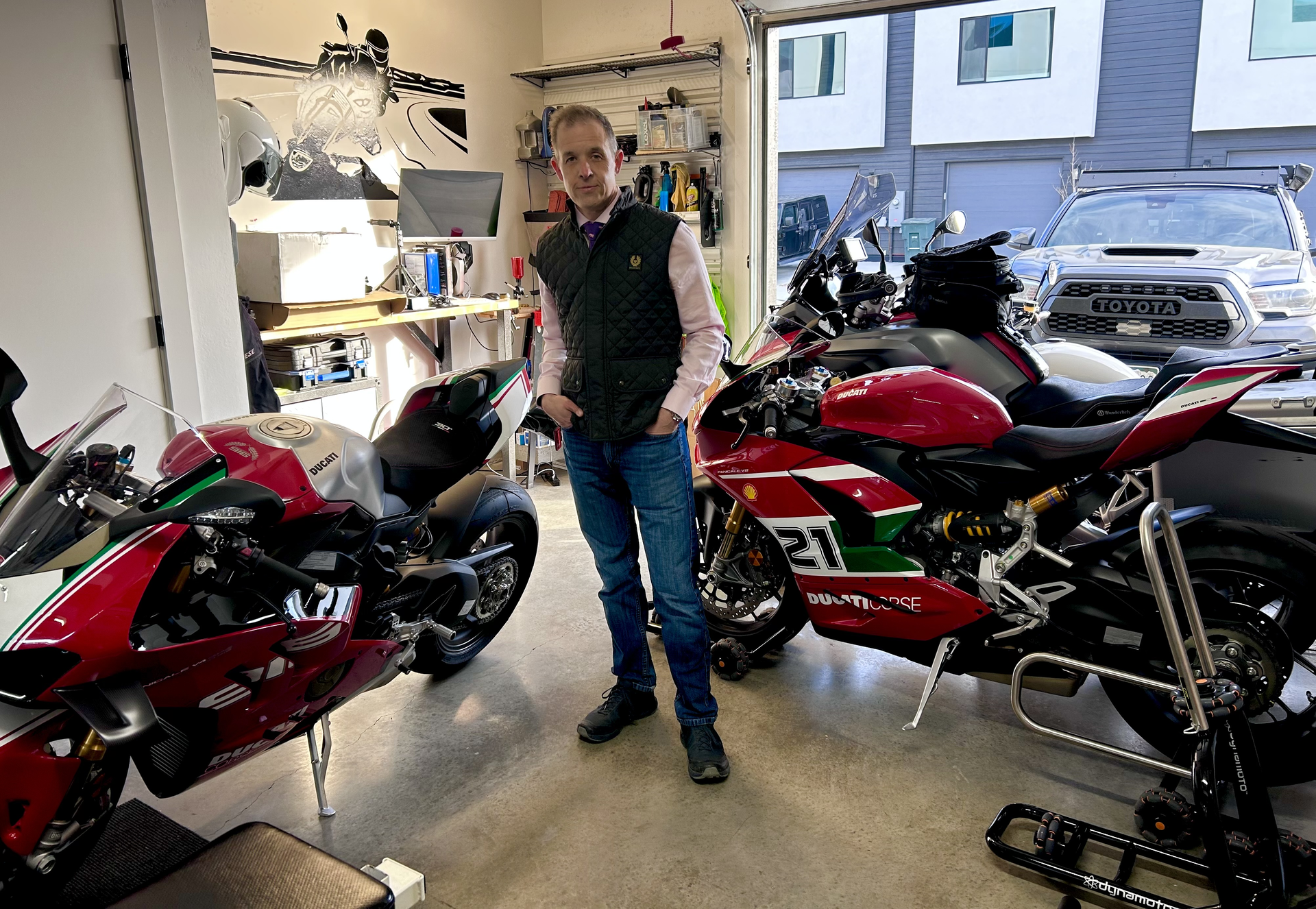
Kurtis Minder, author of Cyber Recon, is a ransomware negotiator and fellow motorcyclist returning to Radio TRO after his 2017 vehicle-hacking conversation. He joins Robin to explore firmware trust, compromised records and the human side of cybersecurity.
Kit We're "Blatantly Pushing You To Buy"


WEDPATA M60 OBD2 Scanner, 2-in-1 Car & Motorcycle Code Reader
Dual Car & Motorcycle Diagnostic ScannerSupport independent diagnosis for automobiles and motorcycles, compatible with 97% standard OBDII protocol vehicles. Cover cars, motorbikes and ATVs, suitable for DIY vehicle owners and professional repair technicians to solve engine faults independently. Full More ...

Product Information: : This kit includes 2 front fork oil seals and 2 matching dust wiper seals, providing everything needed for a complete front fork seal replacement on compatible motorcycles. The 4 piece set is sufficient for servicing both fork legs. High Quality: Each seal is constructed from h More ...

Perfect Fit Adjustable Fork Spring Compressor Tool is designed to work on most current sport bikes, road racers and motorcycle with cartridge type forks, such as Victory Cross Country, Victory CCT, etc. Simply adjust the length and width by screw the nut on the top to and the bolt near the top to fi More ...

Gerbing Heated Jacket Liner - 12V Motorcycle L
MODULAR SYSTEM: Gerbing heated clothing can be powered in a multitude of configurations. For this reason all wire harnesses, controllers, battery packs and accessories are sold separately. FUNCTIONAL DESIGN: The jacket liner is design for a snug fit. If you are on the cusp of a size please order the More ...
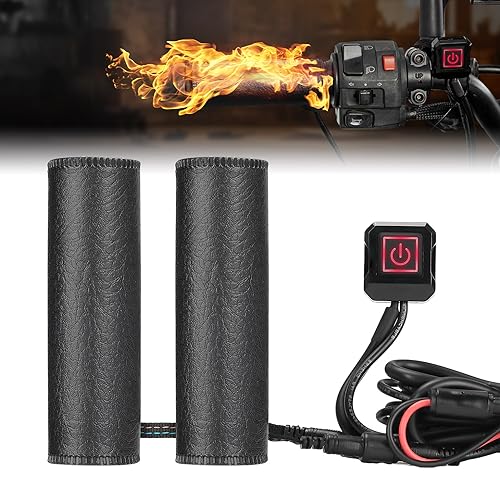
5-Level Adjustable Temperature: KEMIMOTO motorcycle heated grips have 5 different heating gears. So it can adjust to different temperatures for heating from 50C to 85C. The new heated motorcycle grips allow you to easily find the temperature to keep your hands warm and comfortable while riding in co More ...

Fast Drying & Intelligent ControlThe dryer is equipped with a powerful turbo airflow system that evenly distributes warm air, enabling rapid drying. To avoid damaging the helmets interior lining, the temperature is precisely maintained between 50C - 55C (122F131F). Additionally, a cool air mode is p More ...

LONG-BATTERY VEHICLE TRACKING Built for cars, trailers, fleets, equipment, boats, and motorcycles, Trackis trailer GPS tracker uses a 10,000mAh battery for 2 to 7 months active at 15 minute updates or up to 12 months in sleep mode. SUBSCRIPTION-POWERED SERVICE The Tracki GPS tracker connects through More ...
Did We Miss Sump'm?
Sixty percent of the time, we're right every time. What would you add to the conversation and why? Your input is invited. Leave a comment and/or write an article!
Share Link ...


Thoughts gone wild? Write an article!