
FTC disclosure tour-de-force here ...
Rain Roulette
Team TRO weighs rain gear, wet-road judgment and the fine art of reclaiming famous roads from Jagoff Junction. Music by Rabid Neon and Otis McDonald. Download our feed here.
Transcript
As legible as we are intelligible ...
Robin: Opening announcements, news, corrections, and banter. Announcements. I'm going to step up to the plate again in an effort to build MotorcycleTraining.us. It is started. We remember when I disappeared for a month, so that's begun. This will require some kind of independent funding so I can eat while spearheading the effort. Keep your ears open for what will likely be a pre-episode ad mention on how you might be able to help.
Brian: Excellent.
Robin: Probably with money. Random song of the minute this round. If you want to hear our random songs of the minute, visit radio.tro.bike in your web browser. This time, it's Reckless and Arranged, Day 56, by Ethan French. Go check it out. Find it on YouTube. Reckless with an R. No W in there. Just reckless and arranged to day 56 by Ethan French.
Brian: Are there days 1 through 55 as well?
Robin: I think that's what's been happening. They started to feel something, and it was good enough to release.
Brian: Funky. Let's do some news.
Robin: All right, first up, Waze finally builds routing for motorcycles.
Brian: Yay!
Robin: But the U.S. has to wait.
Brian: Boo.
Robin: Waze now has a real motorcycle mode that accounts for two-wheeler shortcuts and restrictions, then surfaces rider-specific hazards such as potholes, speed bumps, raised crosswalks, shoulder endings, and narrower bridges. The catch is the first rollout is Argentina, Brazil, Colombia, Malaysia, Mexico, Peru, and the Philippines, with more countries promised. Personalized routing and a less chatty voice mode are rolling out globally, which is kind of cool. I don't think this is going to do anything compared to like what Curviger does or what you and I do using Ridewood GPS, but still, it's specific to us. That's kind of nice.
Brian: I'll take it. Next up is something that caught our eye. It's a practical Calgary Banff Jasper route package, not just mountain wallpaper. And this comes to you from your friends at Rider Magazine. That's ridermagazine.com. And again, this is a bucket list trip. It lays out 250 miles from Calgary through Banff and the 140-mile Icefields Parkway to Jasper. They have downloadable routes timing lodging food and all the trip prep details and again stuff you need to be ready for like mountain weather changes wildlife crossings heavy summer traffic near banff and lake louise where food is scarce along the parkway and the need to carry layers even in july and august like you would in any mountain that's pretty awesome it's really cool to see how rider a writer magazine lays this out someday man they're in this century yeah If you go to their website, go to Touring, go to Signature Roads, you'll find it right there. And you'll also find the one I'm not interested in, Riding America's Straightest Roads. No, not doing it.
Robin: Off into the sunset, chasing the horizon, symbolic fields of grain.
Brian: Corn, beans.
Robin: Yawns of symbolic branding.
Brian: Beans, corn.
Robin: Shake it off, shake it off. All right, GV's stealth mounts fold away when the saddlebags come off. These model-specific stealth supports tuck close to the tail when not carrying bags, avoiding the usual empty scaffolding look.
Brian: Nice.
Robin: Matching EZ-12 left and right soft bags hold 18 liters each, use hard attachment points, and include waterproof inner bags, which sounds actually similar to my rebadged saddlebags that I carry on the Jigsader.
Brian: True.
Robin: New solution is to have a dry bag that goes inside the luggage and then just let the luggage take the hit.
Brian: Yeah, covers never work.
Robin: U.S. listings show the GV bags at $119.70 each, with supports varying depending on the bike.
Brian: Nice.
Robin: Brian edits the outline to just say $120. They're $120. There you go. How are you? What's going on?
Brian: I'm good. Busy as hell. The neighbor's motorcycle had an issue with the charging system, ran down the battery. There was a whole rescue mission and so forth. And now we've ordered all the parts and stuff.
Robin: Was that the Boulevard?
Brian: No, it's a Kawasaki Vulcan 900.
Robin: Wow.
Brian: They kind of have the same crappy charging system issues as millions of other bikes.
Robin: UJM territory right there.
Brian: Yeah. And it's kind of like, yeah, he's all like, oh my God. And like this, this happens. This comes for us all. Don't, you know, it's, it's not a big deal. Got parts ordered and going to be dealing with that soon. It's kind of fun. He's all antsy to get it going again, of course. But yeah, it's all straightforward if you know what you're doing. Of course, Robin visited the palatial confines of the fork oil stained flooring of house of my garage
Robin: That was a blast.
Brian: We had a good time you know it was interesting we we got the forks part way apart then we realized if i'm going to take them all the way apart and change the fork oil and clean them out then we really need to have new fork seals on hand
Robin: I haven't ordered them yet i need to do that i will.
Brian: It was it was a worthwhile thing to do anyway and we kind of cleaned out the dust seals and made sure the seals themselves aren't actually leaking like there's a possibility that you maybe might possibly could get away with disassembling the forks to a certain point and then very carefully holding there getting the oil out and all this stuff realistically I think it's better to just take them apart all the way because you're going to be putting a lot of strain on stuff so true let's get some fork seals and come back to this later it's fine the fork oil looked clean that was in there
Robin: That was the big one.
Brian: Yeah Yeah.
Robin: When you have a friend that you trust with the information, who is taking the reins and spearheading the effort, this happens to me. So if I'm alone and I'm working on a thing, it will go the way it needs to go. It'll get done. It'll get done well. But the instant that somebody is taking any sort of charge of the matter, all of a sudden I am of no use. My knowledge and understanding disappears. I don't know where the person is with the process. I don't know what steps they're at. I become the learner instead of the person who actually you know i don't know what.
Brian: To do with my
Robin: Hands yeah i'm gonna go make yeah i'm gonna go make turkey outlines on the wall, so i do appreciate it once the things were moving i was just like okay i think the hoist was brilliant i don't think the lift was necessary.
Brian: Hoist plus lift it did add it did add a complication to things it was a little weird maybe maybe it wasn't worth it
Robin: Was it unsafe no was it unstable Absolutely not. It was incredibly stable. Was it necessary? Probably not.
Brian: No, was it worth it? Eh, yeah.
Robin: It was worth it for the tail.
Brian: And yeah, just garage time, hang time. And hopefully we'll have a repeat soon on Maggie's bike.
Robin: This weekend.
Brian: We'll do. Excellent. We'll talk about this later. I'm also looking, I'm also trying, I just want to get one track day. I'm narrowing down the schedule to figure out track days. I really want to get to Putnam Park. I'm not sure if they have any novice days left because I've never been there. It's an organization I have not tried before, Sport Bike Track Time.
Robin: You can get away with intermediate with them.
Brian: Because Novice is sold out, and I'm like, well, I want to start in Novice so I know what their processes are.
Robin: If that's what you want to do, I understand. Having been through their track days before.
Brian: Okay, so you've been to one. Okay.
Robin: Several of theirs. You are definitely intermediate material for their setup. You'll just want to watch your back a little bit more because everybody thinks they're ready for intermediate when they're actually first timers to any track day.
Brian: All righty.
Robin: Just something to consider. They only run three groups.
Brian: Yeah.
Robin: I want to do that with you.
Brian: And it is close by. And that would be not having to drive five hours after a day on the track would be kind of cool.
Robin: It'd be nice.
Brian: Or sleep on the ground next to a generator. That would be kind of nice. Busy as hell, making time, making plans, making Missouri plans, making Kentucky plans. And you and I had a wonderful ride. And we'll get into this later. Dodging rainstorms, having fun anyway. Not wearing rain gear. And we'll talk about why. but we'll get to that later what have you been up to robin
Robin: Enough about me what do you think about me per your advice i ordered those tecton, torque wrenches nice the inch pounds the zero, to 100 and the 40 pound to 200 i think it is it's they're beautiful and you weren't kidding man the one that you showed me at your garage now i own it and i just it's, presentation is just like they engraved my name in it it's beautiful jewelry yeah so one curiosity i have though like i opened it up and it has all these reducers that come with it and i was like well i already have these so i go over to my tool bin my, milwaukee packout drawers and i keep my bits and drivers on the top one the flat one it has all the sockets and such and i open it up, tent that is my garage has been in the sun, but that's shielding. The air's hot in there. You got to understand, folks, the heat index here right now is a balmy 104. That's the heat index. The actual temperature is like 88, but the heat index reads 104.
Brian: And you're next to a river. All the humidity.
Robin: Sure, the air is thick and the air is hot in that tent slash garage that we call it. But then when I open up the perfectly cool lid to my sockets and I go to grab the reducers I have so that I can get rid of some old ones and replace them with these new ones I got for the Tectons, they are, scalding hot, like boiler hot. They were in an air fryer hot. I'm not. Making sense of those physics at what point did the sun actually get direct access to what is in there when it was inside a tent so i yeah whatever the physics, baffles me any rate moving right along i'll make it headway on that same new article i was working on last time not going to mention the topic yet you'll see it when you see it but the point is i'm enjoying writing again and it continues.
Brian: I've got a new article and it works too
Robin: I'm looking forward to it last bit would be I need to update the ad system for the website so I had developed something that would basically search based on keywords for that article, I'm sorry it's just not paying attention to the word motorcycle whoever the services I'm using right now they're like showing, construction helmets as you know like oh yeah helmet was the word right no motorcycle helmet fitment awry showy you know keywords in the mix, they're like here's a construction helmet this one's got a light on And if you're a minor, you know, what's going on here? Those are my updates. Are you ready for some listener questions, sir?
Brian: Lay it on me. I have not looked at these.
Robin: So let's stream of consciousness. Here we go. First off, if you'd like us to field your questions, visit email.tro.bike in your web browser and send us a message. Questions from the wild. First. The rear tire is dry-rotted and the 850-pound bike already wobbles. Is a 40-mile ride to the dealer an acceptable risk?
Brian: And I'm looking at the picture.
Robin: Uh-huh. Does it look like it's split?
Brian: So what we have going on here is not really dry rot. It's tread separation.
Robin: It's radial separation, right? Like it's actually going in the motion of the wheel. It's separating lengthwise.
Brian: Yeah, like big chunks of the tire are coming off at any minute. My bike has been wobbling left and right on turns when I'm at higher speeds. I suspect if this person takes a standard-issue human finger and pokes the tire, they'll find that the tread is starting to separate. I've seen this. It's actually happened to me. It actually happened to me on a defective tire once, and I didn't really know anything until I came to a stop.
Robin: Basically, when you see your steel belts have become the stringy, already chewed bubble gum that is elasticizing outward, it's becoming an accordion.
Brian: I would not ride this bike to the dealer on that tire.
Robin: You want to read the next one?
Brian: Some person. Anyway, they say, should a rider trust an EN17092AA certification when the pants main material is ripstop rather than Kevlar or leather?
Robin: Yes. They should trust that.
Brian: Yeah, really, this known brand, they're a new-ish brand, but they've been around a while, LS2. The certification is a certification. They're in deep doo-doo if they're lying about certification. How you get there is not, it doesn't have to be leather, it doesn't have to be Kevlar. There are many other ways to get there. So if it's certified for the abrasion resistance you want, then... Yeah, you can trust that. People get in deep, deep trouble if they're lying about that.
Robin: And I think that's the idea. You don't get that certification by making a claim about it. You get that certification by putting your product through the process that arrives at that certification. There are services that can test and test and test, and it's a graduated effort. You've made it this far, you've achieved this. You make it that far, now you've achieved that. The point at which theirs maybe started to fail had far surpassed the EN 17092 AA.
Brian: And I would also say, again, this is a well-known brand that's been around for a while and they've been building and so forth. If you see something from, you know, from Holy Fuchs, you know, House of Motorcycle Gear on Amazon, you know, anything you see on Amazon, don't buy gear on Amazon. I'm very sorry. You see a lot of claims from really sketchy stuff and, oh, I've never heard of this brand, and they're really cheap, well, they're lying. They're just located where lawyers can't reach them. LS2 is a known brand, a fairly known quantity. So I'd say these would be fine if that's what you, and the certification is a certification. Doesn't matter how you get there.
Robin: This one I'm going to hand right back to you because my answer's preloaded. Is an Africa Twin DCT countershaft replacement a rational first engine teardown when the cases have to be split? No, that's not a rational first teardown. That's an operation. I remember when Travis Burleson hit a BMW F650 CS. He started it up. He was like, something's wrong. And this was in his garage. We were lucky. We kind of listened, took it around the block a couple times, listened, Center stand started up, ran it, and we kind of looked at each other and output shaft bearing. He replaced it. It was a massive, you know, winter project that came with many oops, back up, rewind, start again, oops, back up, rewind, start again. You know what I mean?
Brian: You know, baby's first engine open? No. This is a pretty major project. Is it something that a reasonably competent human with opposable thumbs could eventually get done? Sure. It's going to be challenging to get all the information from Honda, that kind of thing. I don't know how that particular engine is built. A lot of motorcycle engines, you can actually flip them upside down and pull the bottom of the case off. On this one, I don't know if it's vertically split. You know, the way what he indicates on the Honda is that everything is going to come apart. So maybe it's vertically split. And again, some engines have things that need to be pressed in. Some engines have, you know, you really have to set in-play tolerances and things like that. I mean, you can do this in your garage. It has been done. It can be done and it can be very successful. I've done it, not on this bike, but I've done it many times. I think the main thing here is what your risk tolerance is. If you're willing to risk getting to that moment when you're like, screw it, this isn't happening. I'm going to go on eBay and find an engine. If you're willing to take that on, best case, I get it together and I've learned a lot. Worst case, I scrap it, the engines start over, and I've still learned a lot about myself, about the world, about challenge. About engines. If you're willing to accept that, then it could make sense. It could, and it's cheap enough, that kind of thing. There's, it's a, it's a big leap into the financial unknown among other, you know, and many other unknowns.
Robin: For one, and I'm not trying to drag Travis's name back into, he gets too much attention from us. We got to stop this, but he did write a great article on TRO.bike. If you click the search icon and look up i bought a junk moped and you should too just type junk moped in there it's a great read about why you should just go find a 200 clunker yeah rip it apart and learn something.
Brian: A low-risk project where you can take those shortcuts that would be better To answer the question, no, it is not rational. I would say you've got a 20% chance of actually getting a motorcycle that runs afterwards. And that's if you already have a fair bit of mechanical experience, like you can do valves and you know how engines work. Yeah, it's a big one.
Robin: Build yourself a cavalry of a committee on speed dial when you mess it up and then you will have people there. Let them know what you're about to do. In fact, even have like a geotracker that follows you around your garage. Cover me, I'm going in. Which part of your garage you're in?
Brian: So we've got no, yes, and no are the answers today. Good.
Robin: One more time, if you'd like us to field your questions, go to your web browser and type in email.tro.bike as in the web page, and then send us a message. Be the contact form there.
Brian: Let us do segment one.
Robin: We're calling it Rain Roulette. We ride in the rain. Most of the time, it's perfectly safe. Modern tires hold their grip and well-trained riders, equipped with a balanced skill-to-risk offset, adjust to suit. Other times, maybe we should have waited it out or even did. But either way, what fuels our choice to put on rain gear, go without it, or wait for sunnier skies?
Brian: And I'll give an example. Got to a gas station. We were headed straight into the, like, the nastiest, darkest cloud I've ever seen. We got to the gas station seconds before the skies opened up it started going so we wait we waited out under the canopy of the gas station you know hung around talked to the guy with face tattoos you know for about an hour and a half and then we took off again when it stopped raining and the roads are still wet and all that stuff still a mess tree limbs everywhere and About five minutes up the road, it started, it started sprinkling again and we're all in mesh. It was a 99 degree day and then it went down to 67 degrees.
Robin: Oh dude, I'll take it.
Brian: And we look at each other and I just know, like I was leading the ride and I just know we're not stopping. We're just going to get wet and nobody's going to die. It's going to be fine. And we did. And it was great. And then later on, about a half hour later, we finally break out. It's sunny. It's hotter than hell again. And, you know, we're all damp, but it's sort of blowing off. You know, it's kind of helping.
Robin: Hey, you want to know what it's like in the Midwest right now? Go take a hot shower. Don't dry off. Just put on your clothes.
Brian: Same thing happened last week. We knew we were going to be in for a day of whatever you call it, scud running or rain dodging or, you know, looking at the sky like a sea captain and I should be squally. We left my house. It was dry. At the first stoplight, it started pouring. It was about half a pour. It wasn't like a deluge yet. It was raining pretty good.
Robin: It was enough that my navigation phone started triggering.
Brian: Oh, yeah, like the raindrops, yeah.
Robin: All of a sudden, I'm like looking at settings I didn't know I had.
Brian: Yeah, the phone freaks out. It was just funny. We're like, we're getting wet. We're at a stoplight, and I look over at Robin, and he looks at me. I was like, you want to, you know, get dry? He's like, no. So we... So we continued, and it rained for the next, probably, it rained for about the next 20 minutes. And then we finally, it's about 20 minutes, you get off the highway, and then we're on some back roads. And that's about when it dried out, and we proceeded to have a rocking good time. And then we reached that decision point. We both knew, like, I stopped for a second. I was looking this way, looking that way, looking at the storm, looking through, you know, doing the calculations. There were vectors going on. There was math. There was wind speed. And so we decided to go to Martinsville and get lunch. Right when we got to Martinsville, rain again. No, we're not stopping. Get to the Culver's, get some burgers, wait it out. It's still raining. Point is, experienced riders, you know, we've ridden in the rain, so forth. We know all this stuff. We decided just we're wearing mesh, get wet. It's just not worth the trouble. Rain gear sucks.
Robin: It wasn't a complicated thought process for me at all. There was a moment in the rain where I did feel the shivers. And that's a thing. You can get hypothermia in warm weather riding. It can happen.
Brian: However, know thyself.
Robin: The general judgment call of how hot is it? Balls hot. And that rain is going to feel good. And when the sun comes back out, it's going to be no less humid, drenched, or dry. And I got dry pretty dang fast. There were a couple of glassy road moments where I did double check the oncoming traffic and I was like, is there anybody in this? No. Okay, cool. I'm going to go ahead and let it run wide because I felt the bike, the confidence wasn't there. I apexed the corner, felt great, but upright bike is a stable bike. Let's let it sort of dance over and cross the line for a second there. Not a good vibe. However, all in all, the rain riding was awesome. It's more about what is your confidence in your tires? What is your skill to risk offset? How have you got it dialed in? The real inspiration for this is what fuels our choice to put on the rain gear, go without, or even wait. And I'll tell you that in that ride, we saw all three instances happen pretty quick, which was we're riding in a sunny day and all of a sudden we were getting dumped on. At that point, we kind of asked, do we want to put on gear now? And the answer is no. Then the rain got a little bit more painful where the drops were like bucket size. You're feeling it dent your armor. And you're like, well, this, I mean, this is fun. And the tires are holding up and the roads are great. And I'm riding with skilled riders. Let's take a break here. And lo and behold, I could see a halo over it. Just Culver's, you know, it's like cheese curds and spicy chicken. It's on. So we sit that and that's where we waited it out. And we talked about some stuff and whatever. But then when we walked back outside, that's when Brian opened his top case. And like, he kind of looked at his rain gear and I wasn't in any kind of a hurry. Is this more like, is Brian going to be inspiring me to do the, I'm not doing it. I was like, I'm not putting this stuff on. And then he looked at me and kind of, do we want to do this? No, not really. I'll tell you what I did instead was I put my phone in my top case and kept it screen off and that kind of thing. Brian, the reason I'm telling this part of it, because all three of these decision-making points happened in that one moment, why we chose to do what we do. I'll let you elaborate on that, but let's think about the worst version of this. I rode to a friend's hospital stay and then rode back, at midnight in a torrential downpour with lightning every three seconds, through floodwaters that I could not see at 65 miles per hour, did not have the ability to turn my head and look at a particular object, couldn't see it if I did, and managed to make it back to where we were staying that night. It was not the smartest choice. Probably the wrong choice. What do you have to say about this? Do I put on the rain gear? Do I not put on the rain gear? Do I just sit it out?
Brian: Well, that's the big thing. The hypothermia is the big thing. If you're going to start shivering, then absolutely you need to put it on. And even if you're already wet, put it on over it.
Robin: What temperature would you say you think is the threshold for where anything less than this and it's raining, I got to put on the rain gear?
Brian: Somewhere in the lower 70s. A couple of weeks ago it was it was 67 i've got a thermometer on my bike and it was a mite nippy it was a light rain and i could see ahead that we were going to come out of it so i just decided to tolerate it but yeah that was you know if it's in this if it's anywhere in the 60s unquestionably do not get wet if you can help it
Robin: And i'll go up i'll say if it's below 80 i'll probably put my reindeer on and i'm talking about i'm wearing like that rubberized plastic no air gets in no air gets out suit, and I'm saying anything below 80 and if it's raining, I'll probably be happier wearing it than otherwise.
Brian: Somewhere below anywhere in the 70s it's a good idea you know and if it's in the 60s do not get wet if you can help but i mean we're not talking about that kind of risk yeah the whole dance of pulling it on you're already wet and it's all sticky and yeah you know and then it traps you and then and of course the second you put it on it open you know the the sun comes out so yeah on patchy days and and what i think is really funny is so you know riding with different guys the telepathy like we just yeah let's go
Robin: There's an array of people from our gs resources posse who will step up to the plate and say don't even ask just go i'll wash my gear when i get home.
Brian: I didn't have firsthand knowledge but i trusted that robin wasn't sitting over there wearing cotton underwear and cotton socks Part of rain awareness or being ready or just normal, you know, is you're wearing synthetics, you know, the normal, you're not wearing something dangerous. Like if a guy is sitting there in blue jeans, then, you know, you're going to want to make sure you pull over if it's starting to get into the 60s because that's going to be chilly as hell. But yeah, it's like I knew we were both wearing mesh gear that would dry quickly. One of the things I've always said is skilled riders will make remarkably similar decisions about how they handle corners, where they're going, where they're placing the bike, things like that. And it's kind of the same thing with rain and gear. It's like if everybody knows what they're doing, they're going to be pretty close together in what their decisions are.
Robin: And all of these decisions will evolve with changes in understanding and technology. But you always know who is aware of where the bar sits for what is the right decision, logically. At this point, this is the right choice to make in this general fashion. Things may change in terms of known unknowns that become known you know when you're in the right crew of people they just they just understand this is the technique this is the way that's the attire.
Brian: Let's go yeah
Robin: And in most cases that's the thing it's like i've heard musicians talk about, they've dealt with the complexities of did you learn all of your modes did you learn all of your systems the note arrangements and the which scales work over which chords the math the it's so much and it's vast and you must learn all of it. And if you don't know it, the great musicians, yeah, they've been through that ringer, Now, all they think about is pretty much decide if I want to go up or if I want to go down. Do I want to play a scale upward or do I want to go down? I'm just hearing what's going to happen. And it always works. The same thing happens when you're that adapted to the schematic of your decision-making process. You can play it like a piano. If this, then that. If this, then that. If then, if then.
Brian: Nice.
Robin: Well, Joanne's about to join us here, and that means it's time for The Drownery, brought to you by GearChick.com. That's G-E-A-R-C-H-I-C dot com. Joanne's focus product this round is going to be on point with what we were just discussing. Rain solutions, be them add-on layers or integrated.
Joanne: So depending where you live, it's going to tell you how you want to gear up for rain. You do rain gear or you do a full Gore-Tex suit or another waterproof suit. And it's purely a preference. And you got to go with what you want to do based on what you've tried. So when I would talk to customers, I would ask, have you gone through the rain gear over your gear exercise? And when the answer is yes, and I'm done, I don't want to do that anymore, then the conversation shifts to integration. So I'd say it depends on what you're comfortable with. Let's talk about living on the East Coast. This is going to be different. So if you're living in the east or southeast where it's humid, you will probably have, and I'm going to say probably and more likely, but I'm not going to say you're going to because I can't guarantee that, but you'll probably be more comfortable with mesh and then a raincoat on top because there's less the layers, there's a little more ventilation happening between you and the rain gear, especially if you're wearing cheap rain gear. So that also changes if you're wearing $20 hardware store rain gear versus maybe a $100 two-piece suit from Revit or Alpine Stars because they're using lighter materials and more breathable waterproof materials because going 65 miles an hour in the rain, humidity is different than working in construction in the rain. I don't know, working outside in the rain. If you cheap out, don't expect anything, expect nothing. So let's base this conversation on people like us, where we're willing to invest a little bit, you know, and maybe try some quality product to get this right. So- I would say that certainly, you know, when it's humid, it's more comfortable. It can be more comfortable that way. And a lot of people go that way. Now on the West Coast or the Northwest and Denver, I'd say mountains of Colorado, where the humidity is lower and you might still have humidity, but it's really low, but it is cold. So most people go for integration, but a lot of people do put their gear over because there's also the group of people who run excessively hot and they need as much ventilation as possible, even in cold weather. And for those people, I do recommend external shell, vented mesh gear underneath. My questions always start there is what's your internal thermometer? Because that's going to also drive how much stuff you want to wear and what you're willing to compromise. If you're always hot all the time, you're going to want the most ventable, you know, ventilated option, which is always a mesh product. Mesh product will always vent more than an integrated product, even the best integrated products, right? Because mesh is more certain, there's more mesh, there's more air going in and out. Most of the time, if I'm West Coast and I run cold, well, I want integration because I run cold and I'm okay being a little less ventilated. I don't want max ventilation. I want moderate. So your low, medium, high ventilation should also be driven by how hot are you all the time? Are you always hot? Are you always cold? So someone like me or someone even smaller who's cold in 80 degrees, No, you're not going to do mesh in a raincoat. You need integrated waterproof systems so there's less air coming at you because you run so cold. Or you're in, I don't know, the top of the Andes Mountains or something, you know, you're up at elevation where it's cold and wet, you need to insulate. You're always going to go with a non-mesh product if you run cold. When it comes to mesh, you just pick whatever is comfortable for you that ventilates well. There's certainly different performance aspects, like some mesh is abrasion resistant, some is not. I don't know that has much to do with ventilation. It does depend though on the manufacturer and stuff. I mean, I would say like the $50 mesh, you're getting almost too much air because that mesh is probably going to disintegrate once it hits the pavement. But mid-range mesh, you pick what's comfortable and what you feel ventilates enough for you. If you're like six foot tall and with really long arms, well, you're probably stuck in one brand. So sorry about that. But if we are talking about integration, there's so many levels. There's low, medium, high outfits that are integrated. The higher you go, and I'm going to say at minimum for a two-piece outfit, you're looking at $800, maybe a 300 bottom and a 400 top. And that's the bare minimum to get to products that are laminated. Europeans have different standards for rain. But when you look at a laminated product, and the word laminated will be in the description of the rain product, because it's a very specific way of Bonding the outer fabric to a waterproof layer and then an inner lining. So you literally only have one layer of material on you versus say a $200 raincoat. You can literally pull the lining away from the coat inside because the layers are what you call floating around. They're not bonded together. And when you have separate layers, it's hotter because all these layers are piling up. There's air trapped in there. A lot of times there's nowhere to go because they're not providing any direct ventilation to your body where the air actually goes all the way through those layers. So the reason laminated product is expensive and maybe 900 or a thousand is because they've ironed all the layers together. So when you look at the jacket, you can't pull the waterproof material away from the fabric. The layered options are better in winter or colder weather, but breathability also changes. So the bonus to laminated products and why they're more expensive is they're lighter, So it lightens the load, which also is more comfortable when it's hot. A lot of the times the materials they're using are more breathable materials, more breathable waterproof membranes, more breathable outer fabrics. If you invest in a laminated product, then what you do is you do get direct ventilation a lot of the times. So if you open the vent, there's not a wall of fabric behind it. The downside to the overproduct also is you have to pull over to put it on or you have to put it on before you go. And that's what we used to do is put it on before and I'm okay being a little hot, no big deal. But that is the pain. So the nice thing about having integrated product is you don't have to change. And hopefully you have enough vents for when it's hot. You never want to buy a laminated integrated product and wear it as a quote summer suit. It is not a summer suit. Mesh is a summer suit. All the laminated products you see, the Climb stuff, the Revit stuff, none of it is designed to only wear in July to August here. It's designed to be multifaceted. So if you go from New York to Florida, over to Colorado, up to Vancouver, because you're hitting all these different temperatures and weather environments, that's why you buy a laminated and integrated suit, or you specifically want a fall winter spring suit so that you wear it until you can't take it anymore. Once maybe April or May comes around, depending where you live. Once the temperatures for you get too hot, then you switch to your mesh products if you ride in those temperatures. Some people don't ride in 90. Some people only ride in 75. The bonus to the laminated is there's more versatility for cooler weather. So your percentages should be like 50, 50. Maybe half the time I'm in the sun, you know, in hot weather, the other half I'm going to be in cold or when the weather is like 75 with humidity or maybe 80 with humidity. But if you're riding in like 90s and you run hot, you're not going to be comfortable. Don't buy a heavy laminated suit, especially you adventure folks, because there's so many adventure people who go out and spend $2,000 on a climb kit that they have no business wearing. But lemonade product is good if you do want a lighter waterproof suit. So the downside to the less expensive products are typically they're heavier. They're going to be the worst option, the worst compromise in warm, wet weather. When you're thinking about rain gear, you have to decide what you're willing to compromise. Are you willing to compromise weight? Are you willing to compromise warmth? Do you run hot? What's your bottom line? I can't be cold, or I hate the heat. I can't stand it. And then that needs to dictate which way you go, not what your friend says or what your friend likes. And for some people, there are all-in-one solutions. I had an older Gore-Tex Revit lady suit, but it was a multi-layer system. So the rain gear went inside because in Europe, the temperatures are very different and they don't have humidity. They have a different riding environment. So it makes sense there. It doesn't here, right? But I remember riding from Philly in the summer to West Virginia. And I went from 90 degrees across Pennsylvania into Delaware, Maryland. And then as soon as I went to Front Royal, it was 60 degrees and raining. And I wore that Gore-Tex liner all the way through DC. Like I started when I got off at DC because I knew it was going to rain. But back then it didn't really exist. So I had a Gore-Tex inner liner jacket, and then I wore that from DC to Front Royal. And I'm so glad I did because it got so cold so fast. At that time, being a smaller person and always cold, I was okay with it. I didn't actually start wearing mesh on a regular basis until maybe five, 10 years ago, because I was never riding in temperatures and humidity before. I never needed mesh. I was fine riding in fall-ish spring product because West Coast, you don't need it as much. But as soon as I moved East Coast, I'm like, I have to buy a mesh suit now because this is awesome. So this is where you have to pivot to motorcycle-specific products. If you want compact, if you want light, if you want easy to wear, you need to be looking at motorcycle-specific products. Because motorcycle-specific rain gear, and I'm not talking about stuff that crosses over like frog togs, people wear that, but it wasn't a motorcycle-specific product. They were making it for outdoor fishing and stuff. And it works. So if you want those qualities, you want compact, easy, you need to look at motorcycle brands and stop cheaping out and trying to wear other outdoor brand products that Know about motorcycling and the issues we have at speed and rain. Dainese, Alpine Stars, Revit, and they're all going to make gear for you that's more fitted and tapered so you're not wearing a giant trash bag on your sport bike. The same rules apply though, and they fold up like really small into like a one foot size bag because that's what they're shooting for is compact, lightweight product. And we have Revit rain jackets. Actually, they're the dirt series. They're for actually dirt riding and they're even lighter because we don't ride in torrential rain. It has a giant zipper up the armpit, so it's easier to put on. And now they have a front zipper. And some of them even make rain pants with a two-way zipper. Not enough of them do. At the time I was working for Revit, we were the only brand making a overpant rain pant with side zippers down each leg. And that's really rare. I don't know why, but that is the downside because a lot of the brands aren't making zippers at the bottom. So you have to put the rain gear on before you put your boots on. Everybody makes a one piece. Now I discourage one pieces because they're really hard to fit. They only fit great when you're perfectly proportional. When your upper half and lower half are equally distributed, that's usually when a one-piece is perfect. But if you have a short waist and long legs or short legs and a long waist, one-pieces suck. So do a two-piece because then you can mix and match. And here's the thing about rain. If you're riding a KLR, well, as long as everything fits over your gear tightly, water's not getting in. But if you're on your Jigsader and you're wearing a touring raincoat, that's not fitted to you, yeah, you might get some water up there, but you don't need to have your raincoat zipped together. A lot of the raincoats and pants, they overlap. So you'll be dry. You'll never go wrong with that. And again, the rain gear for motorcycle brands are just, they're easy. They're straightforward. You could totally wear them though out and about as rain gear. I mean, they're great. They'll double for you on and off the motorcycle. All the brands do this and they all have compact choices because they're all thinking about and it's the same thing with all of your motorcycle gear.
Robin: At higher revs can be found via the gear chick website or by emailing joanne directly that email address is help at gear chick.com and that's gear chick with a c okay g-e-a-r-c-h-i-c.com all right, everybody ready to have some fun we're gonna get goofy here brian did you already spin up the letter picker.
Brian: Let's get silly
Robin: We're gonna need a random letter or we're gonna subject joanne to it again and she was very.
Brian: Letter picker i'll spin the wheel are we ready
Robin: You well do we want the music first? Do we need the French music?
Joanne: What are they doing?
Robin: It's in your contract, Joanne. French music plays.
Brian: I'm going to spin the wheel. I'm going to do it. I'm going to do it. You can't stop me. Here it goes.
Robin: Wait, Brian. Stop.
Brian: And the letter of the day is... Oh, boy. The letter of the day is J. Oh, okay.
Robin: All right. For J, it's Jagoff Junction. Popular roads, often teeming with slow skis. How to clock near zero traffic hours. So you've got a road you love but it happens to be a little bit popular and people that want to get out there and symbolically brand name their t-shirt for the poker run they're gonna conquer that road.
Brian: With a hundred of their buddies
Joanne: Like the dragon
Brian: Yeah
Robin: And they're gonna conquer it 80 people deep to really show them how it's done and they are in the way and they're a bottleneck and they may or may not lack skill. How do we clock this? Now, how do you get around that? I have an answer. Brian probably has an answer. I know Joanne's got an answer. Let's talk about it. For the dragon, I show up on Monday, Tuesday, or Wednesday. Alternate. The dragon. It could be anything. But the point is stop at the beginning. Wait. Clock. How long have I been waiting? Less than say three minutes and somebody shows up. Well, they can go. I'm not going yet. But once we reach the three minute mark of constant silence and zero takeoff traffic and somebody shows up behind me, makes the turn to go down the dragon and show me how it's done. I'm gone. That's it. I'm gone. I'm out. Poof. I'm on it. That is my road. I've got three minutes of slack ahead of me, and I'm owning it as much as I can. And hopefully the people ahead of me aren't just that bad that I catch up to them a third of the way through. That's how I deal with it. The same could go for any road. Now, I've got the road that shall not be named. Not a lot of people on there. They wave you by. Devil's Highway, nobody wants to ride Devil's Highway.
Brian: It's no fun. Don't go there.
Robin: It's just 60 miles of no problems.
Joanne: Where's that?
Robin: South of Alpine, Arizona, and it's incredibly difficult to ride, hazardous on all fronts, and it's a ball. And it's not something I advocate unless you have taken an advanced rider course and multiple track days. That's my trick. I'm sticking to it. Please, the baton. Who wants it?
Joanne: Typically, I'd plan my routes around, well, one, just not ride the super popular roads, like especially around, say, the Blue Ridge. It's easy to find great roads around that. But also, you know, peak times, routes that are not as popular and less known, you know, less known by people who ride casually versus people like who like to ride hard all the time. So I would just plan my routes and because I always knew which ones would be busy. Also, I avoided riding with a lot of people. I kind of gave up riding with the groups of people unless I knew them. But in California, I'm in the Bay Area, there's all these crazy roads that are really popular, but there's so many around it, you can easily avoid it and just not do it at all.
Robin: We have an excellent article about, is speed okay? If you're listening to this, go to tiara.bike forward slash motorcycle hyphen safety forward slash speed. And you're going to read a great article written by the one and only Brian Ringer here. It really covers the topic in depth regarding responsibility and pace.
Brian: In the article, there's a whole section about being nice to slowpokes and how to, you know, like if you're, you know, pass them all or pass them none. And make sure, like if you pass, that you can make it stick and that you're there and then you're gone, that kind of thing.
Robin: Don't put everyone in a threatening situation all at the same time. Oncoming.
Brian: It's still a public road. It wasn't built for you. It was built for farmers. You know, come on.
Joanne: It's both for everybody.
Brian: Yeah, pick and choose. Pick and choose where and when you go. That's one of the great appeals of dual sport riding is that it's really deserted. There's no one.
Joanne: That's a good point. There's never any traffic, is there?
Robin: Jagoff Junction is paved, man.
Brian: All right. One of the ways I took this question was some specific roads that are full of jagoffs and the ones that I avoid. That's one of the things we talked about is just not be there. So in Indiana, 135, it's always full of jagoffs. So what you do is you get to know the roads around it. You come up behind a whole herd. You can't get around them. You don't feel like waiting, you know, whatever. Take a left, take a right. You'll get ahead of him probably. And all the roads with stupid names. The Rattler, the Hellbender.
Robin: No, no, no. The Rattler is, not a lot of people ride it. It's a great road.
Brian: I will say like in Kentucky, one of the things that really surprised me when I started, I want to say I discovered, I mean, they've been there a hundred years, but when I started discovering Northeast Kentucky, people would wave us by on 22 and on 10 and all the wonderful roads out there. So nobody should go ride there. Don't, yeah, it's horrible. Don't go ride there. But, you know, like in California, it's got a couple of really famous roads that are just clogged. And like the Pacific Coast Highway is a lot like the BRP. It's full of RVs. It's full of minivans. It's full of sightseers. An older friend of mine once called it, well, it ain't a whole ass road. So it's not a whole ass road. It's a look around road, you know, things like that.
Joanne: Well, the beauty of California, too, there's so many alternatives.
Robin: Having trouble? Make a right.
Brian: Yeah. And the same in North Carolina, Tennessee. you're also liable to end up on a dirt road but you know hey adventure but yeah there's so many other roads that you can just stay off of anything that's famous anything's got a name even if the road is famous and has a name get there before 10 a.m. And there's not going to be anybody there yeah the Jagoffs love to sleep in they love to drink and sleep in
Robin: Beautifully stated I want to conclude this segment by saying Joanne you should definitely come not ride Kentucky with us in Thank you. Likely September when nobody should go ride those roads and we should all get together and not do so as a group. If we can figure that out.
Joanne: If we can make sure my bike's running. Yes.
Robin: We missed you last episode. I didn't know if it was all touch and go, but we talked about the dream garage and the tools. We're going to have to revisit that topic and bring you into podium rant on it and discuss. Let's talk about next episode. The wind down, whoever's hosting next, it's either brian or the wrath of joanne's ideas what are some things we want to talk about next time.
Joanne: How about the state of motorcycling especially with the you know all the e-bikes all the electrics right little bikes it's it's kind of changing motorcycling
Robin: They're skinnier they're smaller they're weirder they can ride in the bike lane.
Joanne: They're cheap
Brian: We did talk about that several episodes ago
Joanne: Gear for electrics i've been thinking a lot about that is like you know a lot of people ride around where, of course, nothing, you know, on their e-bicycles or their e-motorcycles and you're still going 40, 50 miles an hour.
Robin: I crashed a scooter at five miles an hour and it hurt.
Joanne: It's not good. So there are options. Like there are some really good motorcycle options for people who are doing light e-motorcycling.
Brian: Interesting.
Robin: Maybe some room for the communication. This might be a multi-role discussion where I will get into how to relate information to the resistant. You talk about what kit they may benefit from considering.
Brian: I had a topic written down, but I do like this one. Let's talk about what's the mission profile? What's the technology? What makes sense? Like I've always had a goal of having an electric bike in my garage at some point. I don't have a commute anymore, but I do a lot of in-town stuff. I could make a lot of use out of an electric bike if I had bags on it.
Joanne: I had an electric in the city for a while. It was wonderful.
Brian: Whether it's the full motorcycle experience, like a Zero or something like that, or if it's more of the, what seems to be getting popular are those little ones you were talking about, where there is, it's kind of like we're going back to the 1900s again, and we're starting with an evolution of a bicycle and going forward again.
Robin: Yeah, like what is anything? It's hilarious. What is anything? Yeah.
Joanne: Yeah.
Robin: The experimentation is fun. I like my definitive wording of this is that and that is this just because it makes me feel safe. But that's my weakness. You know what I mean? The fact is you can't change the liquid nature of all that is new or the next. And that's OK. I just have to get used to it and, you know, find my standing points when I realize what any of that is. I want to do a segment that inspired multiple times, which is preferred software, because I've got four specific apps that I specifically prefer for all things commercial motorcycle tour leading. And it has nothing to do with like dated noise. It's legitimately the current tech.
Brian: Let's bring it.
Joanne: Or we could share how we used to do it in the 1900s or in the early 2000s.
Brian: I had a grease pencil and I wrote it on my...
Joanne: I had some really good ways to do it.
Robin: What is this? That's a map. Yeah. Why isn't it responding to my touch? It's not touch sensitive.
Joanne: They're still pros.
Robin: There absolutely are. And they're the ultimate fallback. With that, is everybody happy?
Joanne: Mm-hmm.
Brian: I'm happy.
Robin: You guys ready to go?
Brian: Let's get out of here.
The Gist
Robin turns Midwest storm dodging into Rain Roulette, a judgment test built from tire confidence, body temperature and how much wet mesh a sane rider can tolerate. He owns one midnight floodwater run as the wrong answer, then shifts to Waze motorcycle routing, a separating tire that needs a trailer and a three-minute traffic gap for reclaiming famous roads from Jagoff Junction. Somewhere between scorched socket adapters and new torque wrenches, MotorcycleTraining.us also moves back to active project status.
Brian arrives with a Vulcan 900 charging rescue, fork service paused for fresh seals and Putnam Park plans that may start in Sport Bike Track Time's intermediate group. Rain Roulette gets practical when he argues that synthetics matter, summer showers can be harmless fun and shivering ends the debate even if the rain suit goes on after you're soaked. He also labels an Africa Twin DCT countershaft replacement an operation rather than baby's first engine teardown, with the eBay-engine escape hatch quietly waiting in the syllabus.
Joanne maps rain gear to climate and the rider's internal thermostat. Humid-weather riders may be happier in mesh plus a compact motorcycle-specific shell, while cold travelers gain more from laminated waterproof systems (anyone buying a two-grand Klim kit for July should check the mission profile before the receipt clears). She closes with fit-first two-piece advice, then helps route Jagoff Junction toward weekdays, early mornings and roads without souvenir names.
Announce, Acknowledge & Correct
MotorcycleTraining.us is underway but could use your independent support (https://donate.tro.bike).
Kit We're "Blatantly Pushing You To Buy"

WATERPROOF Fully Seam Taped Jacket and Pant Rain Suit designed with FROGG TOGGS Exclusive Polypropylene nonwoven fabric blend, with a DRIPORE GEN 2 middle layer for Waterproof, Wind-Resistant and breathability all day comfort. JACKET FEATURES Adjustable and removable hood, full length parka fits ove More ...

IRON JIA'S Summer Motorcycle Riding Jacket with CE Certified
Outstanding BreathabilityOur motorcycle riding jacket is crafted with premium 600D Oxford fabric and features mesh construction, ensuring exceptional breathability. This combination ensures you stay cool and comfortable throughout your ride, even in hot weather conditions. CE Certified ProtectionDes More ...

FROGG TOGGS Road Toad Reflective Water-Proof Rain Pant
The Road Toad Rain Pant features Frogg Eyzz reflective piping, which helps to keep wearers seen and safe. Made with Frogg Toggs breathable fabric that is waterproof, wind-resistant, and lightweight. The elastic waist with cord-lock adjustments allows the wearer to achieve a customized and comfortabl More ...
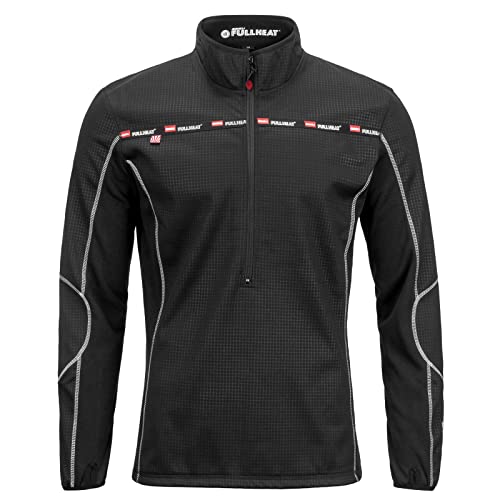
Noru Full Heat Half-Zip Motorcycle Base Layer Pullover Black
Superior Warmth and Protection: The NORU Full Heat Pullover features tri-layer fabric in critical areas like the front, shoulders, sleeves, elbows, and collar, ensuring optimal insulation and protection during cold-weather rides. Comfortable Stretch Fit: Crafted with multi-way stretch fabric and a f More ...

KEMIMOTO Saddlebag Liners 1 Pair Motorcycle Saddle Liner Bag 32L
Wide Suitability: KEMIMOTO Saddlebag Liner Fit 1993-2025 Touring Models Street Glide Road Glide Electra Glide Road King with hard saddlebags (fit some models which show in Description). It's suitable for what you need for Weekend Trips, Road Trips, Camping, and Daily use. Pack clothes, food and docu More ...

Compatible With:The fork seal driver kit comes with 6 adapter sizes (in mm):35/36, 40/41, 42/43, 45/4647/48, 49/50used for most conventional and upside down front forks. Essential Tool: It makes your installing fork seal job much easier,stop wasting your time to use PVC pipeDesigned to save you time More ...

MOTOKU Set of Fork Oil Seal & Dust Seal Wiper Kit
For BMW F650 97-99, F650 GS/GS Dakar 00-07, F650 ST 97-99, F650GS 99-02, F650GS/M 03-07, G650GS 08-09, K1200S 03-08, K75 90-95, K75 RT 85-96, K75 S 85-95, R1200S 04-06. For Honda CB1100 13-14, CB400F 89-90, CB500F 13-16, CB500X 13-16, CB600F (599) 04-06, CB600F Hornet (EURO) 98-12, CB750 Nighthawk 9 More ...

MOTOPOWER MP00205A 12V 800mA Automatic Battery Charger, Maintainer, Trickle and Desulfator
Charger, Maintainer & Desulfator - An all-weather battery charger, battery maintainer, trickle charger, and battery desulfator. Perfect for charging and maintaining all 12-volt lead-acid, flooded or sealed maintenance free batteries (AGM and gel cell). Automatic Desulfation & Optimization - Automati More ...
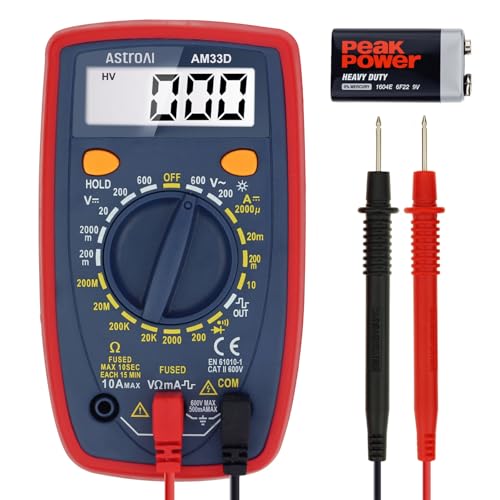
Additional Tips - The following incorrect operations may cause the multimeter not to show results: Firstly, the plugs of test leads are not fully inserted or not inserted into the correct sockets. Secondly, the manual rotary switch is not placed in the correct position. In addition, this meter can n More ...
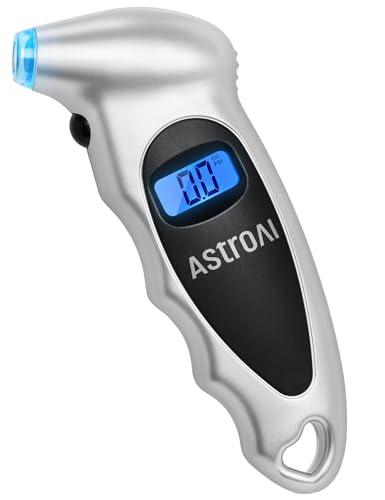
AstroAI Digital Tire Pressure Gauge 150PSI, ±1PSI Accuracy for Car Truck
Accurate, Dependable Readings: Factorycalibrated to 1 PSI, so you can confidently match your vehicles recommended PSI (check the door jamb sticker). Ideal for monthly checks and road trips consistent results every time, cold or warm. Bright Backlit Display & Nozzle Light: The illuminated nozzle help More ...

3M Thinsulate Insulation200 gram 3M insulation provides extra warmth and continues to insulate even in wet environment,it traps body heat efficiently and provides twice the warmth of other type gloves,highly breathable and moisture-wicking. Suitable for all kinds cold winter conditions. It provides More ...
Did We Miss Sump'm?
Sixty percent of the time, we're right every time. What would you add to the conversation and why? Your input is invited. Leave a comment and/or write an article!
Share Link ...


Thoughts gone wild? Write an article!