
FTC disclosure tour-de-force here ...
Hundred Money (P2)
Team TRO spends Hundred Money on expert-fit riding gear, then meets Nevin Ledford and a family-heirloom BSA Thunderbolt 650. Music by Rabid Neon and Otis McDonald. Download our feed here.
Transcript
As legible as we are intelligible ...
Robin: I see a Joanne Don of GearChick.com. That's G-E-A-R-C-H-I-C.com. Shout out to Will, because I know you're going to dig this next part, because guess what? We're going to unleash the wallet. Guess what? We're still rich as hell. Guess what? We have a professional shopping guru who knows exactly what we need. So that means it's time for The Armory, brought to you by GearChick.com. That's G-E-A-R-C-H-I-C dot com.
Joanne: I'm ready.
Robin: The Focus product is whatever money can buy. Because remember, we won the lotto, Brian.
Brian: If you got all the bucks, what do you buy? Let me set the scene for you, Joanne. So the first thing I do before I go motorcycle shopping is... I, and I wrote this down, I said, I hire the one and only gear chick, Joanne, as my personal protection and comfort consultant and my personal Edna mode, you might say, at a ridiculous hourly rate, whatever, you know, whatever four or five digit ratio needs to charge. I fly in Joanne, and then in my private jet, we go wherever we need to go to find the world's finest motorcycle gear for street, track, dual sport, anything else I feel like doing, you feel like doing. Like we fly to the Netherlands, we go to Revit, and we say, shut it down, we're going to put a tape on this guy, and we're going to drape him, and we're going to swaddle this man in comfort. And for the first time, you're going to make stuff that fits Americans. Anyway, so the next step, I hire a live-in trainer, nutritionist, and chef, and I get svelte. I get swole.
Joanne: No.
Robin: Swole. You get swole.
Brian: Because I don't want to disappoint Joanne. And then we repeat this about once or twice, about once every month or two as I get to my final form. We fly around the world. We get the finest whale foreskins. We construct the finest in protective gear.
Robin: You don't get employed. You get retired. Okay.
Brian: Yeah.
Robin: You are prepaid for life, but you have to help us out.
Joanne: I can't squeeze, you know, years into 15 minutes. So.
Robin: Oh, I know. Yeah. Well, you already got me wrong. I can't wear a showy because I got an oval head.
Joanne: Actually, Robin, yes, I do recommend a showy because it is oval. And so it is. and it's the closest to a long oval. However, since you probably, listen, and I haven't physically fitted you or anything yet either, so... This is me going fully on my hunch of what I see and my instinct. But of course, these are all subject to change if we go in person and start shopping and you're trying on things, right? But these are just the first things I would grab to try. It always takes iterations, even when I do help people. You know, it takes a couple tries. But these are two. I do would recommend a couple showies for you because that GS6-8R is a sport tour, right? It's not the Gixxer. What I did was I really shot for sport touring. So a GT Air, you know, is the ultimate sport tourer because it is quieter, still vented, but it's not as loud. It's way quieter than a 1400 or an X15 because the GT Air is specifically for sport tours and tourers. So if you want those features, that's why I put that. But if you don't really want it necessarily to be quieter and you actually just want a really good balance of street and track, then the RFP. 14 or 1600. I've actually meant to put the 1600 because that's an older model. Or wait, 1400. Yes, I have a 12. So the 1400 is the best 50-50 to do a track day here and there and then tour, sport tour. But yeah, either of those. And because the liners are all interchangeable and you can change them and you can have, you know, you can modify the liners by, thickness, which it's not just replace, but sizing, right? They're one of the only brands. It's them and awry that do that so there's more options to resize it besides just the cheek pads but i do think it's a good shape for you intermediate to long oval.
Robin: I'm looking at the beaut it's so good
Joanne: I and i am stunned by how much more expensive these are which ones, i bought a i mean the show last time i bought a helmet graphics were only like 599 or 600 and a graphic is now nine eight $800 that they've just changed so much.
Brian: We're rich. We don't care now.
Joanne: Oh, true. Very true. Well, for the people who are not rich, just FYI, it's changed a lot. Prices have gone up a lot. And the main reason I chose these, it's not because of price. It's because of fitment. It really is because across 150 helmets that I had on my wall, if you walked in the door, basically the chances are you're going to fit showy, maybe a bell depending on which option you choose but i would still choose these period so that's why i picked these for you they match your bike riding position, and your lifestyle you know road and some track.
Robin: I'm fine this acceptable joanne well done
Joanne: And then the first outfit I picked for you is a Revit Ignition Suit. This is the fourth iteration of this jacket. This has been around for about 20 years. I know because I bought the first version. I had the first version of it back in 2007 or something. So it's been around for four generations, and it is the ultimate sport touring leather suit because it is not a track suit. Sure, you could do a light track day in it on a tour, on a sport tour, but it is the ultimate multi-season leather sport suit because it's, track grade race leather where you need it, and then abrasion resistant vented mesh where you need it for airflow. So it's a really good three season suit. So if you don't want mesh and you want something a step up, even though it might be hotter, right? Because that's the trade-off. If you want more protection and you want leathers, well, you're going to trade off comfort and temperature. So this is going to be a little heavier and certainly a little hotter than a mesh suit. And it depends on what yours is. My assumption was I just was going off. You need a really good three-season sport tourer.
Robin: You know, sky's the limit.
Joanne: I would still recommend, you know, depending how hot it is, like the other link, it's called the Venator.
Robin: Yeah.
Joanne: And that is a textile mesh version. So this is a three season, maybe four seasons in California or Florida, right? No extreme snow here, but three seasons, spring, summer, fall, because it's vented. It has a liner for rain. It has a thermal that comes out. The rain can go on top. So it's a full three season. And so that would be an alternate if you didn't necessarily want leather. And if you do like the leather, there's a matching pant and the pants are really great. The ignition pant is wonderful. They're sport tapered. They used to have a really wide leg. And after a while, they just started to get more tapered because if you're on a GS6-8R or anything that's sport touring, You don't want a big, wide bootleg pant. You need a tapered pant. So the beauty of the pants is they either fit in your track style boots or they actually can stretch over them because there's so much stretch at the bottom, but they are tapered like a track pant. But there's no pucks here because this is for street and touring, for your, you know, for your cool trips and tours that you do, you know. But it's just a phenomenal, exceptionally versatile mesh leather suit. It's not a common arrangement. It's really hard to find a combo like this. And the cool thing is the fit is very neutral. It is a sport, still sporty, because you still need a leaner, a tighter sport cut, just not as extreme as a Gixxer.
Robin: Yes.
Joanne: So this is a step down, a step back from a Gixxer fit, still fitted, still close to the body, but not as much. And it's more appropriate as you sit up because you're sitting up more, right?
Robin: You're referring to basically the posture and rider ergonomics contours of the material you're wearing. It's not defaulting to a fully tucked state.
Joanne: Right. The cut of it is optimized for somebody who's up at, I don't know, what is that, 45 degrees?
Robin: Moderately aggressive, you know, yeah.
Joanne: If 90 degrees is a Gixxer, then 45 degrees would be a GS6-8R, right? Or like a Meistery Triple or anything. So this is really uniquely positioned to that sport tourer for sport touring industry. So if you're on a naked, if you're on a sport naked or a sport tour, this is great. And it is the thing that's interesting about it is it does have a cut across the chest like track jacket where, you know, your shoulders kind of push inward. So when you put a track suit on or you put on a race leather, your shoulders are immediately pulled forward, right? You can't put your chest out because the cut is for your jixxer. It actually is a little bit that, and you do have to, kind of bring your shoulders in a little bit, you know, because even just the fact that your hands are lower, just the fact that the GS68R bars are lower than, say, an FJ09, you still need this cut. You need to be able to reach down there. So it's really fitted well. It's really comfortable because from the shoulder armpit to the wrist is all stretch on the inside. So it's really comfortable for a leather jacket. And it's so much better, yeah, than other versions. So I like this for you. And then, like I said, if you want mesh, then you could get the other one and have two. Moving on to boots, I picked for you two options for summer, spring, and then one for fall or winter if it's an easy winter. I have Dionysi Torques also. These are the Torque for air. So these are a vented, Torque. And the Torque is their number two. They have one above that called the axial, and that's for 100% track time. This is the really nice balanced one where you can do your road trips, the sport touring, maybe a track day, but it's good for every day. If you're commuting, no, they're not for sightseeing, but they're max protection because they have a true ankle, they have true support, lateral support. So there's on both sides, right? So there's, like you'll see, there's like a joint and a pivot, and you can only pivot forward. Not like it's steel. It still has give because when your boots have lateral support, there's always a balance that needs to be made between how stiff it is. Like you don't want concrete. Like you don't want something that doesn't move at all.
Robin: You don't want to sleep standing up.
Joanne: Right. You don't want, I mean, you do need it stiff, but when it comes to impact, right? So if you impact, it needs to be able to take that and not just like absorb some of that, but also be soft enough to flex a little bit. That's why I picked that for you is the Torque for summer. And I love my Torques. They're amazing. They're just phenomenal sport boots. And I've used them for track days too. It's great. You might have to size up though, because Diany's boots are a little narrow. So I had to size up once. And to me, that's a perfect compromise. I just size up, throw in a different insert. Voila. For the fall and chilly weather, I... The Alpine Star's equivalent in Gore-Tex. So they used to make a track level boot in Gore-Tex. The SMX6 is really a street boot. It's a sport touring street boot. It's a novice track day boot. The 6 is entry level, you know, your first track day. It's not right. But they're gore and they're more comfortable to tour in. Like when you're walking around, they're just easier to wear. But still really good protection because they do have a lateral support too. And Alpine Stars is notoriously comfortable. All of their boots, off-road, adventure, sport, they're all so comfortable and they really do know how to make a comfortable boot. Also, for those of you who are very wide, Alpine Stars is a really good go-to. If you're like a double E, you might size up but if you're a CD width, you should be able to go right into your Euro and Alpine Stars.
Robin: Interesting.
Joanne: Yeah, because the widths are just a little bit different. And Dianese is also great if you have flatter feet and you have narrower ankles. If you have like ladylike feet and ankles and calves and very slender because there's less room. So the Alpenzaurs boots are just, they're wider. They're wider at the calves. They're wider at the ankles. They're wider across your foot. They have a higher instep. They're just a roomier boot. Now for gloves for you, I also picked two gloves, one for summer, protect summer, and maybe a track day, and then a multi-season waterproof option for the fall and wet days. Or if you have to ride through the rain in the summer, like if you're out in, I don't know, the Smokies and it's raining, the air and dry are great. But for street, I picked a control for you because this is a street-specific glove. It's a sporty, it's for the person who has a track inspired bike or a track bike for the street but doesn't want a track glove. Borrows the protection you want, you know, into this glove. And it is the most comfortable Revit glove you will ever try. And for those of you who used to buy Revit gloves and could never try them and never fit them, these are 100% different. You know, the reason why I still love that brand and the reason I loved working for them is because they really did spend a lot of time trying to figure out different options for different people. And, you know, this glove is great for this group. And this fit is completely different than anything you have tried past five years ago, because these came out like three years ago. So if you tried something 20 years ago and you gave up, try these because they are 100% different.
Robin: Brands change, companies change.
Joanne: Yeah. And Brian, I would actually recommend you try these too, because you could probably size, you might be able to size down. They're that comfortable. They have that much stretch and they're that different. So for you, there just might be a little compromise. Like for me, a lot of gloves are a little bit long, but as long as I don't lose my dexterity and my control over my levers, I don't care. What's an eighth of an inch as long as I can use my clutch and my brake without any restrictions. So those two I recommend for you. Oh, the held air and dries for you, Robin, are great because they actually have two chambers. There's actually a pocket. If you put your hand in the top pocket, you're 100% waterproof. It's Gore-Tex. You put your hand in the lower pocket, then you have access to the perforated palms.
Robin: What the? Yeah.
Joanne: They've been around forever. The Air & Drys are like a long-held staple. They've had that glove for like 20 years. It's really great.
Brian: I did not know this existed.
Joanne: Well, that's also because not a lot of shops stock held. These are $300 gloves. Margin, maybe 30%. And so if you're not shopping in places that don't, you know, are willing to do that, you're never going to see them. Okay, Brian, your turn. So for the FJ09, which is more comfortable to ride in than the GSX-8R, right? You've got even, I'd say, 20-degree ink, maybe a 20-degree.
Brian: A little more upright.
Joanne: Yeah, a little more upright. But you still have to go forward. And even that modest 20 degrees, it still impacts what you wear in your comfort. So I still wouldn't recommend full touring kits for you. So I also went with sport touring. And for helmet, just looking at you from here, I recommend Arai for you because Arai is the most comfortable helmet you'll ever wear if your head shapes fall into their categories. Now, they have three specific head shapes across the collection. One style may not be the fit as another. I picked the Regent for you because that is their really amazing street touring helmet. It's the equivalent of a GT-R. Maybe not as quiet, but it is a quiet-oriented street helmet. In general, Shoei has always been a quieter ride than a Rye. In general. But they really tried to make an effort to make different helmets now that are just that dampen better. And the region is great. And the thing about the region is it's so ungodly comfortable. You will have a hard time saying no. So if you try that on in a shop, you will have a really hard time. It is that comfortable. And this is the helmet I would use when I had people who are very apprehensive about full face. So is that a signet? It says on the back.
Robin: It's a region next.
Joanne: Okay, so you have a Regent. Isn't it uncomfortable? Do you have any problems with it?
Robin: It's outstanding, and I've still got another year or two to it, and it's amazing.
Joanne: It's interesting that it fits you too, but I think because the liner system in that is a little different that you're able to wear it, Robin, and that's great. The Regent is phenomenal, and I remember very clearly I used a Regent to sell this Harley couple, not to stereotype, but let's be honest, who are, non-helmet people or sometimes, and this helmet was the one that convinced them, they didn't know helmets could be that comfortable. Because of course, if you're trying on terrible helmets or terrible gear, you don't know that there's better options. And the Arise would always be my sell. Try this. I'm just, I just want to get your fit. It's true. I was just trying to assess fit. But a lot of times I was like, just try this because you always want the perfect fit to be your frame of reference for what to buy. If you don't know your perfect fit, then how can you make a decision? So I picked the Regent for you, Brian, on your street days when it's 100% road trip and road tour. But I also picked an XD5 on the trips where you are going to do some dual sporting. Because you don't want to trip all day in an XD5. It's doable, but if you have a week trip and you're doing all road, you don't want that helmet.
Brian: I do have to say, yeah, the XD5 is a lot more expensive. That means it's better, right? No, it's good. It's good. It's more gooder, right?
Joanne: Well, yes, depending on what your needs are. Yes.
Brian: I can say that I've been in a shop that sold a rye. I said, I will spend what it takes today if you can... The Arai person could not find a fit for me in their line. This was probably 10 years ago. So yeah, I need to go back and try again.
Joanne: Yes, absolutely. Because all the big brands, every five years, you're going to see the styles changed. They know this and they purposely upgrade the versions. That's why there's no more Signet Q because that was 20 years ago. You know, that's why the Regents knew. That's why XD5 is the fifth version in like a 20-year span. If you try this one, I guarantee you're going to have a completely different experience.
Brian: Yeah, so I need to go back and try again. Like I have, you know, I've spent 600 bucks on a helmet.
Joanne: And for you, the other reason I picked it, because your head shape also wants something wider. Your helmet, you need a helmet that's wider from ear to ear so that you don't have to size up so that the sides of your temples aren't being squeezed, right?
Brian: Yeah.
Joanne: You've probably tried helmets where they're so tight you have to size up. Well, a rye is the one where you can size down.
Brian: I usually get the foreheads. I get the dolphin forehead problem.
Joanne: Then you also need an intermediate oval. And honestly, the region, if it works for Robin, I imagine it works for you. But you also probably could fit a showy too. It just depends. The liner systems would have to change. But generally speaking, the reason a rye is so comfortable is because it has a wider span. Ear to ear and cheek to cheek. So everyone that has like really large cheeks or, you know, just kind of a whiter face, Arai is your friend. It's way more relaxed so you can size down.
Brian: Next time I'm in the market, I will, I'll do more shopping around since things are different. Okay.
Joanne: Things are different. Okay. So for a suit, I picked two options for you too. One for fall, right? Fall, winter, and then late spring, maybe spring, and also wet weather summer. I don't know how much writing you do in the summer when it's raining.
Robin: You talked about the echelon a lot. Heavily.
Joanne: Yes. That's why I picked the Echelon suit as a choice because you can do fall, you can do spring, but you can also do July hot wet because that's always a really difficult outfit to find. Right. That's a very difficult balance for a lot of people. And what a lot of people do is they do mesh and then they just do rain gear on top. And that works, of course. If you're like, a lot of people will be like, nope, I've done it for years and I'm tired of the rain gear. I want a suit that's always waterproof, but will be comfortable enough for me to be in heat and wet. And that's what the Echelon is. The other thing about the Echelon is it is a specific suit for North America. It is not a suit that is sold in vast quantities around the world. It was not designed for the world. It was designed for the U.S. And so the fit is nothing like you've ever seen. If you've ever tried some of the gore suits in Revit, and yes, a lot of them are pretty aggressive. Like the higher end adventure cuts are challenging. This is a 100% different suit and it's for street road people. It's for light adventure. It's for, you know, 80-20 on to off. It's for, shoot, it is, you could 50-50 in it. I mean, it is very comfortable. And here's the big difference between this and its competitors. Is weight. And a lot of people forget that. The weight of your garment will impact you at the end of a day or when you're doing hard stuff.
Robin: Yeah.
Joanne: Ounces makes a difference. And the echelon is so light. So when you put it on, you're going to be astounded. The other reason I picked it for you is because the pants also come in different inseams. They come in tall and short. So you don't have to size up or down to adjust that. And the pant fit is really great too. The other suit I picked for you was a summer straight hot draw you know hot no rain.
Robin: This is the h2o
Joanne: And maybe and then a rain liner that goes a rain suit that goes on top so the tornado is super comfortable first of all all mesh it's light it's comfy you could adventure in it a lot of people will wear that as a light adventure kit you know if you're not doing like hard enduro okay we're talking about you know just some light baby heads and nothing crazy, but with a liner system you can put the raincoat and the rain pant on top. So it's a good summer kit, like pure summer, maybe some fall when you don't necessarily want a full gore outer.
Brian: That's one nice thing Revit does. I don't know if anybody else does it, but the liner actually can go on top of the jacket. So you're not riding around in a wet shell, which sucks.
Joanne: Yeah, I would say nowadays, all the brands are pivoting. Every brand has a system where rain goes on top. Like that's kind of the new way. So if you're shopping in other brands, you will find choices that do that now. The other thing I like about it is it has center ventilation down the chest. And it is still 100% waterproof when you zip it closed. But you do get direct airflow when you actually unzip the main zipper. There's a huge vent that goes from your neck all the way down to your waist. And it is phenomenal ventilation. For footwear, I also gave you two choices. One for your off-road day, your 50-50 days. You're going to go do, you know, a BDR. You're going to go do the transcontinental, I forget what it's called, the TAT. Expeditions are handlessly expensive.
Brian: That's what we're here
Joanne: For i know.
Brian: We're here to spend
Joanne: Right and these are worth now.
Brian: We're finally talking
Joanne: Right if you're a real adventure person and you're out getting on the trails and doing some stuff, this is the answer to the the quest the issue where everybody wants that perfect boot i want ankle protection i want support but i also want comfort. This is it. Like truly this is it. And people don't realize that because they scoff at the price. Well, how do you expect to get the unicorn for $100? You're not. And people don't realize to get that unicorn, it's this boot. It is Gore, but they're using a lighter Gore membrane because people also don't know enough about Gore-Tex to know that there are multiple membranes depending on the use of the shoe. There's a different Gore membrane from Mount Everest. Gear versus summer motorcycle boots. And Revit is very specific. And I'd say all the brands are that use gore about which one they're using. So this is oriented to people in July, BDR, it might be hot, the breathability is great, but the ruggedness is amazing. There's a guy on YouTube, his name is Phil, and he does a podcast. Do you know Phil?
Robin: No, but I think we all know a person need Phil. So when you say there's a YouTube channel and the guy's name is Phil, that's funny. It's just funny.
Brian: YouTube.com, search for Phil. Hi, Phil.
Joanne: Hi. It's been so long since I've seen his videos, but he does a lot of ADV motorcycle videos. And he...
Robin: That's cool.
Joanne: Right. And Revit sponsored him a little bit and gave him some gear. And he has a video and I'll find it and I'll send it to you as a video where he crashed going down a crazy trail. He was railing and he crashed, bike landed on him and he was wearing these and he really gives some good information on like how it did for him. But the system on it is, it's just so great. I have a pair, it was like one of my last treats before I left Revit and I got a pair for me too because as a small person, I definitely value the protection of my feet but also the stability of my feet because I want my feet to feel like someone's big hands are like wrapped around my ankles and holding it no matter what I do because I'm short also, right? That's my leverage, but they are phenomenal. So if you ever see them, you have the opportunity, try them on. They're amazing. You will try them on and never want to take them off. The other boot I also picked for you was also a sport touring boot that you could tour in for the street days. So the SMX V3, same boot. I think that's the same one. Yeah, same boot for you too, Brian. Just more comfortable. Yeah, way more comfortable, relaxed track fit. It's not really a track-specific boot, but it's for sporty people on the street. And comfort, it's great. I used to have a pair of SMX6s back before I bought Torx, but they're very comfy. And they also make vented versions. So if you wanted a vented SMX3, you could buy those. They make the Gore and then they make the vented. It's probably their number one sport boot that they sell. Okay, gloves for you. I also picked two choices for weather. I actually am going to change my mind here and delete the Revit one. And I'm just going to go straight held for you. So two held choices, because I remember you telling me that you need a shorter finger. And guess what? They make short in fingers. They're the only brand that I've seen that ever offers that. I mean, they've been doing it for years. So if, yeah, these both come in short. The Air & Dry is the same two-chamber glove I recommended for Robin, right, for summer.
Robin: It's Rob Orton, depending on where you are.
Joanne: And the... Air and dry, same idea, but you can order short, and that's going to make a huge difference. So I also recommended their summer glove, the Airstream. It's a really good, moderate cuff, right? It's not crazy race gauntlet, but enough coverage for your wrist. Good knuckle protection, but look at the mesh. There's mesh on your fingers. There's mesh on your wrist. Yeah, and they're perforated kangaroo palms. So are the air and dry. So if you've never worn kangaroo palm gloves. They're so great. And it's really hard to go back when you go out.
Brian: I have worn kangaroo gloves because that was your last recommendation.
Robin: Nice. And you bought them.
Brian: And I bought them. Joanne said to buy them. So I bought them and they're great.
Joanne: But that feel and comfort is so great. And so the Airstreams, they're also more relaxed too. So they're an easier fit. They're not a race fit. They're a full street glove. So you can order the same euro size as the racer. If you ordered a nine or ten, you just do a nine short or a ten short. But these are really comfortable. And they also have palm sliders in the form of superfabric. So these aren't track gloves. So instead of putting sliders on the palms, they use a highly, highly abrasion-resistant material called Superfabric. And it's a highly technical material used across many different industries, and they are, supposedly more abrasion resistant than a lot of leather. And I do believe that.
Robin: It's made of super.
Joanne: Well, it's synthetic. And let's be honest, synthetics can perform better than animal hides, depending on the context, especially with protection and safety. I forgot to mention all your gloves, you can use your phone or touchscreen motorcycles.
Robin: For the tactile?
Joanne: Yes. And well, for me, I've always used kangaroo gloves. They just naturally have conductivity. I don't know why, but if it doesn't say touch sensitive, as long as it's kangaroo, I will bet you they will be.
Robin: But also, Joanne is electric.
Brian: Kangaroo, you know, kangaroos have electrical defense. Not a lot of people know this. No, anyway.
Joanne: It's like skin. Kangaroo leather. It's so thin.
Brian: Except you stole it.
Joanne: The downside to the leather, the kangaroo is you do have to wash your gloves once a season or more often, depending how sweaty you're getting, because kangaroo will degrade over time with the salt coming out of your hands and the oil. So you want to keep that leather nice and clean in the palms.
Robin: Or choose a low sodium diet.
Joanne: Or go with goatskin or cowhide. Don't do kangaroo if you're not a maintenance person.
Brian: One thing that's interesting is that I think you cannot sell kangaroo hide in California.
Joanne: So that is a law that has been around forever. And to be honest, from what I've seen, it doesn't matter. You will find, you will be able to buy and order these gloves.
Robin: Order online.
Joanne: You can order and...
Brian: They're not at the border with the kangaroo cops, you know. Yes.
Robin: Now, the downside is they're going to send you the kangaroo and you have to make them yourself.
Brian: Yeah, and they're kind of cute, and you get attached, and yeah.
Joanne: Yeah, if you're in California, don't worry about it. You'll be fine. No one's going to chase you down for these gloves, because I lived in California for my whole life, and I bought many pairs. I had many pairs of kangaroo gloves, and they were all sold through my local dealer's racer and held, actually. But I really like the Airstreams. They're great. They're just a really good summer glove.
Brian: We've only spent a couple thousand dollars. Yeah, no gold plating.
Robin: I'm doing this thing. All right. Similar banter at higher revs can be found via the gear chick website or by emailing Joanne directly. That email address is help at gear chick dot com. That's gear chick with a C dot com.
Joanne: You can also just message me on social media. I will totally talk to you.
Robin: Public profile, all that stuff. Are you two ready for segment three?
Joanne: Sure.
Brian: Lay it on us.
Robin: Moments in motorcycle history. The focus moment. We're going to talk about a 1971 BSA Thunderbolt 650. I'm in the middle of nowhere. And wouldn't you know it, that means rare and obscure motorcycles are growing directly out of the ground. Like it's a wild farm. If you look up Leavenworth, Indiana, you might see a giant deer shaped portion of some random county right next to the Ohio river. I saw a neighbor's BSA and ran up their driveway like a random axe murderer to axe them if I could talk to them about the bike. They asked if I had 30-plus minutes because there's a story to it. This lit me up. I was like, yes, let's do this. And of course I do. The owner's name, Nevin Ledford, and this is the tale of the family heirloom that is his BSA.
Nevin: I've had several bikes and then was in metal fabrication and machining. We were some of the first people in Louisville that actually had programmable CNC equipment. I was pretty involved in that. We built a few bikes. My son's really into it more than me. When we tried to use vintage motors when we did it, we wouldn't pull them off bikes. But if we found them at swap meets and such... That was kind of what we liked to do. That's how we kind of got into the overbite.
Robin: What am I looking at?
Nevin: It's a 1970 BSA. Well, the funniest, there's a little bit of a story there. The title says 1970, but we know almost for a fact it's a 71, so I don't know. But I've got the original title, the number's on the neck. I've got the bill of sales. I've got the title, and everything matches that number. What happened, I had a cousin call me and said, would you like Uncle Eddie's bike? Well, I was only between the age of 8 to 12, and I didn't remember if it was a Honda, BS, you know, I didn't remember what it was. And then when he started talking, I said, yeah, I'd love to have it. And so that's kind of how it came about. So I've actually got pictures of me sitting here with my Uncle Eddie on front riding around on this exact bike. And it basically sat in a garage for 40 years with a tarp on it with a lot of junk. That ain't no hide. And the garage leak. So I think it probably, it wasn't going to be perfect to begin with, but kind of lucked onto it. It was actually about four weeks ago. He called me. He didn't want to pay the mechanics fee. He took it to a Vinnie shop and they kind of went through it. Didn't really do too much to it. Just clean it a little bit. Rebuilt the forks. He flushed and cleaned the engine, gas tank. He did a few other little things to it and then called me and said, if you'd like it, go get it and pay the mechanics fee. So I was really happy. It's a 71 bike, so we don't know, especially since it's original title. And we got the bill of sales from Muncie, Indiana, where he bought it with my uncle's signature. I don't know if it's a typo. I don't know really no more. Some of the BSA guys would probably know more about a serial number.
Robin: It's always been in the family. Yeah, from the purchase. How cool is that? And you got the big, beautiful drum brake up front.
Nevin: Actually, we put new, the gas lines were leaking, so we put some new pit cops. I tried to keep all the originals just in case, but they were leaking. Probably could just put new, the new washers. They might've been fine, but I thought, well, store those for now. And I'll actually want to ride it a little more just to see. Seems to ride and drive great. We did order some tires, and I'm going to balance those, and they're pretty hard. Wouldn't want to take a corner. I've driven it around here several times. Seems to run fine. You know, in the world of BSAs, it's not a highly sought-after motor. British Standard Arms. I think there was some military bikes that they made also. I think it's kind of cool the oil actually runs through the frame, and that's your oil cooler. I think BSA may have been the only ones that ever did that. If that bike would have been sitting over there for sale, I probably wouldn't have even looked at it. But the story behind it, I wouldn't take any amount of money for it because my son loves BSAs. He started out actually restoring as a teenager. He worked on a lot of BSAs and Triumph Motors and pretty good mechanic for a younger gentleman. We visited a minimum of once a year to Dayton, because we lived actually in Hardinsburg, Kentucky, which isn't far, just across the river, but visited at least once a year and sometime twice a year. And that was my Uncle Eddie's thing, because he knew it made my mother mad. So he'd throw me on the back, and we would just ride around the subdivision. We wouldn't go far, but we would make several trips, and he'd always ask me, you want to go again? So we'd make another lap. Yeah, I made several laps around that subdivision on it. And at that age, I even had a little Honda 50 like everybody did. So it wasn't like I wasn't around motorcycles. She just didn't like the idea. I was probably on the back with Uncle Eddie, maybe.
Robin: It has an air intake on the drum.
Nevin: BSA is the only ones I've seen it on. There might be other bikes. And the front brake works horribly. And I've talked to some of the guys that know BSAs, and they said they were like that new. It's nothing out of the ordinary.
Robin: Favorite moments riding around the neighborhood with your uncle.
Nevin: Yeah.
Robin: Maybe a grade schooler.
Nevin: Yeah.
Robin: Did you see it in your teen years, too?
Nevin: No. Actually, my Uncle Eddie died when I was 13. After that, we still visited Dayton pretty often because I had two aunts that lived there. But kind of lost track of his side of the family a little bit. I had several cousins. One of my cousins called another cousin. They knew I was into motorcycles. And that's how they got my name. Eddie always smelt like cigars and beer. I think it's really ironic that my son was into BSAs. And then, you know, me not even remembering what bike it was. Although, after my mom passed away, she passed away two years ago this coming month, I do have pictures of me sitting on that bike. According to my sister, I haven't seen my sister yet, so hopefully I've got those pictures. It would be great.
Robin: Do you still have the original manual for any of this?
Nevin: No, I wish I did. I can probably find that pretty easily, but I would love to have the one he had.
Robin: And then your son, Dalton.
Nevin: When he was really into the BSA stuff, that was probably 15, 18 years. So now he has a big road glide and he's kind of got out of the vintage bikes. He still remembered an awful lot about this particular bike. It's really weird. He's very good mechanically. He's dyslexic. After he kind of overcame that, he just naturally fell into mechanics. I mean, now he has several rental properties and he does construction. He has a small construction company. I like to tell people that my son's taught me more than I've taught him. He's a pretty sharp guy, I tell you. The fellow that did the work on the bike, his wife was wanting to help. And so she was cleaning and cleaned on the bike. And he's a very vintage, you know, he wants everything vintage and proper. And he looked around before he told me the story. He said she was cleaning on it. And he said, I almost got sick to my stomach. She took fingernail polish and painted it. He said it looked better because it was kind of the off-white. No, he liked it. So I might take a little fingernail polish and see if that'll come off. All the signals work. Horn works. Pretty much everything works.
Robin: Can we hear it run? This is Nevin Ledford with a 1971 PSA Thunderbolt 650. Just a classic motorcycle. I hope to God that you just get to hold onto this all the way to when it's time for Dalton to take it over. I want to take a moment to thank Nevin for making me feel welcome in the neighborhood. Here's hoping we get to socialize now and again. Nevin, if you're listening, stay off the sauce. Congratulations. Five months now. And let me dispose of it myself. Personally, whatever you have left, I will take care of it for you. Don't you worry. I'm here for you, man. This town flooded out and has constantly been like houses on stilts right on the Ohio River. That means it's time for the after words. Brian. I'm sure, is fully organized as he understands the responsibility that he is faced with, bestowed upon him, if you will, for the next episode. So he has definitely organized some thoughts that are particular, exactly, for lack of a better term, regarding what he's going to talk about next episode. And if not, Joanne is going to subject him to some fierce punishment as to what she would like to hear us talk about. She will challenge us with, you think you know something? try this. Or we're going to have to do the freaking alliteration grab baguette.
Brian: The only German of an idea I have, and also I had no idea whose turn it was to do anything, but this was Travis's idea this episode.
Robin: Blame him.
Brian: Yeah, blame him. I didn't know who was next. We all understand what we're dealing with here. The only thing that comes to mind for me is to get in and talk about some tools. And although I don't know if I can make an episode out of that, maybe we can. Maybe we're going to do some wrenching very in the next few days and say it
Robin: Joanne say it
Joanne: I'm still waiting for the couples episode and but I have an idea, it's hard to get people all together is it could come up with some questions and you give them to your people and they answer them and we can read them as we talk through that could.
Brian: Probably actually work because getting this in front of no no Not having it, but...
Joanne: Let me work on some questions.
Robin: I think it'd be a lot of fun.
Brian: That'd be a great idea.
Robin: I think Joanne needs to host it.
Joanne: Sure.
Nevin: Oh, yeah.
Joanne: Absolutely.
Brian: Get the hell out of the way.
Joanne: I'm down.
Robin: I don't know if we can do it inside of a week, but I can try. Why don't we aim for next week, fail, have a backup plan, but at least start organizing that episode, because I think we owe it to Joanne, man.
Nevin: We do.
Robin: So, Brian, you're going to have some fantastic tool-related philosophical system.
Brian: Let's talk about tools. Let's talk about workshop. Let's talk about, yeah, let's talk about keeping these things going.
Robin: I like it. You guys ready to get out of here?
Brian: Let's get out of here.
The Gist
Joanne turns the second half of Hundred Money into a rich-person fitting appointment with actual consequences. Robin gets steered toward Shoei, Revit, Dainese and Alpinestars plus gloves that don't punish his hands for existing. He and Joanne agree that fitment, rider posture and seasonal tradeoffs matter more than whatever price tag makes Brian laugh.
Brian gets an FJ09 prescription next, Joanne keeping it upright for touring without pretending a mild forward lean is a La-Z-Boy. Arai Regent and XD5 helmets, Revit Echelon and Tornado suits, Expedition/SMX boots and Held short-finger gloves are all mapped for body shape instead of hope. Kangaroo palms, two chamber Gore Tex gloves and hot wet weather choices make the wallet nervous for all the right reasons.
As for history, Robin sits down with Mr. Nevin Ledford to hear the tale of a two-wheeled heirloom. His 1971 BSA Thunderbolt 650 has "Uncle Eddie memories", four decades under garage junk, a terrible drum brake and a son who once lived deep in the BSA/Triumph world. The bike more than matters because the story stayed in the family, a rare restoration spec no parts fiche can fake.
Guest Interview
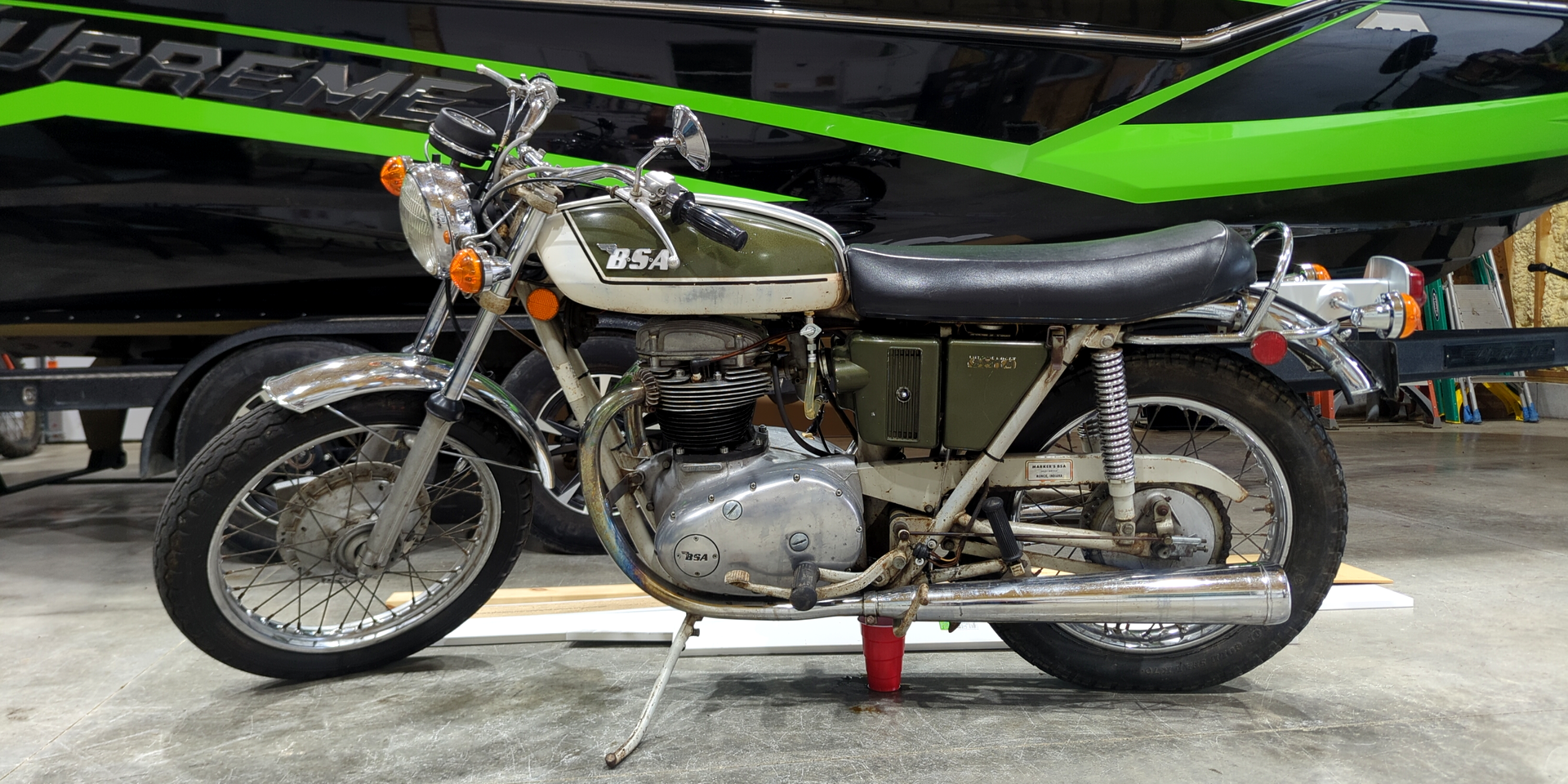
Nevin Ledford's 1971 BSA Thunderbolt has just enough age and roadworthiness to be tempting while keeping everyone honest. The forks are rebuilt, the engine and tank are flushed, the leaky petcocks got replaced but the old tires remain hard enough that he ain't eager to take a corner. Its oil-in-frame setup, exactly the kind of odd British engineering detail that makes an old BSA feel alive, begs riders for a kickstart.
Kit We're "Blatantly Pushing You To Buy"

Bell Qualifier Helmet, Matte Black, Large
3 SHELL SIZES Typical offering requires additional padding sizes to accommodate all head sizes. IONIC PADDING Quick-drying interior padding helps manage sweat while fighting odor-causing bacteria. Meets Federal Motor Vehicle Safety Standard 218 (FMVSS 218). Meets DOT and ECE22.06 standards and certi More ...

Full protection: Removable 4 pieces protectors and 1 removable EVA pad on the back, which can help you from dangerous when you ride. Make sure you stay safe while riding all the time. 100% Waterproof, Abrasion Resistant and Windproof. 600D Oxford cloth high performance fabric. The waterproof layer f More ...

Advanced Microfiber Construction: Alpinestars SMX-6 V3 Boots are made with lightweight, high-performance microfiber for superior abrasion resistance, ensuring lasting durability on every ride. Ankle Brace Protection: Features a biomechanical ankle brace system that enhances ankle articulation while More ...
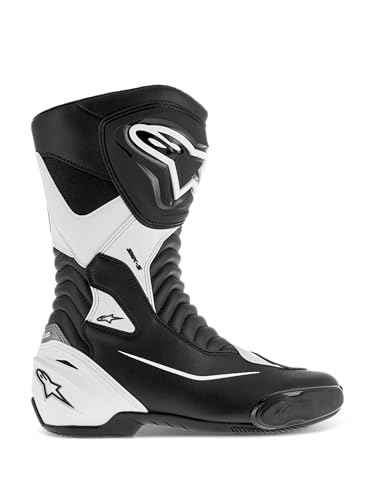
CE-Certified Protection: Features advanced TPU shin, ankle, and heel reinforcements for maximum impact resistance and safety. Durable Construction: Premium microfiber upper ensures lightweight durability and superior abrasion resistance for demanding rides. Ergonomic Comfort: Contoured footbed and m More ...

Premium Cowhide Leather. Protective Knuckle Pads. Gel Palm. Adjustable Wrist Strap. Motorcycle Leather Apparel: Experience the quality and craftsmanship of Milwaukee leather. We are the top manufacturer of motorcycle leather apparel our men's full finger leather gloves are also suitable for teens wo More ...

Gel Padded Palm Motorcycle Gloves Our gel padded palm motorcycle gloves provide exceptional grip and vibration reduction to enhance comfort during rides for a better overall riding experience. The stretch side of the full finger biker gloves adds extra comfort and softness while riding bike. These More ...
Did We Miss Sump'm?
Sixty percent of the time, we're right every time. What would you add to the conversation and why? Your input is invited. Leave a comment and/or write an article!
Share Link ...



Thoughts gone wild? Write an article!