
Tag along for our FTC disclosure saga here ...
Blanket Opinions (Quilted Armor Does Not Safety Make)
Team TRO revisits quilted armor, better bikes and rider growth before testing how little speed it takes to scare yourself. Music by Rabid Neon and Otis McDonald. Download our feed here.
Transcript
As legible as we are intelligible ...
Robin: In this episode, we blanket ourselves in the unfortunate truth that quilted armor does not safety make. And lastly, this round, we're going to whittle down the AGB. That's the alliteration grab baguette even further. We're running out of material here, folks. So pretty soon we're going to have to refresh it. Our random song of the minute. If you want to hear our random songs of the minute, visit radio.tro.bike in your web browser. This round, it's Gift Horse by Idle. This is a ripper. Go check it out and use your throttle wisely.
Brian: 100 mile an hour song. I like the idea of that.
Robin: Out of news.
Brian: First up, Dianisa puts an airbag on your phone's power budget. So their new SmartGo Airbag Vest weighs about 1.7 pounds with a gas generator, and it gets its power from a compatible USB-C phone or a dedicated power bank. Daniza claims up to 72 hours of use with the power bank and level 2 chest and back protection under the EN1621-4 standard. I often stay up late and read the EN1621-4 standards.
Robin: It's my favorite nighttime book.
Brian: It'll put you right to sleep. The vest is packable and uses an electronic trigger rather than a tether to the motorcycle. Touring limits worth knowing about. Danisa says that it must be protected from rain and specifies an operating range of 32 to 104 degrees Fahrenheit. That's a double what would. So that tackles two reasons protective gear stays home, bulk and something else to charge. It does not make the electricity optional. It moves the charging job to something else. Would you want navigation, communication, and your airbag drawing from the same phone, or would a separate power bank earn a place in your pocket? The useful test here is whether this makes an airbag easier to wear on every ride and not just a big trip.
Robin: Wait, so I was just starting to read into this. Are you saying that it actually draws power from the phone or a mobile battery pack, like USB-C style? Or do they have some, like, leftover USB-A-B action going on? Like what is
Brian: It's got a power bank of its own, or you can power it from your phone. Basically, you don't have to get a separate charger.
Robin: Okay.
Brian: So the three things I'll say here is that you can't get it wet. That's a problem. You can't get it above 104 degrees. That's also a problem because that's routine when you're in the sun on a tour and getting wet is also routine. And the big plus side of this is that the cost is a little bit lower than some of the competing models. I am familiar with the Alpine Stars AirVest. So basically has a motion detector inside of it. You charge it up just like a phone with USB-C, and then you select the programming so that it detects when you're flying through the air and then when to deploy the airbag. And, you know, it has programs for race, street, and off-road. This is kind of a competitor to that product, but at a somewhat lower price. Sounds like a lot of the things are much the same.
Robin: I love the concept of the airbag, and I would love to have one. I didn't know that they were the ones who started this whole thing. That's cool. But moving through the article, they bring up like, why should I wear an airbag? And the question is now, why would I ride without one? I think that's a great thing to say, except that affordability is not to be determined by the people manufacturing the item.
Brian: Yeah, it's about $440 U.S. Just by comparison, the Alpine Star's, I think it's a Plasma Tech Air 5, if I'm, don't quote me on that, is around $900. It's still a lot of money, but it's still, it's half the money.
Robin: Moving right along, a helmet display that stays with the bike, not your head. This comes from AegisRider.com. That's A-E-G-I-S Rider.com. Aegis Rider's Vision helmet is getting fresh attention for a display that anchors information to the motorcycle instead of following every turn of your head. The idea is that speed and directions move out of your view when you look away from the bike's forward direction. The company lists four to six hours with the display active. Its certification, frequently asked questions, also carries a major caveat. The helmet's ECE approval does not cover the configuration with the optional AR optics attached. That makes this a technology to examine, not a safety upgrade to assume. Does putting directions in the road view actually reduce distraction or just move it? Before buying, I would want the certification questions resolved and a real test with my glasses in bright sun and after dark. Fewer glances down only count as progress if seeing the road becomes easier. I watched the video on this thing and I'm going to say no, not yet. Get that out of my face. The reason that I put my phone below my chin, out of my direct field of view, is so that I can focus on the act of riding a motorcycle, of living, of feeling reality at all moments in the sport. When I need the digital, it's right there. I know when it's safe to look down really quick. I can look down fast enough, get the information, look back up. I've been doing that for years. It's never been a problem because it's not what you do. it's how you do it. Stuffing the whole Gizmotron video game environment onto my visor is not of any interest to me.
Brian: I do got to say that I'm not interested in this sort of thing either. Handlebar mounted devices, it's there, you know where it is, it stays in the same place. This is a step in the right direction because former heads-up displays were like, you know, always in your face right in front of you.
Robin: Halo.
Brian: They're going to get this right. It's going to work. It's going to be safe. It's going to look a lot better. It's going to work a lot better. I think people are going to get really pretty interested in this, but it's still got a lot of refinement to go, whether we like it or not.
Robin: I don't like it. What's next?
Brian: Over in the luggage department, Revit separates the dry valuables from the rest of the load. And again, if you look at revitsport.com at their website, you can find this. This is Revit's new bag range, which includes the Bauxite H2O listed at $349.99 in its U.S. store. The useful part here is the organization. It's got a waterproof roll-top main compartment, a separate small waterproof pocket for valuables, a removable washable liner, and a shoulder strap pocket for a GPS messenger or something like that. There's hydration tube routing and external stretch netting, so you have a place to put wet gloves and you have a place to put drinking water. Waterproof compartments are a little bit of a thing we haven't seen before it's not quite the same as everything being waterproof, for a touring rider it's a more useful conversation than how much you can put in the back the question is what needs to stay with you when you leave the motorcycle and what would be better on the bike this one, you can manage the dampness of all the stuff that you have with you better so if your gloves are wet you've got a place to put them and keep them from contaminating, if you will, the rest of your clothes. So you can manage wetness, you can manage odor, shall we say. And that's something that you commonly need to do on a ride. You know, okay, these... These are my wet socks. I need somewhere to put them. Flexible system. All that said, it's still a pretty pricey backpack. $350. Obviously, it's going to be high quality from Revit. You have to justify spending quite a lot of money to keep this on your shoulders instead of on the bike.
Robin: A garage reference that goes well beyond socket size. These next two come directly from our friend Brian here. But SocketFinderUSA.com brings socket and wrench charts, fastener identification, thread references, and drill and tap information together in one searchable toolbox. Its calculators cover torque conversions, drill sizes, and cutting speeds, making it useful for both routine maintenance and small fabrication projects. General torque estimates still need to give way to the specifications in your motorcycle's surface manual. The attraction is having the related information together. Identify the thread, check the drill size, and work out the next step without opening six unrelated websites, which I have done. You know, the control click on a folder in the address bar and it blows up the whole, yeah. How often does a 10-minute garage job turn into a half an hour of hunting for one measurement? This is the sort of reference worth bookmarking before you have greasy hands in a mystery bowl. I'm going to tell you right now, Brian, I subscribed to this channel in Instagram and, This gal who does, you know, interesting websites you should know about. She's super deadpan stoic. That Instagram channel, I'm definitely going to pipeline into a list. It's outstanding. This looks like it belongs on there. That's cool.
Brian: Next up is a website that gives you useful calculators without all the signups and ads and spam and so forth. And it's simply normaltools.com. Normaltools.com. So Normal Tools collects free browser-based calculators and utilities without requiring an account, installation, signups, ads, and they have pretty much everything you need in life and business in the world. And yeah, even in the garage is in there somewhere. They've got fuel and trip budgeting, loan payments, battery runtime estimates, electrical calculations for voltage drop, wire sizing. The loan calculator shows the total interest alongside the monthly payment. The fuel calculator uses distance, fuel economy, and gas prices to estimate a trip's fuel bill. Very thorough stuff here.
Robin: I love at the top of it, the navigation plainly states, no login, no install, no clutter. They're just there to shut you up and use the page, dang it.
Brian: Yeah, and there's stuff like file converters for images. So whatever you do to afford motorcycle tires, there's probably something there to help you. Word converter there are tools for working with pdfs which is really it's really difficult to find good free ones for those, and for us motorcyclists who are on the road there are a lot of useful tools here, for planning a motorcycle purchase planning power and wiring on your bike planning your budget for your next trip that kind of thing and again just take a look at these these are really useful, and you're going to have a lot more accuracy than trying to scribble it down on the back of a gas receipt in the rain and google for an answer that kind of thing.
Robin: It's just helpful
Brian: Robin what have you been up to.
Robin: Got all my gizmos in the mail been installing budget Android Auto Terminal. Gotta say, though, it's got a lot of spaghetti. Sidebar, as expected, it's now confirmed. I can pull all of the tank-specific origami, meaning the plastics, less than five minutes. Wiring for this thing is designed for the Every bike, maybe a trike, who knows?
Brian: 60 feet of wiring.
Robin: Oh my God. We have an auxiliary power bank that I've installed at the back of the bike underneath the passenger seat. You've seen this. That is the power source for my keyed system. Okay, so I have this multi-wire-out spaghetti system that is basically like a single hub that connects to the unit itself that sprawls out into multiple connections. Because you've got two cameras, a remote, and the power itself. Yeah, the first thing that needs to be connected is the power. Okay, that connects to the back of the bike underneath the passenger seat. Then I have to run that across everything. And you know me, man. I try to be meticulous with my wires. Like, I want them to be carefully situated.
Brian: Happy wires.
Robin: Power from the passenger seat runs over the battery, underneath the gas tank, up to the front of the bike, where the main conduit connection plugs into the unit. it. Then I have to wire up the rear camera. So from the front where I got to run up back under the tank up by the battery back under the passenger seat.
Brian: And then it's a lot.
Robin: So then there's the front camera and then there's the remote. That's the problem is the spaghetti needs to go somewhere. So there's either a shelf underneath the chin at the front headlight, like somewhere inside the dash area I've been working that one out and I'm going to have to pull some plastics just to route it but at least I've figured out a place that's been the hard part it's like what am I going to do with all this freaking noise so got that done nice And on the lighter side, Mags and I attended a wine bottling party, and I'm telling you right now, that is a party. You are drinking the wine and operating the machinery, and if you go home with all eight of your fingers like I did,
Brian: Something like that.
Robin: I got some video of Mag running the cork machine. Good friend invited us. Thank you for that. Much appreciated. Lastly, the chain Masterlink pins are now flared too well within spec. We rarely know what we don't know, but that deed is done. Spec was 5.6 to 5.8 and i'm at 5.75 it's done
Brian: Leave it alone back away slowly it takes a village to put on a chain.
Robin: Fact is it was below spec at first for sure it is no longer but yeah that's me what about you man how you doing what's good
Brian: So I'm here in Indiana, central Indiana, and this, I think, is probably the last week we have that magical fall weather where it's nice and warm during the day. The skies are that brilliant blue. The trees are amazing this year. The trees are nuts. Really gorgeous. Looks like about this weekend, maybe next week, we get that wet plunge where you just kind of fall off the cliff and like, oh, crap, I'm in the Midwest. Why am I here?
Robin: The suckinging. Everything's really too good right now. it's all too beautiful oh oh there it is
Brian: The suckening i have to decide when is the when is the time for the wrenches to come out and to ration out my project so i can make it, to the spring with my sanity intact it's always a juggling act every winter, in other news i'm i'm really i'm jelly i'm very jelly, i think i mentioned this before but there was a fall dual sport ride brewing in west virginia with some very very close friends in the monongahela which is a great word in the Monongahela National Forest, kind of in the southern portion. The reports are that it was amazing, that it was wonderful. It was everything everybody ever wanted. And I'm really jealous. Just couldn't make it this year. There was a lot of distance, a lot of time, a lot of stuff I needed. If I want to continue to be able to afford motorcycle tires, it's stuff I needed to do.
Robin: We have articles to write, sir.
Brian: Articles to finish.
Robin: Yeah, man.
Brian: This year was not as epic as I really wanted it to be. and I'm hoping next year can be. We have plans, big plans underway. And just a shout out to Neil and John. Putting that ride together and sending me pictures to make me jealous. Thank you and screw you too. I'm hoping to get a couple of those gift days in December and January. Once in a while, we get a day that just pops up over 50 degrees and we can get out for a nice dual sport ride or something. So we'll see.
Robin: Now let's make a perfectly smooth transition over to listener questions. Smooth. If you'd like us to field your questions, visit email.tro.bike in your web browser and send us a message. Can I take the first one?
Brian: Absolutely, go for it.
Robin: Is low mileage any reassurance when a chain develops tight spots? So basically, a rider who bought two ex-demo Hondas this year says both chains have developed seized links and alternating tight and loose spots. You don't say. Even though the wear indicators are still within their limits. One bike had about 1,900 miles when purchased. The other had about 3,100. The rider commutes about 50 miles a day and says the chains get cleaned and serviced weekly. Both are supposed to be O-ring chains. Get X-ring. Their question is whether manufacturers are fitting cheaper chains, yes, or whether something else explains the trouble.
Brian: Also, yes.
Robin: Manufacturers often use one shelf above worst when it comes to an opportune chain.
Brian: Yeah.
Robin: Maybe contest your cleaning technique and maybe inspect the sprockets as they should be replaced at the same time. If your cleaning technique is to blast it with like purple power, super clean, you know, something that's, fully caustic, like please eliminate any and all grease that even that which is supposed to be there. That's not good. I once saw my co-host here bust out lubricant and a rag and use the lubricant as the cleaner and then lubricate and then wipe it free. It's really a gentle process so long as you're thorough to the extent that you're using the correct stuff and all that. Brian, what do you got?
Brian: And let the record state, I get a lot of miles out of my chains. Anyway, That about 1,900 and 3,100 is really, really bad. You do see very poor chains on bikes, OEM, but I think that something else is going on in this case, especially because these are smaller bikes. They're not beating up their chains that damn bad. New Triumphs, for example, people are getting like 7,000 or 8,000 out of the new chain, but that's 115 horsepower bike on a 520 chain. And then they put on a quality chain like an EK, ZVX3, something like that, a high-end chain, and you can easily get 30,000, 35,000, 40,000 miles out of those. So that's part of the equation. So I did a little digging. One thing that popped out was that these motorcycles were used as demos, I think, by a dealer. And also they're in Finland. This person's in Finland. I think if you put those things together, you can imagine the chains, I'm sure, did not get the correct amount of maintenance or cleaning or anything like that while they were being used as demos. The bikes probably got hosed off once in a while. And the second thing there in Finland where they do use road salt, I looked it up. Obviously, it's winter there, I think, what, 11, 12 months out of the year. So I think the OEM chains are actually crap, but I'm also suspecting that they had a lot of usage as demo bikes. They weren't really maintained really well. And then right before they put them up for sale, someone doused them down and, you know, made them look nice. But the damage was already done. So... Throw new chains on there and get on with your life. Have a good time. As to whether you need new sprockets or not, I probably doubt the sprockets are any problem. I think the issue is that the chain itself, the lubrication has been compromised. The O-rings have been compromised. Put eyes on the sprockets. And at that mileage, I bet you could get away with just putting on a good high-quality chain. We're not going to talk about chain lube because that's always a holy war. We're not going to get there. But anyway, go on.
Robin: Yeah, although I am curious, what is that white lard that they include with a new EK chain or the dealership chain?
Brian: It's melted pigs, man. It's a lithium grease, and you're supposed to take it off. You don't want it flinging all over. It's just there for shipping.
Robin: What am I putting into the O-rings when I put the chain together before I compress it with the tool?
Brian: Well, ideally, you have some of that grease. I've got little ketchup packets of that.
Robin: Yeah.
Brian: Or just use any good waterproof grease. You'll be all right.
Robin: High fling is the issue. You want something that sticks a little bit more. Okay, moving right along. Is that mid-corner lurch your throttle hand or the motorcycle? Ooh, I've got stories on this one. They are recent. So in June, a returning rider described a very specific problem after learning about trail braking in a course. In a longer curve, the transition from a little brake pressure to maintenance throttle produces an abrupt lurch. They're not trying to accelerate hard out of a bend. They are trying to hold their speed. They want to know whether this is a practice problem, something about lower gears and lower speeds, or a missing piece of technique. I'm going to say it just because we were just talking about it. It's been a subject in my life as of recent. It's been a subject in our questions as of recent. Again, the chain. Check the slack in the chain and the condition of the chain. Too much slack and there can be a delay in the final drive response. It's not necessarily chain slip I'm talking about either. I mean, chain slip's one thing. If the chain gets so slack that it slips, it's a problem. But if you get to the point where the chain has problems in general, or it's just too loose. Let's say you have a good chain. It's just too loose, but it's not hopping. The time it takes for the chain to slack back up before you are actually pulling the rear wheel can be noticeable under certain conditions. It was for me. I knew my chain was going. Brian knew my chain was going because I had to adjust it too many times. You ride and you adjust. You ride and you, oh, it's getting over. It's done. And there were times when I knew I needed to adjust my chain again because I released the clutch and I began to accelerate and there's a knock. And it's not the slope in my ride by wire. It was the chain, plain and simple. So you might want to check that out. What do you got, Brian? I see a list.
Brian: I wrote a book. Sorry. Anyway, so there are three main things here. Number one is the bike. Absolutely, the chain can cause a problem like that. So we've covered that. Another one is that a lot of fuel-injected bikes, and to mention this as a returning rider, so he or she may be somebody who went from carbureted bikes to fuel injection.
Robin: They're used to organic behavior rather than digital.
Brian: Yeah. The carburetors that are set up and tuned correctly, the idle jet is a little richer and that gives you a much smoother transition into the throttle. It's like Buddha. Not all, but a lot of fuel-injected bikes, that's where they have trouble because they cut the fuel completely when you're at chopped throttle. When you're at zero throttle, they cut the fuel completely to reduce emissions. Some bikes handle this better than others, obviously. But a lot of fuel-injected bikes, it's a lot of trouble to just kind of sneak into the throttle at that thin end of the wedge. An ECU tune can help a lot with that. My FJ09 has an ECU tune because it's a pretty bad problem on these things in stock form. But even then, it can be a challenging thing to get used to. Even then, it's not all that smooth. It's nowhere near as smooth as a carbureted bike. And again, ECU tunes, there's a whole bunch of nonsense. You know, like if they're adding extra fuel when the throttle is closed in order to smooth out the throttle response, then you're putting out extra emissions. And I'll leave that up to your lawyer and your discussion with your priest as the morality of that. Anyway, second thing we'll touch on a little bit is it's just the term trail breaking seems to inspire a lot of mental nonsense. People, everybody has a different idea of what it is. And it's one of those things, if you think about it, think about it, think about it, think about it, you're thinking a little too much. We'll come back to that one.
Robin: Oh, I'll force my hand on that discussion. Go ahead.
Brian: We'll get back to that. So number three is the rider and the skill. And again, coordinating, braking, and throttle together is a difficult thing to get right. And it is something that's really difficult to get right in street riding because you need repetition, you need repeatability. So there are exercises in the arc course and other courses, something you can work on in a closed course, that kind of thing. Being in a higher gear can help you figure this out by reducing the amount of thrust you get. A little more overlap may be worth trying where you're actually staying on the brake a little bit, but actually still adding a little bit of throttle. So you overlap the two controls a little bit. And again, this is difficult. This is high-end stuff. Take some practice. Practice that's a little hard to get on the street unless you can do a lot of repetition. There's both number two and number three. And I think a lot of people get wrapped around themselves. You know, I'm going to trail break. I'm going to trail break. I'm trail breaking. I am trail braking Let us trail brake I will do this with my fingers I will do this with my foot My toes will do this Oh.
Robin: I'm in the ditch
Brian: So the point here is to focus on controlling your speed using the controls you have at hand, but not thinking about controls. You need to be at a level where, you're operating your machine without thinking about what you're doing with your fingers and toes. Because trail braking is something when you talk to experienced riders and they don't know what it is, and then you finally manage to put a definition on it that people actually agree on, which is impossible. They realize it's something they're doing already because they're using controls to manage their speed and to manage, the forces on the bike you're managing your angle of attack and things like that you know instead of instead of braining harder, you know give up on that i am going to go trail break in this corner right now, and so that sometimes that can be a little bit of an explanation for why people are experiencing abruptness is that they're thinking too much about what their hands are doing.
Robin: The mechanics of it all. I know people who are like, I did not expect this gravel that I see before my eyes, but that's okay, for I have in my head the techniques and the steps that are necessary to survive this situation. I will proceed to do everything that I read in this book, and now I am doing those things, and now I am out of control, and I do not know what is happening, and now I have crashed. But I followed the instructions in my head. Let me put it this way. I know jazz musicians who can't keep their instrument in tune to save their life. I know classical musicians. They can't get a feel. When you marry the two, it doesn't matter the genre, the plan, produces beautiful music. There's practice, there's rehearsal, then there's performance. When you're performing, you need to feel. The whole concept of trailbreaking isn't for you to go through the motions. It's for you to produce the result by having a subconscious understanding of those motions.
Brian: Feel the force, Luke.
Robin: There's one more... When does avoiding the highway start costing you the trip? A rider planning a solo loop from Rome on a Honda NX500, nice, had a very appealing route and a demanding rule. No highways, no unpaved roads.
Brian: Well, don't follow me, good Lord.
Robin: The roughly 1,400-mile trip would take in the Austrian Alps, Salzburg, Innsbruck, and Lake Garda. They had divided it into six hotel stops, but most sections still called for seven to nine hours of writing before any breaks. Now, you and I know that. That's fine. All right, we're good with that. Let's do this thing. This would be their first trip of that length, and they were wondering whether a comfortable bed each night would make the schedule manageable. My answer, this is personal and in that lane, subjective, okay? I get the feeling that based on their concern, a bed should most certainly be their evening end game. Also, any roads that are closed should be no match for fine. Expressways it is. Don't force your own hand. It's okay to do these things, but I'm going to say go with the beds. If you're not sure, I think it was a couple episodes back, I was like, look, go try. And then if you don't like what's happening, stop.
Brian: If it hurts to do that, stop doing that. Yeah. Make refundable hotel reservations. 200 miles a day is not, it's not bad at all. I've got a lot of words here, but what it amounts to is use the expressways to avoid cities and towns. Europe is a very dense place. People have lived there for millennia. There are a lot of people that live there. These are obvious things to say. But. The eastern part of the U.S. is a lot like that, especially when you get near the coast, near the east coast. It's town after town after town after town. So you have to learn the art of using expressways and bypasses to fast forward through bits that you don't care about and get to the good parts. Obviously, there are some towns, especially in Europe, that are worth seeing. It's worth slowing down. It's worth tolerating the stoplights, things like that. So I would, this self-imposed rule seems a little, I think it's a good thing to hang a trip on, but there are also times you're, yeah, let's just, let's just hop on the ring road and get around this city. This is not worth it. And sometimes it is. So that's the one thing. Avoid congestion, avoid stoplights, avoid, you know, avoid diesel fumes, all that good stuff. Seven to nine hours of riding each day is perfectly doable. For your first trip, it's going to be, it's going to be rough. It's going to be hard to do. And it's going to be really hard to do day after day after day. That's the hard part. And there's no slack in that schedule for things and stuff that happens. As an example, I'll quote the 777s tour led by our very own Robin Dean himself. It has a high degree of difficulty. It's a five-helmet tour. Seven days, seven riders, seven states. We know this. The plan is usually, I believe, 230 to 250 miles per day. And so it is a full day, day after day. And this Robin guy takes care of a lot of the arrangements. So you just have to show up, ride, get to the next thing, eat, sleep, get up, do it again. And that tour is explicitly not for beginners. I believe it has a five helmet rating.
Robin: It does.
Brian: It is every day has a lot of technical terrain, technical roads.
Robin: Now we're talking completely paved. This is not an ADV thing. I know people that are absolute monsters on dirt. This is not that. However, it is streetwise technical.
Brian: Good distinction to make. So that's 250 miles a day and everything is planned. And that's kind of an advanced rider thing. So what this person's planning for around 200 miles a day is not bad and so forth. But even the 777 tour will use the bypass. Like every town in Kentucky has a bypass. They use that. There's no point in going through it. So even that tour does, you know, occasionally hop on a four lane or a little bit of whatever to get around something to avoid traffic, that kind of thing. So I would say be flexible, be open to that, have a fantastic time, take lots of pictures of boring gas stations. That's really important. Got to do that.
Robin: If you'd like us to field your questions, visit email.tro.bike in your web browser, send us a message. We'll be glad to mangle our opinions right through that freaking meat grinder.
Brian: I like the title you came up with. You came up with this title, so we'll go with it. Quilted armor does not safety make. Last episode, we had a discussion about hanging on to gear too long and when do you need to intervene, when you need to have a, you know, get everybody together and have a talk. So that question kind of resonated with me and I started thinking about, I've still got things in the closet from 30 years ago. And my mind went back to the distant past, to the bikes, gear, and the me of the early 90s when I really started getting serious about motorcycles. We've got pictures.
Robin: And I may put it as the cover art for this episode if Brian loves me.
Brian: Please do. So here is our thesis, our outline, our discussion for the day is, let's talk about what has changed during your time in motorcycling in three areas. So the bikes. Bikes are obviously faster. Are they better? The gear. The gear is unquestionably better these days. I rode in horrible stuff, and we all did because that's all there was. And the rider, what has changed in the rider? I am a much better rider, much more skilled rider than I was back then, and so are you. So let's talk about how we got there.
Robin: Point me in a direction here because I've got all kinds of responses. If we get personal about it, I would like to express to people out there getting into sport touring that if you want it, and most people who get into it do right from the get-go, they know I want to kit out a powerful bike with luggage, visit beautiful places, and ride curvy roads. You will find people who are after the same thing. Many of those people, if you're new to it, will have more experience with it. What I want to emphasize with this, what I'm setting up here is that you will catch up to them. If you listen, you open your ears. When Brian and I met, he was my go-to. I wanted to understand, what are you thinking? How did you come up with this? What's your approach to this corner? How are you cornering? What is it we're supposed to be doing here? What are the terms? How do we describe these things? How do I learn the music of what is writing? Now, I will say with great confidence that if Brian wants to have an argument, we'll have an argument. It's like, now I feel like I have peers that hoisted me up. That said, we're talking about gear
Brian: The bikes the gear the riders yeah.
Robin: The bikes are simply better unquestionable my bike is so easy to ride that i have to find reasons to stretch those boundaries a bit i have to work harder to find an excuse to put my chin over my wrist the suzuki gsx8r just one best bike i think it was in england it's just so well-rounded that it just took over that bike I can sneeze on the handlebars and it's made the turn already. It knows what it needs to do. And that's still an ABS traction control bike. There's nothing really outlandish about it. It's fairly simple. The form the structure the balance of it
Brian: It has a sport touring posture too you're very comfortable and i've mentioned this before watching robin at a track day slicing through, you know he's basically sitting bolt upright compared to most of these people and slicing excuse me excuse me excuse me it's hilarious.
Robin: It's a simple bike that does so much so well
Brian: And the thing is that's kind of a lower tier bike you know it's under 10 grand i believe it's you know it's it's it's almost a basic everyday everyman bike and is incredibly good.
Robin: Loudly stated that's why i bought it keep it simple keep it affordable keep it manageable and keep it modular upgradable that's the trick to sales don't fuck with us we are the customers keep it
Brian: Correct and i think robin and i have a little bit in common in that we started on kind of crappy bikes that were what we could find and what we could afford, i had a gs 400 with drum front brake and kick start i bought it from a guy in my band.
Robin: Xs 400 yamaha i had a yamaha xs 400 same vibe i was just like well
Brian: All right it's got two wheels and it's five hundred dollars let's go i can do that yeah man, And then I bought a KZ650 from my guitar player's wife because she wanted to buy a Harley. Four-cylinder power. And I was like, oh, well, this is interesting. I can actually use this throttle, you know. And then I bought a GS850, which I still have, 29 years later. My GS850G in 1983. Not that many other bikes in between.
Robin: Let me reel this into the quilted armor vibe and explain that at some point, our abilities to ride will request more of the bike than it's really capable of providing. All right. The bike, beloved or not, capable certainly, becomes softer than the spectrum of demand that we impose on it. That's when you know like, Okay, I've got the ability for something beyond this. If you feel the bike well enough, you know I can't ask more of this. It's not safe to ask more of this. Skinny tires, drum brakes, it's over. You know, these things just arrive at, look, this thing has a standard suspension from 1982, as new as that may feel for some, the year's 2026 going on 27. Catch up.
Brian: Yeah, the big dividing line for me was ABS, analog braking. That's when I finally made the leap into a modern bike. Traction control was useful. I didn't really realize it would be. Like, even my V-Strom did not have ABS. It was just a fuel-injected, crappy fuel injection, to be honest. But that was a transition into a much stiffer frame, much better suspension potential. And then, yeah, I arrived at a modern bike with ABS, and that was the big motivation. So about that quilted armor gear.
Robin: I don't remember what freaking acid wash nonsense I thought was protecting my freaking shins. I know that any inquiry of others was answered with a certain amount of angst and get the hell out of my face, I'm not going to answer your question about what is good and what isn't, which is probably part of what arrived at this thing. I could talk to anybody and they were like, this is good enough in my mind, or that is nowhere near good enough in somebody else's mind. The gear thing, man, like I had uncomfortable leather jackets.
Brian: Oh, yeah.
Robin: From india pakistan pakistani leather is nice that's good stuff but it was at the time we're talking i think 2011 it was foam armor shielded with a plastic
Brian: Shell you got foam okay yeah.
Robin: Right i mean putting the jacket on was like technically this fits then you would realize okay now that I'm wearing my Iron Maiden, I'm ready to go ride. There's just stabbing plastic in every direction.
Brian: Yeah.
Robin: Just cutting you, rationing you out, giving you those kinds of bruises they get from torture because you don't know. They can't see it. They don't know where it came from, you know, full metal jacket, sock with the rock. It was just rough, but I wore it anyhow. Now, this is sort of the opposite of subject matter. It's just, is that safe now that you're completely perturbed while you're on the bike accelerating? And you're feeling upset about it, is that safe? I'm going to say no.
Brian: I was trying to pin down. I don't really know how many years I rode. I had a leather biker jacket, which you can see on TRO.Bike. So I had a leather biker jacket that I wore to all my gigs and practices and just kind of wore to, you know, it was soaked in beer from going to all these punk shows back in the 80s.
Robin: It wasn't you doing the drinking. That was just beer from other people who were there for the show.
Brian: Have you ever been to an 80s punk show? it is a it's an amazing thing anyway, I rode with that for quite a while and then like when it was cold I would just wear a parka or something warm, ski gloves were the best thing I had in the winter pretty early on I was really pushing the limits of temperature you know ice things like that and I, I saw things in the back of magazines that would probably be better, but I didn't have that kind of money. It's got $99 for an armored jacket. It was around 1996, I believe. We were not married yet, but Marge bought me. I think it was actually my first dedicated piece of writing gear. And it was a Bellstaff drysabone waxed cotton jacket. And that's the one on the elbow. It's got like a quilted patch. So there's a little tiny bit of extra cotton under there, and that's your armor.
Robin: And we've arrived.
Brian: Yeah, that's it. I wore that thing in all weathers, everywhere. It actually is a very good jacket as far as being waterproof and warm. It's a bad jacket as far as getting any ventilation in there. And I've still got that one. The biggest thing for me was it was a very long time before I really rode in anything but blue jeans, before I got some pants, before I got proper boots. boots were a revelation. I never rode without a helmet, but my first helmet was a really, I'm sure it was badly outdated when I bought it. It was just this dusty clearance Biaffi helmet, which the brand is long, long gone. It was like I had a full face helmet, but I think you could have like slapped the chin bar and spun the thing around my head. It was on my head way past its time. And then finally, I started buying HJC helmets on clearance from New Enough. So back when MotorcycleGear.com was called NewEnough.com, they had amazing clearances and that's just what I needed. I didn't care what it looked like as long as it was cheap and it worked, I would put it on my body.
Robin: I think I mentioned this way back then, like before you joined the show, that the The trick is you can get helmets with particular features at pretty much any price. You can get extravagant features on a low-level helmet. The difference is that a great helmet will integrate those features into the helmet, whereas the lower-budget brands add those features onto the helmet so that it grows into this massive space ball situation. And by the way, that BFA, BFE, whatever you say, they're still around. That helmet company is still in existence, just so you know.
Brian: Okay. They're not in the U.S. anymore. I know that.
Robin: I remember that my first set of kit now, I'll tell you twofold that the first helmet I bought, I wanted something modular. I wanted everything and I just wanted affordability. So it was a Hawk helmet, modular, heavy as shit, vents everywhere. It actually did a pretty good, oh, it had the interior visor for the sunshade. It was okay. But in the end, I'm happier with what I got with the external sun visor. To no one's surprise who's listened to this show, I will reemphasize that my Sedici Rapido Ultimo combo, that jacket and those pants, they're a pairing. They're an all-season system. They have the exterior textile with not great armor. Upgrade the armor, right? Plus the interior liner, that diamond shell winter stuff, whatever, with the rainproof shell that you hate because it's on the inside of the jacket. I carry an oversuit with me when I ride, so that's not a thing. But that particular outfit has been, bar none, the best riding gear I've bought for me personally. And it is no longer a thing. It no longer exists.
Brian: That's been my experience. I find something I like, they stop making it. That's happened over and over.
Robin: Yeah. It's time for me to reach out to them and be like, look, if you make this, I'll buy it. I'm not going to compromise. I've decided I don't want to compromise, so I'm not going to. I'm going to get what I want, and that is what I want. So I'm going to find either something that is the equivalent, the why don't you just tolerate us competition can fuck off. Yeah. Answer the call.
Brian: The one thing I will say is I was kind of an early adopter of earplugs. And it's still amazing to me how many people don't even know that earplugs are a thing you should wear under your helmet. And I learned the hard way that you should change your disposable earplugs every day. Throw them away. Put in a new pair. You do not want an ear canal infection. I had an ear canal infection twice before I learned this lesson.
Robin: Yeah.
Brian: It's 11 out of 10 pain. But I will also say my first actual motorcycle boots were just a revelation. I had been tangled up in boot laces that came loose and tangled on the peg and fallen over. And then finally started using actual motorcycle boots that don't have laces.
Robin: I'm looking at this picture of the helmet and I don't know what it was I just posed, but I think it's the Tri Magnum Honda Goldwing. There's a like a half car half motorcycle bizarro neo-futuristic 80s looking 90s looking maybe 2000s looking trike like a sidecar and that helmet screams i am the control module for this thing tron called they want some tips
Brian: Like you're trying to get it all in one helmet yeah so we talked about the bikes a little bit we talked about the gear i mean the gear is the gear is more waterproof. It ventilates better. It's lighter. Comfort is huge. Protection has been a huge, huge upgrade in just the last five years, even. You can get CE level two. You can get airbags that are automatic. And I mean, it's crazy, the protection. And believe me, I've tested it. I've had three serious injury accidents and gear and armor actually do work. They do amazing things. Sure, I still got injured, but I didn't bleed on the roads.
Robin: You're here on this show.
Brian: So let's talk about the software. What's in these squishy brains? How did we evolve as riders? We got better. We got faster. We learned a lot of things. I learned a lot of dual sport riding, for example, and we took classes. There's a lot of learning how to work on the bikes, a lot of wrenching skills. You know, think about like stuff that you wouldn't touch five years ago that you're happily diving into and working on now or 10 years ago, that kind of thing. And I've gone through the same journey. I've learned a lot as far as wrenching. It's just amazing to think like I didn't know anything about carburetors in 1997, but I had to learn.
Robin: And there's more than one kind.
Brian: Oh, yeah.
Robin: There's the version of any writer who's about to take a corner using the vague description of a technique that they've just heard for the first time.
Brian: I read a magazine.
Robin: And there's the writer who has done that just enough times to say, oh, here's how they should have explained this. And then there's the writer who really has a handle on that technique saying, no, that was the perfect wording for it. So they bridged from being completely new to a sensation, something that may not feel safe because it's outside of their scope to not only is it part of their regular arsenal, but. They've bridged the confusion, gotten through that muck, and arrived at mastery of that method. Writing's full of those moments, but getting to them comes with a lot of realization. I'm picturing a corner, a very specific corner. It is an uphill switchback with a lot of trees, got some ridges just towards the end. It's off camber and not in my favor. and if I know that there's nobody there, it's a great corner, but I never know if there's nobody there. There could be somebody oncoming. So let's use this as an example. My software says, here are the possibilities that could happen. I'm going to start from the outside. My destination is the deep inside because that's how I corner. I set myself up from the deep outside of a corner so that I can look farther in and turn in later. And then when I do finally chop on, I'm aiming for the farthest point inside. This is also creating a certain amount of inertia that is throwing me out. I could slip, but fortunately by that point, I would have been halfway in, which means I would only slip a little bit over. I have to be relaxed enough to let the bike arrive back at balance. And there could be a human being that doesn't know what the hell they're doing, taking up my lane. So I need to be ready to let that inertia throw me away from them. And use that outside clearance to get around the situation. Most of the people I ride with are at the point where these are the same ingredients to their decision-making process. The software says, I have a better understanding of the threat. And if I didn't, then I'm going to be the guy that says, maybe you should just slow down. And that's fine. However, if you have a really strong handle on the threat, and you still hold on to the words, never going to happen to me is a falsity, then you probably have enough ammunition to address the unknown within the boundaries that you set for yourself. I know that's trying to be deep, but it's very, very true that when you don't know what exactly is involved in all that you want to get from the bike, man, that's hairy. That's scary. That's scary. The first feeling of it, if you don't like the result of learning about that stuff, then slowing down is an excellent decision. If you really get strong at managing what you know about it and the intake of information and understanding, okay, that person was right up to a point. This person covered up the remainder of what I wanted to know about it. The software changes and maybe it hardens.
Brian: Yeah, you want to avoid hardening too much.
Robin: Because firmware.
Brian: Yeah, firmware. And we talked before about, you know, when you go in to learn something, you go in with beginner mind, be there to learn what you can from the experience that you're about to have, whether it's a class or a track day or whatever. A Twist of the Wrist was published in 1983. I don't think it really became known for a few years. And then it started to kind of blow up and people started talking about technique and psychology and not just, yeah, just grow a pair, grip it and rip it. You know, Mr. Throttle's your friend.
Robin: Hurt yourself, then you'll learn.
Brian: My writing career started around, I would say, 87, 88, barely, sort of, kind of, in the late 80s. These technique and discussions were just starting to kind of enter the mainstream. Remember back when we had motorcycle magazines? I subscribed to all of them. I have a huge pile of them here.
Robin: They're still out there in digital form. Embrace them, people. Go out there and absorb the information that's out there. I'm not contesting the fact that, you know, that was good. I'm saying go find an outlet that provides the information that caters to your need, not your, I hope this is true. Yeah.
Brian: Yeah. It's cool to talk about technique. It's a known thing. And a lot of things have been very well figured out. If you go to total control, you're going to learn techniques that are going to slot right into what you would learn if you go to California Superbike School, or any track or whatever. You know, the science has advanced so much within the span of the time that I've been riding. That's phenomenal. and the opportunities I've had that just be, if I was born a few years earlier, I wouldn't have had a lot of these opportunities until much later to learn and think about technique and to, and to have good gear. I remember the first Joe Rocket mesh jacket was an absolute revelation. Was it Icon or Joe Rocket? Joe Rocket had the first mesh jackets. And you remember Icon, Icon kind of pioneered gear that was kind of stylish and in your face. They got a lot of people wearing gear that otherwise wouldn't go near it they kind of found ways to make it cool.
Robin: Like i'm equipped
Brian: I remember being pulled over and the cop kept laughing and calling me joe rocket, because that's what my jacket said and i was going a little faster than he preferred, i was going at least a speed limit officer.
Robin: Shout out to kelly howard
Brian: You know the first jacket that actually was somewhat waterproof was a revelation that kind I think.
Robin: Yeah.
Brian: So yeah, that progression of always learning, of always getting better, getting safer, just from what I've learned in the last three years, I have so much more margin on, in my street riding. I can, I know more about where my bike's limits are. I don't know where the limits are. I haven't, not, Valentino or anything. But I have a much larger envelope than I did even three years ago. And that's been the really fun part is the continuous learning. Like any good hobby, you're never done. You're always, like anything good in life, you're never done. You're always reaching for the next thing. And it can make you bankrupt and kill you like any good activity worth doing.
Robin: Space Legos, model railroading.
Brian: Model railroading, yeah. I was buried in HO engines.
Robin: All right, folks, sad to say, Joanne could not make it this round. She's got so much going on. She's traveling. She's in Texas. Motorcycles this, motorcycles that. We will monopolize a little bit more of your time right now, jumping directly to Sigma 3 with the AGB, the alliteration, grab, baguette. Brian, do you like French music, man?
Brian: I, you know, I do like a little bit of a clarinet. Good enough.
Robin: All right, here we go.
Brian: All right, we spun the wheel.
Robin: And where's it going to land? Where's it going to land? Where's it landed on S?
Brian: S stands for stupid, scary speed. I like this. Motorcycles, or maybe moments that are just too damn much.
Robin: Careful what you wish for.
Brian: I've got a couple stories. I've got a couple of thoughts on this.
Robin: Four-digit Kentucky road. lots of bold high-speed maneuvering over a ramen noodle that just kept degrading and degrading and degrading like it was the lost highway
Brian: Oh look a pickup.
Robin: It became a sidewalk, and then there was an SUV that so caringly halted, I brought the back end around, I leaned it to the right, I curled the back end into what was about four feet of space, waved at them, gave them the salute and the thank you. Yeah, and that's recent, man.
Brian: And it was like 30 miles an hour, I think, was stupid scary speed on that road. 35, maybe, yeah. Anyway, let's go to the motorcycle end of the equation. Motorcycles that fit the description. Stupid, scary, and speed. My nomination is the Triumph Rocket 3. What do you got, Robin?
Robin: Mine is the Zero SR slash S.
Brian: Interesting choice. Interesting. And the Rocket 3, what can you say? It's some unholy amount of horsepower, and an unholy large object does unholy things when you do unholy things with the throttle. It's just, it should not be, yet it is.
Robin: Are those cylinders or bomb trajectories? Those are freaking straight up explosions. That's just not, that's ridiculous.
Brian: It's crazy. It's a thing you can get on and ride and it is nuts.
Robin: So do you have a motorcycle permit? You can ride this bike.
Brian: If you go to a demo ride, they, I don't know if they have a process for determining, anything about you, but they just signed me in and said, here, go. I don't get it. Man, I do not want one, but it was a very interesting experience in stupid, scary speed. So you mentioned an electric motorcycle in your stupid, scary speed.
Robin: The Zero SR slash S. And I immediately disabled all governing settings. I've told this story before. I was touring for BRP, promoting Can-Am three-wheel products. We arrived at a dealership that wasn't necessarily prepared for us to be there now we're They apologized and said, look, whatever, do your thing. And I said, well, what are we going to do? We have all these bikes that could use some mileage on them. And I immediately saw that. And I knew electric torque, electric lack of limitations, electric hate. I was like, I'm going to give him the bike. He was like, yeah, you got these three modes. I'm like, is there really any other mode than melt the battery? Honestly, disabled everything and just took it out for the hour-long heyday to test our route. Leading people on these three-wheel rides, we would prepare a route, then go test ride it. And since we had no signups, oh, I definitely jumped right on that thing and just hosed the voltage down to nothing. When I got back, I wasn't sure if I was going to arrive. I thought I was going to ride out of battery in that amount of time. So I think at the very end, I mellowed out. But the point is that, like, that torque, remember, with these electric bikes, I'm not talking about e-bikes, I'm not talking about electronic assist pedal bikes of any kind. I'm talking about Zero's absolute space shuttle sport bike. That machine is configured to be smooth because if you don't configure electric torque to be smooth you try hard enough you can break the chain and it's been done so they have a slope on even the highest performance level That will glue the outer corners of your mouth to your fucking ears It was just ridiculous, and I can't say that I've ever been on a bike that excited me more. Well, then why don't you own one, Robin? Well, because range and sport touring. It's got the sport, and its profile ergonomically screams touring, but we're not there yet with the battery. No contest, bar none, the fastest, most powerful, and most frightening machine I was ever given complete control of. And... Personal safety decision-making over. It was re-fucking-diculous. There you go. That's my stupid, scary speed motorcycle.
Brian: And it all shows that it's relative. 30 miles an hour can be too fast.
Robin: It really can.
Brian: Let's wind this thing down. Wrap it up in a bow.
Robin: Tail-end discussion. How would you summarize all that we've talked about?
Brian: So we got caught up. We talked about the news. We talked about the meat of the episode, the heart of the episode, So it was kind of a little bit of a recap on writing and the changes and the positive changes over the last 20 or 30 years. Can't imagine what we're going to see in the next 20 years. Maybe we'll see people get those batteries figured out. The whole world's working on it. Something's going to happen there. It's going to happen. In the short term, looking forward to 2027. So Robin, next up, you got the topic. You had an interesting way of phrasing everything, actually. But you had an interesting way of phrasing the next topic. So tell us all about it.
Robin: Here are my ideas. I don't know if this is one episode two three the next episode i want to title it line art and this is us admitting we're content on the bike with or without the red mist the idea that slow is smooth and smooth is fast sometimes it can be riding with a friend or a loved one who wants to keep things far more reserved it's no excuse to join them and deny yourself the grin of perfecting your cornering technique the same corner now takes a lot more faith while leaning through, which can and should remain as fun as what might be our default nuclear grade pavement scorching effort. When you take a corner slow and smooth and with a perfect line, you're in that corner longer with the gyroscopic effects of the bike. It's elongated. That's a hell of a sensation when you're just trying to paint a path for whoever's following you assuming they requested such you know you don't want to impose follow me i will lead you to you know understanding blah blah blah that's heavy noise it's like i'm starting to realize that as much as i love setting corners on fire leaving bystanders behind wondering What the hell did that to those tire paths that's a great feeling but under specific conditions that aren't that hard to access, I can really enjoy just kind of taking the corner. Let's fine tune this line. You know what I mean? This actually branched off and then got reprised in some random direction. I also want to say that I'm going to want to do this in a few weeks, so it's time to line up the person with the expertise. All of the above calls back our healing effects of motorcycling. Not that it's therapy, more that I bet any slash all psychological discussions had with a psychologist or a psychiatrist. This can all be translated to and from the subject of motorcycling. And I want to find out. I want to bridge every single challenge that a psychiatrist or psychologist can present. Like, can you make it about motorcycling this way? Outside of that, I'd also like to eventually talk about, you motherfuckers asked for it, all right? When all these different curriculums hear a term that's been explained by a person who's not part of that curriculum, and then they claim the terminology and invent definitions, it's time for the writers to reclaim authority in this way all right i'm saying this okay i'm saying rebel uprise conquer we're gonna do it these different curriculums that claim to define a given term and then another curriculum defines it differently and then a third party comes this is no actually and then somebody you actually admire who's got the history of isla man level bullshit. Guy Martin comes out of the woodwork and is like, no, no, here's what it is. Here's the punishment to all these people who didn't get together and just ask if it was okay to say it in the right way. You got to combine them all. You got to take the best bits of each of them for the sake of technique and performance, redefine the wording of it so that it embraces all factors. And the one that comes to mind, you know what it is. It's motherfucking trail breaking. That's what I got.
Brian: Let's get out of here, Robin.
The Gist
Brian divulges thirty years of questionable protection, from a beer-soaked punk jacket to waxed cotton and quilted elbows. Proper boots and modern impact protection make nostalgia a poor shopping guide. His motorcycle progression finally crosses the ABS divide while training gives the rider a much-needed upgrade of his own.
Robin remembers plastic armor that turned a leather jacket into an Iron Maiden before finding gear he actually wanted to wear. His GSX-8R makes the case for simple, capable modern bikes without requiring a superbike budget. The bigger improvement comes from friends who share their skills and enough practice to stop reciting instructions mid-corner.
Stupid Scary Speed puts Brian's Triumph Rocket 3 demo beside Robin's battery-melting Zero SR/S session. Meanwhile, listener questions separate throttle from chain and give an ambitious Alps itinerary permission to use the bypass. Neither a low odometer reading nor a heroic no-highways rule guarantees a good time.
Kit We're "Blatantly Pushing You To Buy"

CE LEVEL 2 ELBOW OR KNEE PROTECTION: These protectors are made from impact-reactive polyurethane material and meet CE Level 2 impact requirements, helping absorb and disperse impact energy while remaining flexible during normal riding. FITS ELBOW OR KNEE PROTECTOR POCKETS MEASURE FIRST: Each protect More ...

Tourmaster Men's Trailblazer Motorcycle Boots
Waterproof and Breathable Design: Equipped with a HiPora 3-layer waterproof, breathable inner membrane, these boots keep your feet dry and comfortable in all weather conditions, ensuring reliable performance on every ride. Premium Durability and Protection: Crafted with durable, abrasion-resistant I More ...

Affordable packed: You will get 100 pairs of foam earplugs. 32dB Noise Cancelling Ear Plugs, Lake blue. Effective Noise Reduction: Our foam earplugs are designed to provide effective noise reduction. They can reduce the noise level by up to 32 decibels, effectively protect hearing or set a quiet env More ...

Precision Brush Applicator for Clean Application: Designed with an integrated brush tip for accurate and controlled application, helping ensure even coverage on the chain while reducing mess, overspray, and product waste. Long-Lasting Lubrication and Protection: Provides durable lubrication that adh More ...

Maxima 80916 Waterproof Grease - 16 oz. Bottle , BLACK | High Temp Waterproof Grease
For best performance, follow the manufacturer's recommendations in your vehicle owners manual. A smooth, dark blue, E.P. Lithium complex multi-purpose grease manufactured in a NLGI No.2 consistency - with the added benefits of a high density polymer to provide optimum service under most ambient temp More ...
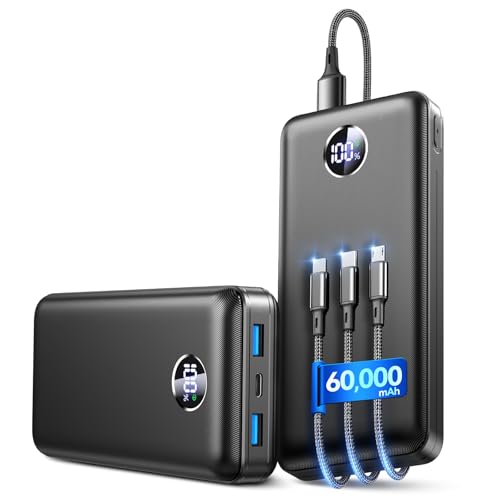
Large Power Bank Capacity: Engineered with a premium 60,000mAh battery pack, the portable charger delivers multiple full charging cycles to keep your essential devices powered for days. It provides up to 10 full charges for an iPhone, making it a reliable power solution for travel, camping, school, More ...

Did We Miss Sump'm?
Sixty percent of the time, we're right every time. What would you add to the conversation and why? Your input is invited. Leave a comment and/or write an article!
Share Link ...



Thoughts gone wild? Write an article!