
Tag along for our FTC disclosure saga here ...
What Do vs. How
Team TRO trades garage impatience for riding composure, checks beloved gear for retirement and puts Wera Hex Plus to work on stubborn fasteners. Music by Rabid Neon and Otis McDonald. Download our feed here.
Transcript
As legible as we are intelligible ...
Brian: In this episode, What Do vs. How, meaning keeping cool when taking on any task. Riding Kit Stockholm Syndrome, we all have gear we refuse to replace. And Brian's Tiny Tasty Tooltips, Vera Edition. Visit radio.tro.bike in your web browser if you'd like to hear our random songs of the minute. This time around, it's Magic Mountain by Hollow Ship. Great instrumental jam, very pleasant funky beats. Make you ride quick. Have a good time with that. Big announcement on this one. Riders First is offering free classes. So this is an Indiana MSF curriculum provider.
Robin: Nice.
Brian: So before we get rolling, a heads up for younger riders around Indiana. Riders First Motorcycle Safety Training is advertising a free motorcycle safety class for Indiana residents age 21 and under. That's 21 and under, not just under 21. To get the promotion code, text 463-269-9959 and be ready to verify your age. Get that code before you register. Riders First's Entry-Level Motorcycle Safety Foundation course combines online preparation with two days of hands-on training. They provide the motorcycle, and you don't need a motorcycle permit for the class. You do need to meet their enrollment requirements, complete the online course beforehand, and bring your own DOT-approved helmet and required riding gear. That's a full-face helmet, by the way, folks. Don't bring a motorcycle hat. Riders under 18 need a parent or legal guardian present to sign the waiver. The free course offer is for Indiana residents only. Out-of-state riders can still sign up and pay full price if their home state recognizes MSF completion cards from providers in other states. Check with your home state's licensing agency before booking to make sure the rider's first completion card will count toward your endorsement. When you text for the promotion code, confirm which classes and dates qualify before registering. If this sounds like you or someone you've been encouraging to get trained, contact riders first and get the details before booking. Now, news, which we will not read as if we're seeing it for the very first time because we're completely familiar, says Brian and not me so much. Let's give this a go. You want to read the first one?
Robin: I'll dive in. Robin, how about a navigation screen that you can take into the diner?
Brian: Tell me more.
Robin: This is from CarPureRide.com. I'll tell you more. Car Pure Ride, which is a horrible word. Car Pure Ride. Latest screen updates tackle a very ordinary touring problem. What stays on the bike while you go inside and what are people outside going to do to it. Use 702S Plus. Got all that? W702S Plus.
Brian: Catchy!
Robin: Adds a quick-release mount to a 7-inch display running Android 12 with built-in GPS and front and rear 1080p cameras. The smaller W603DS, oh, can it be consistent here, also gets the removable mount and dual cameras, optional tire pressure sensors, and so forth. The interesting upgrade is not really another icon in the dashboard or another device. It's being able to take the expensive part with you at a lunch stop. That's what's interesting to us. So, would you rather run navigation apps on a separate Android device or let your phone do the work? We have different takes on that. Either way, easy removal deserves a place on the shopping list alongside screen brightness and glove-friendly controls. So, these are the maker's announced features, not a road test yet. Are you guys listening?
Brian: There are a lot of these popping up, man. I don't know if I would need to walk away with it. Like, it's... I've got the phone. This is just an expansion of the phone. I'm pretty satisfied with what I would see on the screen on that level.
Robin: So, you know, figuring out what to take with you, what to leave on the bike is always kind of an individual decision. And as long as it's clamped on the bike, I don't really, I don't know if I feel an urge unless it's overnight. But yeah, it's a great feature to have. And I'm glad that people are out there thinking. I said a few episodes ago that this is all in Wild West development mode. And it's going to be really interesting to see where things end up when... People kind of settle down and the market understands what's important in a few years or right now, whatever. All right. What else you got?
Brian: Next up, Kawasaki takes the clutch squeeze out of stop and go riding. This comes from Kawasaki.eu. Kawasaki has announced a European market KLE 500 SE smart ride for 2027 with a mechanical centrifugal clutch integrated into the conventional clutch assembly. Kawasaki says you can pull away and come to a stop without operating the clutch lever with no electronics needed for that function. You still shift gears yourself using the normal clutch lever and shift pedal. This version also gets tubeless tires. The announcement is European, so don't treat it as a confirmed U.S. showroom offering. Forget the adventure bike label for a moment. This is a useful road riding question. How much of the manual experience do we actually want to preserve in a traffic jam at the end of a long day? Taking away the repetitive squeeze without taking away gear selection could be a sensible middle ground. It is an automatic transmission, and the distinction matters. Personally, I don't have any use for what is essentially the E-clutch or whatever they call it. It seems to be sprawling across brands now, and I like the feeling of a normal clutch. It feels like they're trying to cater to people who don't want to learn to drive a stick shift car or operate a clutch on any machine at all, when that also could be the devolution of society in my mind. And if we don't help people learn the idea of coordination and consequences, I say whatever to this. It's news. Some people are going to be excited to hear it. I myself am just reading it verbatim because it needed to be said.
Robin: Go back to your opening announcement about free rider training here in Indiana. Clutches are a barrier that are keeping younger people and older people now, out of motorcycles. And if we can remove that barrier, that is probably going to be a good thing if we're getting more people on motorcycles. We don't get a lot of details on how this works. I do really like the idea that this is a purely mechanical solution. And I don't know if it's just like it's a limited strength clutch, like it'll get you rolling in first gear, but you can't get up to speed. I'm not sure what the details are, what this is like to ride, but a purely mechanical solution. As opposed to the really expensive electronic solutions that we've seen, could be kind of the magic sauce here. And if it gets some new people into writing, I'm all for it. At least here in the U.S., the market has so far been very against automatic transmissions, against costumers. De-clutching, but we'll see. Honda system is supposed to work really well in real-world use. There have been failures in the past in other bike makers, but it's coming, it's going to happen, and old farts like you and I don't get to complain about it. If it brings more people into the fold, that's fantastic.
Brian: What's up next?
Robin: There's a mini rant here. I'll get to that. Held is the European gear maker. I think they're German. Held's rain layer works inside or outside the jacket. That's just from Motorcycle.com. So there's a FreshMotorcycle.com review where Held's Carissa or Carisse Evo jacket and Tomo Evo pants are kind of new on the Turing radar. The practical hook here is there's a rain layer arrangement. Held confirms that the jacket's removable Gore-Tex layer can go inside the jacket, over the jacket, or can even be worn on its own if you're out for a fashionable dinner. So the reviewer reports that the suit kept water out during hundreds of wet miles in Canada. Nobody sent us a free suit to test, so whatever. So our take on it is that a weatherproof layer isn't much help if changing into it becomes a whole roadside production and dance. So having it built into the suit can be a really good thing. So would you rather stop early and put the shell over everything or leave the rain bearer inside and manage ventilation around it? I guess with this suit, you kind of have the choice to do what you want and it's kind of with any, solution for weather resistance and crash resistance and so forth you kind of have to learn your way around it you have to learn how to wear it how to use it it's like any other tool so how quickly can you adapt what gets wet, where's the extra layer does it go in the bag do you put it in a pocket hard to tell the other. Relevant piece of this that you need to know is that the jacket is $1,300.
Brian: Good grief. You've got to be kidding me.
Robin: So this is at the high end. And so I think you can kind of have a certain level of trust that this is going to work as advertised. Held makes very, very high-end gear. I don't know where you get it in the U.S., but I bet rich people know. My take on it is I really, really hate having the waterproof layer under the jacket. And I think we've talked about this before. That works. It can keep your skin dry, but now you've got this soggy mess to hopefully dry out or just stay soggy and heavy for the rest of your ride. I do like the idea of including with a jacket, making it a system where you have a jacket that goes on the outside. I know Revit offers that and Held offers that and a few others offer that. So that makes sense. But I don't know why anybody put it on the inside, but if they want to, I guess they have that option.
Brian: Very good. Well, next up here, Leet moves from protecting the rider to cleaning the bike. This comes from PRnewswire.com. Leet, L-E-A-T-T, has announced GRIT, capital G, capital R, lowercase i, double T. Just making sure you get that. It's a care product range covering motorcycles and bicycles, including washes, chain lubricants, and degreasers. Its cleanest product pitch is thicker liquid that clings instead of immediately running off. That's a manufacturer claim, not proof of better cleaning or longer component life. Leet says the range is available to order. Bicycle retailer reports U.S. And Canadian inventory is expected in mid-November. So ordering and having it on a local shelf are different things. The touring question is whether a new bottle makes maintenance easier or just makes the garage shelf more crowded. What would actually earn a place in your routine? less mess, less scrubbing, or one product that replaces several others. A familiar logo is a reason to look, but not a substitute for seeing how the stuff performs. I don't know. We wrote an article a minute back that talks about the muck-off system. Which is fiercely dedicated to this exact thing. It comes with this machinery you can buy and all these different things. And basically, it's merchandise and merchandise. And I actually really like what they did. I didn't buy it, but I dig what they're up to. I support what they do. Imagine if this one bottle, elixir, as you call it, with the Suzuki coolant, ultra blue, elixir of magical qualities. I don't think it's going to replace all those things, but hey, cool. This is great. Find your brand. Go that route.
Robin: Cleaning motorcycles yeah oh it's raining let's go ride this thing's dirty all right, this comes from ridermagazine.com they're route planning so montana's us2 offers a different kind of cross-state ride, so rider magazine has published a planning guide to roughly 665 miles of us2 across northern montana, this links mountain scenery in the west with small towns and open planes further east. So the feature includes a mapped route and downloadable GPS files, et cetera, and so on. It recommends going July through September. You do not want to be in Montana right now. So this is an ideal plan for next summer rather than an invitation to head out there to the mountain passes in October or November. The appeal is the change of scenery across one state. It's not a promise of nonstop corners. So would you ride west to save the mountains for the finish or ride to the east to put the winding section first. A route like this also asks whether the small town stops are the point of the trip or merely interruptions to racking up mileage and corners. A good touring road doesn't have to keep your tires on their edges all day. Well, we'll see about that. You have your opinions.
Brian: I don't really mind the Lake Michigan Circle Tour if I'm doing it to spend time and I just happen to have handlebars in front of I mean, the motorcycle becomes an additive to that. Like, do you want to go spend time with the fam and see the pretty sights and do this stuff? Oh, and you can also do so either in a car or you can get on the bike and just go straight ahead and enjoy the bike. I'll take the bike.
Robin: Yeah.
Brian: But at the same time, my default is like, well, if I'm going to Montana, well, I'm going to jump on 12 and go to Lalo Pass. And I'm going to ride that back and forth 15 times. I'm just going to live on 12. But it's a nice thing.
Robin: Time on the center of the tire is not always wasted, and there's a lot out there to see that's not mayo, mustard, and lean angle, I guess. I'm not selling it, am I? I'm not selling this at all.
Brian: Hell, look at our NM3 tour. The space between Silver City and the start of Devil's Highway. That is 70 miles of just, you're going to go that way, and it's going to be blazing, but look around, and you just...
Robin: That's gorgeous. Yeah, that's true. Yeah.
Brian: It can be good. It gets into something we're going to talk about here in a bit anyhow, so. All right. Well, Brian, enough of this news. We've done our part. Catch me up. It's been a little bit. What's going on?
Robin: Just had kind of the season finale ride, if you want to call it that, with my good friends, Tim and Greg. You know them, you know them too. Absolutely glorious day. Very cold in the beginning. We stopped and had a leisurely breakfast to let it warm up. And we got a really, really good last look for the year at all the middle Southern Indiana classics. You know them, you love them, 135, 58, bunch of back roads, just a wonderful day. We did not see any deer, which is kind of the usual pattern, is they kind of really lay low for a few weeks about now. And then in a week or two, end of October, early November, they're going to just explode. And they're going to be out running around all over the place. And I am not going to be on the road. So I'm out of the countryside for six to eight weeks, well into December. Although i do still ride locally for errands and stuff like that and, yeah if we get any bonus days like in the december and january and february, we can be found out there if we get a 50 degree day which is not uncommon just a tiny rant uh, indot indiana dot finds a creative new way to screw up highway 135 every year and this year is no exception what happened, They chip and sealed the road earlier this year, I believe it was. And then there's an extra layer of seal. So it's like this kind of lumpy black surface. It's very rough. I don't know why. Like your suspension is working, not just like gravel.
Brian: Oh, great.
Robin: It's finally settled in. The debris is gone. But it's a really lumpy, teeth-rattling type of surface. Traction's okay, but it's already starting to fall apart. And, you know, if it's not tar snakes, it's fresh chip and seal. Or they go through... I don't know what's up with those guys. And also, I'm dealing... I got a couple of blown seams on a Tourmaster jacket that's kind of pissing me off.
Brian: So we'll get to that.
Robin: I stuck some tint patches on it. I need to sew on a patch and just deal with it. Tour Master does have a warranty, but I have no idea where the receipt is. I bought it locally, and it's been more than four years anyway, so whatever. I'll just deal with it. Keep your receipts, kids. What do you got going on, Robin? You're out riding awesome roads in New Mexico. You're in the desert.
Brian: I am.
Robin: Tell me what I don't want to hear.
Brian: Did you ride today?
Robin: I did. I went to lunch.
Brian: Then you were smiling. That makes me smile because I also rode today, and yes, it was an awesome ride. I think I cranked out about 90 miles or something like that. It was good. Quick out and back, rode the lunch route, which is a good time, and then connected that to Winston. Yeah, so we finally set up camp, and it's a nice, spacious site we got going on here, celebrated with stir-fry on the walk. I have a new sidebar hobby passion is just cooking on a walk over an open fire. Really digging that, so eating healthy. I do need to get a steel walk, though, instead of this non-stick version. I need the one that you can...
Robin: Oh, good Lord. Yeah. You got to.
Brian: Beat the hell out of it and just let it collect all the nasty and burn it off and keep it in. You know what I mean? I need a walk I don't have to care about, where if I cook it hot enough every time at the start, the fragments of anything in there are part of the seasoning. That's the goal here.
Robin: That's the only way to do it. Yeah. Probably not a lot of Asian markets and truth or consequences. So I guess you'll have to go to ABQ for that.
Brian: I think that our campground is the Korean district of the town. You know what I mean? I mean, we are Koreatown right here.
Robin: That's about it.
Brian: I did go on another lengthy ride not long ago with the wife. So the bikes are running nice and smooth. My winter plans are definitely in order. And I just got a new toy in the mail that I'm happy about. For Maggie's bike, she's going to have a phone charger. She's going to have heated grips. Probably get some grip covers that are those, you know, cheapo wraparounds that you've seen me use. And my FOBO tire pressure monitors are going to get transferred over to her bike. I've got an Android module coming in that I'm happy about. It cost me $150, and I'm glad she's not here to scold me about it. You know who I'm talking about, an innate Maggie. I've got the Android 6-inch module that's going to have TPMS on it, and also two cameras front and rear to record routes and promote things, all that stuff. Pretty stoked about it. The big one, though, this is a little bit of a rant for me, too. We both have hyperflash on the bikes because of our LED signals.
Robin: Ugh.
Brian: Which doesn't make much sense to me, given the fact my bike came with LED signals. So they were predisposed to having resistors built into them, even stock, and kind of defeats the purpose to some extent.
Robin: Strange.
Brian: I just ordered the blinkers that replaced it from TST Industries, their blinkers for her bike and mine. But this is the little rant I got. I got an email from them. The address I gave them was Robin Dean, care of the campground we're staying at, the town we're staying at, Zipco. They sent me an email, sir, can you give us a different address? Our policy says we cannot send to a temporary address or anything, a campground, a temporary housing, mobile home parks. We can't allow that to happen. I'm sorry. My response. Okay. Remove the care of part. It's my name, the address. That's it. I will receive it. Now, this is the part where I always laugh because you receive that email back where they say, unfortunately, whenever I see that an email, I picture them like they receive my initial response and then it just breaks their heart. Brian. They just can't deal with themselves and the fact that they're going to have to tell me that it's a physical impossibility for them to allow that to happen. There's simply no chance. They don't know what to say. They're so hurt by the decision. They're so hurt. They're going to have to explain to me that this can't happen. And you know that they feel it. They really do. So when they say, unfortunately, they really mean it. My response, yeah, that is unfortunate. So luckily i got a buddy here in town was like hey can i borrow your address having a refrigerator and some dumbbells sent along with a portable shipping container and he was like yeah it's cool so i got the product so that's how we're doing life's good how do you feel about some questions from the wild brian
Robin: We'll blast through these but first off if you'd like us to field your questions visit email.tro.bike in your web browser and send us a message.
Brian: First question, what is electronic suspension worth if the setup does not fit?
Robin: You must acquit.
Brian: A rider weighing about 209 pounds described a Multistrada V2S test ride that felt floaty. With little front-end feedback, even in dynamic mode with the rider and passenger preload setting, their current electronically suspended adventure tourer also leaves them unhappy. They say maximum preload does not put the sag where they want it, and finding replacement springs has been difficult. This owner has tried not to repeat a suspension compromise on the next motorcycle. They like the Multistrata, but questions about front-end preload, separate damping adjustments, and replacement springs changed their enthusiasm. What would distinguish an unfamiliar electronic setting from a setup that simply does not suit the rider? For a sport tourer, that alternates between solo rides and loaded trips. Would you rather have quick electronics adjustments or easier access to the springs and settings you know you need? I would rather have a manual adjustment I did love it on the beamer I really did but just to be able to dial in because I know the dark art I understand the process I can set sag I know how to tune my rebound and compression damping so I'm not worried about it I'd prefer to be able to do it manually what about you?
Robin: One element of that is that you are the average humanoid people come with calipers and they measure you to find out what the middle of the human experience is. I am, more of a too extra large, extra, extra large person. Our experiences are different. Oftentimes stock suspension is made for extra medium over here. And I think the same thing is happening with the electronic suspension. And one thing that's a real fundamental of suspension that you can't electronic your way around is the need to have the correct spring rate going. And just mashing a spring further using preload to get to correct sag still does not give you the correct spring rate.
Brian: Oh, shoot, just fill the freaking down tubes with concrete. It'll be great.
Robin: You need more sprung-a-tudeness for someone that's 209 pounds, assuming that's 209 pounds in your socks. You know, you're at least 50 pounds north of the average that European and especially Japanese bike companies are going for. In Japan, like Suzuki hires retired ballerinas and horse jockeys and things like that. But, you know, they have very tiny people doing their test riding from what I can tell. Preload can only do so much. If you're looking at a bike with electronic suspension, that's great. Preload's not going to do it. You need to be able to put some heavier springs in there. Check and see if Racetech or Sonic or somebody like that can get you hooked up and get you dialed in and in the ballpark. And the second thing, the rule of averages, I guess you would call it, also applies to the compression rebound adjustments, the on-the-fly software. and things like that. Hopefully those have a range sufficient for your personal gravitational...
Brian: Your bearing on this Earth.
Robin: I'm trying to be delicate here.
Brian: Vertical inertia.
Robin: Your personal acceleration. So a couple of specifics come to mind, you know, in these test rides. One, new suspension or better suspension that you're not accustomed to is going to feel weird at first, and you just have to deal with that. So to a degree, it's really hard to separate what is just something that's not familiar versus something that's genuinely better or genuinely a problem. For example, on my 850, my ancient 1983 GS850G, it's 43 years old, and you can imagine how primitive the fork is. I installed a fork brace on the GS850 because everybody said that's what you needed to do because the forks are so skinny. I hated it. I was using all that, all that wiggliness and all that stuff was feedback I was using to tell what the front end was doing. And the fork brace kind of objectively should have made an improvement, but I didn't think it was an improvement in feels. So there may be something like that going on. So things like people sometimes complain that after they install cartridge emulators, they, that the front end feels kind of numb that can be a concern anytime you you ride upgraded suspension or you upgrade the suspension it takes some time to to tease out okay is this just something i'm not used to, or is this genuinely a problem active suspension if you're riding something with active electronic suspension it's going to like sit in the middle of the track it's going to feel weird like it sits in the middle of the travel and it kind of you can feel it clamping down on, you know it doesn't move around as much and so you don't get as much feedback, it may be more of a u problem depending, and all the traditional stuff applies if your front end feels vague look at the rear end you know people are like oh this feels vague up here and it's like well maybe the bike is sitting too low you have too much sag in the rear yeah.
Brian: There's nothing left
Robin: And also if your spring rate in the rear is still not anywhere near the ballpark where it needs to be for you, that can make the front end feel really weird because you're kind of sitting up too high. So everything's connected. And so it takes a lot more than a right around the block on a dealer demo to kind of tease all this out. And I suspect the answer is some of all the above. I definitely make sure that there's some aftermarkets, at least an aftermarket spring available for both ends. Like if I'm above average weight, I'll just go ahead and admit it. I'm so brave. But before I buy a new bike with electronic suspension, I would absolutely check and see, okay, can I get at least the correct spring rate? Does the electronic adjustment have enough range to be where I need it to be? Or am I going to need to have this modified? Am I going to need to install a new shock? Every bike I've had, I've had to upgrade the suspension. So I need to budget for a better shock. I need to budget for upgrading the front end. And, The same process applies to electronic suspension. The electronics simply can't do it all. You can raise spring rate with pumping air in, but nobody's done that for a long time. It's really not that. It's got a lot of problems with that tactic.
Brian: It makes more sense to me that on the electronics side, it'd be great to have presets so that you can actually dial things in exactly as you would want and then save that setting. One of the biggest issues I have right now is I have two bikes, one of which, depending on the person after some discussion with the owner of our SV, which is Maggie Dean, her permission is what brings the gavel down on whether or not a person's allowed to ride that bike. And when they do, I want them to be comfortable. What do you do?
Robin: Not enough adjustment.
Brian: You got to have the adjustability and the know-how. Now, if you would like to learn to tune your suspension, visit TRO.bike mouse over DigiTools and click on the suspension sag calculator. This doesn't necessarily fine tune your rebound or compression damping, but it does get your sag right. And then all you need to know about your rebound or compression damping is whether you hit a bump or rise over a hill, your bike should only respond once and then settle back to normal. That takes some practice and we can discuss that if you like, just reach out via the contact page. Anyhow to be able to do this requires the three adjusters that allow it the preload the compression and rebound damping so we got to work on that emulators the component that you would install you then have to remove and adjust every time that's a little bit tedious in standard forks they go at the bottom of everything so it's a process yeah Anyhow, onward. Our next question is about wind protection.
Robin: Brian, how much wind protection is too much wind protection? This is a question near to my heart. So a rider of some sort, about five feet, nine inches tall, an average medium extra person, bought a 2025 Kawasaki Versus 650 to get away from the wind fatigue of a dirt bike. The report that every position of the stock screen produces severe buffeting above about 50 miles per hour, along with poor helmet ventilation. A taller screen largely stops the buffeting, but leaves them uncomfortably hot and looking through the screen instead of over it. They like the bike, yet they wonder whether a different screen, helmet, or even a naked bike would make their riding more comfortable. But they also like to have the rain and cold protection they get from a fairing.
Brian: Now, I know what you might say.
Robin: You know my thoughts on windshields.
Brian: Brian has a prejudice against windshields, and the first thing he does is, without even loosening the screws, he walks up and rips it right off the plastics and leaves the jagged, broken fiberglass right there as a message to all others who would dare offer him such things as wind protection. But here's the trick, and this is going to get into our main segment. It depends on the height of the rider, the shape of the windscreen, where it deflects the airflow to. I remember that Maggie's Triumph and now her Suzuki SV650 both have impressive designs on the windscreens we chose. Those were through SWMotech. This one's Puig. But the SW MoTeC on the Triumph did something I'd never seen before. Instead of the whole like loop-de-loop thumbnail, shape it this way, it was splayed. Almost like a split window VW Beetle, you know, like it just had this crease in the center that said, yeah, yeah, we'll try to get the air to go up over you. But before we do that, can we just push it around you and evenly as such? So the contours were nice, but it had a crease in the center that gave it an angle that shoved air to the far right and the far left. Like the one from my Beamer, I got the thumbnail, the giant thumbnail, because for me, again, Captain Average here, it was the perfect answer. The air would end up at the right point on my helmet, clean flow, and the remnants of which were then taken care of by my helmet. That worked for me. If you're taller than that, I remember people riding my bike. Like, hell, Brian rode it, Travis rode it. All these other people had been on the bike, and they were like, yeah, I'm getting dirty air. Because they're a foot taller. They're way up in the stratosphere, dealing with the after effects of clean air, getting blasted into dirty air, having a fist fight that we don't know about, and then shaking our heads about until our brains are scrambled. So... There are answers. They just need to suit you. Know your physique. Assume what may or may not work. And remember, what looks aerodynamic might not be. There's a great regular car reviews discussion. Look up the regular car reviews station on YouTube where he gets deep into the Hayabusa and talks about how aerodynamics don't look the way you might want them to. And that's okay. it's okay to buy the bike that looks the way you want and compensate later it's all right that's my take brian what you got
Robin: I'm normally not a fan of windscreens i am a fan of clean air, and that's how i have everything set up some people do like windscreens and that's fine, i would say a really good starting point to really get an idea okay this is what i'm dealing with and help separate out the components that go into creating smooth airflow, yank the windscreen off, which is what I do anyway, but, take the windscreen off and see, what is coming from the fairing, what's coming from your mirrors, what's coming up over the headlight or whatever's left there, and try to kind of piece together something that works for you. You know, a lot of people do end up with a different setup for summer versus winter if they want weather protection, if they want protection from the cold wind, and it's incredibly individual.
Brian: Unique to you.
Robin: It is unique to you. It's incredibly individual. So there's not, you know, we can give you like a little bit of guidance, but we can't say, yeah, buy this part number and your troubles are over. So check the forums, look at the feedback. You know, you're an average height, for an american male but you know what if you have really short legs and a long torso so you may need to adjust there.
Brian: We know a guy
Robin: I would say the other thing is make sure you have a helmet that fits correctly, and the correct fit on a helmet is often a lot, more snug than people buy so if your helmet is rattling around on your head that's going to cause a lot of problems of its own any reasonably modern helmets going to be pretty have pretty good aerodynamics, so i don't know if There are a lot of differences there. Touring helmets are going to be a little more stable, maybe a little heavier. Versus is kind of an upright bike, so you're going to want to bias towards more of a touring or a naked bike helmet anyway. Like a full race helmet is intended to be used.
Brian: Kissing the tank.
Robin: Yeah. And so it's going to aerodynamically behave a lot differently. But yeah, there's a lot of things to piece together. Even things I found, I'm fairly wide, and I found that getting spacers to move the mirrors out about three inches on each side actually helps a lot, too, because I get a lot of turbulence that can kind of hit my shoulders and my head, just from the mirrors on a standard bike.
Brian: Get truck mirrors. Big rig.
Robin: Yeah, just set up cameras and an Android tablet and electronics and radar units, all wireless.
Brian: Because you know what's fun? Changing batteries.
Robin: Bluetooth connecting, Bluetooth connecting.
Brian: If you'd like us to field your questions, visit email.tro.bike in your web browser and send us a message. You ready for segment one, Brian?
Robin: Segment one?
Brian: Segment one. I'm calling this what do versus how, because it's not what you do. It's how and maybe why you do it. It's a vague notion of a subject. If you cherry pick a favorite concern or opposite, like a route rally or a plan, there's likely a best and worst way to approach it. With a loosely exacting effort, I want to talk about how we either get in or out of our own way. You know, like sensibility, cognitive load, patience, when to hustle, whether or not the time window for any decision we make is going to leave us stressed when we start or not, or if we can come back to it and not feel like it's going to be a mess of mismatched memory when we arrive back at the task. The first one that I thought of, the instant I start a maintenance task that I promised myself I would address from a relaxed posture with more than enough time at the very first wrench turn, I want it to be done. Done. Done, I say. This can and has caused the kind of mistakes that only make matters worse and sometimes exponentially so. So let's remind ourselves, you know, I'm in these clothes to get dirty and I've got all day to dirty them. I have two bikes. I have two bikes. I have two bikes. And freaking breathe. Take a breath. You've got time. Turn the wrench. Observe. Remember that you forgot to do the other thing first that's supposed to come before this. So go ahead and stop turning the wrench and address it. Just give yourself enough room to realize, oh yeah, that's okay. This might take a weekend. I told myself it would. Now, Brian, I'd have compressed efforts into like two days. It's going to take two days. And then everything starts to compress. The effort starts to constipate. But like, why get stressed? If you have the time to stretch it out, why not just take a breath you're going to find that you might even cut the time in half just because you decided not to let it get the better of you.
Robin: Yeah and, We'll stay in the garage for a little bit. Now, my perspective in the garage is pretty different. When I was five, I rebuilt my first lawnmower engine. And when I was seven, I saved up my pennies to graft a glitter gold banana seat onto my little red Schwinn. So nice. I have a different challenge when it comes to the garage. The challenge is just getting my ass out there in the first place. Once I'm there, I'm home. I know what I'm doing. I'm calm. I'm zen. The anxiety leaves. But the problem is making a time to get out there and to do the things I need to get done and making that time like one of the things you said was I've got all day it's like I when to hell do I ever have all day it's hard to set it aside.
Brian: It's a long game
Robin: Yeah the motivation for me this may sound weird but it's just plain lonely out there a lot of times, I really enjoy the social aspect of that when you and I have had extended garage sessions I really enjoy that I enjoy teaching people things. I enjoy showing them things. I enjoy learning things from people that know things that I don't. Teamwork, that kind of thing. And kind of the example I give here was when Travis had a tire that was looking mighty, mighty thin. And once again, I parachute in out of Indiana to Kentucky with a tire. We pull that off. And what was fun about that was we had not Not just my hands, but your hands and Travis's hands were in there. All of us with untold experience in wrangling rubber onto rims. And the whole thing happened as if by magic, like in seconds.
Brian: Like a pit crew,
Robin: A tire was and then it was not. Then the new tire appeared and it just magic. And it was on that kind of thing is a lot of fun where everybody knows what they're doing and it's like a pit crew thing. That was kind of fun.
Brian: It was even better to see the people that didn't know what they were doing watching it happen.
Robin: Oh, that was the best.
Brian: They were just like, oh, okay.
Robin: What did I just see?
Brian: Boom, done.
Robin: Once I get there, I'm on my way. I'm good. I'm locked in.
Brian: This winter, we will make a point to keep company with Brian. So I'm going to set up a special Discord server, and I'm going to invite very particular people to it. You and I will be there, and you can log into it anytime and say, like, is anybody in there? No, there's not. Okay. And then maybe reach out and be like, hey, I'm going to go into the garage. You want to hang out? What are you doing? I'll be like, well, I'm writing an article. Cool. Write your article and meet me in the garage. And then we'll just hang out while you're working on stuff. Right. Does that sound good?
Robin: Sounds lovely.
Brian: Do you have a garage computer?
Robin: No, I don't.
Brian: Change that today. Get yourself a dedicated oil-based computer that just it takes all the brunt of every punishment but has just enough CPU power to stay online and keep track of steam powered yeah but then back to Kentucky getting that tire swapped out that fast now we're riding again right in writing the whole what do verse how not what you do but how you do it this might mean repeated forgiveness of self which is something I'm writing about right now whereby a poor line selection doesn't need to become a domino effective. I always try and select the porous line, you know what I mean? Like from here on for the entire duration of the ride. We catch ourselves, we loosen up, breathe in, breathe out, acknowledge the error, correct and refine. Whereas option B is like we cringe, we gnash our teeth, we angst and blame the self so as to ensure that next corner goes to shit, followed by the one after that. We do enjoy riding motorcycles, right?
Robin: Right.
Brian: Find that. Find that enjoyment. Immediately following the error. Cap it with a laugh. You know, this is a way back into that Zen state.
Robin: Yeah, and I simplify this down, and this applies to all aspects of the act of writing, but let it go. You have to let it go. Your own mistake, learn from it, adjust, you know, adjust, learn from it, move on, keep that grin on your face, keep enjoying yourself. But one of the things is to really keep an eye on the people around you the people you're leading, and look for those people who are experiencing anxiety or are mad about something or they're mad at themselves or they're mad at you talk about it buy them a candy bar whatever it takes to to get them off of that and the same thing applies to, road rage things like that if people are going to road rage or people if other people do dumb things things like that you gotta let it go.
Brian: This is going to tie in so well.
Robin: For me, the biggest lesson in forgiving myself was in off-road riding. Because when you fall off your bike on a street ride, it's kind of a big problem. It's a deal. It's a big thing. Falling off off-road is kind of part of the thing sometimes. So the first several times I fell down when I was building what little skill I have off-road, it ruined the whole It was a disaster. It was like, oh, my God, you know, I'm no good at this. I can't do this. I need to go home. I was locked up. I was stiff. And that just increases your chances of something, happening further down the road. I mean, you're further down the trail. So, yeah, self-forgiveness, things like that is a big part of it and forgiving others.
Brian: Don't be a block of meat sitting on the seat.
Robin: Yeah.
Brian: Be able to be fluid.
Robin: Nobody's perfect. Something is screwed up with every corner. It's just a matter of degree. As long as you're still on the bike, you know, that's good. You're doing well. Stay on the bike. Keep riding the bike. That's important. Don't go, start beating yourself in the head and run off. Yeah. Handle that imperfection and move on. Learning off-road riding, track days, things like that, give you like a bigger toolbox for compensating. Dealing with and forgiving yourself for all kinds of things that can happen.
Brian: Now, remember the theme here. What do versus how. You will meet people out there who... Under no circumstances, they ain't going to learn nothing gooder. You're going to bump into people at gas stations who are going to question your choice of bike, who are going to wonder why you wear gear, who are going to say, what I like to do is, and it's going to make no sense to you. And it's not even bait. They're just trying to project on you an alternative to anything that you've learned that is good. And you have to navigate these conversations. I mean, have to is relative to your will to do so. You can also just not speak or just turn your back and stare at the wall. But it's going to happen that you're going to meet people who don't necessarily share your perspective and they express such before they've even heard your perspective. Deny those who cross your mind palace threshold with, I don't wear no helmet. My bike is faster than your bike, by the way, really, because they're stationary until the better writer tells you we're not into racing on public roads. Or my favorite, if you don't use this technique to make a U-turn, you should feel inferior to those who said so. Just deny them the response. I'm not interested in learning who's faster and U-turns are nothing more than a maneuver in favor of a proactive, positive, optimistic response that disarms everyone A much better experience. I need to practice my own words here. It is so hard for me not to be like, sure, I'll play.
Robin: Yeah, yeah. Don't take the bait. Yeah.
Brian: I've got this Kung Fu at my disposal in this particular subject matter, and I'm ready to dole it out.
Robin: Yeah.
Brian: You can say, no habla inglés. Of course, then they'll say, oh, well, me llamo, and then they'll like no Spanish flu.
Robin: Oh, shit. Yeah. No, no. Damn it.
Brian: Yeah.
Robin: The key here is the same thing. Keep smiling. You're having fun, man. Sometimes it's hard to escape the guy who wants to tell you the story of how his Uncle Fudd killed himself and one of them devil machines or whatever. But keep smiling and find a way to engage. Nice paint. Nice chrome. That sure looks like a lot of fun. Thank you very much. But no, I don't need a Budweiser right now. But thank you. Very kind of you. I've said these things. And also, I think what's kind of fun, I've done this deliberately many times, is when people, they'll make a comment about like, ain't you hot and all that.
Brian: My new favorite answer comes from a friend local and it's, oh, thank you. Nice.
Robin: Just get like super nerdy, enthusiastic. Oh, wow. Let me show you this. Well, like see all them little holes in this thing. It's like, it's mesh. Air comes right through. And it's really much, you know, much better than being hip, but you know, than riding in the hairdryer or, you know, the helmet thing. It's like, man, I really, my doctor said I had to stop eating so many bugs. So I really find that this is a lot more comfortable. You know, most people just don't have a helmet that fits right. You know, they haven't really tried one that fits right. Just nerd out and smile, and maybe they'll learn something, and maybe they'll just walk away.
Brian: I like it. I like it.
Robin: Yeah, there are all kinds of ways. Just be positive. Keep smiling. Riding is fun, damn it. I like the suffering.
Brian: It's our turn. We got to learn. We're moving on to segment two here. I've made a request. We're going to talk about riding kit Stockholm syndrome. We all have something we refuse to replace because the alternatives might be worse in our mind, that means we're going to need some extra special expertise to discuss the matter. I can tell you that right now, hanging up, I've just pulled out my Sedici Rapido and Altimo kit. It's exactly what I prefer. It is the best writing gear I've bought in all the gear that I've bought. Why? Because it's three season. It's easy to switch out. It's got two breast pockets to hold my extra audio line and my phone on the exterior. It is exactly the, dare I say, third person Robin Dean-ist, Robin Dean-ery that I could Robin Dean with on a motorcycle. And I know that sounded weird, but I'm going to stick with it. So point is, I see gearchick.com, Joanne Don, Like I said, we all might have something we refuse to replace because the alternatives might be worse. What would make you repair it, alter it, or just finally retire it? And bring an example of a beloved piece that deserved another chance or one whose owner needed a gentle intervention. Has it happened to you?
Joanne: I haven't worn anything out to that level. I have things that I just don't like anymore, but they're perfectly fine. And I just don't want to wear them because I got something newer that looks better or something or my tastes have changed. So then I've sold those cheap or given them away. For me, it's really that my closet was overflowing with too many things that I wasn't wearing. So I donated a bunch. Most of it was new, like hardly worn, but I don't have anything that's super worn out. The only thing I've replaced a couple of times were gloves. So when I started, I was riding a scooter and it was a small scooter and I was mostly using two fingers for braking and I wore out my index fingers. So that I replaced immediately because as soon as there's holes in the fingers, I don't want to risk one finger. Care. So I bought new ones. After that, I've replaced a gear I've crashed in. So I crashed in my hybrid leather pants and my hybrid leather jacket, and I specifically wore down the knee. I slid on my right side. It was a low side. So that means I abraded my elbow seam, my right knee, my right elbow, and a little bit of my stomach. Now, because I slid on the seams of my right elbow and my right knee, I chose to replace them. Also, I'm vain, and aesthetically, I don't want to wear gear that looks like I've already crashed in it. It's okay to be vain, and it's okay to buy things because you don't like how they look or you want something different, and aesthetically, you want a different whatever. I really don't like it when people say passive aggressive things to other people like, well, I don't care how I look. Good for you. Some people value that and some people don't. And that's great. You don't have to value it. I don't have to, but I do and I want to. Also, the jacket was white and so it was gray where I had abraded it. But my main concern was if I low sided again on the right side, then the seams might actually compromise. They were Revit leathers and they were very good. So sliding at about 50 miles an hour rubbed away the white leather to reveal the gray of the leather underneath. I'm sure I could have used them again. Like they weren't worn through. I bet I could have crashed in them one more time, and then they probably would have worn through. I just didn't want to wait. So, Honestly, if you don't want to give up something, hang on to it as long as you want to, as long as those core safety pieces haven't worn away, right? If there's a big holes in your elbow because you've crashed three times, it's time. If you've compromised the hip seams because you crashed, it's time. Now assuming you are using the right product in the right context. So I don't mean people who buy city abrasion clothes and go on the highway at 70 miles an hour. I mean, if you're buying something that was designed for the purpose of what you are doing in terms of abrasion and strength, this is what I'm speaking in the context of. If I buy this leather jacket like I did back then, It was designed to work for me going on the highway at 60, 70 miles an hour. The leather was that heavy. So it was 1.2 millimeter. That's track leather weight. So it was the heavier weight leather designed for that. So when I crashed at 50, I might have been going 60. It was a 45 corner. At that speed, it wore away the color of the leather. I expect that. It started to open, I think, on part of the knee. The way that safety seams are constructed, if you Google this, is you don't just layer the fabric on top like this and sew it. The materials are folded two or three times and then stitched together because it takes longer for the seams to compromise. Mine actually started opening, but my armor was there. So even if it did open, I was fine. But a lot of people think that seams aren't supposed to compromise at all. And it depends, again, on the context of what you're doing. And what I've seen are people who buy cheap product designed to work at low speed and they're testing it at high speed, those seams are going to go and they're not going to hold on versus properly designed. Your garment stays whole, but yeah, you might wear a hole through where your shoulder slid on the pavement at 60 miles an hour, but the whole thing doesn't fall apart. So it's okay for there to be a hole that wears into your knee because you used it, that's what's kind of supposed to happen. You know, not with track leathers. You know, if you're buying the wrong leather, Yes, the whole garment will probably fall apart on the track. But when you buy a proper track suit that's, you know, designed for a motorcycle and manufactured correctly, right, and stitched correctly, then no, you shouldn't have giant holes in your leather. Well, unless you're Marc Marquez, okay, but we're not that. No one's that here. So in just normal riding, it's okay if a hole opens because what happens is The hole starts small like the size of a dime and it opens up. The longer you slide, the smaller the hole, the shorter you probably slid or the slower speed you went. Just remember that if you don't trust the garment to protect you in all the places, then it's probably time.
Robin: There's a layer of dirt and bugs. Yeah, anyway. Yeah, this is my five-year-old climb induction.
Joanne: Wash it. Once a year, wash it.
Robin: It's been in the rain a lot.
Joanne: Soak it. And you'll get a lot of stuff out of there.
Robin: The high-vis is just gone. Actually, overall, it's holding up well. The one thing I've seen that I'll mention, I've shamed people about when the armor in their jacket starts to fall apart, Because a lot of them, the foam will eventually just get hard and start cracking. It's time to do something, whether you get new armor or you get a new jacket.
Joanne: Yep. And anything foam, it will, like you said, it'll harden and start to fall apart. But then also some armor that's not foam and it's just kind of a weird rubbery material, it can get hard. And when it gets hard, it's not going to do anything for you. It's not going to absorb impact. It's going to hurt even more, and it won't protect you as much as new armor. So definitely throw out armor that isn't going to absorb impact anymore. And I would say 10 years, that's probably, I would say that's long enough. And armor is so much better now than when it was. It sucked 10, 20 years ago. armor options were okay, but now they're even better because the really good manufacturers that spend all the money on R&D for us, they've developed lighter, softer, more ventilated and comfortable armor. So it's much better than it used to be. Science.
Robin: Yeah. You're the one to talk me into, I mean, my track suit had only a few track days on it, but you're the one to talk me into upgrading it all, just the CE2 armor. I didn't test it. I'm not that dedicated, but it was...
Joanne: Comfort-wise and fitting you, like, did it feel good?
Robin: It wasn't bad before, but it felt fine. And looking at just the little hunks of stupid foam that I pulled out versus the engineered CE Level 2 stuff that I put in there is a lot more comforting.
Joanne: It's not the Level 2, the CE2 part, For the armor, I recommended Revit's Ceaseflex armor for you. And for that particular armor, it's not the level two aspect. It's really the design that it's fully vented. That armor is so vented. It is more comfortable and it's ergonomically shaped and not a lot of armor has the right shape to kind of cup around your elbows and your shoulders. And they really did a good job to design the shapes so that the shoulders, they can only work is a shoulder because a lot of armor is interchangeable, but the elbows are shaped like an elbow, you know, and they're very specific. In general, in the past 20 years, armor is just so much more comfortable than it ever was before. And there's really no excuse to not put any in because if your frame of reference is 20 years ago, your frame of reference is old because there's cool stuff today like D3O and all these things. But Arma for sure, I would say helmets, you know, 10 years is probably pushing it, even though manufacturers recommend five to seven from the date of purchase, because you generally purchase your helmets six to 12 months after manufacture, because it takes time to get over here to go to your dealer. So five to seven years after you to purchase it, you know, 10 years is reasonable, but because the EPS, which is the fancy foam inside, it also gets hard just like your armor does. And of course, if you crash in your helmet, you need to replace that if the EPS is compromised because then it can't absorb your head anymore.
Brian: Thank you, Joanne. Similar banter at higher revs can be found via the Gear Chick website or by emailing Joanne directly. That email address is help at gearchick.com. You can also find her on social media. Moving on to segment three, we were concerned. Do we want to do the alliteration grab baguette? Do we want to do Brian's Tiny Tasty Tool Tips? Do we want to do an article read? And we've elected to do Brian's Tiny Tasty Tool Tips. One or two per episode.
Robin: Thank you. I was worried I wouldn't get the jingle.
Brian: You got the jingle.
Robin: I've got a jingle. Now we're stuck with it.
Brian: Mike is yours. Joanne, feel free to interrupt him and argue. He needs it. He deserves it.
Robin: I could do a couple more hours on thread repair and putting threads in place, but we'll put away the thread files for now. So we'll back up a step to the time before the thing is busted, before the threads are mangled. So what are some ways to turn that which is reluctant to turn, to get those threads moving before the head snaps off or the thread strips out?
Brian: I did just do this with WD-40 and walking away. It sometimes helps. Depends on the bolt.
Robin: Soak it, walk away, heat it up, things like that. And there's a lot of stuff like that we can get into. There's one specific thing. This is a short one that I'm going to get into here. So if you have hex head fasteners, and by that, I mean socket hex head, also known as Allen head. There is a hexagonal recess in your fastener. They're common on Japanese bikes. They're a little less common on European bikes, and they're all over Harleys and things like that. They're all over motorcycles because they look good. So whatever you call them, socket head, allen head, whatever. The very specific thing I want to bring up is that there are a couple of different brands of tools that are shaped a little bit differently. It's not just a hexagonal bar, but it's actually got a little bit of a shape in it. It will help lock the tool into the head and give you a much greater chance of getting the thing loose using your tool. One of these is called the Vera Hex Plus. They make a whole range of hex tools, everything from L keys to bits and so forth. Vera is spelled W-E-R-A, so you may read it as Vera if you're an American who doesn't know any German. They're a German brand. I believe they're all made in Europe somewhere, different places in Europe. But Vera Hex Plus Hex Tools are, in my experience, extremely good. They will remove fasteners that other hex keys have slipped and chowdered up. It's pretty amazing. They fit well and they will remove things that other tools will not move.
Brian: How and why?
Robin: Yeah, it's weird. They have like a little weird shape. There's a little relief in them and they can turn a little bit and then the tool can actually bite on a different part of the fastener head. I really don't know much about how the Magic works, but I can tell you that it does work. And a set of Vera Hex Plus keys is maybe $20 for a set of basic metric hex keys. And you can get stainless steel. You've probably seen the ones that are kind of a rainbow set, things like that. These are well worth having. These are well worth carrying the ones that fit your bike, just to make sure you don't ever have a problem. As I put it here, they're the stuff, the beans, the shiz. where lesser tools slip, these will do the job. There's also a tool brand that's a similar idea called RBT Grip Edge, things like that. There's a couple of other brands. It's basically a fancy shape on the hex that will get those things moving when nothing else works. That's my Tiny Tasty Tool Tip. Just one this episode, Vera Hex Plus, get you some.
Brian: One or two per episode. That's up to Brian and Brian alone. Well, I mean, that's three segments. We've got ideas for next time.
Robin: I do have an idea for next time, and you have an idea for next, next time. So that's going to be awesome. But my idea is we're going into winter. It's a time to think and to be philosophical. One of the things I was thinking about was changes. What has changed? What has gotten better? What has gotten worse in riding world? I've got gear in this closet over here that was from the time before armor was a thing. It's got like these little quilted pads on the elbows and that's it. It's a wonderful jacket. It's very comfortable. I would love to wear it, but there's like zero protection. From the time you started riding, from the time you became aware of motorcycles to now, what has changed? What has gotten better besides yourself.
Brian: And don't answer now. You wait until next week. This is information to process for the week. Otherwise, I end up with two hours to edit.
Robin: Gear has gotten so much better. What's been the arc in that and many other ways? What's gotten better about motorcycles? Let's do that.
The Gist
Robin has all weekend to fix the bike and wants the job finished by the first wrench turn. What Do vs. How follows that impatience from the garage into a badly chosen corner, where self-forgiveness beats carrying one mistake through the next six. Even gas-station experts get an exit strategy that doesn't require winning the argument.
Brian would happily wrench all day if getting to the garage came with company. A rapid-fire tire swap and plans for a Discord garage hangout put friendship back in the tool kit. His Tiny Tasty Tool Tip then gives reluctant Allen bolts a fighting chance with Wera Hex Plus instead of another appointment with the thread files.
Joanne stages an intervention for Riding Kit Stockholm Syndrome without confiscating everybody's favorite jacket. Her own worn gloves and crash-scuffed Revit leathers explain why damaged seams matter more than sentimental attachment, while tired armor gets a separate retirement hearing. Vented, shaped replacements can keep good gear useful and wanting something that looks better isn't a character defect.
Announce, Acknowledge & Correct
Riders First Motorcycle Safety Training is advertising a free class for Indiana residents age 21 and under. Text 463-269-9959 for the promotion code before registering and confirm which classes and dates qualify. Complete the required online preparation and bring the required riding gear, including a DOT-approved full-face helmet. Riders under 18 need a parent or legal guardian present to sign the waiver.
Kit We're "Blatantly Pushing You To Buy"

STOPS SCREWS FROM ROUNDING OUT: Hex-Plus geometry increases contact with the screw head, letting you apply up to 20% more torque before the recess strips or slips. REACH SCREWS AT AN ANGLE: The spherical ball tip on the long arm lets you tilt the key off-axis, so you can drive fasteners in tight or More ...
STOPS SCREWS FROM ROUNDING OUT: Hex-Plus geometry increases contact with the screw head, letting you apply up to 20% more torque before the recess strips or slips. REACH SCREWS AT AN ANGLE: The spherical ball tip on the long arm lets you tilt the key off-axis, so you can drive fasteners in tight or More ...

CE Certified Armor for Elbows and Shoulders: Our CE Level Approved Armor Pad Set for Motorcycle Jackets, Made with soft PU Memory Foam. Our 5-PC CE armor pad set include 1 CE Level 1 Back protector, 2 CE Level 2 Shoulder protector and 2 CE Level 2 Elbow protector pads,fits both men and women for mot More ...

Goatskin Covered Hard Shell Knuckle - The gloves are made from high grade goat skin that ensures durability through a variety of situations. The knuckles are hard shell PVC which provides the utmost protection to your hands in the event of a knock or crash. About the size- The glove size runs smalle More ...

6 Level Adjustable Temperature: KEMIMOTO ATV heated grips are equipped with an advanced intelligent chip, offering 6 adjustable heat levels to suit any riding condition. Tackle chilly trails or freezing commutes while keeping your hands cozy. The safe neutral mode prevents battery drain with an auto More ...

Tire pressure monitor for motorcycles, with smallest and lightest sensors in the market. with 1.5" waterresistance monitor with built-in rechargable battery. Default setting PSI and Fahrenheit, just install and go. 9-12 month long life rechargable battery in the monitor, 2 year sensor battery life ( More ...
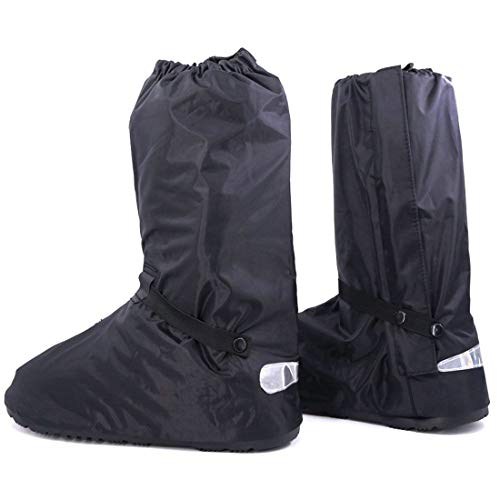
-Size: US 10-11/ Euro 44-45, Detailed Size: as picture shown. Please check the measurement before you bid to avoid unsuitable size. -Sturdy Side Zipped & buckle closure for easy wearing. Outer cloth is waterproof. Our shoe cover is suitable to withstand light rain shower, drizzle, dust, or snow flur More ...
Did We Miss Sump'm?
Sixty percent of the time, we're right every time. What would you add to the conversation and why? Your input is invited. Leave a comment and/or write an article!
Share Link ...



Thoughts gone wild? Write an article!