
Our FTC disclosure's magnum opus awaits here ...
The Burrito
Team TRO welcomes Bill Hawkins for a Mexico-to-Washington ride, repairs missing threads and picks a few motorcycle arguments. Music by Rabid Neon and Otis McDonald. Download our feed here.
Transcript
As legible as we are intelligible ...
Brian: In this episode, we sit down with Bill Hawkins, author of The Burrito. And speaking of tasty things, Brian's tiny tasty tooltips, The Thread Files Part 2, will ensue. And a random discussion from our alliteration grab baguette. Not even we know what that will be. Opening announcements, news, corrections, and banter. Robin, what you got?
Robin: Random song of the minute. If you want to hear our random songs of the minute, visit radio.tro.bike in your web browser. My wife, Maggie Dean, and I are celebrating our anniversary, 21st anniversary this weekend. So this one goes out to her. It's Wonderful by Adam Ant, which is a great song. And as Brian says, a very brave, confident opening falsetto.
Brian: Nice. All together now. Aw. Nice. Congratulations.
Robin: Thank you very much. Also, Wendell Berry passed, a Kentucky poet and writer. I actually was not very familiar, but a friend posted this incredible series of words that are strapped together eloquently, and I wanted to read it because I think it suits the convo quite well. So rest in peace, Wendell Berry. This is a warning to my readers and our listeners. Do not think me gentle because I speak in praise of gentleness or elegant, because I honor the grace that keeps this world. I am a man crude as any, gross of speech, intolerant, stubborn, angry, full of fits and theories. That I may have spoken well at times is not natural. A wonder is what it is. And again, that's Wendell Berry, a warning to my readers from the selected poems of Wendell Berry. Be sure and check it out. Rest in peace.
Brian: Nice.
Robin: In the news,
Brian: I'll read the first one, because it touches on something that I...
Robin: Go for it. Do it up.
Brian: It touches a nerve. All right. KTM's 1390 Super Adventure gets a four-channel CAN bus accessory manager. What? So, hexes 222 quid, whatever that is in dollary-dos. Easy CAN Ordos connects to the 2026 and newer KTM, 1390 Super Adventure CAN bus and gives four high-power channels of digital fuse protection and lets factory controls operate auxiliary lights, horns, navigation gear, and heated kit and, whatever clown waving stuff you have without splicing into the bike's wiring harness.
Robin: No hassle with the ABS system. Tell me more.
Brian: And basically, we've all done this. So adding accessories is easy until the bike has five dangling views holders, a battery terminal with a wedding cake shaped to it and all that stuff. So, you know, the fact you have to buy this expensive accessory just to wire new things on your bike is kind of rankling to me. I don't really think that's a great idea. And CAN bus increases the cost of components and so forth, but it does simplify wiring. And kits like these, I think people who own BMWs have long been familiar with that kind of thing, where you have to get a CAN bus converter in order to get power out of your harness safely. You know, the whole idea, I mean, I'm glad this thing exists for people who own these bikes, But it's also, is this the world we want? Is this the world we want where you have to buy a however many quids or dollary dues, you know, this expensive box to hook up a set of lights to your bike? I mean, come on. I'm sure it's a great device. I'm sure it's clean. I'm sure it's wonderful. I'm a grumpy old man. I'm a grumpy, you know.
Robin: You're not wrong. In fact, we just wrapped up our interview with Curtis Mender, and one of the questions I asked him was about the threats of buggery in the ECUs. Everything has gotten so proprietary, and it impedes on right to work, because otherwise things get hacked or whatever. Also, when I bought the RS, I think I got really lucky in that I put in a power bus and they were like, oh, yeah, I did use the commander pro turbine. Oh, yeah. Moon lander. I did none of this. I went right into the wires spliced and I connected the system and they were like, well, you got to watch out because that's going to the voltage drop will create a thing with the stuff and it'll be scanning you and the aliens and the satellites. I don't know if you know this, but you're being targeted by the CIA now. You know, it's like Interpol's looking for you. It didn't make any sense. I just realized that some of it is just hearsay do whatever you want with the damn pike
Brian: Truth is you know some sometimes on the bmws the ktms etc with the canvas, yeah you can cause problems if you just start hacking at wires and so forth there's a middle ground there where it's not all it's cracked up to be you know if you're going directly to the battery that kind of thing sure it's probably going to be okay.
Robin: If it gets confused by how much how much of the milkshake's being sucked through the straw and starts to go haywire because of that, that can get a little weird. But yeah, no, I agree with you. And that's why I went modular. Hey, you know, I went with the freaking Suzuki GSX-8R. I'm super happy with that bike. Are you ready for the next one?
Brian: I'm ready. Hit it.
Robin: Dayanize gives elite racers a full test day instead of chasing feedback during race weekends. This comes from MotorcycleNews.com. Project Apex put riders including Valentina Rossi, Marco Bezzeci, and Franco Morbidelli, I hope I said that right, on largely road-derived bikes at Masano to assess more than 95 configurations of leathers, gloves, boots, and base layers. Over 50 Dianese engineers collected feedback on products already developed for as long as 18 months. The useful question is how much 340 kilometers per hour, what is that, about 210?
Brian: Something like that.
Robin: How much of their pace the racer feedback reaches a rider doing six hours in rain and traffic. Extreme testing can expose weak seams and back controls, but comfort at the limit is not automatically turning comfort. Agree? Disagree?
Brian: Agree. Interesting. So they somehow hired him for an entire day to switch between things. And so they're going to get at some things like comfort, but yeah, they're not going to get a lot of information on street conditions and things like that. Unless it happened to be raining that day. Raining would be kind of cool.
Robin: You're going to like this next one.
Brian: Boy, crash data. All right, the roughest roads and the deadliest bad road states are not the same. A law firm study of 2020 through 2024 federal crash and pavement data ranked West Virginia worst for the combination of road condition deaths and poor pavement. Rhode Island had the highest share of poor roads at 36.2%, but a comparatively low condition-related death rate. So these are deaths caused by road conditions of some sort, like the road's not there or slippery or whatever. OK, the figures cover all vehicles, not just motorcycles. OK, so bad pavement is visible to all of us, but the mix of speed, terrain, shoulders, traffic, etc. may be what turns it lethal. Interesting. So for trip planning, the question is, should riders avoid a statewide ranking or use it as a prompt to inspect the exact corridor of where they're going, think through construction, think through escape room and things like that?
Robin: West Virginia is some of the best riding I've ever enjoyed.
Brian: And it's also the most challenging.
Robin: So that's probably why.
Brian: So yeah, it's hard and we love it. i think the pavement in west virginia when it exists if it exists is, some of the best in the world but the conditions and the roads are very challenging very mountainous very hilly, it's really if you have not been through west virginia it's really hard to appreciate just how remote it is how rural it is and how hilly and like it's not like alpine mountains but it's mountains yeah, it's pretty amazing i mean for motorcyclists, You know, for us, it'd be like, oh, this is a big negative. We need to go to there.
Robin: Precisely. ST is like, what? Where are these roads? I must see them and inspect them myself.
Brian: I must go. I must go there. And yeah, with anything, it's you have to pay attention. You have to be on your A game in West Virginia. And I think that's more what it projects than there are potholes because it's not very cold there. They don't get too many potholes. You know, I was joking earlier, but in West Virginia, for every paved road, there are three incredible unpaved roads. So it's, it's also one of those states that has just a lot of, sure, a dirt road's a bad condition, but it's also could be the most fun road you've ever been on if you're on the right bike. So let's go to there. Uh-oh.
Robin: So now, see how I'm setting this up? You're ready, but you see this. Here we go.
Brian: Yeah.
Robin: An unlit Indiana sinkhole swallowed a motorcycle and left the rider mostly intact. This comes from inkfreenews.com. A rider entered a sinkhole on an unlit dead-end road in Putnam County at night. The sheriff's office said the rider was traveling slowly and escaped without reported serious injury. The hole was difficult to see before the motorcyclist reached it. This is the ridiculous version of a serious night riding problem. You cannot react to what your light has not revealed yet. How much should speed drop on unfamiliar dark roads? And when is the headlight itself the limiting piece of safety gear? Personally, I hate riding at night. It's just not something I'd look to do. Maybe when I was in Chicago, riding to the old Pintes and Pistons hangout spot and looking hip, trendy, doing all that stuff. But nah, honestly, in the countryside, no, no, thank you.
Brian: Yeah, that's my rule. It's mostly, well, it's mostly due to deer, but now, you know, new fear unlocked. Thank you very much. The picture is appalling. The picture is terrifying, people. It is a motorcycle in a hole in the road. I mean, it's what it says on the label.
Robin: Wow.
Brian: Like, I don't ride outside the city on country roads at night. Now, there's a whole new reason. I will, you know, I'll do things in the city, you know, where you have lights and there's traffic and blah, blah, blah. You know, if I need to get from A to B and it's dark, I'll stick to interstates. I'll try to stay off two-lane highways and definitely stay off of back roads but yeah so.
Robin: This one and see how i wrapped it back to another bike here you go have fun with us
Brian: Why is everything in pounds all right suzuki's sv-7 gx, got all that turns the old sv650 v-twin into some sort of priced middleweight tour we've got, The SV650, the beloved V-Strom, you know, that V-Twin sticks it in an upright fairing with a tank of some size of liters and modern electronics, et cetera, and so on. The UK tests list 211 kilograms wet, 450 or something like that, a 795 millimeter seat height, and a 6,999 pounds or whatever they have over there starting price. This is well below the tracer 7 or or tiger sport 660 prices, pretty interesting and i like what they're doing here but isn't that just a v-strom or did they make it more of a tour and not an adventure sounds like it's more of a sport touring than an adventure bike so okay.
Robin: But i think they taller rounded it a little bit with a more lengthy suspension
Brian: It's not exactly a v-strom i mean they already have those suzuki has always been really good at parts bin engineering and this is a fantastic example. This is new bike news with an old bike argument underneath it. Considered inexpensive, whatever that is in American dollars, would you rather tour on a proven engine and simple suspension with money left for luggage and hotels or pay for the latest chassis and higher output? And I think it'll be a solution for a lot of people. What I don't know is whether it's ever going to come to the U.S.
Robin: I keep thinking they're going to do away with the SV engine since they turned over the V-Strom to just what is equivocally the Strom because it's using my motor, you know, and that's cool.
Brian: Yeah, like the GSX-8R and the V-Strom, the current V-Strom, use the same 800cc parallel twin, but the V-Twin is still soldiering on and the SV, I think they're still making the SV. They put this bike together. Whether it's coming to the US, I don't know. I think it'll be a solution for a lot of people. Throw some luggage on it, go places, ride fast, shift a lot.
Robin: I like it.
Brian: The more options, the better. And Suzuki's always been, Suzuki, you know, from the 70s, has always been really great at that parts-band engineering, and also engineering for value. Not like cheap, but like you get a lot for what you pay. It's on brand for them and looks good. Go buy one.
Robin: Yes.
Brian: All right, Ed. What's going on in your world? Have you been sweating today?
Robin: I planned this last night. This morning, trying to beat the heat. The feels-like temperature down here is 104. I wanted to try to beat the heat, and it is International Maggie's Bike Maintenance Day. First thing I did was I installed her SW Motec top case rack for the GV luggage, which does not play nice with the SV650's tail tidy, whoever made the one that's on there. So I had to grind off the turn signal mounts. The tail tidies there, the plate's there, ground off the mounts. Still need to blast it with some bed liner or something. And then ordered license plate L bracket, turn signal mounts, which will be arriving tomorrow. And then everything will come back to normal with lower signals, which will be kind of nice, I suppose. Then I upped the coolant to super Uber Max big overfull because we did that track day. And when I got home, it was on the low. I got the remainder of that bag of engine ice from your place and I poured it all in. And now it is well beyond the word full line. The cap called, and it's wondering if you can fix the plumbing kind of thing at the reservoir.
Brian: So figure out where that goes and where it is, and make sure it's not directly in front of the rear tire. Because, yeah, it will expand. And if it's all the way to the top of the cap, some is going to get pushed out. So you might as well take some out.
Robin: Rock the turkey baster.
Brian: Rock the turkey baster, and it'll make a mess, and it'll be slippery and stinky and no good. There'll be a tube going to the radiator. So just under the radiator cap, there's a tube, and then it ends up over at the reservoir, which is on the other side of the bike for some damn reason. Yes.
Robin: Yes.
Brian: Then there'll either be another tube or there'll just be a hole just throwing it overboard.
Robin: So I guess I'm going to keep working on this bike all night then. You know, I screwed up the turn signals. I managed to screw up the coolant and then I'm going to work on the chain. So let's get the trifecta going here. This should go well. My own bike, which I actually know, then it's time for that. I need to do a wash, degrease, detail, oil change, air filter, clean up the chain and sprocket. Brake pads are on order. Actually, they've already arrived. The tires on a pre-Kentucky monitored performance plan. And, you know, I want to get as much destruction locally and then don't worry, you know, I'm going to wrap a con of the crap out of that before it's time.
Brian: Good.
Robin: Chain and sprockets, they're dirty as hell, but overall they're still functional. There's no resistance. I don't want to mistake dirt grime and neglect for a dead chain, but, you know, I'm going to confirm. I know it's going to, it's going to happen when I'm in New Mexico, but I believe that chain is good until then, at least. The tank grips are starting to lose their adhesive. Need to reset the service light and then a bit of shopping for all the stuff I packed, the touring bits, you know. Luggage organization, supplies. Lastly, man, I just got back from Indianapolis hanging out with you for a couple of nights. You know what I was going through with the MSF Rider Coach Tour. So that's the Motorcycle Safety Foundation Rider Coach Tour. It was a great experience, also excruciating and difficult to maintain tolerance and also empowering and inspiring and also oppressing and judgmental I mean, you get that many people who are going to have expertise in the same location. There's going to be all kinds of, it's going to be intense. And it was, I had my highs, I had my lows. I just did the best I could to get some, as much out of it as I could before it was time to go on home. Yeah, that happened. You have to hang out with Dr. Ray Oaks a lot in near silence. I just kind of thought he might like that. You know, I'd see the guy and just chat a little bit, keep it mellow, whatever. It was so cold in there that I had to go outside and just get the sun to just get the bake on. And lo and behold, he comes walking out. It was just the two of us standing next to the range in silence, just basking in the sun, being like, yeah, they got to fix the AC in that place, man.
Brian: I'm a lizard. So you had like different sessions where you talk about stuff and learn stuff and things like that. That all makes sense. The other thing, I think you mentioned you tried out several bikes or were you like working on exercises or was this intended to kind of look at the bikes and see how they function, that kind of thing? What was that all about?
Robin: They set up a specific exercise from our basic rider course. They invited us to test some of the new bikes that are prospects for any given fleet next year. I quickly found out that those were not the standard dimensions of that exercise, to which other people were equally surprised and other people were equally suggestive that we should know better than to not look at that and understand exactly what the measurements were. Which is not how trust works, Brian. When you see rider coaches set up an exercise, you think to yourself, that's going to go perfectly. The first bike I hopped on was an MT-03. I know that bike. It's top heavy. It does not have much of a turning radius. But I got good at riding the U-turn box at the basic rider course that I just coached a couple weeks back. So I was like, God, that thing's fun. I'm going to do that. I go in there and I make my turn. I look. I'm like, oh, you're not going to make that. And oh, you're about to fall over. and, oh, you're going to put a foot down. So all these rider coaches see Captain Sport Touring over here fumble around on this bike and make a fool of himself, you know. It was embarrassing. So then I just started smoking all the clutches. No problem. Fine. This is how things are set up? Cool. I'm going to go burn out the clutches making these U-turns in this 16-foot space. It was fun.
Brian: It's supposed to be a 20-foot width or something, and for some reason they—.
Robin: 20 on the test, 24 on, you know, let's see if you can get your act together kind of stuff, right? That sounds like I'm bitching. I'm not. It was an honor. It was an honor, and I hope they do it as much as possible every year, whatever. I just think it's great to get everybody together like that and hear such a wealth of knowledge in one location. It was galactic.
Brian: And I'm not an MSF writer coach or anything like that. And even I, you know, I can see like the community and the friends and the people, you know, there are, you know, the community around that is amazing. Just the people I've met. If you're wondering how Robin knows people from all over the United States and some countries, that's a lot of it right there.
Robin: In different languages, people see me walk in the door with the MSF and they all go, oh, dang it. That guy.
Brian: It's that guy. Maybe he won't see us. On my part, it was fantastic to have you and John visit.
Robin: Thank you for that.
Brian: It was a lot of fun to have you guys hanging around and send you back to your conference, and I could do what I wanted, you know, the rest of Saturday. So that was nice, too.
Robin: Shout out to Three Letter John, by the way.
Brian: Got a nice ride in Sunday. I thought it was interesting. We took five hours to get to Leavenworth from here. I got home in about two hours, 15 minutes from there, and that included some farting around. So that tells you how much, you know, how much interesting stuff we did. It was a fantastic ride. Also got some much-needed maintenance done, got the fork oil changed on the Gixator.
Robin: Thank you. Learned how that whole system is put together, too. Thank you for that.
Brian: Shout out to Suzuki and Showa for requiring a special tool with no information on said special tool. So if your right fork seal ever starts to leak on a GSX-8R, just light a match and walk away.
Robin: Molotov.
Brian: Molotov it. I have no idea how the hell that fork comes apart. But the left side, you could do, as long as you have the tube of appropriate size, too, and a second person. I think for the second person, we'll need to find another fat guy to hold that down. Might make it go a little better. I'm not sure. We'll figure that out. There's some weird special tool needed on the right to pull the cartridge and press and push. And the manual is incredibly vague about what the hell it is. So, fortunately, we didn't have to go that deep. We were able to look at the instructions, think it through, and then notice the next to last step was setting the fork oil level. So we were able to dump it out, dump fork oil in. It took a good 20 minutes of burping to get all the air out of the cartridge system.
Robin: Right side.
Brian: Yeah, and again, only on the right side. The left side was easy. Come on, why is this so complicated? But the seals are great, change oil, and you swore that you felt a difference.
Robin: It feels better. Thanks for the assist. Would you like to field an onslaught of questions?
Brian: I suppose we can. If you'd like us to field your questions, visit email.tro.bike in your web browser and send us a message.
Robin: When a Tracer 7 idles rough, stalls, and flares to 4,000 RPM, where should diagnosis begin? So a 2021 Yamaha Tracer 7 with about 24K on it has developed an uneven idle, occasional cold bias stalling and a check engine light every hot or cold start briefly jumps to roughly 3,000 to 4,000 RPM before settling while the bike runs much better once moving battery and charge readings appear normal and the rider plans to read the stored code before clearing it well
Brian: I mean, it'd be maybe a start. Yeah, wouldn't it?
Robin: The question that just answered itself. If you have the special tool, plug that into your Tracer 7 and just see what it reports. Unless that's just an ODB thing. What do you got?
Brian: Yeah, I don't know if that's an ODB 2 bike or not. The physical thing that comes to mind for me is an intake leak. So if something, if the throttle body's popped off of something, clamps loose. if the throttle body synchronizing port has lost its cap, something weird like that. I would look for something like that. But yeah, I'd look for the code and figure out what's going on because the other thing could be something like one of the sensors got unplugged or it's not functioning. See what the code is. That's the place to start. And to just kind of lift the tank up and look and see if anything looks like it's out of place.
Robin: Next one. Why would an F4i charge normally cold, but quit charging when hot? A Honda CBR600 F4i shows about 14.5 volts at the battery with the engine near 60 degrees Celsius, then drops to roughly 12.8 volts once coolant reaches about 100 degrees Celsius. The rider wants to know whether heat is exposing a regulator rectifier fault, a stator problem, or another failure in the charge circuit. It sounds to me like the fan is just bogged down or drawn far too much power or something.
Brian: The answer is yes, it could be any or all of the above. Yeah, that's one thing. If it's at 100 Celsius, it's 212, then the fan should be running. And it may simply be that if it's sitting there idling and the fan's running, that's the voltage you get with the drain of the fan. So definitely you want to wait until the fan goes off to make sure you check the voltage and make sure you're checking at the correct RPM, which is usually 3,000, 4,000 around in there, that kind of thing. All of the above is also possible. If your regulator rectifier is near the exhaust, it can get hot and cause problems. Oftentimes, if that happens, it will stop regulating, so you'll get too much voltage at the battery. So that's probably not what's going on. Second thing that can happen is as the stator heats up, assuming this, I have no idea what the charging system looks like on this bike. If it's your normal stator that's sitting in an oil bath, as it gets hot, it can expand a little bit, and if you're dropping one leg of the stator, it'll... Generate some electricity, but not enough to keep up. That may explain a little bit about what's going on. Testing that would be pretty tough. You need to get it nice and hot, pull the connector apart, and then test the AC stator output. So put your meter on AC and make sure you're getting the appropriate voltage. Again, look in your service manual for what that's supposed to be. It could be anywhere from 24 to 60 volts AC, from between each of the two, each of the three legs of the stator so each of the three pairs, you may find when it gets hot one pair is not really generating so you may need a new stator there again that is complete guesswork i don't know third thing that may happen is you may have, corrosion in a connector somewhere so when you pull apart that connector to your stator, the connection will get worse when it gets hot and, as when a connection gets resistance from crud in it, it'll get hotter and hotter and hotter so when the bike gets hot that'll get hotter and so like if you pull the connectors apart and you see, evidence of burning or creepy green horribleness in there look at the entire chain of the charging system look at all those connectors eyeball those very carefully and you may find something there so, so the answer is hell i don't know but here's some things to check all right.
Robin: Last one is if 80 liters of camping luggage is not enough should you add saddlebags or subtract gear a moto camper already carries a 40 liter top case plus a 40 liter waterproof bag on the passenger seat but once another 20 to 30 liters rackless saddlebags are the obvious option yet the exhaust outlet may sit too close to the bags and the rider does not trust the existing heat protection i know this answer because i've done it go ahead and get the saddlebags get the saddlebags you want get the best possible fit in saddlebags for your machine. Let's assume the average sport tourer going state to state through the twistiest roads is probably going to be looking for society and maybe a beverage once they're off their bike, and that usually involves a hotel. So the camping thing is more often not in the mix. When camping is in the mix, that's when all of a sudden it's all about that passenger seat. In a default state, two hard saddlebags, a good top case, and when you're going to go camp and take up the remaining space with rock straps right there behind you. That one bag that's on the passenger seat is the camping system. That's my answer. What do you got?
Brian: Yeah, pretty much the same. They're going to need to figure out saddlebags. I think they need more capacity. Could you go minimalist and, you know, and like run around naked while you wash and dry your underwear every night because you only carry one pair? I'm sure there's a minimal way to do that, But yeah, figure out the saddle bags, get some racks, hit up GV, whatever, make it happen. Hard bags are incredibly worth it. I don't care who you are or where you go. If you go long distance, hard bags or a really good soft bag setup where it's really stable is, which is what Robin has. Fantastic. Worth every penny.
Robin: It's time for segment one. When I first landed in Indiana and got our rig set up, it was a beautiful night right on the river. And I needed to go up on the roof to check some stuff. So I did. And while I was up there, I met my neighbor, Clay Hawkins. Clay is a good man. Since then, Clay and I have kicked back for regular whiskey tastings and blabbermouth of the Riverside Campground order. Then one day he hands me this journal of sorts, this, uh, not a memoir. I don't know what you'd call it, but it's, it could almost be a movie script. It's basically 30 pages, which is about the right length of present tense documentation of a journey from the middle of Mexico, not New Mexico, Mexico to a daughter's wedding in Washington state on a 250 CC dirt bike. This was Clay's dad who set out to do this at 58 years old. Now, you might start thinking about like Jupiter's travels. You know, he went around the world, then he did it again in his 70s. Now, this was a whole different thing. There he is, middle of Mexico, 250cc dirt bike. He begins his ride in an effort to hide and escape from all, you know, he went through four drug stops just to get to the States. It's an amazing read. He didn't do this for us. He doesn't know us that. He did this for his family to know what it was like. And it's all about him getting to see his daughter and walk her down the aisle. I can't speak highly enough about it because it's not about the journalistic quality. It's about the imagination and what you get from reading it. The vivid description. And he's always in the present tense. It's a very spiritual thing. So I got to sit down with Mr. Bill Hawkins, or as he would tell me to say, just Bill, and questioned him about this particular story from beginning to end. Once you hear this, know that it will be made available on TRO per his permission, and I invite you to check it out. Here's how that interview went.
Bill: Like at the bank, that would be William Brian Hawkins.
Robin: Good to meet you, sir.
Bill: Thank you.
Robin: Thank you for being here. I've got my own sloppy notes here that I'll turn into questions eventually, I promise. Okay. But while I was reading through what I'm going to call, I mean, maybe a journal, a memoir, whatever it was, something that you did that I also did was write in constant present tense, you know, vertical thinking. You were always, this is where I am. And I think that matters for a sense of action. But I took notes. I was like, the journal, if not memoir, might call it the burrito, right?
Bill: Yeah, of course. Burrito is Spanish, but the is not Spanish.
Robin: El burrito.
Bill: Right? Somebody called me on that right away.
Robin: You were on a 250cc Honda.
Bill: Yes, sir. And everybody shakes their head.
Robin: Started in? Ajijic. Ajijic. A-J-I-J-I-C, Hockey Peak. Hockey Peak. Yeah.
Bill: Yes, it's a place of many springs coming out of the water.
Robin: Things that we can talk about. No direct nuts and bolts, no absolutes, no exacting nature about it. You began the trip with fear in your head and joy in your heart. As the miles went by, which one became stronger? What did each teach you?
Bill: Well, I'm by myself in the great metropolis of Pozlajara, which is a great big city. I don't know what's comparable, but it's really big. It's New York with the Mexicans, and there's another New York called Mexico City. Uh, you go into any of those, you're going to get all confused at lost at all that, especially when you're by yourself with limited Spanish. But I finally found it with the help of a taxi driver out there somewhere.
Robin: Steve Brown, same language process.
Bill: Steve Brown, I just, I told him what highway I was after and I could say the numbers in Spanish and, you know, it didn't take him long to figure out. Lost. But I just, I couldn't wait to get on something that looked like wide open spaces. And that, gladly, I was real close to the open spaces. But, you know, I was elated just to be out there where I had some elbow room, not too much traffic, and practically no traffic after about 50 or 20 minutes. I was out. I didn't have a cell phone. I didn't have any connections with the outside world and so if i had broke down i was i was broke down broked yeah and i don't know that trip was uh glorious because i was on my way i didn't know what else to say about it i felt free and you know that feeling of having the wind blowing in your face and you know it doesn't matter where you're going
Robin: It's jumping ahead but i know you had gas canisters on bars
Bill: I had two plastic containers that had bath soap in them that I picked up from the grocery store, one for each handlebar, and I had enough gas to make it through the denture without having to hitchhike. I wouldn't dare hitchhike out there. None of what I would have done. But I was prepared, and I used it. I had to start having flat tire, and I got pretty close to the underworld, another little town, and found my way to a little tire shop, mechanic, anything you wanted. Of course, you've got to understand, no Spanish, flat tire, not a problem. You can point to it. I think it was on the weekend, and he was the only one there. He was a great little guy.
Robin: He knew what he was doing.
Bill: He jumped right in. And I felt mad about it. So I jumped in too and just to let him know I'm not a weak link. We both got greasy and he took the back tire off. And it was a little more complicated. I ate him too much because he saved my ass.
Robin: You pushed it on him?
Bill: Yeah. I couldn't have done it by myself. Anyhow, I enjoyed just working with him a little bit, being his gopher and all that stuff.
Robin: Did the fear of the threats around you outweigh the smile you had in your face doing it?
Bill: Not at all. I knew that they weren't going to show up on dirt bikes. My best doubt would be go that way or that way, take your pick, go like hell, and you're probably away from them in about three minutes. I might be lost, but they won't be there to watch me be lost.
Robin: Throughout the journal, you refer to God as the big ranger.
Bill: Yep.
Robin: Which moments made you feel most strongly that the big ranger was looking over your shoulder?
Bill: Oh, everywhere. Once I got in deeper into the flat plains of deserts of Texas, it was what we all but smokers know about the wide open spaces out there, probably. At least the ones that we cared to talk about. I always felt safe. I haven't had a drink since then. And I don't want to make this a meeting about AA, but spirituality is a big part of that whole thing that we do. I knew there was such a thing as spirituality when I was about eight years old because I had a huge spiritual experience. I'm up there in the woods in the blackberry patches by myself with my little brother picking blackberries. I knew where I was. It was a familiar path and all, but there was nobody listening. That's the key. And there was a great big tree up there. It was huge. Had a trunk probably about that, but it felt like this to me because I was a little kid. Yeah, but it was a pretty big tree, and it obviously had taken 100 years for it to get the way it was because it was dead, and on that very day, with no wind blowing, I heard a few birds in the background that stopped immediately because that tree, without any pressure on it at all, decided to follow. And that thing went over, popping and cracking, hit the ground and smashed All the dead branches were flying through the air. I'm just spellbound. It didn't scare me. I felt like something had just given me a present.
Robin: You were how old at this time?
Bill: I was eight.
Robin: A woman looked at your bike and asked,
Brian: Is this your life?
Robin: And you answered, yes, ma'am, this is my life. What did that answer mean to you at that moment?
Bill: At that moment? I had just finished sitting on the mountainside looking at the only summer snow that I'd ever seen, being from Indiana. You know, I'm a flat lander. I had just gotten wasted by this big-ass mountain over here. It looked like it had the hunks of snow on it the size of this town. I wanted it to let go, but it didn't. But that was my first close-up experience with it. And I'd been up there for about an hour just, I don't want to say meditating, just enjoying it and soaking it in. I can remember, you know, not all the details, but I can remember quite a few details about that. So I go down to the parking lot, and there's the big bus and all the nice old people, which I now am. One, she got off there, and she was very interested in my bike because I looked like a sort of a, I don't know, a masculine lady. Living on the street, I was pretty dirty most of the time. I was very polite with her, but that had double meanings, of course. She didn't get the other meanings, so it doesn't matter.
Robin: Among the Redwoods,
Bill: You wrote that
Robin: Nature made you right size and smaller. The Grand Canyon made you feel the same way. Why was feeling small so powerful and comforting?
Bill: Too and that's the thing called surrender we learned about that in the other program which i promised i wouldn't get into but it's such a part of my life i can't help it but we have to surrender let go and let our higher power the guy that was through stuff they're so huge you can't believe and there's even bigger ones way up there on the mountain side but down here you're swirling through it it was a it was a national park i think and some trees had fallen over the road And we're cut, was six feet high. Pierce this tree with a chunk of them had taken out, and you'd just drive right through there. You start feeling pretty small when you're around these big things. I just felt like a church. It came together at the top. There was no sunlight. I felt like I was at church. If somebody played an organ out there, I think I would have camped for the night.
Robin: You decided that there are no wrong turns on this trip. only other turns, other being the keyword there. Did that become a way of looking at life after you came home?
Bill: After I came home. I wish I'd known how to work all these possibilities, how to get through life. I wish I'd have known more about some of the other choices. I got wrapped up in the big city and the hustle bustle and I was a blue shooting suit guy. I was in a design business. I was making presentations to guys that are way smarter than me and I'm up there trying to convince them that I'm just as smart as they are and what i was what i was doing actually i was pretty good i hated it i just hated it i did it for a long time i actually i did that for 10 years with a partner and i went in one day and i said you know what i can't do this anymore that's when we went down to the farm took the kids down there ripped the phone off the wall throw it in the yard it was an emotional time but i was like trying to figure out who the hell i was i'm a cooking I said, boy, we grew up on a coal mine, and I'm in here doing this.
Robin: You later wrote that going alone was something you did not want to do, but something you needed to do. What did solitude allow you to discover that you might have missed with a companion?
Bill: Well, I think you know the answer to that as well as I do if you've been out by yourself. But it seems to be multiplied by those damn wide-open spaces, plateau areas out there i've only experienced total silence two times in my life one of them was out there on one top of one of those buttes that you can see for 50 miles there were no birds there was no wind there was nothing swear to god i think if i put a bucket over my head taped it up at the bottom couldn't have gotten it that quiet i just stood there for a minute and sunk in that this was something I'd never experienced before in my life, ever.
Robin: In your bottom line, you said you'd lost my fear of the unknown and found my self-confidence. Was there one particular moment when you realized that change had happened?
Bill: It happened in the middle of the ride. Early on. There for a minute, I thought that first flat tire, I could have died. But the big ranger had my back. He always does.
Robin: Well, that and some Mexican dude.
Bill: Yeah, right. That was God.
Robin: That brought it together.
Bill: Yeah.
Robin: The journal is filled with brief encounters from the mechanic in Mexico who would not charge you to the Navajo waitress who shared that quiet morning with you. Which stranger has stayed in your memory most clearly and why?
Bill: Well, gosh, that was a good one, that waitress. When I was headed into the Grand Canyon, I was 10 minutes away. Straight down, it was early in the morning. It had rained. I wanted to get something to eat. She was the only person that was a little restaurant. She was playing beautiful flute music. She was beautiful, 100%, whatever the tribe. That was a gift in itself. I don't remember what she gave me. It didn't matter.
Robin: Here's a bowl of sand.
Bill: I got my money's worth already. And I get on down the road to the Grand Canyon, and that was the first person through the gate that day. And I was able to get to a place on the rim where I could stiff over the log barrier that was there to keep people back. I said, I ain't doing that. So I went and sat on the edge of the rim. Grand canyon with my feet there straight down oh my god i just i was crying in the pathway before i even got to it
Robin: I could feel
Bill: The strength and the experience of this thing was going to be really powerful and it was
Brian: I like that.
Robin: Seattle and aaron's wedding were the reason you had a deadline but the ride changed you before you ever arrived did the journey affect what it meant to walk your daughter to the altar
Bill: Oh yeah oh yeah but we we both agreed that we weren't gonna cry and sob and oh
Robin: How'd that go
Bill: Well not well i mean this is my little girl for crying out loud you know i still i make her sit on my lap every time she comes to visit right now and one time i forgot the last time not this time she said dad you forgot to ask me to sit i said well what are we waiting for.
Robin: Last question I got for you. On your 58th birthday, you wrote that the trip reopened emotions you remembered from childhood, but had lost somewhere along the way.
Bill: Yeah.
Robin: Which memory from the trip still brings that childlike feeling back most vividly?
Bill: Oh, man. You know, from that trip, there was probably 20 I could use for that answer. The Grand Canyon was one of them. And the redwoods. I slept with a hammock strung between two redwoods. I didn't have enough rope to get around, so I could hang my hammock and help a tree. But to be laying there and looking up at these two things was just like, boy, I hope you guys don't drop me. It was wonderful, and I woke up that next morning, and there was a squirrel sitting pretty close to me, kind of watching me, trying to figure out where I came from. I told him that, I appreciate you coming down. It's a long trip from up there. That was an experience. The whole redwood tree experience was just wonderful. Those are two good ones. Oh, my God. it. I just sitting on a chalk line road in the middle of a desert. There's nothing out there but me. It didn't have to be beautiful. It gave me all the space I could handle to be alone and just meditate a little bit, just let it all come in.
Robin: That's all I got on the question side. Is there anything more you might want to say to anybody out there young and wanting to know what the world's really all about on their own terms?
Bill: That was the big number on my bucket list. And I was 58 years old and I knew that I need not wait any longer. We were also having troubles at home with my marriage. She didn't want me to go because I was going to get in a wreck and she was going to have to feed me the rest of my life. And I said, well,
Robin: I'm going.
Bill: And, uh, triggered the divorce crap, which came after this story. I do not regret it. And neither does she. We're still okay.
Robin: No wrong turns, only other turns.
Bill: Right. And everything worked out. I've seen her several times since we, that's been 25 years ago. So that's no big deal. But big deals, they were all big deals, Matt. There's a hundred of them. That's why I went. I was a different person when I got back. I'd do it again if I could, but it wouldn't be the same.
Robin: Should it be?
Bill: Oh, no.
Brian: It's always be a little different.
Bill: Yeah. But I'm lucky to have the health I had.
Robin: Mr. Hawkins, yeah?
Bill: Bill.
Robin: You want me to call you Bill?
Bill: Oh, hell yes. All right, Bill.
Robin: Thank you again for...
Brian: Nice.
Robin: Pretty amazing, right?
Brian: That was the burrito. How do you pronounce the name of that town where he lived? That was his dad, I believe, right?
Robin: He says it in there. I'm not even going to try. How about that?
Brian: Okay. And I followed along on maps. And yeah, it looks like a wonderful place in Mexico, right on a lake. Beautiful, tropical paradise type of place. And yeah, the whole trip when he mentions towns, I was following along. It's amazing. I've been to some of those places. I haven't been to a lot of them.
Robin: Well, you know, it means we need to move on to something tasty.
Brian: Tastier than a burrito?
Robin: Brian's tiny, tasty tooltips, almost as good as a burrito.
Brian: So last time we began the thread files by talking about thread files. So speaking of threads, let's continue the thread files. Let's talk about threads, the things that things screw into.
Robin: The things that get screwed.
Brian: So the next thing to talk about are tools and materials that let you put threads back in places where the threads are no more places where threads are long gone or if you're fabricating, how do you put threads in where you want threads to be right up front i'll say this applies more to people who are hand who are dealing with vintage bikes but, Even on a modern bike, you can get into a situation where Mr. Helicoil becomes your friend. Robin's been there.
Robin: Yes.
Brian: These are good things to know, good skills to have. First thing I want to talk about is rivet nuts.
Robin: Riv nuts.
Brian: Riv nuts. Rivet, insert, nut, blah, blah, blah. Just slap that into Amazon and you'll see what I mean. Basically, these are used to put threads in thin metal. If you have sheet metal or something that's a relatively thin or whatever, you can put threads in it with that. These are not going to be liquid tight threads, so don't use it to try to replace your oil plug threads or whatever. But it can be very handy in a lot of applications on motorcycles. It can be really handy for fabrication if you're putting things together out of sheet metal, pipe, and things like that. These tools for installing rivonets, they're all made in China and they're all pretty much identical. They use the same mandrels, etc. Take your pick. I have one from Harbor Freight under the Doyle name, and it comes with M5, M6, and M8. So metric 5, 6, and 8 millimeter.
Robin: What, no quarter 20?
Brian: That's right. Well, that comes with that too. So it also comes with some inch stuff, which I don't really care about. You put the insert on, you put the right mandrel on the tool, you put the insert on the mandrel, you stick it in a hole, you squeeze the handles, and the tool compresses and collapses the rivet nut insert so that it locks it into the hole. You take it out and you can put a bolt in it.
Robin: Imagine sticky string going into a tire, only the tire is made of metal and you want to mount something on it with a threaded bolt. You basically hole saw an outlet and then you compress the rivet nut in, you put the rivet nut tool in, and as you bring the arms of the rivet nut tool together, it mushrooms the back of the mount point against the metal and creates a seal so that you can then apply nuts, bolts, whatever. You get a point.
Brian: Pretty handy for general, you know, vehicle, whatever, home stuff, anytime you're dealing with metal. There's also a version, an arrangement with a nut and a bolt you hold, and then there's bearing in between them and so forth. But the upshot of that is you can get a kit where you hold part of the tool with one hand and then you tighten the other part and it does the same thing without having to get the whole rib nut set or tool. These are cheaper, a little more compact if it's kind of restricted. And the cool thing about this is you can get mandrills and inserts for different sizes. In metric, you can go all the way down to 3mm and all the way up to 12mm. And again, these are all on the Brazilian River. And they're one of those weird things that they all seem to be made in the same Chinese factory under all kinds of weird names. And they're all actually pretty decent quality. No one knows how, but it's one of those weird things where just to search around on Amazon, make sure the kit looks like what you're after. You can get yourself set up pretty cheap. A good starting point is the $50 kit, at Harbor Freight, and they have similar kits, and they all take the same mandrels on Amazon. Pretty handy stuff. I keep the kit around, obviously, because I have way too much crap in my garage and just added it.
Robin: Because I've got one that is no longer seated properly and it just spins. It's in a difficult to access portion of the bed of the truck where I have the base plates for my Milwaukee Packout tool sets. I need to get those stabilized. Maybe you can help.
Brian: So what you want to do is you want to get a bolt that fits in your insert, which I'm sure you have somewhere. And then you want to get a nut that fits on that bolt. And so you put the nut on the bolt put the bolt down on the insert and then you'll hold the bolt and then tighten the nut in order to kind of pull that up some more and tighten it a little bit.
Robin: Okay never mind I've got this covered now well done.
Brian: Yeah that's one thing rivet nuts can work a little bit loose over time if they have some strain on them but you can deal with that, you know the idea is you want to get the nut get the bolt down in there and then use a nut to Sometimes you want to have like a little spacer in between there or a washer so you're not tearing up the surface of it. So that's one way to put threads where threads were not or where threads disappeared or where whatever happened. All right.
Robin: Threads.
Brian: Threads, the thread files. We're talking about the thread. It says the thread files and these are the thread files. So next up are thread inserts. And the brand name that you've probably heard of is Helicoil. And it's basically a, the cross section of the spring is square. And then they're wound so that the square is on its side, like a diamond. That spring will form an internal thread that's quite strong. Strong and so the kits include a drill bit and then they include a tap for making that external thread so the spring. Threads into the hole so you make the hole bigger you tap it for that larger size for the outside of the spring you wind that spring in there and then you've got internal threads in the size you want and they're super strong, and again the neat part here is this is one of those things that the kits all look the same in some factory in China, and they're all actually really good quality. I don't know why. Under $30, you can get a kit that includes five metric sizes, M5, M6, M8, M10, and M12. And you can also get individual kits for certain thread sizes, things like that. For example, a lot of these kits include threads that are 10 millimeter by 1.5 pitch. Most Japanese motorcycles use 1.25 pitch on M10 and M12. So, but you can get individual kits for those and include a drill bit. They include a tool for putting the insert in. They include the tap for making those threads that the spring winds down into, and then they include several inserts. There's a little punch tool where you break off the little tab inside the spiral. So when you're done, you break that little tab off so it gets out of the way. The point is, it's pretty cheap. They're actually decent quality. And... It can be a real lifesaver if you're working with bikes that are more than a couple of years old, especially if you're into vintage stuff. So last time we talked about how to repair threads. Now we talked about how to put threads where threads weren't before.
Robin: Where they were once and once, then became not that, and then are now again. Yes.
Brian: Yeah, that's deep, man. Maybe next time we'll talk about solid thread inserts because, well, you can't really use helicoils where you have to seal against liquid.
Robin: Let's not get too crazy
Brian: Let's not get crazy i'll get to those later but yeah they're you can put in solid thread inserts for like spark plugs or oil drain plugs things like that but we'll we'll cover that next time.
Robin: Nicely done man
Brian: That wasn't that tiny but it was tasty and it was a tool tip or two.
Robin: It's time for segment three and this round it's the agb no i didn't say kgb agb as in the alliteration grab baguette. Give me some French music. Brian, you got to spin the wheel.
Brian: All right. We're running low, so we might have to spin a few times, all right?
Robin: Spin a few times. Go ahead. It's fine. It's fine.
Brian: Spinning away. This is random internet, let me tell you. This is peak internet. Oh, my goodness. This is going to be wild. All right. The letter for the day is D, and that stands for divisive. Is it divisive or divisive? It's divisive dogmas.
Robin: Divisive dogmas, yeah. Yeah.
Brian: So no matter how deep the niche goes, there's always room for argumentation. So let's keep it light. Let's keep it positive. What are the things that will cause an argument no matter what?
Robin: Walk into a room full of motorcyclists and say, what oil should I use? And then leave.
Brian: Your work is done. Yeah, that's all you need.
Robin: The next morning, you will read in the news about a hugely volatile event that took place near your locality at the time you said those words there
Brian: Was a mushroom cloud yeah.
Robin: It just started to deconstruct the universe behind you as you walked out that's one
Brian: Tires are always another one, And especially if you're in an adventure or dirt space, oh, my God. No, these are no tires you should definitely use. These tires you can only get from the Czech Republic twice a year. They're the best on the planet, and I will fight you. Tires, tubes, how to load a trailer, how to strap down a bike, instant fight.
Robin: Totally. And I love the trailer one because one of our mutual friends once rescued me and my bike and just wheeled the bike into the bed of his truck, placed it into a chalk, and we left. No straps. The chalk was that good. It was a secured chalk that was designed to capture the front wheel, and then we just drove. Whereas I've also been with another one of our friends who proceeded to load up a bike and then put enough straight it looked like spider-man had been there there must have been one two three four five six there were probably eight straps there's a spectrum a broad spectrum yes
Brian: Yeah you know there are topics like this that are always they're almost banned on a lot of spaces like you you'll see a rule we're not talking about this here we're not talking about and I think one of those is if, If you're in a sport touring space or whatever, just don't bring up Harleys, okay?
Robin: Yeah, just leave it alone.
Brian: Don't bother. Leave it alone.
Robin: Because somebody's going to get agitated.
Brian: Loud pipes, do rags, pirates, don't bring it up. It's just going to go south.
Robin: Just leave it be.
Brian: Leave it be.
Robin: Let's talk about speed. You wrote The Manorly Gentle Rider's Guide to Speed, the main title. I hear it all the time in various corners, you know, and I've arrived at, well, what is speed then? Because one person's speed versus another person's speed, we all know that person in our life that we've ridden with in the past where, well, we were really going for it. And I was like, you haven't even swung over the bike yet. And then there's another one who was like, I was kind of holding back. And I was like, really? Because you're in a different continent now. I love this line. And anybody who rides faster than you is a maniac. And anybody who rides slower than you is a moron.
Brian: George Carlin.
Robin: George Carlin. It's difficult to address the fact that we are not the bar. You know what I mean? And that goes away. The instant we've said it to ourselves, there's some satisfaction with saying like, okay, I'm not the bar. Okay. And then now I've said that, I'm going to go judge everybody around me. You know what I mean? I'm going to judge them for everything. thing speed is another good one
Brian: Yeah i've had i've had people get mad at me for how i'm riding my bike and i'm not riding your bike go do do what you want buddy, you know or if you're talking about like you should always be one mile an hour under the speed limit and you know in the shoulder on the right lane or that's a topic that always gets people, there's also this is very specific but on the klr 650, try bringing up the doohickey in any given room of klr 650 riders if you don't know what this is it the technical term is it's, it's the balance shaft chain tensioner now in the early klr650s, it was a piece of stamped sheet metal and it cracked and it fell apart and it destroyed a lot of engines and through the years they're still making the klr650 they are still making essentially the same engine, throughout the years they have upgraded the the doohickey from sheet metal to a pretty beefy, cast and machine part over four or five stages. I've got several stages of doohickeys in my garage right now. And Kawasaki has never once admitted to anybody in any way, shape, or form that there's ever a problem with this thing. And so to this day, the doohickey is still a little bit of a problem. It doesn't fall apart anymore. It's got a spring on it. So every oil change, you're supposed to loosen a bolt, let the doohickey create tension on the balancer shaft chain, and tighten it again. And what happens is the spring is too long on a lot of them now. So it varies. Some bikes, it's fine. Some examples, it's not. You don't know unless you look. And so a lot of people will go ahead and replace the doohickey, put on a torsion spring that cannot run out of travel. So should I replace the doohickey on my klr 650, will start a fight because there are people even in even in the 80s there were people who are convinced it was just internet bs and that never happened and so forth sorry i've seen it i've seen it happen that kind of thing, and in later models it became less and less necessary to do but you still have times when it is necessary but yeah there are people who will make blanket pronouncements on either side they'll get very very angry with each other over the doohickey.
Robin: You've been freshly hipped to regular car reviews and our motorcycle playlist, so you got to see his take on the entire thing as well. Very good.
Brian: Yeah.
Robin: Have we done this to death?
Brian: Have we done it to death? I'm sure we could go on, but we're not. We'll release the controversy to let you complete that sentence in your own brain.
Robin: Next show is yours to operate. What are some things we want to talk about next time, Brian?
Brian: No idea.
Robin: Even better.
Brian: We're getting ready to go to Kentucky. Something related to that and something related to what we've been talking about between ourselves is, and we talked about last time, was the 81 ride where you do 81 miles without looking at a GPS or a screen. And actually, I did that the entire ride down to Leavenworth and most of the ride back. Where I had my screen on my bars, but I'm in my home state. I know exactly where I am. And we just we just vibed and we went. Of course, maybe that maybe that kind of thing is a good topic. What can we do to get rid of the screen? How do you go for a ride? And that's something we talked about wanting to do in Kentucky, because we're sitting there in Berea, Kentucky. We're going to be sitting there. You can see Disney like you're at the entrance of Disneyland. What do you do next? Do you make a plan? Do you follow a map? Or do you just go run screaming towards the ride that you, the big tall ride at the end? You know, that kind of thing. Maybe we should talk about that. Title of it could be vibe riding. How do you ride for the vibes? How do you, yeah, I'm going to go down that road and see what happens. That kind of thing. Let's talk about vibe riding and let's not talk about the vibe rider, which is a product we don't need to really discuss here.
Robin: Good idea. Well, I like your plan. You ready to get out of here?
Brian: I'm ready to get out of here. Let's go.
The Gist
Bill Hawkins rode a 250cc Honda from Ajijic, Mexico to his daughter's wedding in Washington state with no phone and a deadline worth keeping. A roadside mechanic, desert silence and a hammock between redwoods give The Burrito something no touring catalog can sell. The Grand Canyon rearranges his sense of scale while the wedding defeats an ambitious agreement not to cry.
Robin survives an MSF RiderCoach gathering where a suspiciously tight U-turn box gives Captain Sport Touring a public humility demonstration. Back home, Maggie's SV650 gets a luggage-rack fitment fight and enough coolant to require a turkey baster. Divisive Dogmas then finds the quickest way to start a motorcycle argument: ask about oil and leave.
Brian continues The Thread Files with rivet nuts for thin metal and wire inserts for threads that have left the building. He sorts installation tools, loose inserts and metric pitch traps before returning to the KLR doohickey's apparently permanent argument. Somewhere between a hot charging fault and a GSX-8R fork cartridge, the service manual still owes him an explanation.
Announce, Acknowledge & Correct
Download Bill Hawkins' The Burrito here! https://tro.bike/downloads/the-burrito-by-bill-hawkins.pdf
Guest Interview
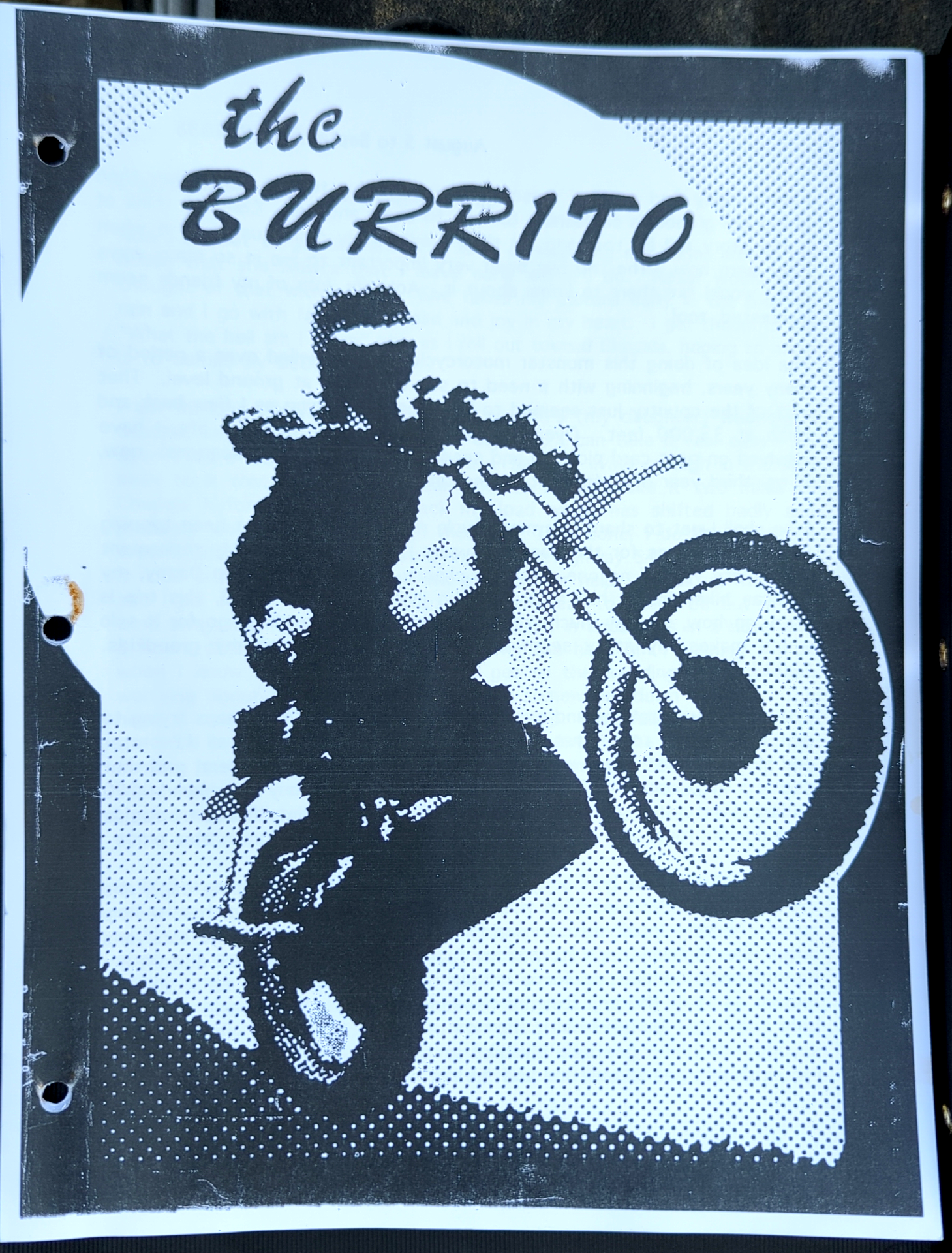
Bill Hawkins is the author of The Burrito, a family journal about riding a 250cc Honda from Mexico to his daughter's wedding in Washington state at age 58. He joins Robin to revisit the strangers, solitude and renewed confidence he found along the way.
Kit We're "Blatantly Pushing You To Buy"

Head Rivet Nut Tool, Rivet Nut Tool Kit, Adaptable to Hand Tools or Drills M3 M4 M5 M6 M8
5 Sizes in One Compact KitIncludes M3, M4, M5, M6, and M8 threaded rivet heads, providing the most commonly used sizes for automotive repair, equipment maintenance, sheet metal work, and DIY assembly projects. Compact & Easy to CarryMeasuring approximately 5.5 3.9 1.4 in, the organized storage case More ...

Trivd Frol 830PCS Metric Rivet Nut Tool Kit, M3 M4 M5 M6 M8 M10 M12
RIVET NUT SIZE: In this rivet nut kit, we provide 7 size of rivet nut, includes: M3---300pcs, M4---200pcs, M5---150pcs, M6---100pcs, M8---50pcs, M10---20pcs, M12---10pcs, total 830pcs. FEATURE: Head Type: Flat Head; Nuts have a work-hardened surface providing high-strength, load-bearing threads. WID More ...

OMT 172pc Thread Repair Kit Metric Restorer with Drill Bits Taps Inserts
All-in-One Kit: This 172 thread repair kit by Orion Motor Tech brings you 5 drill bits, 5 screw taps, 150 wire thread inserts, 10 installation & tang break-off tools in the most common needed metric sizes: M5, M6, M8, M10, and M12. Built to Withstand Tough Jobs: Made from heat-treated high-speed ste More ...
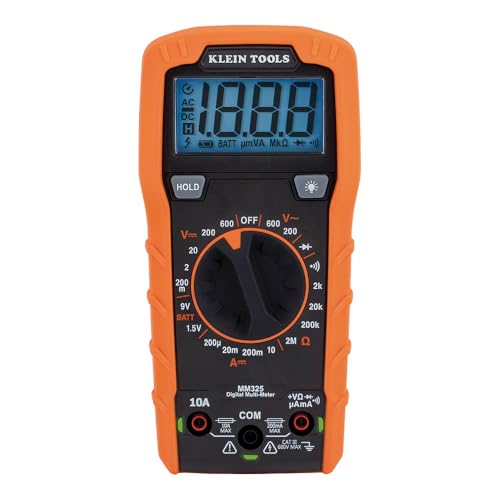
VERSATILE FUNCTIONALITY: Measures AC/DC voltage up to 600V, 10A DC current, 2M resistance; additional features include continuity, diode test and battery test. LEAD-ALERT PROTECTION: LEDs on the meter illuminate to indicate proper test lead placement, enhancing accuracy and safety during measurement More ...

KEMIMOTO Expandable Motorcycle Saddlebags Bag 24-30L (15L*2) for Mini bike
Fitment: Motorcycle saddlebags are fit for most motorcycle models. Including but not limited to Scooter, Dirt Bikes, Dual Sport Bike, Sport Bike, Cruiser, Motocross, and Enduro motorcycles, perfectly compatible with Ruckus , Ninja 400 500,GSX-R600 YZF-R6 GSX-R1000 CBR500R CB500X, GROM 2026 2025 2024 More ...
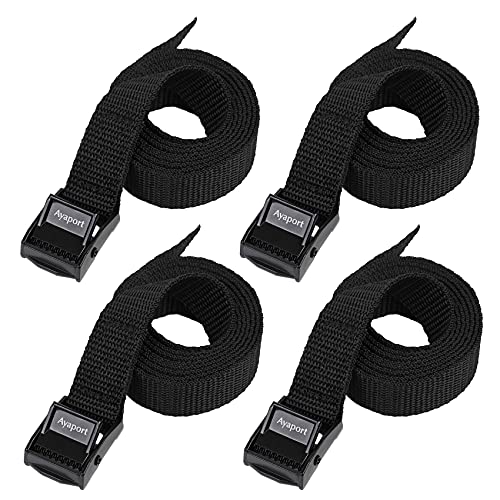
LIGHTWEIGHT BUT STURDY. Made from unique cam buckles and strong brine yarn webbing, these lashing tie down straps are lightweight for easy carry & storage, and super sturdy to offer a long-term performance. SIZE MEASUREMENT. 0.75 inches width, 48 inches/ 4 ft length lashing straps. 4 pcs per pack. C More ...

Frienda 2 Pairs Motorcycle Turn Signal Bracket Metal 30-43 mm
Items sent to you: you will receive 2 pairs motorcycle fork indicator brackets in classic black color, equipped with 2 pairs (4 pieces) mounting screws, the nice combination sets and enough quantity can well meet your use and replacement needs in daily life. Durable and reliable: made of good qualit More ...
Did We Miss Sump'm?
Sixty percent of the time, we're right every time. What would you add to the conversation and why? Your input is invited. Leave a comment and/or write an article!
Share Link ...


Thoughts gone wild? Write an article!