
Our blockbuster FTC disclosure awaits here ...
Maps 2 Apps
Team TRO sorts forty motorcycle navigation apps, fits real track-day spine protection and turns organizer fine print into a safer prep list. Music by Rabid Neon and Otis McDonald. Download our feed here.
Transcript
As legible as we are intelligible ...
Robin: In this episode, Navigating the Ride Part 2. This time it's Maps to Apps, opposite last week. In the Armory, Joanne puts us back on track by helping us find the right back protector. And, a little bit shaky about this one, track day prep. There's plenty more noise that we've got to get in order before next Sunday. Real quick, opening announcements, news corrections, bit of banter. This week, Random Song of the Minute. If you want to check that out, visit radio.tro.bike in your web browser. This week, it's Talking on the Internet by Spiritual Cramp. Real rockin' tune. Real good stuff. That is a throttle twistin' tune right there.
Brian: Nice. All right, first news item. I don't know how to say this, so it's either CIGIC or CIGIC. But anyway, CIGIC puts motorcycle routing on CarPlay and Android Auto. And Android is really hard to say. I want you to know that. Anyway, so the point is Navigation App Cigic moves its new motorbike mode into compatible factory and aftermarket displays. So if you have a CarPlay or Android Auto display, you can keep your phone safely tucked away and have this up on your screen there. And so they've got a motorcycle mode with motorcycle routing, motorcycle hazards, motorcycle weather, motorcycle elevation, motorcycle terrain, and motorcycle twisty or motorcycle scenic options without leaving a phone on the bars. And some features require a premium plus ultra subscription or whatever. This is really interesting to us because we've been sniffing around the cheap CarPlay screen. You put that on your handlebars, it's out in the weather, it's out in the sun, it's cheap, it's big, it's bright, you don't care what happens to it, and it's fed by your phone. And now suddenly that's got a little bit more of a reason to exist. Maybe it's something we should experiment with, we'd love to hear about and here's some real life experiences. Does it keep your route that you plan, that you carefully shaped with all the love Or does it turn it into some Google-style interstate abomination? We need to know. What do you got, Robin?
Robin: CFMoto brings the self-adjusting suspension down market. The UK market 800MTES reads road conditions, speed, and load, then adjusts rebound and compression in real time. I always wished that my BMW would have had that, the RS. It had the dynamic suspension adjustment. It wasn't anything like that. So it also packs a six-axis IMU, cornering aids, traffic proximity radar, cruise control, heated grips, and a heated seat for 8,499 pounds. The United States availability has not been announced. Semi-active suspension used to arrive with a premium brand tax. Now the discussion is whether bargain electronic suspension is a touring breakthrough or one magnificent future troubleshooting bill. If you can make it happen, we can make it break.
Brian: We shall see. Yeah. 8,500 pounds is about 11,444 US dollars. Overall, that sounds like a heck of a bargain.
Robin: I wonder if that, is that the first bike they've made that surpasses the 10,000 mark?
Brian: I do not know. I am not a CFMoto expert.
Robin: Damn it. What's next in the news, Brian?
Brian: Honda's new CB1000 GT is going to be an actual sport tourer. Now, the interesting part is Honda confirmed that there's going to be late 2026 Australian delivery for the CB1000 GT. So it's derived from the Fireblade, 1000cc four-cylinder tuned for touring, whatever that means. And it comes with electronic suspension, panniers, cruise control, heated grips, a center stand, an adjustable wind stream, road sink navigation, USB-C charging, and a partridge in a pear tree.
Robin: I think usually the tuning, it's mostly about the bore. So it probably has a linear torque curve.
Brian: Yeah, it's going to be a little bit heavier bike. It's going to be toting a little more, especially if you're too up, especially with luggage. So yeah, retuning makes sense. Hopefully they didn't like neuter it. Hopefully those days in the 90s where tune for torque meant that the bike couldn't get out of its own way or behind us. A leader bike, four-cylinder, kind of a tall rounder it looks like I think it looks like it has a little more suspension travel that kind of thing fast comfortable paved drawer I believe it's got a 17 inch front wheel don't have to have the big pizza cutter out front I'm a fan I'm here for it I'm all about that kind of bike my bad knees so it'll be interesting to see whether this kind of helps revive the category whether yamaha responds with even more stuff on the tracer the other thing that remains to be seen is whether this thing comes to the u.s whether it comes to europe and the rest of the world and also i may be old man yelling at clouds here but what's up with the damn pickle forks on everything it's got the pointy front end like yours looks like a motorcycle the naked version has got these There's two like probes sticking out the front like it's a TIE fighter. I don't know what they, I don't like that, but I don't have to look at it from the saddle. So whatever. I'm glad to see more. I think it'll be cool if and when it gets here. Robin, what have you been up to?
Robin: Had a great ride with Mags for our lunch loop. We have that Leavenworth lunch loop, which is basically just 62 out to 66, head south, pick up old 37 up north, pick up 62 back home. We got to do that. But then after we gracefully distributed her back to the mobile rig that is the Dean machine, then you and I did what we do. The general rule is that speed limits are merely suggestions. That was just an amazing day. And I know you're going to talk a bit more about it. Really, I'm just preparing to prepare. I got to get in the right headspace for both a track day and I'm going to be coaching an MSF course. It's been a while. Purchasing a new back protector, a little bit difficult. and rather not skimp on cheaper brands. So I'm watching over Facebook Marketplace, of all things, trying to find a back protector. I did learn a lot about mine, and we'll get to that in a bit with Joanne. Also, just for life efficiency, I've been attempting a new daily agenda. Just a list of things like, see if you can get this much done kind of vibe. Namely, a balanced blend of moto industry efforts, some writing, some writing, the podcast, writer coaching, everything in moderation, as they say, especially moderation. Brian. How are you doing?
Brian: Doing well. And again, yeah, the ride last Sunday was lots of fun. A lot of really interesting, fun stuff in southern Indiana. I caught like six drops of rain somewhere around Indy, even though it looked threatening all day everywhere we went. We just ignored it and we did our thing. The degree of hatred, it wasn't full hatred. It was a mindful degree of hatred that day on whatever crimes we were. Anyway, and at the end of the day, I arrived in my driveway with 420 miles on a day. So that was an action-packed time. Lots of fun exploring. I wish they would get done with 145. I don't know how many years they've had that. They just keep tearing up a different section of 145 every year.
Robin: Well, 450 made up for it, by and large.
Brian: Big fun.
Robin: Outstanding.
Brian: All the Indiana classics. We need not say more. And also some stuff like getting around and through and over. And I don't think we ended up on any gravel, which is unusual for a ride I'm leading. And yeah, we're getting ready for track day. We'll talk about that a little bit later. Preparations, purchases, things are underway for that.
Robin: I was hoping for a nice, light, easy, open schedule. And now I really am on edge. Every weekend is dedicated to something. This is my free weekend right now. So I have to get my headspace right so I can really do everything that is being asked of me.
Brian: Get your mind right.
Robin: Properly well, yeah. You ready for some listener questions?
Brian: Did it.
Robin: If you would like us to field your questions, visit email.tro.bike in your web browser and send us a message via the contact form. First question, what is your current choice of tire inflator? The CO2s just don't cut it, in my humble opinion. My answer, I have reduced everything down to a handheld mechanical bike pump, which, is, in my mind, probably all I really need to get a tire filled up to the full-on 36 PSI necessary to meet spec on my machine. Now, you might think, well, how the heck is that going to do that for an actual motorized vehicle? Bicycle tire pressures go up to 75 PSI sometimes. Of course, that's distributed in a smaller general space. However, it's pretty much the same thing. And the more pressure that you put into a tire, the faster it begins to inflate because all the air inside starts pushing all the other air around more quickly, rapidly, that is. So I just go with a mechanical one. I used to have the one that plugged into the SAE, and I always accept the assistance of what Brian is about to mention because everyone we know has one on their bike. If we put them all together, we could Voltron, the ultimate mega tire inflator.
Brian: Especially if you're in an isolated area, like having a, having a bicycle, you know, something you would clip on your bicycle pump actually works better than you would think. It's a great plan B. My plan A is honestly, if you're up to spend a little bit, you don't have to do this, but the one that I like, not a sponsor or anything, but it's a fantastic, it's a U.S. Based company. They make these in the United States and they're called, and it's motopumps.com, motopumps.com. And I've got a special edition orange pump. It sounds kind of like any of the other little pumps that plug into your battery, but this really works a lot better and it's a lot more durable. Or you can just grab the smallest slime pump at Wally World. I prefer the ones that plug into the bike battery, although the ones that have the self-contained battery, I think those could be pretty convenient in some situations. You're always up against what are the limits of this battery. You know, if I have a if I have a leak and it's repeated and I have to keep this thing charged, you know, and that's so forth. The one that plugs into the bike battery, you know, your bike battery is always there. And, It really doesn't take a ton of energy to pump up a tire, even a rear tire. You're not going to make your bike so it can't start or anything like that. As far as the battery-powered pumps, the ones that have an internal pump, it changes all the time. Read some recent reviews and make your best guess. Be careful. A lot of these, when you look at them on Amazon, it's hard to tell how big they are. Size really matters when you have to carry this thing on a motorcycle. And there's also, there are these little tiny ones that are about the size of like a Zippo lighter or like a pack of cards. They just don't have enough battery to do much with a motorcycle tire. I think they can do bicycle tires, but there's just not enough energy in that space to squeeze enough air into a motorcycle tire. And also, if you have tool batteries, I've brought my Ryobi pump before. If you have tool batteries, they always have pumps, but they're kind of big. So if you don't have the space, something dedicated that lives on the bike is probably a little bit better. Finally, I will agree that the CO2 just doesn't cut it. You need a bunch of cartridges to get anywhere. And then if you have a slow leak, you're kind of stuck again. So been there, done that, tried it, doesn't work.
Robin: Next up, we got questions from the wild. These are pretty good. First one of three. It's a suspension setup question. How do street riders actually know when it's right?
Brian: How long you got?
Robin: I can summarize this so quickly in my own mind. it's just personal preference, but really the idea is after you hit a bump, the bike should rise up to just above settled and then depress back to settled. After you go over something that creates levity, the bike should rise above, compress back down and go back to the normal position. And all of this should happen as quickly as possible. But, also comfortably. It's really that simple in my mind. It's like, if I hit something, compress, rise, settle, or rise, compress, settle in those three stages, it should not repeat those acts. It should only happen one time, and it should happen as quickly and efficiently as possible. Brian, what you got?
Brian: Yeah, that's about right. If the effects last longer than like a few revolutions of the tire, there's a problem with compression or rebound, something like that. I would also add to your list that you really need to have SAG in the ballpark. And again, look that up, TRO.bike, there's articles on suspension, there's SAG calculator, all that good stuff.
Robin: Go to TRO.bike, mouse over DigiTools, and you'll see it.
Brian: For your bike, for your butt, for your luggage, get your SAG set up so you're in the top one-fourth to one-third of the range when your weight is on the bike. And that goes a long way. And then basically if if the bike starts staying upset when you go over the you keep feeling things over and over then yeah you have a problem and you need to address it and that's where we'll leave it otherwise we're going to be here for days so we can talk suspension for a long time okay let's fight this is becoming the new oil and tire debate but anyway is a roadside tire plug a limp home repair or full life repair
Robin: Oh i know this one i know this one it's neither yeah, it's nothing to worry about so long as you have visually assessed the puncture and have judged that yes a tire plug, we call it sticky string is gonna take care of it basically what i'll do is if there's a puncture which always happens, every time brian and i ride together first we spill some kind of automotive fluid all over his garage and then we go get tires punctured it's what happens point is, If we're on a tour or we're at a rally or any kind of event that's going to be multi-day and many, many miles, and there's a puncture, we will plug it with the silly string, and then we will finish out the entire event with zero worry. And then when we get home, we'll think, huh, do I want to replace that? Or maybe put in a plug patch or swatch out the tire? And it all depends on the tread depth and the remainder and all the stuff. But all in all, I think it is down the center of that. It is neither a limp home nor a full-life repair. It is something to do, enjoy your time, and when you're back home, think about it.
Brian: It's one factor among many. When you're deciding whether to replace a tire, like let's say you got 10 points and when you're at 10, it's absolutely replaced the tire. It's done. It's shredded. It's dead. I would say having a plug in the tire adds maybe two or three points to that equation. So I would be more likely to replace a tire a little sooner if it already has a plug in it because I know the second one's coming because when tires get thin, they get more punctures.
Robin: Yes.
Brian: Them's the rules. Yeah, we just did that.
Robin: I was in proximity of home and I had a tire for a friend. This worked out.
Brian: It was beautiful. It was like a well-oiled machine. You know, you had a tire, he gets a tire, everybody gets a tire. Yeah, I think we've answered that and everybody's mad.
Robin: Is everybody hurt? Is anybody okay? The next one, phone, dedicated GPS or CarPlay screen on a sport bike. If this is a fresh episode, you can probably just go to the website and it's the first thing you'll see on the page right there is the article linking to it. But otherwise, if you need to search on the site, just look up Motorcycle Tech Screen and the article will come up. Once more. If you'd like us to field your questions, visit email.tro.bike in your web browser and send us a message. We'd love to hear from you. Which brings us to the all nerve-wracking, panic-inducing segment one. Last week, Brian and I did our best to explain the benefits of carrying physical maps, not for default use, but certainly as a fallback. Also, it's sort of an art form, even if disguised as a planning slash survival tactic. Quick summary, the sun rises to the east and sets to the west. So if you check the time, before noon, the sun is likely to the east. Afternoon, it's to the west. If you know where east or west are, you know where north or south is. So then you align your map with north, make sense of your whereabouts, learn the road and the terrain, and you'll find your way. So that was last week. That episode was inspired by my wanting to explore and discuss the many apps out there, not maps, but apps, that can help us navigate with modern tech. These are the kind of apps that let us plan our travels with exacting detail, some with custom notifications of our own design. Others can then import our plan and inform us of every upcoming turn, complete with street names, other information, makes the entire process about the act of writing rather than double-checking our odometer against how many miles remain before the next lunch stop. Our favorites generally remain the same Brian, feel free to cut me off at any time And say what you'd like But Ride With GPS Osmond Locust Pro Curviger Best Biking Roads. It begins to fade with Furcate And there's some weird ones out there too So I. I put my hamster in a box AI on the job to find and make note of 40. It turned out to be four zero. 40 additional would be, we're number one motorcycle-friendly navigation apps. And this totally put me in panic mode. I wanted to get into the finer points of each. And that sure is hell going to take more than one episode. With that right here, right now, I'm suggesting we do our best to see what we can accomplish and have some fun with it. Whatever we don't get to shall become ingredients in our newest series, the Maps to Apps Testing Grounds, which I'll do just five minutes of each episode. I'm testing this app and here's the result. You know what I mean?
Brian: Yeah, the one thing I will say right up front, we are not talking about Google Maps. No. We're not talking about Apple Maps. Oh, they mean Waze. We're not talking about whatever. We're not talking about Waze. So these are dedicated, these are dedicated apps.
Robin: Or aimed to be.
Brian: Yeah, and... Sometimes a website that goes along with it, and we'll talk about that. Hopefully, most have a mode or are dedicated to motorcycling. I think the last thing, and we'll need to make some distinctions here, is they should work offline because the best roads are out where the sell signals fear to tread. This is what we're talking about.
Robin: Bit of an isolated truth there that I didn't necessarily mention all that well. I think about the order of operation reaching out to our real dedicated listenership here. In the sport touring community, you know yourself. You know that you want to, find that road that nobody's really made sense of yet. And you want to isolate your route with exacting detail. You want it to go from here, 250 miles, you know which roads you want to hit. You want to make sure that you nail it. And there may be some little in-betweens you want to test out. And you wouldn't mind maybe hearing the GPS in your ear saying, hey, about two miles, you're going to turn right on this road, whatever. You're building that map Now once the map's built You want to be able to export it If you're not going to use it inside of the software That is designed to handle it You want to be able to export it to something that's portable GPX being the MP3, Of map files, And then you want the software that's going to be Your navigator, To be capable of importing that GPX And accurately giving you turn-by-turn directions, There might also be the opportunity For a social queue to, provide that map to your friends and they can do the same thing there's a huge huge list 40 apps total. Right now i'm still all about ride with gps, as my planning platform but i am definitely considering downgrading it'll stay social you'll have access to my maps i'll be able to create the maps develop the routes and share them with everybody just that's a free feature but i am gonna get back into osmond a little bit because, i have a big place in my heart for all things open source and osmond is open source, now if i'm goofing off opposite that if i'm just being a twerp about it and wanting to fuck around and find out, kerfiger is just goofy stupid and fun totally worth the the coin for a yearly subscription i think i paid 50 bucks for an entire year of just like, it's not all that adjustable it's super basic the first thing it's going to do is forcibly say like take these twisty roads and you know you can add waypoints and supposedly you can drag the line but, there's a lot of goofiness about how it does what it does that's a lot of fun, it doesn't really have a mailbox detector. It's a good time in a, well, that didn't work out, or yes, that was fantastic spectrum of opportunity. That is where most of my familiarity tapers off because I found everything I needed and I learned to operate it. That's the thing about it. So today, just out of curiosity, I cracked open Osmond. There are so many configurable settings that you really have to become a virtuoso of the preferences screen.
Brian: Yeah.
Robin: And then you might change profiles and realize that changes all the preferences. You got to do this for it. There's just so much. I guess I'm kind of looking forward to sitting down with it again.
Brian: Yeah. There's one thing to keep people organized. It's really important there is to separate the planning function from the app function. What's on your handlebars. Sometimes they're the same thing, sometimes they're not. And you can also mix things up. Personally, right now, what I use is ArrivaGPS to do the planning. I really have not yet found a better planning platform. Curviger has a lot of interesting ideas, I got to say. And then you're like, why is it going through this neighborhood? I mean, there's kids here.
Robin: Because it's dumb.
Brian: Yeah, it kind of, it's just like, oh, this looks like a curve. Well, there's mailboxes stop signs come on i could
Robin: Hear their accent too they're just like look it does what it does that is technically a paved road you wanted twisty we gave you twisty mailbox we cannot help with good luck.
Brian: Yeah a lot of these have interesting ideas sigic the one we talked about has you know that kind of thing has all the weather and all that stuff coming in and there are also different degrees of connectability or connective connectiveness i don't know what you'd call it. Internet-erness. And the thing is, I use Locus Pro on my handlebars. There's really no good reason for that other than years ago when I was first getting into having, oh, I think a map on my handlebars would be awesome. I'll put my phone up here because I don't want to spend any money. And It's hard to use. I will give you that. But once you get it set up, it's really, you don't touch it. There's a learning curve to that. And the same, like, Osmond is, I don't, and the only reason I don't use Osmond is because it made my phone crash five, 10 years ago, whenever it was. So there's really not a good reason I don't really use it anymore.
Robin: I wrote an article a long time ago when I had it all dialed in and I spent the time, you know, what else was I going to do? I didn't have mass career situations happening. So I just really honed in on that app and sort of tuned it. And I got what I wanted. What happens first time I handed off to a friend at that time, it was our friend GBW. He read the instructions. He understood what I'd done. He actually commented. He was like, this is the best step-by-step I've read on getting this to work.
Brian: Yeah, he used that for a while.
Robin: Well, the first time he used it, we're at a rally, and he kicks it on, has the map loaded up, hits the navigation button, and then about 20 miles into the route, he... You know, waves me up next to him. He's like, come here, come here. And he looks up and he says, so she will not shut the hell up. How do I get her to just shut up? You know, because you can, there's two modes where it's like, you could have it tell you you're going to need to make a turn in a couple of miles, or it's going to warn you like a rally car navigator about every degree of every corner coming up, and a half mile, 45 degrees left and 2.5 miles. You're going to do a hard hairpin right. Watch out for the geese. You know, it's like, it's random.
Brian: Yeah. So some people are going to want that. Some people are not.
Robin: You really got to finesse the preferences to get it exactly where you want them. From what I understand, you can now tell it to give street name, turn by turn directions. That's going to be a good fix.
Brian: Yeah. It'd be worth experimenting with. That's kind of overall the point is you really have to, you have to try and experiment. And, and the other thing we found is I've, Everybody has different preferences and a different mental map for how they interact with these maps. Robbins happens to be completely wrong, but I use north up whenever I have maps going, and most people think I'm insane. I like that. It works the way my mind works. I like to know exactly where I am, what directions are what, and even things like the scaling when it scales in and out and so forth. When it zooms in and out automatically, do you go with the stock settings? You know, all these things are configurable. They've been this way for a while, at least five or 10 years. So what I think is really interesting is all these new things are coming out and they all have different new ideas that are really interesting. Curviger has been around a while, but it's a really cool idea and it's getting better and better at executing that. I remember the first iterations of Curviger, I don't know how many years ago I tried it. It would literally take you through every neighborhood with every mailbox. That's why we make that joke. It's getting better at that. It's getting better at finding things that aren't like, you know, stop sign left, stop sign right, stop sign left, stop sign right, stop sign right, right, right.
Robin: UPS.
Brian: Yeah. So that's what I think is interesting. For example, CIGIC we talked about, you know, it connects to the internet and it can show you the weather. We're starting to get apps and we're starting to get things that figure out, that understand what motorcyclists want. Car drivers are simple. Google Maps, all you want is the shortest, quickest way to get from A to B. And you don't really care what you see along the way. But there are a crop of apps that are figuring out what motorcyclists want to see. What are some of those interesting ideas that we found here. I've never even heard of some of these.
Robin: Let's do this backwards in the most random order. So there's one called Riders without the E. Ride Today can connect nearby riders for a spontaneous same-day ride. And then it shares the ETAs without exposing the location longer than necessary. So the privacy is maintained, but it's like all about gathering for a group ride. Now, that is sketch as far as I'm concerned because I'm very personal about who I ride with. But maybe in social, If there's a bike night or a vintage motorcycle night or a car show and bikes will be there, that kind of thing. Okay. That's kind of cool. Ride in together. There's this Ride Forge app. So Ride Guardian adds a live family follow link and one tap emergency contact access alongside the active motorcycle route. It's mutual across the board. I think on a networking level, you see an issue. You know who to contact when you discover the problem. These are obscure, too, man. Yantera. It's weather-aware routing combines radar, wind, rain, and hazard alerts with proactive rerouting intended to steer the ride around storms. You and I could have used that the other day, but we actually won that battle, so it worked out. And plus, we could use a shower.
Brian: That was interesting, and both good and bad. The best roads have no cell signals, believe me. So this all requires a crap ton of data, and it requires a good data connection to make sure that your weather report you know is accurate and it's routing you around so if you know if it follows through a net promise and it can make do with the occasional scrap of 4g you know when you're in tennessee and mountain somewhere that's pretty interesting but it can also blow through a lot of data if that concerns you so there's a lot there's a the devil's in the details for these Oh,
Robin: Downloadable maps. It's really all about the offline maps. So if you can contain the calculatory system to the phone app itself versus a request for server level processing, and you have the local maps on your phone for it to do that processing with. Yeah. I mean, your battery might be able to keep your hands warm, but at the same time, you know that everything's localized in a way that will always be accessible. For example, another one that's here under the new and emerging motorcycle apps. And we'll talk about these individually one day. Too tired. It's one word called T-W-O, tired. One voice request can specify stops, the character of the roadways, and different pacing by section, such as like technical out and mellow home, that kind of thing.
Brian: Interesting.
Robin: Each one of these has a unique characteristic, and I'm going to make a point to sort of focus on that as we go. Here are the commonalities I'm noticing. Most of them are community-driven.
Brian: I.e.
Robin: Find people who have the same app to go ride, which can be either beautiful or cringy, depending on how it goes. I do remember times where we all would, in fact, feel some good in the world wanting to shake hands with someone new just to say we did. You know, do you remember meetup.com?
Brian: Yeah.
Robin: I actually met up with people to play overhand fast pitch baseball. Catchers, outfielders, the whole deal. Overhand, fully grown adults hurling fastballs down the line just because, you know, there was no need for a waiver. That's when it actually did something, which was not the worst thing in the world. It was so fun. You know, so communicating, learning, bridging new friendships as it were. Even if you think the group ride vibe is cringy, many of these apps have websites to support them, forums dedicated to app assistance, route improvement, those little roads you'd otherwise miss. People can actually check out your stuff and be like, hey, you know what? You should check this out. It's really great. And there's, you know, it's a park road and it's kind of closed off and whatever. These are good things. I gotta say though, tourstart.org is the funniest of the bunch. It's got this overdramatic jet engine intro featuring a giant straight line road off into the distance. Then the next scene is like slow rollers who are damn near falling over in the curves going a half mile an hour. But the point is, this exists, and there's nothing wrong with that. The support for finding the better ride, it's out there. It may be spread a little thin, and we'll talk about that eventually one app at a time. But this is just supporting the industry. It's supporting what we want to do. And to keep the segment that I'm developing here interesting, which, again, it'll be about five minutes each episode. I'm going to let whatever I personally deem quote better than whatever my current favorite specifics are, I'm going to let that push them aside in favor of improved experience. That way all apps following in their footsteps will be compared against that set bar. That's the plan. We're going to have some fun with this. And whatever pushes the next one out of the way, this ought to be something good for everybody. I just got to welcome back Joanne into the room. Hello, Joanne.
Joanne: Now, hopefully you can't hear the 3D printer buzzing. I turned it off. I paused it, but the motor's running.
Robin: You left Maggie hanging in the last episode. We were like telling you about how we're going to all get together and not ride in Kentucky and make sure that we don't enjoy those awesome roads as a group, which we won't be doing. You know what I mean? Hint, hint, hint. Maybe we can all get together. And you said, if my bike is running, I will try.
Joanne: If my bike is running.
Robin: You want to fill listeners in?
Joanne: Yeah, it just won't turn over. I mean, it's trying to turn. It's not a battery problem. Problem we think maybe it's an alternator problem something like that and I don't have a proper garage to look at it ourselves so I just gotta wait and I can get it taken I'm probably gonna go to one of the small shops around here in Runtown to get it looked at I don't think it's a major thing but we googled and found my make in exact year and they had the same problem and it was like I think their alternator or one of the other parts
Robin: You got a voltmeter?
Joanne: Yeah, like we checked everything. We ruled out the battery for the most part. But I don't know. We haven't really spent a lot, lot, lot of time on it. It's just because it's a big public apartment building. It's secure, which is great because our bikes have never been bothered. I'm going to have to figure it out.
Robin: That means it's time for The Armory, brought to you by GearChick.com. All right. So, Joanne, look, me and Brian and Brian and I are on the hunt for back protectors. They need to be rigid, meaning some flexibility is okay, but bottom line, they need to be more exoskeleton than nerf.
Joanne: Okay. So you don't want like crazy rigidity. What you do want is impact absorption, right? You want nice shock absorption. So not every school has like a really detailed specific overview of what you need. But my recommendation is always going to be a level two full length back protector. We shortcut that to FLBP, but you basically search for full length back protector. And that's very different from your inserts that go in your jacket, you know, that have a pocket. when your jacket has a pocket where you can slip in a piece that's really the center of your spine, this is not what we're talking about. We're talking about a full length, and that means there'll be a kidney belt, there'll be like suspender straps like a little backpack would, and then a kidney belt around your waist for support for your lower back, but it'll basically protect Full length of your spine. That's why it's full length. So it should go down to your tailbone almost. And since you're in a suit and you're bending over, it doesn't matter that it's long. It would matter if you're going to like sit up straight on your KLR or something. Pretty much all the big brands, Alpenza, Dianase, Revit, Knox, all the big reliable brands, they all make back protectors and most of them make full length back protectors. If you have a level two back protector, it's a level two period. You're on the level of safety that you need to be. It's not about the specs at that point. It's really what is going to fit you comfortably under your suit in your riding position. And I would say that all the brands offer comfortable choices. You actually want to avoid something that has a hard shell because that means less flexibility and less room to make it fit under your suit. Because remember, it's not 1994 anymore. Protection isn't defined by hardness. It's not that anymore. It used to be a long, long, long time ago. Now it's really about comfort because all of the brands put together some amazing pieces where they're all going to work great. Those straps are removable. If you really wanted to, you could take the straps off, strap the waist on, and then get in the suit. And the suit is snug enough to hold it in place. Straps are there to hold it in place, but the suit's really snug, the straps are optional. So you just Do what works. Try it on with your suit and see what works for you. Also, there's Velcro around the waist belt and you can adjust that. So you can actually move the straps in and out tighter or looser. Now you size it by your height. The taller you are, the larger the size. But the rule with full length back protectors, it can never be too long because it's not like it's going to go all the way down past your butt. Like we're not talking that long because if the suit is already really snug. If you try to squeeze a plastic, something that has a hard shell, you probably won't be able to. But right now, CE standards don't have anything for your kidneys. So that's just a little extra around the waist. Some people like it. And if you're someone who just wants as much as you can get, well, there you go. Just make sure that you have a good three quarters of an inch of room around your waist and around your chest, you know, without an insert already in the So the reason I recommend the other two is because of that flatness. But for those of you out there who you have a little room to spare and actually you need the opposite where you're trying to take up more space in the body, you should look at the ProArmor, the Dionysia ProArmor. It's longer and narrower, but their cells are really thick. So you need a good inch. I've actually used that for people, the insert versions for people whose jackets are a half size too big. It takes up a little space. Even the older version, it would actually curve to your spine really well. Like it would actually curve in and out. It was way more pliable, but the compromise is thickness. So it looks like they've added some like really funky, I don't know what they call it, but they added some cool flexion in the middle. Expanded nitrile rubber, carbon elastomer. So some really cool materials in there. So it looks like it's even more ergonomic and it'll really like curve to your spine and probably curve more, especially if it's really long on you. The more forward riding position you have and the more aggressive you sit, like especially if you body shift to get your knee down, the top of the protector will probably follow you better. But again, you do need more room in this chest. I would say an inch, at least an inch of space in your chest and waist to spare. And generally when you buy a suit, that's what you also wanna look for. When you buy a new suit, you need to have a good inch of space around your chest. It's not that much. We're not talking a size up. We're just talking enough chest space for you to add a back protector and be comfortable with it. So generally when you're suit shopping, And if you can, you want to bring your protectors when you buy your suit so you can put your protector on and your track boots on with the suit you're buying. Or if you're shopping for all of it at the store. Put on the new back protector under that new suit. Two things I have to say is that you won't get a full-length back protector that's a strap and a kidney strap for less than $150. That's just the bar. Now, inserts, you can find an insert, like you can find a D3O insert for $50. Even a level one is fine, especially when you're a beginner, when you're new to the track, or you're just a casual once a year track day rider, your needs are far less than the guys and the gals who go out every month, every weekend during track season. You should not put yourself up to their requirements and standards. You don't have to is what I'm saying. You can if you want ultimate protection, of course, or you just want to go all out and buy the best. Go crazy. But don't feel like you have to match them because you're on the track. You're not getting your knee down. You're afraid to, in fact. You're just going around the track trying to figure out how to ride it. Your risk of injury is, you know, especially to your spine, is a lot lower than the people who are in group one. In my days, group one was the best or group A, where they're going the fastest, your risk level is not like theirs. You can get away with Insert. So if your suit and most of the new suits now come with pockets to insert a back protector, just like a jacket, because those entry-level suits and a lot of the suits that have that, they are for people who are casually tracking once a year, maybe twice a year. Maybe you're taking a street-focused track day, which is very different than the track club people who go every week during the summer. Do an insert. There's nothing wrong with that. If you don't have a pocket, either your suit's too old because way back, pockets weren't a thing. A lot of suit manufacturers didn't put inserts into the suits because generally you go to the track, you wear a I would say if you're really on a budget, use the insert option. Hopefully there's a pocket. If you don't have a pocket in your suit, that's a different thing. You really don't want to do a track day without one. Get away with it on the street. Take your risk. But going to the track, you are going to step up your level of riding. And you are going to step up your risk, just not to the highest level. You need back protection. And if you can't do it, don't go. I mean, I'm going to be honest. You really shouldn't be at the track if you don't have all the protection with you. It's the one place you shouldn't skimp. Also, try shopping on Facebook Marketplace. Used suits are really, Really inexpensive. So you can probably, you might even be able to find, you'll probably find some back protectors too. But I would definitely recommend going with brands that you know, not generic brands on Amazon because they're inexpensive. I mean, you can take a chance. Go ahead and take that risk. But you really want to go with companies you know and that are here and that everyone at the track wears. If they wear it at the track, then you know they're legit and they're not fake. Because these protectors are level two and because of the materials that these premium brands use now, they're repeat performance protection, meaning you can crash in it, use it again. It's not like a helmet. They're not one time only. The material, whatever they call it, they bounce back. They don't just compromise and then trash. You don't have to worry about buying used armor like a helmet, but certainly ask the questions, have you ever crashed in it? Inspect it. Make sure you see it. Motorcycle-specific back protection, remember that these full-length back protectors, specific for motorcycling, are fitted and designed exclusively to wear under your suit. They are not a universal, I mean, you can use them for other things, but when they design the fit and comfort, it's with you in mind with leathers on. It's not you on a horse. It's not you hiking or whatever. It's you on your motorcycle. And that's always important with whatever gear you buy. Don't trust everything that says it's universal because it really does depend.
Robin: Similar banter at Higher Revs can be found via the Gear Chick website or by emailing Joanne directly. That email address is help at gearchick.com. That's gearchick with a C dot com. Segment three. Here we go. Very different. Totally different subject. Totally different. Track day prep. Let's get this thing done. I am tired of this episode already, and there's so much to do. So do we have a packing list? Do you have everything ready? I mean, okay. I mean, canopies. Do we have canopies?
Brian: I got two.
Robin: Massage chairs? Boomerangs?
Brian: Sorry. Boomerangs? Sorry. Yeah.
Joanne: Snacks.
Robin: Yeah. Okay. We're going to need a cooler. There you go. Okay. So let me let me create a temporary bullet point the packing list is so we need a canopy for sure chairs cooler.
Brian: Cooler and contents yeah it's
Robin: Not yeah cooler and contents water definitely lots of water a fan you've got the right way fan right i do wheel chocks can you get a double trailer brian.
Brian: When you could fit on when you get your bike on I could pretty easily rent one.
Robin: We'll talk about that. Trailer, the chocks for the ground, because you're going to need, we have to, we basically have to zip tie our side stands. We need to dap the oil drain plugs.
Joanne: Toolkit.
Brian: That's a given anywhere I go. Every organization has their own rules. And this one does not, the last one, Motovid, required you to zip tie your side stand and your center stand if you have one. This one does not mention that. So they mentioned zip tie, your passenger foot pegs in a closed position. I don't know what the hell happened. It's just interesting, these little differences in there. And the reason we're talking about back protectors is for the unit, I'm riding in a novice group. It's my first time with this organization. So I'm just going to start from zero and see what they teach me. Robin's going to be an intermediate. And intermediate, they have some requirements where you need a back protector. They're unclear. I asked for clarification. And yeah, anyway, we'll see what happens there. A really weird one was if you're in intermediate, your coolant needs to be changed out for a non-toxic coolant. So you don't need to go to, you know, the pure water wetter or anything like that, but you need to go to propylene glycol. I guess that's probably a track rule where they, you know, they don't want to, if there's an incident, they don't want to wash the toxic stuff into where the ducts are or whatever. I thought that was interesting. So we have that and ready to change it over and so forth. And the other thing that was really interesting, the oil drain and fill and filter need to have like a blob of RTV on them. I guess that's so they can tell if they're starting to loosen.
Robin: Just a dot.
Brian: And then if you're in advance, you need to safety wire a bunch of stuff, and we're not going to worry about that. I thought that was just like all these little differences. Oh, and if you have wheel weights on, you have to duct tape over them. Motovid doesn't require, you know, so you really have to read is what I'm saying.
Robin: I'll be curious to see whether or not they'll allow the clip-on weights. They might look at the clip-on weights and say, nope, you're going to need to go with tape weights, and that's fine too. But the point is, you know, I know what my weights are.
Brian: Clip-on weights are fine. Just throw some gorilla tape, just throw some duct tape over the top, and they'll be fine.
Robin: Not Gorilla nor duct. It's usually gaffers, but you know, whatever it will hold.
Brian: Oh, now we're getting snooty about tape. Okay.
Robin: You don't want to peel the paint off the rim with like Gorilla Tape will take the, it'll bend the rim. See, that brings me to the problem then is that decisions, decisions, which bike? I wanted to bring Maggie's SV so that I could ride it like I stole it because a borderline did, but... Comfort. My bike's already paid down. I'm also a lot more competent on my bike and it's got a quick shifter. Lots of reasons to bring the old Gixader, but I just love, I really want to open up that freaking Leo Vince exhaust, pull the silencers out and just hate throttle the hell out of it all over a track I've never been on. And it's a short track. It's like a go-kart track, Putnam Park. It's just begging for it, but the problem is getting to you for the track day prep at your house is a matter of luggage and capacity, of which I have none on her bike yet. We've never gotten around to setting hers up for such things. I could probably improvise something, but I'm still in the works on this. Now's the time for me to stress out. This is my only free weekend for the rest of the summer before heading back to New Mexico. I gotta figure everything out. It's a lot. It's track day. Coaching a bunch of new riders. My anniversary. Mom wants to see it. It's everything. Weekend after weekend after weekend. So, yeah, keep the list going there. So I hope to get to ride her bike for the sake of just, you know, we shall see.
Brian: Well, how does Maggie feel about this?
Robin: Sure, go for it. Sounds great. Have fun.
Brian: You know, that's kind of what I thought.
Robin: Yeah, there are pictures of what I did to the Street Triple R last time. Just menacing behavior. Malicious intent. And worth it, I'm tempted. I'll be Captain Bump Shift the whole time.
Brian: Your bike has ABS. And yeah, there are reasons both ways. Yeah, and the other challenge with this particular track day is the timing is awfully tight. You can't, you're not allowed to camp there. The gates open at 7 and the riders meeting is at 820. So there's a herd of however the hell many people riders are there. Run to the table, register, run, you know, run and figure out where to park, unload all your crap, get everything on the ground. Sprint over to the writer's meeting.
Robin: They're all hopped up on goofballs. Look, I'm going to be doing none of that. I will be moseying everywhere. And whatever their issues are, they're going to have to look at their paycheck. Because if this goes the way it feels like it's going to go, this will be my last MassGash event. And yes, I said their name out loud. Let's see if MassGash is organized enough to organize an event that is welcoming and receivable of the people who agree to attend. I'm not going to stress because stress equates to foolish decisions and accidents. And if they're going to impose these stresses, then they'll be my last go of it. I was warned about them after I'd already experienced them. I've been there many, many times. I'm really hoping it goes well. I'm excited for it. I hope they have their act together.
Brian: Yeah, the timing is a little tight. One of the things that occurred to me is maybe going down the day before on Saturday and getting, you know, unloading, get everything set up and then hop in the van, head back to my house, have a nice relaxing day.
Robin: If they say that that park allows it.
Brian: Yeah, you can leave your crap there and there's nobody there.
Robin: Well, the trick of it is we're going on a Sunday. They're already having a Saturday event. It's a two-day event. So if we pick up the second day and just have everything waiting, I can't imagine why that would be an issue. I will also add that for everybody listening to, this is like all personal banter about the event. I want to suggest to those of you considering track days, if you begin to experience the presentation of multiple providers, anything they demand that you don't already do for safety only makes you safer. So it's a win-win. If normally you wouldn't wear a back protector and they say you should, add it. As something you do, even for the outfits that don't require it. If they say you don't need to do propylene glycol coolant, well, okay, maybe I wouldn't do that. If they say you need to tape your wheel weights and the other guys don't, go ahead and tape your wheel weights. If they say you need to zip tie your side stand and center stands and the other outfit doesn't, go ahead and zip tie and set up your center stand. Basically anything you can add, create your own list and anything that's not on it at it you get the point, safer is gooder this is going to be more time spent just getting things ready that it's like yeah okay but the whole hubbub of them saying like oh you think you're ready for our track day well we'll show you who's ready for our track day it's like.
Brian: The schedule seems super tight. If everything flows, it's fine. That all seems very odd to me. We'll definitely consider going down the day before, dropping off our stuff. Like I said, I'm riding a novice, and really none of these really apply to me. Yeah, I'm just going to ride a novice and see what they have to say and see how it all works, what the vibe is, what their processes are. Not too concerned if I get trapped behind slow skis.
Robin: With that, I've got to round this down so I can handle the production effort. Brian, tell me, what are we talking about next time?
Brian: So we are going to be talking about, I think it's going to be a continuing segment where we talk about the new apps and new ideas and the mapping apps and maps and so forth. I think it needs to be a recurring segment and so forth.
Robin: At least one a week, five minutes, 10 minutes, one a week, we can do it.
Brian: And I think we could get back to that topic of, can you stand it, suffering, put up with it or fix it? Something like that. You know, and it's something Joanne says, well, you're just going to have to be uncomfortable. And sometimes you got to deal with it. And then sometimes, yeah, maybe there's something you can do about it. You know, so we can talk about that line and where that stands. You know, do you keep writing when your fingers are going numb? Or do you do something about it? What do you do about it? Or when it starts to rain, do you care?
Joanne: Safety.
Brian: We're so awful.
Joanne: That's why women have a longer life expectancy.
Brian: Oh, absolutely.
Robin: Oh, yeah. It's certainly nothing that you impose on us.
Joanne: Everything you just described is marriage. Well, you compromise. Well, maybe you don't. Just do it. Just do what we say. That's my advice.
Brian: Do what we say.
Joanne: Mm-hmm.
Brian: It's going to be a good time.
Robin: So you want to talk about what?
Brian: Let's talk about suffering. When to suffer and when to not suffer.
Joanne: How about our experiences suffering?
Brian: Experiences and suffering.
Joanne: Got a lot of those.
Brian: When is it worth it? When is it not worth it?
Robin: When we're keeping things positive for the training courses, we do not tell war stories. But this is not a training course. So one war story per person.
Joanne: Okay, fine. Just one.
Robin: The will to suffer. When you decide, yeah, I feel more good than harm, I'm going to continue on.
Brian: It's 17 below. What's the worst that could happen?
Robin: Is everybody ready to get out of here?
Joanne: Yes.
Brian: We are ready.
The Gist
Robin flips last week's paper lesson into a 40-app panic spiral, then rescues it with a plan. His new Maps to Apps Testing Grounds will put one navigator at a time against GPX handoff, offline maps, rider-aware routing and whatever feature manages not to melt when the cell signal is gone. Track-day prep later turns the same appetite for options into canopies, coolant rules, taped wheel weights and a choice between Maggie's SV and the paid-down GSX-8R.
Brian separates the route planner from the screen on the bars before anyone mistakes Google, Apple or Waze for the assignment. Locus Pro remains his learned habit, north-up remains his apparently criminal preference and every contender has to preserve the shaped route instead of converting it into an interstate abomination. He also brings MotoPumps tire-inflator advice, practical sag checks and a novel track-day strategy (read every organizer's rules).
Joanne replaces hard-shell mythology with CE Level 2 impact absorption and fit that follows a rider under leathers. A full-length protector with a kidney belt is the track-ready standard, while a proper insert can still serve a casual novice if the suit has the pocket. Her bottom line is simpler than the catalog, meaning bring the protector when fitting the suit, buy known gear and don't attend a track day without spine protection.
Kit We're "Blatantly Pushing You To Buy"

Seamless Wireless CarPlay Experience: Stay fully connected with wireless CarPlay, enabling hands-free navigation, calls, music, and voice commandsperfect for urban riders and touring enthusiasts. Android Auto for Every Adventure: Streamlined Android Auto for motorcycle support offers real-time GPS, More ...

AstroAI L7 Tire Inflator Portable Air Compressor,150 PSI Cordless Bike Pump
ADVANCED TRUEGAUGE SCREEN: This battery tire inflator includes updated sensor technology, capable of collecting pressure data from tire inflators at a frequency of 200 times per second. Its valid data rate is higher than 80%, which is 60% better than the market average. From routine maintenance to r More ...

PSLER CE Level 2 Back Motorcycle Armor,CE Level 2 Armor Jacket Pads Inserts
DESIGN FEATURES - The CE 2 Level black cloth padding on the back side is designed to prevent cracking, so the product is more durable and you don't have to worry about the black cloth padding affecting the normal breathability, you just need to make sure that it fits with your jacket. UNIQUE DESIGN More ...
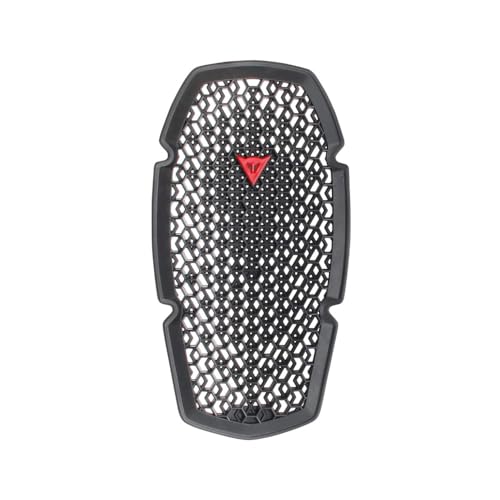
DAINESE-PRO-Armor G1 2.0, Unisex, Black, One Size
Characteristics: ProArmor G1 2.0 is a Level 2 motorcycle back protector in G1 size, engineered to deliver an exceptional balance of flexibility, lightness, and robustness for everyday and performance riding. Size G1 is compatible with Dainese suits and jackets in men's sizes EU 4248 / US 3238 and wo More ...

Surlim Back Protector CE Insert Armor Motorcycle Jacket Replacement Pads
1. Back Protector Insert for Riding Jackets Designed to fit into the back protector pocket of compatible motorcycle jackets. Removable insert design for easy installation and daily riding use. 2. Impact-Absorbing Protection Engineered to help absorb and disperse impact energy during riding. CE certi More ...


Tuoksullxm E-Track Motorcycle Wheel Chock Fits Floor or Wall E-Track 2pcs
MULTI-ANGLE ADJUSTMENTThis mount allows you to adjust the angle at any time to suit your needs. After securing the base to the E-track, adjust the rotation angle of the motorcycle chock and lock it in place. You can then position your motorcycle exactly as you like. Easy to installSecure the base to More ...
Did We Miss Sump'm?
Sixty percent of the time, we're right every time. What would you add to the conversation and why? Your input is invited. Leave a comment and/or write an article!
Share Link ...



Thoughts gone wild? Write an article!