
Our blockbuster FTC disclosure awaits here ...
Hundred Money (P3)
Team TRO closes the Hundred Money series with Indiana lunch routes, sport-touring tradeoffs and a dream garage full of unreasonably nice tools. Music by Rabid Neon and Otis McDonald. Download our feed here.
Transcript
As legible as we are intelligible ...
Brian: In this episode, we ponder weird and wonderful new stuff. It's spelled consumerism, people. We banter about recent rides, and then we continue that rich dude conversation with all that other awesome stuff in the garage, surrounding, supporting, above and below all those wonderful motorcycles. Let's get into it. Opening announcements, news, corrections, banter.
Robin: In the news, Garmin keeps SOS alive after you suspend inReach service. So apparently Garmin understands that riders are just organized enough to buy a satellite messenger and just forgetful enough to suspend the service before needing it. The useful bit is simple. InReach owners get a year of SOS access, even when the plan is suspended. That is not flashy gear news, but it is sort of boring rescue detail that matters when the paved road stops being cooperative. Next up. This one caught my attention because I was an owner of a GoPro Hero 4. GoPro's Mission One line tries to make action cams feel serious again. So GoPro has been looking a little less like the default action cam answer lately. Just thanks to DJI and Insta360 eating its lunch from several angles, the new Mission One line sounds like GoPro trying to stuff more serious cinema capability into the old action cam idea. For riders the question is not whether it makes prettier mountain pass hero footage it's whether the thing is tougher easier longer running and less annoying than the camera already collecting bugs on your chin bar which yeah i was just writing about this in this article i'm building i won't say what the topic is but yeah it's like anytime i wanted to record footage okay first i had to bust out the gopro then i had to make sure the battery was still charged enough even if I just charged it, hook it up, boot it up, start it, and then hope I got a clean run at the road. And yeah, it just, it's kind of tedious. I'm getting more and more into hardwired cam systems, you know what I mean? With like a detachable module, but constant power is what I want to get into. So who knows? I'll check this out.
Brian: Yeah. And plenty of memory storage. And yeah, you really wonder where GoPro went. Insta360 has kind of been eating their lunch as far as the footage you see on, on youtube and whatever it's all like 360 cams and it's yeah gopro's got to be back there preparing an answer i mean they started the category you know i've got a gopro in the closet somewhere as limited as it was it was a lot of fun.
Robin: Yeah i mean it got all the footage i ever needed for any of the tours we run and some of the routes we do i loved using it and then seeing the footage you know played back but the the entire system is going to upgrade itself as time goes on, which is not so bad. You'll see what I'm talking about when I write this, finish this article up. Last one. Team IF Omnipro Wrench 3.0. It's a compact multi-tool that glows in the dark, which seems to be their biggest selling point. I saw your notes on this. I completely agree. The Omnipro Wrench 3.0 is the kind of tool that sounds gimmicky until you picture dropping your only useful wrench into black gravel after a late roadside fix. So it packs a ratchet, bit driver, adjustable wrench, knife, calipers, glass breaker, pen. It does have a bottle opener, yes. And phone stand nonsense into something roughly phone-sized, you know? Then adds tritium glow slots. Is that how you say it? Tritium?
Brian: Tritium. Yeah.
Robin: Glow juice. So half multi-tool, half where did I put the damn thing, which is probably the most honest touring feature on the list. It looks like a good tool. So personally, I've got the Leatherman Wave, which I just swatched out in my, so long as it'll just work this one time, and get me out of situation batch of adapters. So I've got the ratcheting tool and the bit attachment and sockets and all that. I don't think the leverage is going to be, you know, I'm not taking that axle off, that's for sure. But I do actually have vice grips in there broken into pieces. So if I really had to get to the axle, I could just destroy the lug nut and peel that thing off, which would be all right, you know, in a case of an emergency. You've got good notes here. I agree. It's like they don't ever do enough good enough.
Brian: Yeah, and the monkey wrench form factor, just like it's not, it's probably not going to be strong enough to get an axle off, although who knows, you know, but pliers I think are more, I just like seeing people innovate and come up with new ideas. Like the glow thing is a little radioactivity just to give it a little spice. And so you can find the damn thing. There's a lot of good ideas in there. I like seeing people innovate to that. And I've got one I wanted to mention because we just invented a new award for, this is the TRO official Dumbest New Gear Award. We just invented this. The Dumbest New Gear Award goes to the Neangir LED backpack. It's a real thing. I have a link to it. It's on MotorcycleGear.com. It's on clearance for some reason, but it's a backpack with an LED display on the back. It's like this giant low-res display, and then you can program it with your phone to display stuff to the people next behind you. It's dumb as hell. I love it.
Robin: Middle fingers, stop hogging the left lane. What else? Tons of messages we can put on that thing.
Brian: Yeah. And a little preview, they show, you know, you can put all kinds of memes on there. So they've got the raccoon and the globe. They've got the cat licking the screen. It's dumb as hell. I love it. And it's on sale.
Robin: Very nice.
Brian: They've got 14 left. Get out there.
Robin: 99 bucks. Yeah. Yeah. Do it.
Brian: How did I not see this when it first came out? So what have you been up to, Robin? How are you enjoying your new digs, as they call them? I don't know why anybody calls it that.
Robin: Now that we've gotten through two tornadoes, it's great. So I told people in the tornado shelter, you know, hey, we really do like it here. I'll give you nine tornadoes, but once we get up to nine tornadoes, we're going to have to go. So we're already at two. I don't know. It's crazy. I mean, so Indiana gets on average, this is for the whole state, 24 tornadoes per year. And so far this season, we've had 73 so far, just up to now. Okay. So I built a local lunch route. It's a nice loop. I have plans to improve it and am looking at my surroundings. I got a link there if you check it out. I call it the Leavenworth Lunchbox. It basically heads out to Sulphur and heads south via 66 and, oh yeah, passes through Mount Pleasant, goes down to Derby and takes a right, jumps over to Old 37 and heads on back north and then jumps on 62 and heads on home. I know there are other things I could do. I know there are ways to improve it, but I wanted to start with something that was just kind of pleasant, something I could take the wife out on, have a good time, and just, you know, grab lunch. Something to do inside of 45 minutes. I think it took me all of 50 minutes, and that's if I was only going nine over the speed limit, you know?
Brian: Sure.
Robin: It was nice. So I planned that. I would be interested to hear your critiques and opinions after we get through this banter, this carefully organized and highly structured stream of consciousness banter. I'm also, I'm working to get both Maggie's bike and my own back to 100% ride ready. All I need to do for my bike is the fork oil. You're going to help me with that. There's a bit of a laundry list with Maggie's bike. I'm hoping you'll help me with that too, but we'll do them in separate instances. So yeah, I'm excited about that because, oh, I pulled the exhaust silencers off of the Leo Vents and my goodness, it's louder than the Beamer was. It's just dumb.
Brian: It's straight through. Yeah. If it's straight through, it sounds pretty ignorant.
Robin: I'm writing again. Got a new article on the way. Enjoying the week-long effort, per instance. Like, I like writing over the... Like, start on the outline, then outline the outline, then do the content, then edit the content. You know, take a week. So, it's going pretty good. I'm liking this one. I'm figuring out how I'm going to do it. Let's get to this, though. Okay. I got some family members who suffered a loss. It was a pretty big one. And that's hard. And so, this week's random song of the minute. If you'd like to hear our random songs of the minute in your web browser, just visit radio.tro.bike in your web browser. But the song for this round is Without You by Junip, which is one of my all-time favorite melodramatic synth ballads, let's call it. Just an acoustic combination synth solo ballad. It really hits the mark when it comes to what we all feel in times of loss. So I highly recommend you check it out. even better there's a great variation of this video where a you know independent fans created videos and somebody went big with it and they filmed the footage of an elderly man in his kitchen having an argument and caressing the hairline of somebody he misses and she's clearly been gone for some time so hug your loved ones people and mean it when you do now i'm Try to lift things back up here. I did buy the annual Kerviger subscription.
Brian: Nice.
Robin: I'm happy I did. I know it's weird, but it's Kerviger is cool, man. That's K-U-R-V-I-G-E-R.com. They're a Deutschland company website. I did pay up this round. It's cheaper than Ride With GPS, that's for sure. I also reached out to them because I was like, how fun would it be to have them on a show? And they replied. Something to the effect of we thank you for invite but we can no do podcast you know it's like okay no skin no problem no big deal that's cool okay i'm gonna say this now i'm gonna say at the end because i think it's what i want to get into next time i'm nose deep in a book by somebody who's been on this show before one curtis minder i read that in the morning just to make progress because it's dense it's a lot of information i've got another thing 100 pages left digging through it.
Brian: It has nothing to do with motorcycles, by the way.
Robin: It's gonna. We'll find a way.
Brian: I'll put it on my desk.
Robin: So while I was visiting mom, before I left, my neighbor here handed me this.
Brian: This is the burrito.
Robin: Yeah, the journals of his father, who I haven't even started this yet, but it's just a very short, maybe a day sitting down reading through the journals of a gentleman who rode his motorcycle. I don't know if it was a bull taco. That would make more sense, but he rode his bike from Northern United States down to the middle of Mexico. And there's a huge story there. The man's still alive. Maybe I'll get to talk to him. We'll find out, but I need to read that. And while visiting when I did get there, I met some of her friends in the independent living facility. And one of her friends, Ann, we'll just call her Ann for now. That's her first name. She used to race aircraft across the country. And I thought of you immediately.
Brian: We need to talk to her.
Robin: This needs to happen. Then I told her what our show is about. And. She handed me this article and I had it copied. Can you see that whole thing?
Brian: Yeah.
Robin: This guy used to make massive miles, enough so that he'd make it to the news, on what I would deem to be a legitimate, beautiful Harley Davidson. So I plan on reading that article and maybe doing a read-through of it while you speak to her. I'll do that independently. So there you go. That's me. That's me. That's everything. Now, enough of my crap. Brian, it's been a minute. How are you doing? What's good?
Brian: Yeah, so last weekend just had a really nice, very hot, very steamy, humid day.
Robin: 98 degrees?
Brian: It was a Friday, actually. I had the day off for Independence Day.
Robin: Uh-huh.
Brian: That's Fahrenheit, by the way. We still did about 240 miles, which is pretty good because we stopped. You know, usually it's a 30 and then 60, 60, 60. We stopped about every 40 just to drink water.
Robin: Oh, yeah. Hydrate.
Brian: Hydrate. And it was just kind of a fun day because it was such a big contrast. We just slipped into bed for literally seconds. We got under the gas station canopy, fueled up, and then it started raining. We set out one of the most violent thunderstorms i've seen in quite a while, and it was kind of fun you know when you time it you're headed into absolutely it looks apocalyptic and you're just and you're riding toward it purple yeah it's even past purple it's it's, just one of those moments when it all worked out we got there right in time we fueled up parked the bikes hit into the canopy rode it out for about an hour and a half, we kind of turned down the they had fried chicken and fried potatoes, but the guy cooking them had like some sort of nasal issue. And so he had his rubber. Yeah, you know, this was like face tattoo guy, which is fine. That's par for the course. But the guy had some sort of, he needed to really see a good ENT about whatever was going on inside his nose because he was going, he was getting after it.
Robin: He was looking for it.
Brian: We declined to have lunch there. And so, yeah, we went from 97, 98 degrees to 67 degrees after the storm. Dang, that's a hell of a drop. Road north is a little bit wet and then it kind of slowly, by the time we got through Bloomington, it was in the 90s again, dry, sunny, hit some more twisty roads around Martinsville, all that stuff. You know, not an exceptional ride for us or anything like that, but it's just something about it was a lot of fun. You had dodging weather, making up routes as I go, all that stuff. It's always a relaxed day with Tim and Woz, so it's always a good time.
Robin: Yeah, I want to hang with you guys. I miss, like, getting out with my friends on a bike because now I'm down here and we'll make it happen.
Brian: Yeah. They're on that spectrum of they don't really, they don't care where we are.
Robin: Mm-hmm.
Brian: Hey, we're going to go, but we don't care. They're just like, you go and we'll be there. It's a lot of fun because it's just, it's completely chill. Down to the treadwear indicators on the Yamaha again. At some point, I got to dig into the brakes on my van, but digging up the amount of give a crap to do that is, it's just missing. It works. It stops. It's just not ideal, and I know it's not ideal. I'll get to it when I get to it. Yeah, we might end up doing a little diagnosis this weekend and then order parts and stuff. Questions from the wild. Queries spotted in the jungle of the internet. If you'd like us to field your questions, visit email.tro.bike in your web browser and send us a message. What you got, Robin?
Robin: I've got to layer these in order of interest, but the first one I have is, what are your experiences going from super sport to a sport touring bike? My first bike was a 600 Supersport, almost as old as me. I really love everything about them, but soon I will be 34 and I do 600 plus kilometers of twisties occasionally. I'm a mess after the day. I really want to try something like the Tracer 9, the Multistrada 1260, but I'm not sure how much performance I will lose. I'm not super fast, but I do scrape a knee now and then. That's the question. What do you say, Brian?
Brian: So I've never been a sport bike, super sport guy. So i will preface that with that but i am a sport touring guy with a tracer as they call it in europe or places that use kilometers, and my it's called an fj09 in the u.s so honestly i think i think he's going to be a lot more comfortable and and on a d on a good sport tour something that is narrow and lighter on the light narrow and lighter end of things, he's going to ride further i i just don't see any downsides. He's thinking about downsides. I really don't see any downsides here. He's going to be a lot more comfortable, once he figures it out. He'll adapt very quickly. These things he's talking about are really capable bikes. He's not going to slow down a bit. He's going to speed up a lot. I don't see any downsides to, long and short of it. What do you think? Now, you may have more experience with sport bikes. I don't know.
Robin: Maybe. Maybe not. I have ridden super sports. I've ridden full-on, clip-on, full-tuck, race replica bikes, my fair share. There's a flip side to this coin that I'll get to in a second, but the trade-offs are really, they're not much. I mean, your body posture will affect how you handle a corner. The rainbow effect of a taller bike, because what he's talking about sounds more tall rounder. You know, he's in the sport touring realm for sure, but the variety is vast. And his choices sound like they're a little bit more make my knees not hurt. And maybe he's a taller guy. So what you'll notice is that, you know, shifting from one corner into an opposing corner will have a little bit more oomph involved. But the bike will still do it. And it'll be a ton of fun. I think it'll be great.
Brian: Yeah. Adapting to a tall bike, that arc that your head goes through, that is weird. Yeah, I get that. I forgot about that. Yeah.
Robin: But you get there. You know, you get there and you have fun. I mean, in the end, you're just like, oh, this is just better. I'm having a good time. It could be compared somewhat to that slow bike fast is more fun than a fast bike slow in some regard. You're having fun is the point. You make your choice, you're comfortable, and you have a good time doing it. The flip side of the coin I wanted to mention was you don't necessarily have to switch. Okay, the knees are killing. I get it, you know, but there are solutions involved that I think cater more to me being captain average i'm five seven you know everything's i'm just i am average joe so if i had say an r7 i would probably if i weren't tracking it you know if it wasn't the dream garage as we talked about last time i'd probably get what we call the old man bars i would get some really tall risers that's true i'd get some flattened pegs that are slightly more down forward set just barely and just turn it into well screw it why don't i just buy the gixator But the point is, if you love the motor of like the Triumph Daytona, well, then they have the 765. If you enjoy these sport bikes exclusively for a reason that is personal to you, you don't have to surrender that if you go about getting the kit necessary to convert its posture to what is more suited to your appendages.
Brian: Less pain, more fun, more miles. And like anything else, you're not going to, the speed is you, it's not the bike. So don't worry about that. And you don't need to worry about that on the street anyway.
Robin: It's the rider. Ready for the next one?
Brian: What do we got here?
Robin: Ari, and this one I picked specifically for you because I know you've got some brilliant things to say. You know I love a fairing, right? The question, sport tour or super naked? Hello, am having a though, I'm gonna do it. Am having a though time deciding on my next bike thought you guys might be able to help out. Context, have a Z900 today from 2018, which is nice for the weekend rides, but a bit taxing going a day on the highway on. We'll be taking a week-long trip down Europe in the summer. Wow, down Europe in the summer. And some weekends, I will go 900 kilometers back and forth to my parents' place. We'll do two or three track days a year. Been looking at the Kawasaki 1000SX, which seems to fit the task, yadda, yadda, yadda. Other bikes I had my mind on are the Ducati Supersport 950. The Tuono V4, the S1000R, and the like. The point is, we're talking about naked versus fared for a touring machine. Am I right? Does that sound about...
Brian: Yeah.
Robin: You and Travis have brilliant wording for this. Me, I like having a fairing for reasons that have nothing to do with their purpose, but I think you guys know how to embrace the unfaired two-wheeled steed.
Brian: And a lot of this is personal taste. I will say that right up front. I am a very strange person in that I really, really hate windshields. My bike has a fairing, but it's just because it came that way and I can't really change it, at least not without having an entire plastic shops at my disposal. I have a strong preference for naked bikes. So a couple of things here are, if you prefer having a windshield and all that, that's great, that's fine. Find something that works for you. So there are a lot of things to think about here is, are there aftermarket windshields that are going to work better for you and your height and your riding style? Second thing is ergonomics. On a naked bike, you really have to think about getting your body into the right position. So at 70 miles an hour, which is, what, 180? 900 kilometers an hour. Anyway, that's 70 miles an hour, highway speeds. You're basically balanced on the wind. You're not being blown back. You're not having to hang on to the bars and things like that. So it is very important to get the ergonomics right if you want to try that. This all takes experimentation too. You have to experience it, rent a bike, things like that. Those are kind of the things I would say is you can adapt the bike either way. There are things you can do to adapt it. The bikes he listed also have a lot of ergonomic differences from like super sport track weapons and the Kawasaki is actually more of a sport touring bike. So that would make a lot more difference and I think a lot of times the sport touring bikes are going to have a lot more attention paid to the fairing and windshield ergonomics for real world highway riding. From the Multistrada and some other models that are more of a all-rounder, those are going to have more attention on the aerodynamics in the real world.
Robin: Well, we've got one more, and I thought this one would be great for us. All right. So the question is, what is the current quote unquote best sports touring tire?
Brian: How long is a piece of string? Yeah.
Robin: The last set of tires I bought were Pilot Road 4s. They met my needs with ease. I'm tempted to put Road 6s on my bike, but I'm just curious if the Michelins have been dethroned or if there's something almost as good that is cheaper. I'm not at all worried about the wet grip. I don't ride in the rain or do long trips that could see me getting caught in a storm. Any recommendations or should I just stick with the Michelins? That is loaded, man. First off, if you want to see our tire selections, we maintain, semi-maintain a Google sheet full of tire information. To see this information, you need to go to tro.bike, place your mouse over DigiTools, and then click on the Road Rubba Rankings. rankings. You'll see it. And... Brian and I, and now Travis, Travis is in the cult. We have stacks and stacks of used tire history, specifically currently the Pirelli Angel STs, which we regularly melt. I mean, it doesn't actually matter what tire I get. I don't make it beyond 4,000 miles, maybe 4,500 when I accidentally bought something. And it was intended for a gold wing, had concrete sidewalls. It's like I've never made it past the 4,000, 4,500 mark. And I usually make it to about 3,500 and then realize it's not going to make 3,750.
Brian: Yeah.
Robin: We just experienced that. You heard about it in a previous episode that during the rally I had to change out. I don't know. I'm just a big fan of the Pirelli Angel STs. Somebody in here put the Conti Road Attack. I don't think I'll ever buy another Conti Motion.
Brian: No, Connie Motion's a, it's their low end. Looks like this person is in Canada. So I don't know whether they, they probably get about the same tires, A, that we get here in the States. Ooh, I need to update this. Anyway, the, what we're talking about is if you go to Amazon, you will find somebody, I don't know who it is, but they're legit, selling Pirelli Angel ST sets for around $280 for the standard sizes. I am just about to mount my sixth set of those and they have been through everything from thunderstorms to track days and, i get a consistent 2500 to 3000 miles maybe a little more depending and robin has found much the same we've also found that we tend to. Fewer miles out of these tires than normal people do so bear that in mind so given the price and the fact that we're changing our own tires, we've really been a fan of those what i would say to this person was is they don't seem price sensitive although then they mention price, those would be worth a try yes they've been around a while but they're a solid tire they work well in all conditions the pilot road 4 is still out there and still a good tire if you just want to stick with what you know. I don't know what they cost these days. I don't think we have them on our list. The other contenders I would put up there, and again, the Road 6 is kind of considered one of the ultimate ones. They do have excellent wet grip, and they're known for having excellent mileage. So your cost, they do cost a lot, but their price per mile is pretty good. And if you have to pay to have tires put on if you don't mount your own, then that could be a really reasonable solid choice.
Robin: You're gonna love this michelin pilot road for gt tire for the rear 288 dollars jesus but then below it i see the revzilla ad for it which says michelin pilot road for gt and what does it have next to it as the example image the pirelli angel st that's our take on those questions are you ready for your segment one
Brian: Let's do it we're gonna call this Dream Garage, 100 Money, Part 3, The Stuff. So last time around, we filled our dream garage with motorcycles and then some. But wait, I mean, we're rich guys. We won the lottery. We built, our dream place on in a van down by the river and then we just bought it and, but it's only partially full we've got a lot of room in this dream garage so what are we going to put in it there's so much room for activities what else is in there i've got stuff i've got a lot of stuff in my sandbox, you haven't seen it yet so we're kind of hot we've hidden from each other what we're going to talk about here.
Robin: I actually haven't even thought about the stuff i just knew that if I went about this with a certain philosophy, maybe you'd dig it.
Brian: Okay. So the question I have for you is this, is your dream garage, a mobile rolling disaster like you're living in now, or are you going to put down roots somewhere in this dream garage? That's the first question.
Robin: See that. And it's a great one. I think that like, I want to hear some of the things you have to say and also make suggestions like, like Brian, if you could go ahead and spend the coin and get this thing, then I'll know you have it and I'll be happy that you have it and I'll use it. You know what I mean? But I got to address the fact that this is how I live. I travel. I travel to roads that are amazing and I ride those amazing roads. And in riding those amazing roads, I need to maintain the machines that we ride on. And, yeah, man, that really has this location is a perfect, a prime example of where I need to think through this whole thing. My philosophy is this. And this is why I put underneath the segment in our outline. Do not fill in this space. Leave it stream of conscious. If I just close my eyes and think about any given maintenance level task or process or something that is just an obstacle to the throttle and that which makes me happy. There are so many things I could just make so much easier. Do you have some ideas for your garage first?
Brian: Yeah, I've got a whole page, and we can start there. You have right now a pretty darn well-optimized and well-thought-out setup for the way you live. You've got the Rabaconda.
Robin: Yes, exactly.
Brian: We talked about air compressors. You've got, you know, the quiet one that fits where it needs to fit. For giving you the weight and space constraints that you have, you've got a pretty darn good setup.
Robin: Doing pretty good.
Brian: And also, you've been in my garage. You've seen me reach for shit that you had no idea was there that solved the problem of the moment.
Robin: Yeah. And there's so much envy. So much envy.
Brian: I've got a pretty good setup, too.
Robin: Yeah, reigning solutions in a brick-and-mortar household garage is a reminder of, oh, no, no, no. Robin, you elected to live this way, and now you have to sleep in the bed you made.
Brian: Both of us are starting from a pretty good base.
Robin: Let's do three and three. I'll say three, and then you say three, and then I'll say three, and then, you know, back and forth. So I'm going to start with something nice and simple. I would have a beautiful snap-on digital beeping and beam-type torque wrench. I'd have two of them, one that is 0 to 40 pounds, and the other one that is probably like 25 to 150.
Brian: Do you have an inch-pound torque wrench? Quarter-inch drive, yeah.
Robin: That's a good idea. In fact, I need one.
Brian: That's the most essential one for bikes, yeah.
Robin: Are you thinking about the gaskets and...
Brian: The quarter-inch drive, inch-pound torque wrench.
Robin: All right. That's something I don't have yet. So I need to get three is what you're saying. So thanks for that. Cause that's actually on the list. I'm actually planning to buy that. The next one, here's where we get kind of, I need a portable floor. And by portable, I mean, I think they make a material that's like space aged and you can get it in 10 by 10 completely foldable sheets, but you can only fold it in one direction. And when you fold this fabric out, it becomes rigid when you try to fold it in the other direction. And that way I can actually get my center stands under the bike without fear of everything falling. So what happens is the front stand needs to go on after the rear stand. So the rear stand gets under the bike in whatever manner I can get it. Get to that in a second. And then the front stand, I go to put it on and what does it want to do? It wants to pull the bike off of the rear stand, which is no bueno. I would like to have some kind of flooring that is borderline weightless and certainly compactable so I can store it someplace with ease that will be rigid enough that everything can move around the way I need it to so long as the ground is relatively flat. However, that doesn't change the fact that those stands that I have, they're just the Harbor Freight ones. They're good enough for rock and roll. They do fine. But the wheels in the gravel, that's no way to live.
Brian: It doesn't work, yeah. I put a link in the chat to Marston Matt, these steel planks that airlocked and he used them to build runways in World War II. And, Something like that. There's got to be a modern equivalent, but that's a great idea. I like that.
Robin: Anything that is enough and not too much at the same time would be better than nothing. At the same time, yeah, the wheels and my stands have to be more robust. Getting them into the gravel, they then dig into the ground and then they pull the bike back. Instead of rolling underneath the bike, as you see at a track day or anything that has a floor, they end up lifting the bike up and then the bike rolls back and then it clicks into place and you're good as long as you don't have to do the front end otherwise then you have to get some help yeah i think i'd like to have big garden wagon wheels like dolly wheels those would be my first three
Brian: That's achievable man.
Robin: What about you man
Brian: I'd have to put a priority on things let's see here so first thing i would go out and buy is that stupid high dollar electronic pixie wrangling computer, damn it, that is needed to talk to the computers of my Yamaha, whatever the hell it's called. The Yamaha special tool.
Robin: You should be able to say the serial number by, like it was your cousin.
Brian: 900 bucks. I would go out and drop the coin on that. There's all these stupid special tools that become no longer available by the time you need them. So just grab all those. I'll just, I'll lump all these together is one of the big things I would really like to have if I had the space and had the money was is, all the special tools and jigs for working on suspension I've got a shock spring compressor but I don't have the one that mounts on the bench and makes it effortless I've got the one that you have to crank and blah blah blah you know, I spent good money on that but. The kind you see in a good suspension shop, I want that level of tooling and stuff so I can do the nitrogen recharge stuff, the changing the seals, all that stuff. I'd love to have all that suspension stuff. And again, this is something, even if I had all the bucks, I would go out and get a Rabaconda. I think it's the best solution I have seen yet. The one thing about Rabacondas that I don't like is that you're hunched over, like some sort of troglodyte. You're half hunched over because it sits on the ground so what i would do is get a rabiconda and then make like a concrete plinth or something yeah, or maybe with my with my other tools i buy my welder and stuff fabricate some sort of frame and maybe, i bet people have done this to put the rabiconda up where i can stand up like a like an ape on two legs and do everything without having to bend over because like i said the rabiconda it's not a powered machine, and i don't want one of those i think the the rabiconda is like that's the best solution i have seen yet for tire changing and getting one of those and getting it up where you can work on it i think that would be the way to do it the pixie wrangler the, suspension tools and a rabiconda that was three nice.
Robin: Okay, then. I thought of two while you were speaking. It was inspired by what you had to say. I think I wouldn't mind having an ultra lightweight titanium hoist on wheels. A basic hoist that's tall enough that I can suspend the front end of my bike in the air with no need for the front stand. We did talk about how maybe I could hang it off the front of the rig, which makes perfectly reasonable sense. I think it could totally handle it, but I'm also not quite sure it's high enough. And I'd have to come up with like a ratchet strap solution that would allow me to ratchet it up. So it became a little bit more of a process. But having a hoist, I could use that for both holding the bike and even create an adapter where I could hold the suspension on there and do the fork wheel on there, which wouldn't be so bad.
Brian: And again, this is like, this is, you could go out and buy one tomorrow, but it's called a chain vol or a chain hoist.
Robin: Link me. Portable you know or is this like
Brian: You can look at it.
Robin: Yeah see that's pretty good i've seen this yeah
Brian: So basically the idea the nice thing about those is you pull one one chain is kind of a circle and you just pull it, and then it slowly brings up the hoisting chain and you could just let go it, it doesn't pull you know so you don't have to do anything to lock it, you pull this the small chain the other way and it lets it down so it's not like a ratchet strap thing where but you You can pick things up safely. You can leave them there.
Robin: So it's ratioed.
Brian: Yeah, just haul the other way. Yeah, it's great.
Robin: Basically, one thing spinning many times, another thing going up slowly. That's good. I like that.
Brian: $70 at Harbor Freight. You know, obviously a rich guy would buy the Snap-on one or something, but anyway.
Robin: Yeah. We'll just upgrade. It's a diamond-encrusted Snap-on belt from Middle on the Moon.
Brian: I also linked you to the, I have a tecton quarter-inch drive.
Robin: Oh, I saw it. We've already had that conversation.
Brian: Torque wrench.
Robin: I'm going to buy all three now.
Brian: It is sweet.
Robin: Dear Tekton, we're looking for more sponsorships. Please reach out immediately because I'm about to buy three of your wrenches. The second thing, I'm already in love with my Milwaukee Packout tool systems. I just think they're badass.
Brian: They are.
Robin: At the same time, I got these giant bins that are purposed for larger items. For example, lift stands. They come apart into pieces and such, but they go in there. But I've also got a bicycle mount that I use to hold forks. Or, you know, anything that's long and awkward, it can fit into these longer rolling bins. They are fatigued. They're still good, but I bet you there's nicer stuff out there that's lighter or a little bit more versatile. So I think rolling, easy to pack storage of very specific width, that's the trick is our pit bull stands are installed in such a way that if it's wider than that dimension, I won't have any place to put them. Kind of a big deal. So something I thought about. So, these are the two I have. I'm trying to think of a third. Again, I got to travel so I can't overload. I started thinking, well, I get another set of wheels. Another set of tires on rims, ready to rock at that. Your turn.
Brian: All right. Stuff for, like, metalworking and fabrication.
Robin: Ah, yeah.
Brian: Welders. Bandsaw, lathe, drill press, a mill. Get to take some classes, learn how to use them. Fabrication table all the fixturing and all that stuff i think it could be really just i would really enjoy fabrication metal fabrication learning how to do that and build all kinds of useful, useful heavy shit build some lightweight stuff for for robin's rig you know and his he buys a new truck every year and a new rig every year so we could really optimize which is.
Robin: Funny they never look that they never look any different they're always they look identical
Brian: For some reason amazing second thing is i would really i'd really start getting into 3d printers oh yeah i think yeah you can make even just the little crappy ones that can make just plastic stuff would be great i think there's a lot of potential, i think it's i don't think it's there yet but it's getting there where you can print things like flexible tpu so far people who have experimented with that like to make intake boots and rubber parts and so forth i think somebody at some point is going to invent a filament that will hold up in gasoline. And then there's a lot of like intake parts and carburetor stuff that doesn't exist anymore that you could print and make better versions of, things like that.
Robin: So fuel rated.
Brian: Yeah, there's so much, but there's so much other stuff that you could print. The second direction there is it's something that's possible now, but printing in metal to make like parts that are really strong and well-designed. There's like a super cards come out from this new company that this company, their main thing that they do is a 3D print, heavy-duty metal parts, like for cars. So their tour de force is this really weird, organic-looking thing. The company's called Singer. That's C-Z-I-N-G-E-R. And if you look at the parts of this car, the frame and so forth, it's all 3D printed, very organic-looking, heavily optimized for weight and strength and so forth. Anyway, that's exciting as hell for motorcycles. I mean, what if you could 3D print a wheel? Like, oh crap, I hit a rock. Let me 3D print a front wheel And I'll put it on tomorrow.
Robin: And I've kind of seen this Somebody was building a custom bike In Instagram, whatever They arrived at a piece or a component or something fragile that they needed to replace and they just printed it off it wasn't fuel rated it was nothing like that but it did the job you know it could handle some talks or at least could handle the stresses of the weather environment you know that's that alone is pretty impressive so i thought that was pretty badass but you did definitely just trigger my next selection, I would absolutely have another smaller vehicle of an SUV or truck with a bumper pole, eight foot wide by 16 foot long rolling motorcycle garage slash office.
Brian: Nice.
Robin: Like it would have black and white checkerboard floor tile, an AC unit, you know, a screen setup on the other end, a beer fridge, a coffee maker, and a computer system to the front where I could sit and write all the articles and do all the things with the stuff in the place for the people. And the motorcycles and all the tools surrounding it in back, definitely the upgraded roof and siding so that it becomes, you know, it becomes a 50 to a hundred year trailer. It doesn't have any of the, well, the roofs always go attached to it. It's like everything's shellacked in permanence. You know, the more toxic the material it's made of, the better. You know what I'm saying?
Brian: Like shipping container strength.
Robin: Yeah.
Brian: Without the downsides. Yeah.
Robin: But with like moon landing weight, you know what I mean? Like there's just lightweight astro materials. Yeah, I think I would have that. So 8x16, the entire back two-thirds of it dedicated to the bikes and the tools. The front third of it dedicated to the office and doing what TRO does. Side by side next to our main rig that we live in, which would immediately become a luxury RV instead of a toy hauler. And then I would just travel all over and ride the motorcycles and say I was famous. Yay. There's probably, I mean, there's probably more, because the way I thought about this was, I was like, if I close my eyes and I think about the problem, if I'm packing to go someplace in a given day, I wake up like, oh yeah, I brushed my teeth. I have a mouth guard because I gnashed my teeth. I would put that in the toiletry bag. You know, you itemize these things, but if you hold still long enough to realize what you're about to do and every opportunity you have to stub your toes mentally thinking about the process. It's like every time you run into something that is a problem, address the problem, right? Yeah. Every time this thing that happens, every time I start this process always hangs me up. And I always disregard it because both of them you can do. No, no, no, no. This time it's like, okay, stop here right now. I want a portable floor. I mean, like
Brian: A dude with some cash can make that happen. Yeah.
Robin: Yeah. Anybody out there listening to this, we've been enjoying, this is the trifecta episode of the dream tools, the dream bikes, the dream gear, the philosophy is sound. If you run into an obstacle, that thing that regularly gets between you and whatever you're trying to accomplish, take a moment to go into DIY mode and imagine what if, and what if it's not that expensive? I'm imagining something that, you know, like I said, diamond encrusted snap on.
Brian: Yeah. And I was going to say for your, for your portable floor thing, there are like zero dollar solutions. You know, you can go steal a couple of pallets or something and some, but something that's lightweight, fold up. Yeah, sturdy. That would be, I can envision a few things. Yeah.
Robin: I'd still rather have this eight by 16 trailer, but I hear you. And I like that we're being inventive.
Brian: Nice. Okay. So here's one I'm going, this is a tool. I actually found out today that this tool may exist, although it's expensive. It's about $170, but that's nothing for rich guys, you know. So I may have talked about this before. What happens when you work on motorcycles and cars a lot is that you have a collection of light bulbs in holders with wires coming out of them, and you use these for electrical diagnosis because it's very common, to have a wire that reads continuity, reads voltage just fine, but it's got corrosion somewhere. There's a connector that's got corrosion, or there's damage to the wire. There's like one strand. And so one little strand of wire will show voltage just fine. It'll show continuity because you're only passing a little bit of current. So you actually have to load circuits in order to test them correctly. So like, for example, if you're tracking down a turn signal that doesn't work and you've narrowed it down to the wiring, you've got three feet of wiring on a motorcycle to look for. So what I want is, or what I have is a collection of random light bulbs I can use to put an amp load on or two amps for a turn signal bulb or put a five amp load on for a headlight. This is what everybody has who does much electrical work. What I want, and a lot of people want, once you explain it, is a box with wires coming out of it. You plug, you have the wire here, you have the wire here, and then you can turn a dial and the box will put, and it could be as simple as a light bulb inside the box. You turn, notch one is one amp, so a small light bulb comes on. Notch two is two amp, two bulbs come on. Notch three is five amps, there's a headlight bulb in there, et cetera, and so on. or you can combine them. So you can actually load a circuit by a certain number of amps and you will see a light. So you can look at this thing and you can wiggle the wire and watch the, you know, and watch the light. And oh, the light went off or the light got dim. Something's going on here. Or even a box that has a speaker. So I want a variable load box that you can use in place of like a light bulb that's not going to burn your fingers. And then you can switch to different variable loads. I just found out today that this actually exists. It's called Joe's Auto Electric.
Robin: I'm Joe. I do auto electric.
Brian: It's a little online store. And I think it looks like he's 3D printing in these. And it's a box and it's actually got light bulbs in it.
Robin: Joe'sAutoElectric.net. I'm going to his website right now. Is there a particular page to look at on here?
Brian: So we've got the loaded variable load test unit. And it's actually a printed box and it's actually got light bulbs in it. You can switch how many light bulbs you want on to switch the load. And then there's a lid. So I guess you can, you can kind of see the light bulbs through the box, you know, if you want. It's that simple. And this one guy is finally making the damn things. $170.
Robin: Once I grasp it, I get it. I understand. But getting the roadmap to the purpose can take me time because I hear all of the terminology go by and my glass ego is like, oh yeah, yeah, sure. Yeah, I know. Sure. Yeah, I hear you. But then you arrive at. And that's why this is yada yada and conclusion. I'm like, I don't know what happened. You've got a box with multiple bulbs on it, multiple switches that change the amperage being delivered to the harness on the bike at some point.
Brian: Imagine this. You unplug the headlight and you clamp this in and then you turn the bike on. So the bike is supplying electricity to something.
Robin: This box is the headlight now.
Brian: And so the idea of that is that you can eliminate, okay, we're putting that load on it and it's still failing. And so we've got a wiring problem. So I leave this thing on and I watch it and I wiggle and I wiggle and I wiggle and I go down the harness and all of a sudden it starts blinking or it gets dim. Yeah, I found where the problem is or I start wiggling a connector and things like that. So sometimes you need to put a live load, not just the tiny amount of current that's coming from your continuity tester. You can also isolate a wire, unplug it at both ends, run from the battery to one end of the wire, put the load on the other end of the wire. Yeah, you could test an individual wire. Obviously, you need to know what you're doing because you're running current through a wiring harness. I just, like, I literally, like, I have a collection of, like, I got a turn signal bulb that came out of a busted something and two wires hanging out the end. And I use that to put a load on circuits when I'm trying to diagnose something really tricky. That's a long way to go. It's like, someone's finally making this. It's $170. There are also some digital versions, but they're more like bench test equipment.
Robin: Questions. Does it absorb over amperage? Like if you put in the wrong size bulb, does it absorb the power coming in and just simply activate its bulb that's designated? Does the amperage that's coming off the bike affect the light that's being lit? When the power is connected to the box, is the light that's going to tell you about the continuity going to explode if it's taking on too much amperage? It's buffered is my point.
Brian: It doesn't really work that way. Imagine plugging a turn signal bulb into a headlight bulb. It's not going to do anything. It basically says, oh, I see 12 volts. I'm going to light up at 21 watts, which is what I normally do. Based on the voltage, the potential, it's not going to overload or anything like that. Yeah, it's not doing anything like that. So, yeah, where you could go wrong is if you're testing a wire that, you know, if you're testing a wire and like there's a short or something. And so you would need to have a fuse in there. For example if you're testing a wire that's not working it may actually be working because there's like a clamp cutting through it and so if you apply voltage to that and put a load on it you may, you know you may end up letting a little smoke out so you have to you have to know what you're doing with computer controlled bikes, you'd be extremely careful with any of the computer wiring harnesses because they use a lot of five volt signals.
Robin: Don't fry the board yeah
Brian: There's a power probe you can use to apply voltage to a circuit. And those are a great way, if you don't know what you're doing exactly at every moment, those are a great way to fry a lot of components.
Robin: But let's do it. The website is joesautoelectric.net.
Brian: Joe knows auto electric, and he's using Wix, unfortunately. One thing I will slide in here because it doesn't really fit, But I would love to have a Project Potoguzzi and spend like a year just dicking around with it and then finally go ride it and break something else. For some reason, I really like those guys. And if I was going to get a cruiser, it'd be one of those. And then I would make a project out of it and I would take my time. I wouldn't give a shit when it gets done. I think it'd be fun. You know, you're a little late.
Robin: That was part one. We're on part three now.
Brian: Oh, sorry, man. Yeah. Well, see, rich guys don't, you know, once we're rich, we're not going to pay any attention to rules.
Robin: No, no, no, no. Just throw money in the air and watch everything materialize right before our very eyes. Motorcycles waiting for us in grease.
Brian: Last thing I would want, a sandblaster and a parts washer. Cleaning stuff up.
Robin: And I'll add my last one, which would be a gooseneck ball connection for our rig in the truck and one of those simple roll-in and lock chocks, an easier ramp that is enough space that I can walk up next to my bike to go into the back of the truck with one of those chocks that you basically just rest the bike's front wheel in, and then you just drive. No issues, no problems, just ba-boomp, and the bike's rescued. I would like to have those two things, and that would be it.
Brian: Yeah, I've seen something like that that's actually got a winch. You just winch the bike up, and then it locks in.
Robin: Tim Clark used to do that diagonally into a Tacoma with his Africa Twin. So the bike would fit in diagonally, but he had a winch because it was just so much, you know, it's a Clydesdale. You know, it's a very tall bike. You've ridden one.
Brian: Yeah. All right, so there's no armory, and there's no moments of motorcycle history this time around. We'll be back later, and let's have the wind down.
Robin: That was fun, and I'm not surprised that we took up easily our target hour for me to produce down without segments two and three.
Brian: Oh, I can keep going with tools. Don't get me wrong. Stop it. That's enough, though.
Robin: Stop it. Stop it.
Brian: Zip it.
Robin: I think next time, I'm going to put these down. These are the things I would like to tackle. I'm typing into the outline as we speak. So that and alliteration grab baguette. I can tell you have a damn good time doing that. Here's what I would like to talk about in passing with preloaded whatever we want to do. I want to talk about Berea, Kentucky. That is the kind of place where we could set up a rally that is personal. And you and I actually might say, I'll catch you later. I'm going to go do my own thing. And it would be ludicrous. No matter who's doing what, it would be absolutely insane. Anything to the east would be pure bliss on sport touring 17-inch wheels. I think we want to look at that really hard because we can go into West Virginia in a day.
Brian: Mm-hmm.
Robin: We can do it all, sort of centralizing some things there. Also, after my very interesting email with Kerviger, which was a lot of fun, sorry. Thank you much for America Talk. We appreciate you being customer with Money Cash. But No Can Podcast, that got me thinking, well, screw it. I want to talk about these apps because I still love Osmond. That's the free solution, and it is fantastic. fantastic i still love ride with gps because it allows you to really see your layout of any route you can actually have it give you custom prompts like don't forget that in one mile you're facing major hazards which we do on sevens i have one that says stop at the top of the hill because otherwise they can't see you and you're about to make a very awkward left turn it does do that so ride with gps and the other one is curviger which i just finally got a membership for because they're worth the thank you in very minimal cash of like, thanks for making this goofy thing that looks at paved roads and just sort of strings them together in what would ideally be the most awesome route in the world. But unfortunately you would need a zombie apocalypse to actually capitalize on that because there's too many, I don't know, residential houses and children in the road. You know, it's like
Brian: Need a mailbox factor or something. Yeah.
Robin: Like the anti-mailbox system. I am going to read this journal, the burrito as it's called, and the Harley tail. I'm going to try to set you up with Ann eventually. I think you deserve credit and attention for Brian's Tiny Tasty Tooltips, and we might pull some of the alliteration grab bag yet. So we've got too much for the next episode, which means it'll have to carry over. I'm thinking, why don't I hand you the B quadruple T and the alliteration grab bag yet for your next episode in two weeks, and I'll take on these three up top and see what I can make happen.
Brian: That sounds awesome.
Robin: Well, we can't leave until you say the words, Brian.
Brian: You want to get out of here?
The Gist
Garmin may rescue you for free, GoPro wants another chance and a glow-in-the-dark wrench promises to survive gravel even when dignity doesn't. An LED backpack wins TRO's Dumbest New Gear Award while questionable gas-station chicken quietly withdraws from competition. Then, what sensible adults do ... spend imaginary lottery money by eliminating every inconvenience within reach (or wrench).
Robin's local riding route, dubbed the "Leavenworth Lunchbox", is fully mapped. He fields questions that favor comfort without surrender, from old-man bars on a beloved sport bike to Pirelli Angel STs that somehow vanish before 4,000 miles. Imagination points to portable floors, gravel-proof stands and an 8'x16' rolling motorcycle garage because wealth should first remove the stupid parts of wrenching.
Brian counters with a 240-mile heat-and-thunderstorm ride, brake-job procrastination and a naked-bike defense built around getting the ergonomics right. His would-be rich-guy shop gets Yamaha's expensive pixie-wrangling computer, suspension gear, metalworking machinery, 3D printers, a raised Rabaconda and Joe's Auto Electric variable-load box for hunting wires that lie to a multimeter. The fantasy stays useful by solving recurring friction, learning the machinery and saving the diamond-encrusted Snap-on nonsense for after the problem is actually fixed.
Kit We're "Blatantly Pushing You To Buy"

8-in-1 Torque Wrench Set Includes 1/4, 3/8, 1/2 inch drive torque wrenches that meet your different needs. 5Pcs Adapter: 1/4"Extension bar(4''), 3/8"Extension bar(6''), 1/2"Extension bar(5''), 3/8" Universal Joint, 1/2" to 3/8" Adapter with a sturdy plastic case for storage and portability. Dual ran More ...

Manual Lever Chain Hoist. PREMIUM QUALITY G80 CHAIN -- The grade chain come along 0.75T lift capacity and 1.5m length which 80 chain is made of high tensile manganese steel and is hardened and tempered to prevent deformation even when overloaded.In order to make the chain last longer, the chain also More ...

SPECSTAR Motorcycle Stand 441 Lbs Capacity, Red
ROBUST CONSTRUCTION - Our motorcycle stand boasts a sturdy metal frame, ensuring a resilient and durable structure; Crafted from high-quality steel and treated with a protective black powder-coated finish, it not only resists rust but also guarantees a long-lasting and reliable performance throughou More ...
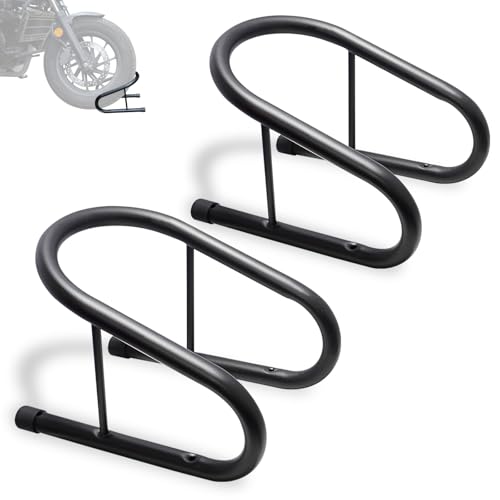
WOWTK 6.5" Removable Dirt Bike Wheel Chock w/Mount Kit Pack of 2
[6.5" Removable Motorcycle Wheel Chock] 6 1/2 in. wide Motorcycle Trailer Locking Wheel Chock Tire Holder fits for wide-profile dirt bikes, dual sport bikes, adventure bikes, sport bikes, cruisers, or motorcycles; Ideal for one-person motorcycle loading. [Specifications]Height: 9" Interior,Width: 6. More ...

Rabaconda Motorcycle Tire Changer, Street Bike Starter Kit 12-21 in Wheels
Fast Tire Changes at Home: Change a motorcycle tire quickly and easily without the struggle. The Rabaconda Street Bike Tire Changer lets you skip the trip to the shop and swap tires in your own garage, for street riding or track days. Innovative Design: A unique wheel angle gives you an ergonomic wo More ...
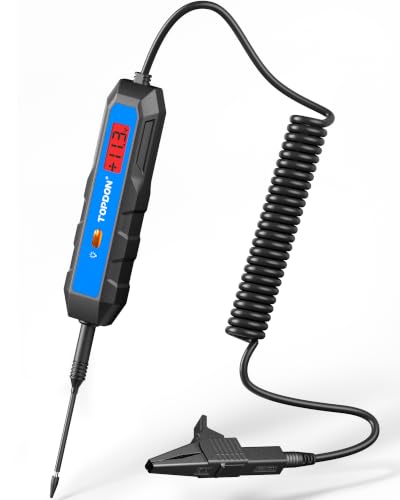
TOPDON CT100 Automotive Circuit Tester with Load Test,3.3-65V Test Light
LOAD TEST TO FIND HIDDEN ISSUES: Test DC 530V circuits with up to 1.2A load output using a simple press-and-hold operation. Monitor voltage drop in real time to help identify weak batteries, poor connections, and circuit issues that basic test lights may missgoing beyond a simple voltage check for m More ...
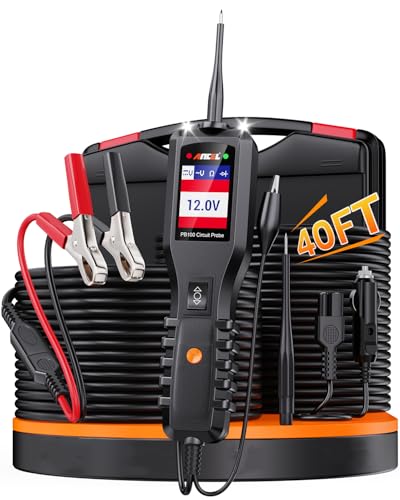
ANCEL PB100 Automotive Power Circuit Probe, 12-24V Elec. Short &Open Finder
ALL-IN-ONE POWER CIRCUIT TESTER QUICK & EASY: Fix vehicle electrical issues in minutesno guesswork, no complicated setup. This all-in-one tester works on 12-24V systems and handles Voltage, Polarity, Continuity, Grounding, Short Circuits, Activate Components, and more in one step. Replaces multimete More ...

Milwaukee Packout 3 Drawer Multi-Deep Tool Organizer Box - 48-22-8447
Reinforced Safety: Locking safety bar for extra protection of your tools. High Capacity: Holds up to 50 pounds, ideal for storing heavy equipment. Internal Organization: Adjustable dividers for custom organization of tools. Smooth Slide: Drawers with metal ball rails for smooth opening and closing. More ...

Parts washer is lightweight that can be moved easily to accommodate your cleaning needs; Features a 3.5 gallon fluid reservoir capacity and a 110V electric pump which recycles liquid at 1/2 gallon per minute. Compact, bench top steel cabinet parts washer great for small parts cleaning jobs including More ...

Efficient Surface Treatment: The VEVOR SBC200 sandblasting cabinet with stand offers a generous 60-gallon capacity, accommodating up to 203.4 pounds of blasting media. Operating at just 5cfm @ 40-120PSI, it efficiently handles various tasks, perfect for DIY renovation projects at home or in the gara More ...
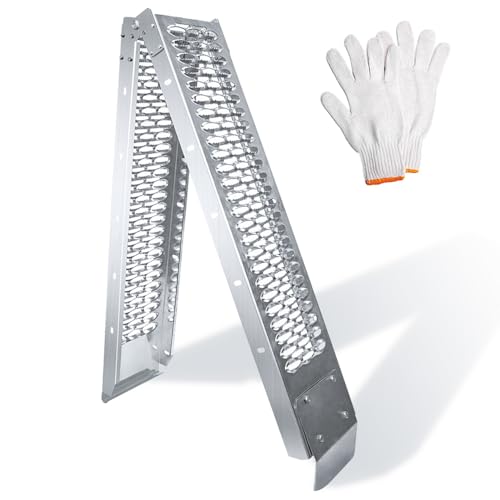
Folding Portable: Motorcycle truck ramp is made of steel alloy, folding design takes up minimal space when not in use, perfect for storing in your garage or trailer. Expanded size 73.11*9.05 inches, folded size 37.6*9.05 inches. Product surface slight traces of special coating curing oxidation, is n More ...
Did We Miss Sump'm?
Sixty percent of the time, we're right every time. What would you add to the conversation and why? Your input is invited. Leave a comment and/or write an article!
Share Link ...



Thoughts gone wild? Write an article!