
Our FTC disclosure's magnum opus awaits here ...
Junkfessions of a Clunky
Listen in as Team TRO discusses Glacier National, RPM shifting and Yamaha's that just won't quit. Music by Rabid Neon and Otis McDonald. Download our feed here.
Transcript
As legible as we are intelligible ...
Robin: Brian is steering the ship this round, but in this episode, we're going to revisit an old segment, Maptastic Mayhem, for the one and only Armin A. Piper, who sent us a request. We'll get to that in a moment. He's our main segment, planning that monster riding year, because the weather's going to start getting warmer here eventually, and it's time to start getting ready, folks. Lastly, a big surprise from the one and only Jordan Lehman for moments in motorcycle history. We don't even know what it is yet, but we'll get there. So for announcements, this round, Random Song of the Minute, my new favorite thing, Random Song of the Minute is Avoid by Brett Bolton, which is an excellent Go Fast song. Also, quick shout out to our friend Matt Berry, who has a not-so-new Instagram channel that I certainly didn't know about until a couple nights ago, when we were boozin' and talkin' shit. Check out on Instagram.com, no-namegarage.wi, so that's Instagram.com forward slash no-namegarage.we, as in Wisconsin. It's got quite the tidy little setup going on there.
Brian: Got a very interesting garage, well worth following. What's good? Ask me the question. Did you ride today? Well, yes, I did, Robin. Yesterday, the temperature was in the lower 50s today. It was 41 degrees. I had a lunch meeting, and so I rode to the lunch meeting. There's crust on my bike, but never mind that. Anyway, yeah, it's been, I actually was able to ride, like, late December, and I think it's been a while since we've had enough snow off the ground to do it. What kind of ride was it? Where'd you go? What'd you do? I went to a pub where we had lunch and we talked work stuff. It really wasn't exciting at all, except it was on a motorcycle and not in a car. I'll take what I can get.
Robin: I'm very happy for you. I'm glad to hear that. It's good news. It means that things are starting to warm up for you. If anybody's heard the previous episodes, they know that you've been up against the wind of the whole time, and it's apparent on your face. Imagine a motorcycle. Good enough. It'll have to do.
Brian: Yeah, there's a snow blower on my motorcycle lift, so nothing else going on. Again, we're planning out the year. We're going to talk about that later, so we'll get to that later. What do you got, Robin? What's going on?
Robin: What did you do? Once again, I very recently, as in yesterday, rode the road that shall not be named and found a new favorite destination. There's a restaurant in Silver City called the Cuban Guy, and it's this Cuban cook and his lovely Cuban wife. It's automatic. Oh, yeah. They opened up this hole in the wall that is only open on weekdays from 10.30 to... I kind of look it up, but it's like 10.30 to 2, or 10.30 to 1.30, but weekdays for a very short window where you show up and it's just Cuban sandwiches. I'm telling you right now, I'm going to eat every sandwich on the menu to give it a go, and it so far does not disappoint. It is nice. The place to go. It's also right next door to a friend of mine in Silver City, so shout out to Lucky out there. He knows the drill. He's about to get a lot bigger, huh? Yeah. Breakfast, lunch, dinner. I did it once. I got one sandwich for myself and one sandwich for Maggie. This is highly unnecessary. And get the triangle because they want to bring the other half home. You're good to go. On that ride, one more time. Shout out to local friend Will. He is proof of concept on all matters of group ride. It's never about pace. Pace changes day to day. What's more important is riding with people who are smooth, consistent, and predictable. Yeah, that's what I tell people. It's like, just be there. Show up eventually. I don't care. How'd you make it through the turn? Doesn't matter. What matters is you made it through the turn. This ride yesterday rivals the very first time I rode that route because the first time I went had no idea what I was getting into yet. I saw the curves on the map and I said, that's got to happen. Went and checked it out. Decided. Now I live here. Yeah, you get into that mode where you're just you're enjoying the process of slicing through every corner. And yesterday, I wasn't really feeling it. It means I'm going to ride something about the weather, the overcast, the cloud cover versus the non cloud cover where there were clouds. There was this dramatic contrast in lighting over entire mountains. So you would have this peak off of the distance that was that looked like Mordor. And then you'd have this giant gleaming ray of sunshine that was just laser beaming down into a valley with trees and farm land and just beauty. The whole trip. Those are two ingredients to a 50 ingredient garbage burger of beauty. Nice. I had zero desire to go abeshit on my regular terms, but I still threw leg over the bike.
Brian: So that was awesome. Like doing the same thing again and again, you really get to see how nature changes. Maybe smell the roses a little bit, not that there's any roses out there.
Robin: It's all cactus, but up in his elevation to get it. You get grass.
Brian: Yep, there's long. There is grass. There's live cows and anyway. But yeah, seeing it at different times and different weather, different lighting is that's always different. It's never, never stale.
Robin: I think sometimes the canvas will tell you not today, man. You're going to see this. The more you try, the more beautiful I'm going to make the scenery to where you just cannot ignore it. And it did slow me down significantly, but we were still cooking and I was just having a grand time.
Brian: And I was going to say that's something I would say to someone who thinking about the triple sevens tour or something like that is it's not about pace. It's never about pace. It's always about enjoying it, getting it, seeing things in new light every time you do. It's one of the most gorgeous parts of the world.
Robin: Sevens will bend your take on reality. By the way, we've got two spots left right now. If it doesn't sell out, it doesn't happen. I sent that email out today. So we've got plenty of time, but I'm under the gun because I haven't quite made any reservations yet. I have to actually fire off that email and get things started. So after that ride, we rock trivia night, which may be what's necessary to get my brain warmed up for Curtis Minder's book. It's been a hell of a good year for reading, I got to say. Now I'm talking about the collective year, not 2026 divided, but the collective past year. For Matt's last theorem, Rick Rubin's creative act reread the relaxation response and actually bought beyond the relaxation response from my own reading and legend. If that's any good, I imagine that's the next installment. Wow. Which I didn't even really know there was one, but I'm going to check that out. Trying to keep my brain tuned for this cyber recon effort because Curtis Minder is going to appear on the show to talk about vehicle hacking. Once more and other things in the book as a whole, he's looking forward to it. I'm looking forward to it. I think Brian, you'll enjoy that. If you get a chance to go to TRO, just look up Curtis Minder, Curtis with a K. I think it was vehicle hacking was the topic of the episode. He really shed some light on some unexpected truths and I'm about to get through his book and just going to start layering the questions. Hopefully, as he is a friend of ours, hopefully I'll be able to come up with something that is difficult for him to respond to and borderline offensive. If you're listening out there, Curtis, you better be getting ready, man, because here we go. There's not a single good ticotty.
Brian: It's going to get you out of that. And I do have the book and I've gotten started. I'm at the forward. That's right.
Robin: I went to after the forward. I'll meet the Oliver day afterward. The sideways, the left turn, the reverse turn.
Brian: Dedications probably, I think, introduction. You're in there. My name's in there. You got a little shout out. It was the first thing I saw. It was pity. Thanks, Curtis, for the empathy and pity and all that. I ought to read it. I have to figure out where the motorcycles are in it and have an intellectual stimulating conversation.
Robin: Yes. Listen to that episode. I think I'll link you to it after this. I'm sitting here stealing your show, though. So now, are you ready to move on to the things? We'll do the big, heavy print thing last.
Brian: Okay. First up, we got listener questions and even a surprise question that's a little deeper. These are questions from the wild. And again, if you would like us to answer your questions, please visit email.tro.bike in your web browser to send us a message. We will rattle it around in our brain cavities and we may even come up with an answer. Paradise and a fist. You never know. Could be right. Could be wrong. DM asks, so I'm booked in to have my rear tire and he spelled it with a Y. So I think he's Australian or something. TR. Yeah. What do I have? Dollar e-dos, kangaroo, coin, something like that. So I'm booked in to have my rear tire mounted on my GPX 250R. And again, I'm not doing the accent, not doing it. The bike shop has said they don't need to be balanced. Now, there's already weights on the wheel, but I should I ask them to balance them just in case? And the short answer is the shop is right, but they're also wrong. Basically, the cold hard truth of this is that no human rider can detect anything but the most serious imbalance. Now, we're talking like three or four ounces, 70 to 100 grams, depending on where you are. If you're under 100 miles per hour, 150 miles an hour, you're not going to feel a thing. Even if your wheels and tires are severely out of balance and pretty much any reasonably modern tubeless motorcycle wheels with any decent quality tire will be normally they're within a half or three quarters of an ounce with no weights. You know, you line the dot up with the stem, the dots, the light point of the tire, line it up with the heavy point of the wheel, which is usually the stem, and you're going to go. And honestly, no one's going to know the difference. That said, I still check balance as kind of a quality check to make sure the tire's okay, make sure it's mounted and I didn't leave anything in the tire. It happens. And I will go ahead and balance. You know, I'll put like one or two weights on. I'm not going to feel it. I know I'm not going to feel it, but I just want to do the job right and I want to take time to do it correctly. So it's not necessary. The shop is correct there, but it is part of doing the job exactly right. So I can go either way on this copax or whatever you got over there. If you want to spend that on having them do the balancing, that's great. If you want to skip it and save a few bucks, that's fine too. What do you think Robin?
Robin: I think that two boundaries of opinions on these topics, Brian's not wrong. He's more calm and casual about such things. I tend to be leaning in that direction these days myself. When I first learned to change a tire and to balance it, the person who walked me through those motions is the same guy that wrote our sport touring history article, which is a cornerstone content. That's Joe Conradi. He really covered every step involved to really get it right. Why you do it that way, which is great if you're looking for that kind of knowledge where you're trying to stack the cards and really understand, okay, this, then that, check that, then this, all the way from unmounting the tire, remounting a new tire, and then balancing. Now, the story goes on exacting elaborate terms that you're going to put the rim on your balancing stand and you're going to spin the rim. Wherever it stops, you'll then spin it again and see if it stops at the same uniform location and mark it with a sharpie and get to know the heavy point on the rim. In which case, it's weird. My Suzuki rims have a strange heavy point taking away from this process on just knowing your bike and then leaning back in the relax, be casual, calm down, nature that Brian's bringing to it. I'm only going to do that one time. I'll check the rims for one time. Be like, okay, now I know, whatever, moving right along. And it has proven true every time. Now, the next step in the elaborate process was to put the tire on and whether you don't use air or you do use air because air does carry weight. It doesn't really make a difference. It's more just about like, okay, spin the wheel again. Repeat that process. Does it stop at an obscure location when you spin it and it spins like 40 times and you walk away and get a beer and you come back. Did it stop at that same location? Okay. Yeah. This part, I no longer do that. Again, there's a dial in between Brian's casual suggestions versus the absolute. Make sure you check all these things kind of vibe. Yeah. I've gotten to the point now where I'll put the new tire on. I will fill it with the recommended air pressure. I will put the cap on. I will put it on the balancer. And then I will spin it very gently and see where it ends up with my old weights on it. Because maybe I don't have to do anything.
Brian: Yeah, that's common.
Robin: And with a little experience, you can tell just by how much variation there is, whether you should bother peeling the weights off and start, you know, that also gets right into that casual truth, that it's like, I can tell how much variation adding another weight is going to cause or switching out the weights I've got. So I will simply observe how drastic is its turning once all of a sudden it wants to turn. Does all of a sudden stop? Can I turn it clockwise 30 minutes and does it hover there? Does it start to move in that direction or in the opposite direction? I'll repeat this cycle and stop it. Check it. But I'm nowhere as neurotic as I used to be about this because I know that whether I'm going 35 miles an hour or 125 miles an hour. So long as it arrives at a consistent lack of motion when I let go of the rim, I'm good. And then I'm just going to walk over to this model I face. Yeah. After all that ranting, should the tires be balanced? Yes, I think they should be. Do they need to be balanced with incredible exacting, absolution and scrutiny? I don't think so. Not so much. They just need to be okay. That's definitely better. Let's go right.
Brian: Make sure you didn't screw it up. Yeah. And again, this is another pitch. Learn how to do your own tires. Learn how to do your own balancing. Doing a static balance is what they do with MotoGP. They do the same thing I do in my garage using a pair of old crappy jack stands. That's what that's how they do in MotoGP. I swear unto you, if you learn that, you get to know your bike better. And you just, I think it makes you a little bit better rider. Or if you have the shop, do it. It's up to you on a 250. You're not going to be going 200 miles an hour.
Robin: So it's funny to me that we're talking about this right now because I just changed my tires yesterday. Oh, okay. That's that made 3500. I am proud to say 35 miles on this sort of evangelist, which is not normal for me. Are you getting old?
Brian: What's going on here? What else we got? This is a quick one. Okay. E.P. asks, what's the best balaclava for people with small heads? I'm looking for a balaclava that will actually fit my head and face. I unfortunately have a pretty small head. So most balaclavas fit baggy on my head, even with a helmet on, blah, blah, blah. Two words for E.P. I have two words. Dog snood. Google Dog snood.
Robin: Yes. And there's a variety that you may choose from. I personally prefer the ones that make the dog look like a different animal. Like even if you have a dog, it could be a bee or a frog. Those are the ones that will probably serve you the best.
Brian: Yeah. Find a dog with the head, the size of a grapefruit or whatever you got going on and you buy a snood.
Robin: It's a fabric tube. It doesn't matter what it's intended for. In the end, it's a fabric tube that's intended to keep a mammal warm. Just because it has dog before it doesn't mean anything. Yeah. I just got the best net gator I've ever owned. So this is the Shampa.com Myers net gator. This thing is as thick as a fleece, man. It is dense. Okay. Like for winter use, absolutely outstanding. I do not have a summer one and I think I'm getting to be that. I'm ready. I'm almost ready to get one. So Joanne, I know she had brought that up in the past.
Brian: Yeah. Joanne will probably eat. Maybe she'll strangle us over dogs nude. I don't know. And now for our newest segment 404 Fletch Not Found featuring the brave questions of new rider Angel Marie Kendall. Angel has willingly stepped into the spotlight so that other new riders might know they're not alone.
Angelmarie: Should I be listening to the engine to shift? Should I be looking down at the RPMs to shift?
Robin: Where are you at in the RPM range? How does the engine feel? How does the throttle response feel?
Brian: I'll break this down somewhat. There are many different points at which you should shift. Do you know what your red line is on your bike stack? I don't even know what that means. The rev counter. So you got your speedometer and then you'll have like a bar that goes up when the engine revs.
Robin: It goes up to 12K.
Brian: 12,000. Okay. It's all variable depending on if you're trying to accelerate quickly, if you're just trying to put along so you don't draw attention to yourself in traffic. But generally you want to shift up into the next gear when you're at about maybe half of your red line RPM. And again, that's very broad and very variable.
Robin: How about 1,000 above halfway?
Brian: Yeah. So if your red line is 12,000, is that what it was?
Robin: Yeah.
Brian: Shift anywhere from four to seven.
Angelmarie: Okay.
Brian: If you really want to sound like a racer and go fast and impress everybody and then go all the way up to red line and then shift and it's up to you. You're the one hanging on to the grips.
Angelmarie: Okay.
Brian: The point is somewhere in the middle is where you should shift. The second thing is you will begin to learn over time what your engine sounds like. You will know when it's about time to shift just by the sound and by the feel. And the third thing is you'll begin to learn the concept is torque curve. It basically amounts to the way the characteristics, the way your engine builds power. You know, it's not from zero RPM to 12,000, it's not a straight line. The engines kind of have a curve to them. The way the torque curve works, a smaller engine like your bike. It has a hell of a lot of power for the size of the engine it is. It's such a cool bike. Yeah. I love it. You could ride that bike for the rest of your life. I mean, it's really incredibly flexible bike. But it does have a lot of power for the size and weight of the machine. So it's a great bike to learn these things on. Up until you get to four or five thousand, it may not feel like it has as much power. And then it'll feel like it's pulling harder and harder as you go up. And that's part of that torque curve. You'll learn what it feels like, how hard I'm pulling the throttle open. You know, do I want to just go a little bit or do I want to really haul out of here? This is a bad neighborhood or whatever or I want to impress everybody. But yeah, shifting somewhere in the middle, somewhere just above half.
Angelmarie: Okay.
Brian: There's really no wrong answers here. Not really.
Angelmarie: I'm not hurting the engine.
Brian: It's a modern field injected bike. So it does have a rev limiter. So you really should not be able to over rev the engine.
Angelmarie: Okay.
Brian: Sometimes put it in first gear and then go up to like 10,000 RPM. And just see what that sounds like. You know, I got to hurt it.
Angelmarie: Okay.
Brian: On your bike, there's a display and I think there's a bar that goes up.
Angelmarie: Yes.
Brian: That's the tachometer. That tells you how fast the engine is spinning. You know, sometime put it in first, go up to like 10,000. Okay. Wow. I should shift before I get to that point, but it's also not going to hurt anything. If I hear that noise, you know, get used to it.
Robin: Okay. Another perspective is looking at it from the both boundary lines and just using the inside third of your rev range. So everything that's up top and everything's down bottom. First gear is going to love you from the start up to it's time to shift. My bike goes to 10, 5, and whatever it is about my bike, it's different with every machine. When I reach about 4,000, that's where it wants to cruise. But it's also kind of time to shift like four or 5,000. It's like, eh, yeah, it sounds like revs are higher. It sounds meter and angrier. It's like, okay, shift there, whatever. And then once I reach that last third of RPM range, that's where I'm like, well, I don't need to be up here unless I'm doing performance writing. Let's go ahead and shift and chill this thing out. If the motor sounds happy to you, it probably is. But there's going to be low RPMs where it just wants to chug and there's going to be high RPMs where every motion in a throttle is going to be exacerbated.
Angelmarie: Yeah.
Robin: Because there's so much power available in those lower gears. If you're in high RPM, it's going to do that. I'll run it up to about a third of the RPM range. Go towards the middle and then shift. But I'm cruising at one third. That feels right to me.
Brian: Okay.
Angelmarie: Okay.
Brian: If you want to follow Angel's Wanderings, look up 404 Clutch Not Found. One word on Instagram, YouTube, and TikTok. And if you'd like us to field your questions, visit email.tro.bike in your web browser to put an electronical message into our green settings.
Robin: Are you ready? Let's I'm going to share my screen here. This is ought to be fun. This is a throwback. Yeah. Ladies and gentlemen, we're going to do something we haven't done in a long time. The one in a late Armandé Piper of Clutch motorcycle training in Loveland, Colorado. She asked, what are the chances that you have a cool route from Portland, Oregon through Glacier National Park? I answered a little bit too quick because I remembered the big tour from Chicago to Portland and back way back in 2015 or 2016. So I knew we did something there, but I don't know if we went through Glacier. Travis doesn't hear to help us out with that. So let's see how that goes. We're going to do this ourselves right now. So I'm going to share my screen browser style. That's my plan. I'm going to take direction. I'll have some suggestions because I've actually ridden in these areas. But in terms of how we figure this out, here's what I think we should do. And let's see how quickly we can do it just for sport until we get to the fine details of good riding. We'll do a simpleton point to point route. We'll then expand that into something of a scenic route. And then we'll expand that into something of a hectic. Who cares about the freakin scenery? Let's go ride motorcycles route. Challenge fantastic. I am at our favorite resource ride with GPS.com. That's ridewithgps.com, which I prefer for all of my motorcycle route planning. Sponsorship could change that. Let's move. As she said, Portland, Oregon through Glacier National Park, right? Right. I'm going to just create two points. They are Portland. No, we don't want Portland, Texas. We want Portland. Why are there so many Portland's are our Portland, Oregon, USA? Boom. We're going to start right in the middle of technical downtown Portland, Oregon. Sure. I will go ahead and zoom out. Let me know if you have any particular map view preferences and we'll set that up. Now, where is Glacier?
Brian: I've got it up on my screen here and it is near the Canadian border in northern Montana, straight north of Missoula.
Robin: Glacier National Park typing it into the destinations. Here we go. Click. We're going to route to here. So now you've got your base route and that's all it takes. You go into right with GPS, you go to the route planner, and then you click in the right hand toolbar. You select control points, not the add to route stuff because that's the video game version that will go south on you when you're doing these big miles.
Brian: Yeah, it's going to say we've got 619.2 miles. So this is a big. Ride anyway, you slice it. And so I'll point out a couple things to you. First off, you know, I have this thing like where on maps, you've got it on the terrain view or the topographic map view. So you will see the issue for the likes of us with this map is that big yellow pale blob in the middle, which is the Palouse. Yes, Washington State. We're going all the way through Washington State. We're crossing a little Horn of Idaho and going into Northern Montana. And so the issue in this route is that big blank region in the middle of the Palouse, which is it's a region. It's basically sand dunes. And I'm not going to get into the geology and so forth. The big question here is how do we put this route more into the mountains into that into those green lumpy bits? And so do we go north or do we go south? And also, the second question is you have some really famous and interesting roads that would be interesting to hit along the way. So if you take like a southern route, you can do stuff like Lolo Pass 12 and so forth. All those roads in and around Missoula. Lolo Pass is mandatory.
Robin: It is the first thing. Lolo Pass is Idaho Route 12. Now I had set up in Mackie, Idaho, which is by Route 21, the reversal of that, the southern route. Now that's actually where you've got the distress call about the triumph immobilizer. Lolo Pass is famously awesome. Now, if you look at 21, that's which is all pretty far drift of we're not doing that. The point is I'm going to save this map as a generic avoids highways as much as I can way to get to Glacier.
Brian: Yeah. And don't get me wrong, the Palouse is a scenic area, etc. But yeah, it's not it's pretty empty and not excitingly riding Portland and Glacier.
Robin: I'm sitting at the private, we are riding a motorcycle and we are saving. All we did was pick two points, your start and your destination. And if she needs me to reverse these, I can, no big deal. Now it's done. Okay, let's party. Let me, let me, yeah, let's party. Let's make a suggestion. Look for a town called Cuschia. I'm going to the top right hand. I'm typing in Cuschia, Idaho. It's going to show me that location. We're not routing there. We're just marking it. Dragged her out south to Cuschia. So I've got it set to control point. I click on the line one time to create a control point. Now I've got control that control point and we'll drag it to Cuschia, which immediately makes things way more important.
Brian: You're going to be on 12 and you're going to be hurting. You're going to be out of breath. You're going to feel like you've been beaten but in a great way. Don't do this in a day. Like it's a really good beating. Yeah, that one action there really improves a lot of it.
Robin: And Missoula is fantastic, by the way. That's a beautiful town with cool people. What else can we do to help them avoid? I don't know if the Walla stuff is, you know, that's still all route 12.
Brian: Yeah. And you can see going through Lewiston, it's pretty decent. L-E-W-I-S-T-O-N. The route that you have there goes through Walla Walla and in Lewiston is right on the border. It's right there on the right side. Okay.
Robin: And I'll bet you 84 is gorgeous. It'll be like by Golden Dale when it follows the river all the way into Hermiston. It's probably lovely.
Brian: Yeah, Lake Wallula. Yeah, and you're going through the Dallas and all that. Okay. So this ain't bad. And here's the thing you're right into when you're dealing with like big air with big mountains. There's not a lot of alternatives to get around and over them. This northern route just follows 12, doesn't it?
Robin: Yeah, it's 12-tastic. And beautifully so, you can always double back a French town on 90 and then, you know, create some excess writing. But I don't think we're there yet. We want to, you know, we've set this up to where I think this is more fun to ride and seen it. We're looking for that middle ground first and we still were at, what is it? Just shy of 700 miles, 690.5 miles.
Brian: It's like two big days and it's fairly efficient. So here's the other thing. If you look along the river and I think it's, does it turn into the laminate at some point? Our west of Pendleton. So between Portland and Pendleton. I'm there. Move that to the other side of the river to that smaller road.
Robin: Can do. I am in control point mode. I'm going to click on the line. It will create a control point. And now I will click on the control point, hold and grab and move it to the other side of the river. Now, is that the area? Hold on here.
Brian: Oh, oh, well, yeah, there you go. It is fixed. You were in someone's driveway.
Robin: Yeah, if you don't zoom in and really hone in on the road, it will put you in the oncoming direction. So you'll have to doing two U-turns, if not a gravel road that goes through somebody's living room. Yeah, we want to avoid that. Now, did you want me to get across the river earlier?
Brian: Yeah, and that's the other thing. Zoom in and check the route and see if it stays on the north side of the river the whole time. Because the south side of the river is like a big highway, but the north side is a much smaller. And so, yeah, you have to put in more control points and really force it to stay where you want. Route 14 and I have ridden route 14. It is beautiful. It's beautiful. I've been in that area and I've actually been on 14 a little bit myself.
Robin: Now, it's trying to be more efficient. Like I said, I'm on control point mode. And then I click a section of the line to create that control point. And then I drag that line wherever I want, but that does not mean it will not try to find its way to a more efficient get to work route, so to speak. And we don't want that. So you got to follow it and just make sure it does what you want.
Brian: Basically, you take 14 and it goes all the way to almost Vancouver and then down to Portland, and we'll leave that alone. It starts with a really just a beautiful ride along the river. I like this. And again, getting out of Portland is always just a giant. I've never seen traffic like that. It's crazy. Portland's too cool. Everybody's there, you know.
Robin: Piper's from Colorado, so she's completely familiar with traffic and bad service, which is something I'm going to want to talk to her about when she opens up this cafe is like, Hey, by the way, how long will it take me to get my order Colorado is a reputation, which is funny to me. And she's probably never got to speak to me again for that.
Brian: Here we've got a really nice escape along the river and then it hooks in with 12 get wilder and wilder and wilder. And then you arrive in Missoula fully spent. And then from there, it's just pretty straightforward. I mean, you could take some diversions and you could go over to that valley, you know, on the other side of the mountains. But from there, it's a fairly straightforward shot to the glacier.
Robin: Yeah, but you also get more beautiful scenery and what looks like white sands, high plains desert. So that'll be really pretty.
Brian: That's Sealee Valley over there that you're looking at. So you could drag the route over there if you want, or you could leave it on the west side of those mountains.
Robin: Let's take them on the west side through Elmo and Lakeside. Oh, yeah, Elmo just for shits and giggles because we're still relatively direct. I didn't even see that. Yeah. Well, keep zooming about. Tell me what you see. Clicked on control point mode. I am dragging my map. I'm finding a point that I want to change near Polson. I'm clicking on the map. It creates the control point. I'm going to keep that tethered because I don't want to change anything else. But I'm going to clear another control point because everything up to Polson, we want to keep as it stands so we think so far. I'm going to create another control point at a different location up north of that so that I can then drag that over to the mountain range and the Lakeside Road that is basically just west of Wild Horse Island. Then I'm going to zoom in and make sure this line doesn't go through somebody's pantry. And now we are to the west of Flathead Lake.
Brian: I think it's important to look at, like if you look at the street view on that highway, it's US 93. Yes, it's pretty deserted. Lakes tend to attract people. So in our side of the Mississippi, you avoid lakes. On this one, there aren't any really any towns. There's very few roads. So it's not going to be one where you're trapped behind people towing boats miles or miles. And again, it's going to be really when you zoom way out, I mean, every road looks like a bowl of ramen.
Robin: But in the end, this will be a lot more scenic and pleasant with big sweepers now and then still kind of a straight ahead in a manner speaking because it's a main road, but it'll be a lot prettier. And then we'll get to some other stuff.
Brian: One of the things also I would just a little tweak, I might suggest, is making sure the route goes through Colospell north of the lake. Got it. Control point, click on the line, create the control point. Yeah, because you're going to want gas and, you know, that's your last outpost before you hit the park.
Robin: It is. Now let me zoom in on Cala, whatever super califragic spell. Yeah, the question is, do we want to go through the maintenance of downtown? Finally, I get to say it. This is where Google's hybrid satellite mode is exceptionally useful. We're always looking for the good roads with the landscapes. It's a lot easier to figure things out within terms of businesses and fuel access when you're looking at the satellite hybrid, which you're going to pass fuel. You know, you only realize how hectic this town is after you do that. And it's like, you're going to see gas. I'm not worried at all. So don't worry about it. Switch back to River GPS cycle. I got this going on again, and we are golden. Except this cue point does basically check on a perfect stranger's laundry. So zoomed back out looking good.
Brian: Yeah, seven hundred and ten miles. I'm doing the same thing. You are just going back and forth here. Yeah, we don't really get into the heart of the Palouse. So if you want to see that and you want to see ancient sand dunes, you know, knock yourself out. But anyway, but it escapes Portland as quickly as you can along a beautiful river valley on a small road. And then, you know, right after walla walla, it starts to you start to get into mountains, you start seeing mountains walla walla. And then by the time you hit the border walla walla, it's going to get it's going to get pretty crazy. You get to Lewiston and things get nuts out. So basically, this adds a few miles, but it takes you through some of the finest mountain pavement ever created. Have we created the intermediate route? I don't know yet, because we created basically a southern route. So do we want to try and create a northern route? Or what are some of the other options we could go further south? Or we could do something where we escape along that river valley and then divert even more through those through that second range of mountains?
Robin: I am of the assumption that they're going to want to see Portland and they're going to want to see Glacier. So arriving at this ride alone is going to be fantastic, that they're going to take great pleasure in this. And you don't want to miss 12.
Brian: We could add some more miles and add some heavy smiles.
Robin: I think that we should move on to another segment and next episode we will create the can of whoop-as that covers the entire mountain range all the way north, comes back to south, picks up Lalo Pass and 12, anchors itself in the crevices of the mountain range all the way up, skips the lake entirely to Glacier. We will build that, but we should move on.
Brian: Yeah, like I said, there's some other ideas. Fine, do something for me. Let's see what this looks like. Okay, since we're here.
Robin: Let me save this intermediate version. Okay, Oregon, Piper's, Portland, Glacier, intermediate, save, and I'll also share it whether so she knows what we're doing. That is now done. What would you have to do next?
Brian: Yeah, I don't know if this is a good idea, but you can scoop in another mountain range crossing if you route through a town called Wiser, W-E-I-S-E-R.
Robin: Looking for Wiser Idaho, I've got control point mode on, it gave me a marker so I can zoom in on it and immediately.
Brian: Yeah, that one goes through like the Hell's Canyon area. That's got to be good, right?
Robin: This is what I would do. Now, are these paved?
Brian: Good question. So that basically loops south to scoop in even more mountains. It goes through John Day. Okay, yeah, I got it.
Robin: It does. Look, this is a problem. If we do this, this is the entire episode. We can't keep going. This is going to be the whole thing. We're going to be doing this whole episode. I like this plan.
Brian: I'm going to hit undo, and I promise you, if she wants some megatronic version, then we can do that. But yeah, this one here takes, you know, and again, it's a lot more miles. Of course. We would three day it. So the version we had, where did that end up at? 800 and something.
Robin: 708 miles, which is feasible. It's a two day ride only because when you're leaving Portland, you're riding along the river. You can cover significantly bigger miles on day one. You can cover three, maybe even 400 miles. If you shoot for Lewiston, you've got a 250 mile day the next morning and you'll probably still have plenty of time to watch the sunset and enjoy a beer. No harm, no foul.
Brian: And we covered a lot of principles. Look at the terrain. Look at the regions you're going through. Look for the mountains. Look for the ways around and through the mountains. And also do things like, okay, which side of the river don't want to be on? That kind of thing. You know, think about the landscape and the topography. Oh, look, there's a road around that lake. Nice.
Robin: Yeah. And I think we will expand on this in the rootest possible way soon. What's the big shoe, as you called it in the last episode, the really big shoe, the really big episode.
Brian: This is something I've been thinking about quite a bit and we've discussed and so forth. But the whole thing about planning a monster riding year, it's February, you know, you have to think ahead on these things. The preservation has to be made. Things have to be moved around. I don't really would go into a lot of detail about what I have planned and what last year I was and so forth. But the whole, what are the concepts behind it? How do you do enough planning and not too much planning? How do you make sense of it all? You know, how much writing is too much, how much planning is too much? You know, for example, I have several times I have to balance rides against, obviously, we all got to work, at least I still do conferences. You know, there are different conferences I need to go to to market my company, time with my wife, time with my family, and how to balance everything else out. The cats angry when I'm gone for more than a couple days. It's all that stuff. There are times when I've managed to combine business with writing, you know, go right to visit a client, but that's pretty rare. Our clients are scattered all over the country. So, wherever I go, I have to carry a laptop. You know, I have to be able to connect and to handle at least something. Yeah, that's just life for me, you know.
Robin: I just reduced that to a 10-inch iPad and a folding Bluetooth keyboard. It looks like that's going to work for me in the future as my I've been scaling down more and more and it's getting pretty interesting. Yeah, go.
Brian: Yeah, like a MacBook Air is pretty lightweight and that's, I don't know, I'd like a little extra screen real estate, but I've gotten by with like a tiny little Chromebook before, you know, if it's just emails and stuff. Yeah, during the season, which is approximately April to October for me. And again, with a lot of day rides stuffed in at either end, usually there's kind of one big event or big thing a month, sometimes two, and then a bunch of little like ad hoc, you know, like friends come down for the weekend, we'll go ride stuff like that. I mean, I have to work around to work week. Normally, don't really get a chance to get out during the week, unless I have to just take a day off. And like last year, we did too much. You did, there were seven in Brown County and then they tracked day. That was, it was all wonderful, but it was really like, I need a week to recover from my week of two weeks of a way. Yeah, just dance. Awesome and way too much. So one of the things this year is I need to make hopefully have more time for getting out for the weekend.
Robin: Well, now that's the thing of it. The way you're speaking about this topic, now, let's remember that you wrote a brilliant article for the site some time ago. It's all about how do you deal with the no time to ride factor and how do you figure out what can and cannot be done. So if you go to TRO and you click the search icon up top and you just look for ride time, there's an excellent article by Mr. Ringer here that talks about all kinds of stuff. You know, is it selfish? If you're going to do it, it should be done well. And what's the psychology of this practice? You know, time, love and balance. It's a two way street deep. It's super heavy. I like getting deep that article. I think I'm in a different lane that I know how good that article is. I know how important that article is, but my approach kind of covers sort of like we were trying to do with the map planning today where it's you can get really edgy and twitchy and freaking out trying to figure out how you're going to do each individual thing. Or you can create a broader scope of your availability so that there's always a tree to pull the apple from, you know, be like, Oh, I've got this opportunity. What's near what's what makes sense? What's financially feasible? Click. Okay, let's take a bite of that.
Brian: Yeah.
Robin: Any inverse. If you're kind of covering it from both angles, lots of good things can happen until you almost see like it's too much. Look at it last year. Commitments, promises were the bulldozer of constant writing that like, Oh, I told him I'd be there. I told these people I would do this. Yeah.
Brian: Yeah. Balancing with time away. You know, I don't like being away from from my wife from my home, but we're over here having this awesome time. So you have to balance that and so you have to make time to do things with the people back home.
Robin: I can hear Kelly Howard say, all God's children's got problems, Robin. Any time he talks about some lavish luxury that we're all enjoying or we wish it had more oregano or like some mint leaf on it.
Brian: All God's children's got problems, Robin. There's certain things like you set out some hard points and really trying not to have more than one hard point in a month is kind of my thing. Like for my business, I've got conferences I need to be at things like that. Those are hard points. I'm trying to plan around them. There've been a couple of times I've had to make that decision. Okay, do this really wonderful ride I want to do or do I do this thing to continue earning money to buy motorcycles with? I've chosen both ways before, you know, I've chosen and you plan it too tight and it doesn't work. I can say like if you have, I don't know, what was it last year? I don't remember if it was July or anyway, there was one month in there, right? Didn't have anything. And yeah, it was kind of weird. Did a bunch of weekend stuff. We got a lot of writing and don't get me wrong.
Robin: But I think if you can create your pool of options, like the complete overwhelming impossible not going to sheet. And then you can highlight the ones that really stand out and see if they gel well with a calendar. And then you can figure out what's local. The name of the game this year is legitimately balanced. How do you make it work in a way that doesn't make you feel like that's enough happiness for one year. And I was like, how do you how do you spread things out enough that the divvy on arrival to each event feels natural and comfortable? Yeah. Even if it doesn't, you can still do it. It's just if you want to have a year with that anxiety about the accordion being so crammed shut.
Brian: Yeah, the stuff that's too close together, like Brown County in sevens is pretty close. I think that's doable. This year, I want to do more dual sport rides. So do I need to get some knobby's under you bud. Yeah. And we haven't even talked about money, like what can you afford? There's only so much money you can spend flying and renting and actually riding your motorcycle places is not that bad. Double up in hotels, it can be pretty inexpensive, but you still got to think about that. There's a few tips. Make sure you can do your work and keep your income going. That's important for me. A lot of times that does mean doing stuff in evenings or I'm always up early doing things in the morning, logging in, stuff like that. I mean, some people can just leave the office and there are other people that can handle it. That's not me. Take care of your family and be there when it's important, stuff like that. And also go do stuff. The way I put it is you have to respect the stress your absence places on the folks at home. So whether that's kids, spouse, dogs, cats, make sure you do things with them too. You're not always leaving to go do what you want. Nobody else has to do anything fun. It's hallmark season. I say a big one also is just to stay healthy, even if you're on the road or even if you're doing stuff a lot. Still exercise, stay healthy, don't eat too much gas station food, don't drink too much bourbon every night, even though you're having a blast. Sleep is a really, really hard one. I think that's the biggest thing I've seen really screw people up.
Robin: Oh, and how? We've seen some, let's just not. I've seen some people have trouble with that. One such person is interested in being on the show, which I think would be fun. That'd be a good different take on things. I think that what this comes down to, if I can round this one out, I'm going to say that it comes down to an old saying that I've been trying to adapt for some time, which is everything in moderation, especially moderation. If you balance out what you're interested in accomplishing vacation and ride wise for a given year, if you balance that out and pick and choose from a dense tree of opportunity, you'll be a victim of your own decisions. But so long as you keep it fairly spaced out within the confines of what you're comfortable doing, I can handle a lot of writing and a given year for sure. Yeah, that's neither better nor worse. It's more just about what is your body telling you? What is your mind telling you? What is your peace of mind telling you? Then other opportunities may find you that you didn't consider and you left space for them. Yeah, where oh shit and that thing right after it got I cancelled. So, well, so there is room for spontaneity. So long as you divvied up that way, like, yeah, keep things spaced out to where like, wow, that is going to be a really great year. I'm going to be very satisfied with it. But there's slots for placement. Certain fuses that burn out in the mix of the plan can get pulled and replaced with something better. It's just slightly offset in the calendar. And you adjust. Yeah. Let's have a great 2026. We shall. Well, I don't even know what's going to happen. There's no iron in the middle. Fire. They're just irons everywhere. They make no sense and they're bent and messed up. We shall see. There's one thing there's planning and there's reality.
Brian: All right. Next up is moments of motorcycle history with Jordan Liebman. Got to be honest, folks, I have no idea what's coming. Jordan has a big surprise for us. No idea. It's going to be awesome. I can't wait to have a drink with Jordan and hear what he's got for us. Take it away, Jordan.
Jordan: Confessions of a junkie, prelude by Jordan Liebman. I would like to take you back in time to my youth. As I said at my grandfather's breakfast table in July of 1985. And as the most recent custodian of my first bike, a fifth hand Italian scrambler. A 1967 Moto Beta XTR 100. Yes. The same beta that became famous for trials bikes purchased for $50 cash. No title. Not running. Looking like a discarded farm implement. And then I proudly pushed this dishonorably discharged veteran by hand and foot for over two miles along the streets of Oak Park, Illinois. To the carport at my mom's house, where over a period of days, I managed to coax the cough of life from it once more. I had just turned 16. I had been adjacent to motorcycles for over a decade at this time, being a third generation rider on both sides of my family. My dad rode, my grandpa rode, cousins rode, family friends rode. Heck, whispered oral traditions at told of times long ago, hushed and secreted before I was born. When even my resolvately anti-moticycle mom was a frequent passenger of my dad on his try of Bonneville, Jawa 350 or Yamaha YDS 5 e-bikes. Indeed, the permanent dent in my dad's leg told of the night in July of 1969, racing to the hospital where I would soon be born. My dad laid down the Jawa and the kickstart arm went through his upper thigh. And this had both of my parents in the hospital. Under these auspicious circumstances, I entered this world, missing the moon landing and woodstock like Lou Michaels choking at the 1969 Super Bowl. He was probably thinking about his motorcycle. And so, having stamped life into my more illegal than not 1967 Scrambler, which I rode over lawns and sidewalks with the occasional stint through gardens and overhauled effects, and on its total loss ignition to and from high school. And there, I was granted permission to park inside the high school in the back of a small engines class by Mr. Stan Chatham, who somehow squinted hard enough to rationalize its presence amongst the Briggs and Stratton's. So, there sat I at my grandparent's breakfast table and perused the most recent issue of Cycle Magazine, August 1985. One of the many motorcycle magazine subscriptions that my grandpa maintained. On the cover, the feature article asked the question, speed in what size question mark. And showed the red, white and blue logos of two sizes of Honda's VFR interceptors, the 500 and the 1000 CC versions. In the magazine, the very first generation Ninja 900 was still available. Suzuki, Kawasaki and Yamaha were still building two-wheeled Winnebago's to compete with the now fully fared 1200 Goldwing Aspencade. There were still full-page cigarette ads to generate revenue, and the VMAX was the baddest motherfucker on two wheels. But I had the budget of a popper, and I had my very own decrepit butt running bike that shouldn't have been allowed on the street, yet somehow that's where I ran it. I digested these magazines like nutrition in those days, blessedly lost between life stages with no real responsibilities besides my job at Arby's. And at just barely 16 years old, I stumbled upon an article that spoke to my soul. The page greeted my eyes with a bike very kindred to that of my own. Old, beat up, copious amounts of rust, oil and patina. Juxtaposed to the photo was the author seated looking like a modern day Teddy Roosevelt. Freshly back from the Amazon, the slightest smile at the corners of his gla, suggesting that he made it back and lived to tell the story and the world could fuck off about it. I was hooked. Twenty-some years later, due to the most outrageous turn of fate, I would correspond with Mr. Stein. The author, while I turned wrenches for a private collector specializing in vintage two-stroke buds from the 50s, 60s and 70s. Mr. Stein had heard of our little side hustle and called to source some parts for a YDS2 based race bike he was building to compete on the Catalina Island races. It is with his personal permission that I would tell his story from 41 years ago, a story of which I have committed much permanent memory, and I have inadvertently modeled much of my life in adherence to. The article was entitled Confessions of a Junkie by John Stein. Here's the story. The Yard Sale. There it sat. As appropriately as a discarded Sunday edition of the Los Angeles Times, might lie crumpled in a dumpster awaiting a Monday morning trash pickup. Desirable when new and useful, the 1965 Yamaha Big Bear Scrambler now seemed lost in a rolling wave of litter that washed over the lawn. The 250 Big Bear belonged to an industrious young man intent on pursuing his fortune such as it might be found in the operations of a Samoan fish processing plant, not running lame with worn out tires, a weak generator, and a faulty crankshaft bearing. The 20-year-old Yamaha had been scored and ravaged by two decades of salty ocean air. Its auto-loop oiling system meant to civilize two strokes of that generation had long ago been discarded. The Big Bear was junk. It was also $5. Sold an inventory of the 60 former and present occupants of the Stein garage for senior citizens of the motor world reads in part something like this. Eight Ducati's, three Osas, an AJF twin that uses National Geographic magazine covers at its cylinder-based gaskets, a 1958 NSU Supermax, and a score of hyperkinetic, two-stroke street and off-highway Japanese bikes. The automobile roster has included about a dozen 50s and 60s American and English convertibles, an elderly Cadillac Hearse, a New York City checker cab, a caser special, and most recently a rompold lotus. Close to two-thirds of these vehicles did not run at the time of purchase, and the vast majority were more appropriate for the dis-mantler than for the highway. It would be very nice, very avant-garde to suggest my collection currently glistens, with Porsche Carrera as a newly restored Vincent's, but that's not the case. For the most part, I own worn-out things. Some have cultural value, yet those that do not, I like just the same. To me, these well-worn vehicles show more personality than shiny stuff fresh off the showroom floor, and while new things are certain to become worn, dirty, and dented, old things can only improve with time and care. Well, okay, at least they can't disintegrate much more. The Yamaha fit perfectly into my garage, but I had grander plans for this $5 throwaway. What better vehicle to use to make a point about waste, about revival and utility, about attitude and travel? Why not do something outrageous with this poor beat-up old Yamaha? Get it running? Load it up with a satchel of tools and clothes and take off. Why not head toward Canada and just see how far I could go on a ride that costs as much as a hamburger and fries? Maybe the big bear would keep running to the border. Probably not. No matter. To prove its worth and the worth of the idea behind it, the Yamaha needed only to run short distance. For anyone who measures his fun in accountants terms, 100 miles would be plenty far. 5 cents a mile is as good as bus fare, and the Yamaha would certainly be a better ride than the Greyhound coach. Yet, what if the Yamaha should run all the way to the Canadian border or beyond? Then it would be a dazzling affirmation of the beauty and value of junk. But first the Yamaha would have to run. With a bit of tinkering, a borrowed battery, beating the pistons loose with a plastic mallet, the Yamaha was resuscitated. Only one thing remained in the way. The faulty main bearing rattled so loudly I couldn't keep myself from reflexively switching off the ignition each time the engine rumbled to life. Finally, a pair of earplugs offered a cheap and painless solution. Other details required attention and I vowed to deal with them without spending any money. The Yamaha's throttle cable was broken, so I shortened the cable housing and resotted the steel cable end. The kickstarter lever spun freely but uselessly on its once-splined shaft. Solution, direct and strong, albeit a bit crude, I drilled the kickstarter arm and its shaft and threw bolted the two together. For Operation Big Bear North, I allowed one week. With delays for a general slowness and breakdown, I figured an average of just over 200 miles per day. Should the YDS3C break in a really big way, tough. If I couldn't repair it in a day, under the shade of a nearby tree, I would remove the pack and license plate and walk away. As much as I've prepared for this trip, the Big Bear is still unfamiliar. In truth, I've ridden the $5 tourer no more than around the block since I trucked it home from the sale. Crawling tentatively north, the Yamaha first conquers the steep hills outside of Santa Barbara. Peak engine speed is 6,000 RPM at best. The aged clutch will hold no more power. 150 miles out. A nice little downhill presents itself. Here, clutch slip is not a problem, and the Yamaha seems to run so well, I lose some meringue. It's revs soon sore to 7,000 RPM, and instantly I hear a sickening change in engine pitch that can only signal a piston seizing in its cylinder. This is it. I think 150 miles on 5 bucks. Satisfied with the Big Bear's effort, I pull in the clutch, turn off the ignition and coast to a stop. After a minute, I roll the bike back and forth to hear an ominous clunking. It's only slightly worse than normal, so I give the scrambler another try. The Yamaha starts right up and runs fine. Somewhere farther north, the Yamaha's battery goes flat. I discover that the generator's armature windings have completely disintegrated. And desperate, I gut the wiring and run on a total loss system. Then, at 280 miles, the whole electrical system shuts down. As I roll into Fremont, California, just southeast of San Francisco. Somehow, the YDS limps to a local Yamaha dealership on one cylinder. The end is certainly clear now. Yes, the generator armature is history, and the Yamaha store has no parts, no juice, no hope. But for $5, the Yamaha has served well. It's been interesting and so long Big Bear. Not so fast. Just as I open my mouth to ask the location of the nearest bus station, the Yamaha dealer opens his. It directs me to a motorcycle salvage shop two blocks away. It's a long shot, I know, but I have hardly checked this place anyway. Incredibly, they have not one but four Yamaha YDS generator armatures. Probably the only four in California. With one of these installed in a quick regulator adjustment, the Yamaha charges its battery perfectly. I find an old used Michelin PZ 2 tire and fit it to the back of the scrambler as well. Every bit helps. The original Dunlop K70 had no pattern left whatsoever. Nearly 400 miles out, and the ride has become, well, uncomfortable. Deceiving accommodations stink. I now understand why Yamaha technicians designated this thing a scrambler. They named it for what it does to your body and internal organs. To improve matters, the scrambler could use a six speed gearbox. It could stand to be quieter. It could vibrate less. And to this end, a new crankshaft might help. Nonetheless, it refuses to quit. I envision the scrambler as a bloody and beaten prize fighter crawling by instinct into the ring for each new round. Each time to be knocked flat and then saved by the bell. On down the road, the Yamaha seizes for the second time. It's a harder seize. So sudden, I don't have time to pull in the clutch lever. The back wheel skids a little on Interstate 5's Clemente slab. Surely, I say to myself, this is the end. Or is it? Once more, I start the big bear, and once more, it begins to move north, clattering even more alarmingly. We reach Red Bluff, California, 480 miles out, and the Cinderella Riverview Motel sitting on the bank of the Sacramento River offers a respite from the excruciating ride. It offers something else as well, a compelling thought. Why not retire this scrambler now? As I look out at an eddy swirling close to the shore, I am sorely tempted to ease this scrambler down the bank ever so gently and inconspicuously into the cool current. Can't do it. A morning adjustment of the YDS3C's ignition points inspired plug gaps improved performance a lot. But now, the clutch slips terribly. I can't use the good part of the power band starting at about 5,800 RPM. The bike will definitely seize beyond 6,000 RPM, and below 5,000 RPM the engine bogs uselessly. That leaves a working range of about 800 RPM. With the clutch repaired, I might expect 200 RPM more. I can no longer attack major hills or highways. A full day's ride through the mountains fighting snow flurries and nursing the smoking glazing clutch plates brings us to a best western lodge 650 miles out. The Yamaha continues to run blindly, faithfully at 5.30 in the afternoon. I begin disassembling the Yamaha's clutch case. This clutch repair operation will do one of two things. Improve the clutch or totally ruin it. Either way, I win. The big bear will grow stronger or die on the operating table. I can pick up the pace or go home. With a dog bone wrench and an oily rag locking the clutch, I use my sturdy helper, a 12-inch craftsman adjustable wrench to remove the lock plate secured clutch hub nut. Once free to disassemble the clutch basket, I fool a taut 6-inch snap ring out of position without the help of Yamaha factory tools. The clutch plates are fried, though the springs appear to have retained their temper. With a piece of emery cloth, I remove the slime and rough up the plates. Then, I bolt to the springs by adding a 6mm lock washer to the bottom of each spring cup. Now, in the fading light, I must re-confront the massive snap ring. With the Yamaha carcass as weight, I leverage the clutch basket closed and replace the ring. The odds against having done this was only the tools at hand seem tremendous, but the big bear scores again. In the amber glow of the motel sign, I finish my task. The clutch still slips during hard acceleration, but less so. Finally, the Yamaha holds steadily at 6,000 rpm, or about 60 miles per hour. As we reach the California Oregon border, over 750 miles out, the wretched Yamaha is still running better than ever. The generator and regulator behave perfectly, and the Yamaha can now actually flow with traffic. There's more. This scrambler seems to have gained strength from my agony. For the first time in the whole trip, I am able to pass cars. I do so. The Yamaha motors on and on. I pass a thrashed Dachshund B-210, a diesel Volkswagen rabbit, and a pickup pulling a trailer. On Oregon's Highway 199, I'm led away from the coast, northeast back to Highway 5. It's the prettiest stretch of the whole trip, and the Yamaha pulls smartly up a long series of deserted wooded canyons. We sweat onward and upward. There's little to report about Highway 5 through Oregon, except it's beautiful in his lots of hills, and the big bear seizes twice attempting to climb one. I wonder what people must think seeing this derelict big bear scrambler outfitted for touring, glossy with oil from leaking clutch cover seals, standing, seized by the side of a major interstate on a dark Oregon afternoon. Once cooled, the Yamaha is ready for a new round. It starts, rattles, and runs on, of course. Six days, 1200 miles north of Santa Barbara, the big bear is still running. This bike defies all fundamental rules of mechanics pressing along the road by what appears to be sheer tenacity. I half wish. No. Now I dream the big bear will terminally seize, throwing chunks of crankshaft right through the engine cases in a last heroic charge up a mountain pass. More likely, I fear it will deliver me in its slow and painful style all the way to the Canadian border, Olympia, Washington. They brew beer here, and I sure could use some this morning. Yet, I'm hopeful. The western window of my Victorian lodging is positively filled with light blue sky and the sounds of half a dozen tripping birds. Today, I'm sure will be the Yamaha's last. As I prepare to ride, dark gray clouds blow in, and the sharp spring rain begins to rake the window. The road to Port Angeles, the last stop in the United States, is a removed two-lane affair, and the machine shuffles along it all the way to a ferry and across the border nearly 1400 miles from home. The Canadian border crossing offers no grand climax, and the border guard is unaffected. Just another worn out traveler. I admire the big bear's durability, but I can't stand to ride it another second. So, in a wooded section of British Columbia near the Vancouver city limits, I disconnect the Yamaha's battery and note the last spark of life at across the ground cable. I dig a sizeable trench and drop the Yamaha key into the gas tank and roll the big bear down inside. I mumble as much of the naval officers' prayer for burial at sea as I can remember from a childhood of watching John Wayne Matinez cover the big bear with earth. Stand down the shoulder of the southbound lane and stick up my thumb with a story to tell whoever gives me a ride home.
Robin: John L. Stein himself. 1980s article, Confessions of a Junkie. Permission granted to read out loud. Jordan's got the connections. He does know the people. They do catch him off guard and they do lay out opportunities out random for this guy. Thank you for that, Jordan. You are one of a kind, definitely part of the fam here at Radio TRO. You like that? I like it. I've decided that despite next week being my turn at the helm, I don't know what I want to talk about yet. And I'm not going to think about it right now. I've got no plan. And I kind of like it because every afterwards session, that's what we call this the after space words. There's a tale in discussion. What are some things we want to talk about next time? We created the alliteration grab bag at, which I think would be fun. I will create a randomized shuffler that will give us a random item. Now, when I first started coming up with these, I can certainly complain. So I came up with all these different ones and I was like, wait a minute, these are all negative. Why is it always negative? I don't want it to be negative. The trick of it is if it seems like a negative topic, we have to spin it into a positive for the viewers out there to think about it on a happier note. Whatever we get, we will make something of at random on a shuffle on the show. We'll find out what we're talking about. We'll make something of it spur of the moment and it will be removed from the array. And we'll have to replace it. I like this. We're going to grab from the grab bag at next round. That's my plan.
Brian: And I think we're planning on maptastic mayhem. Yes, even more mayhem. Let's see what Piper feedback is. Have we sworn any in this episode? Fuck, I don't know.
The Gist
Robin kicks on, spins a random song, plugs it, boosts a friend's Insta and revisits Maptastic Mayhem. He riffs on a Silver City cruise, a Cuban sandwich fling and light/shadow vibes that make you slow when you want to rip. He hijacks RideWithGPS for a live Portland to Glacier sketch, plugs a Kurtis Minder book chat, okays a grab baguette bit and tries to keep the chaos ... charming.
Brian is the calm tech foil who rode to lunch and brought actual wisdom, not just crumbs. He nails tire balancing, says shops are mostly right and a quick static check helps, then schools Angelmarie on RPM marks and torque curves. He pushes Lolo Pass, Kalispell and sane fuel stops and maps a big year: pack light, dodge hard plans, sleep, reshuffle rides, skip bourbon rehab.
Angelmarie rolls in like a new rider should and fires one clean ask: shift by ear or by the tach? Brian and Robin say aim for the middle to upper third of usable revs, about half redline for most rides and learn the engine's voice. Respect the torque curve, hit shifts where power lives and practice with quick tach peeks until feel makes it second nature.
Jordan steals the show with a wrenchy read of John L. Stein's Confessions of a Junkie, an ode to a $5 Yamaha that refuses to die. We go from yard sale rescue to motel clutch surgery to a poetic B.C. burial, turning pain into road romance and proving junk belongs in the garage. Robin and Brian tip lids as Jordan's connections morph a history slot into a campfire reel that makes you tune carbs and book a flight.
Kit We're "Blatantly Pushing You To Buy"

Tanfix Motorcycle Wheel Balancer for Static and Dynamic Balancing
Motorcycle Wheel Balancer for Static and Dynamic Balancing Designed for motorcycle wheel maintenance, this balancing stand supports both static and dynamic balancing to help identify wheel imbalance and achieve more accurate balancing results for motorcycle wheels. Compact Design for Easy Setup and More ...

MIKKUPPA 1/4oz Adhesive Stick on Wheel Weights, Chrome 0.25oz, 144oz/Box
Specification: 1 segment: 1/4 oz 1 strip12 segments 1 box48 strips576segments144oz in total. Anti-Corrosion: The tire weights' surface layer applys a electrogalvanization and a multilayer and omnidirectional plastic spraying process, preventing corrosion and rust. High Performance: Weights of the pr More ...

CONTAINS: 3 tire spoons, 3 rim protectors, 1 valve tool, 10 valve cores, 12 valve caps and a storage bag. All parts neatly packed for easy storage, portability, quick access when needed. PREMIUM MATERIAL FOR LONGEVITY: Tire lever tool set are hardened steel, strong and durable, withstanding repeated More ...

AUTOWN Flat Tire Repair Kit with Plugs 31pcs, Professional Tire Plug Kit
Professional Quality: The AUTOWN tire repair kits are made of refined high-quality steel and upgraded to comply with exacting standards of audit. This ensures that the kit is of professional quality and can repair even the toughest tires on the market. Durable and Safe: The tire puncture repair set More ...

SPECSTAR Universal Motorcycle Stands 882 Lbs Capacity,Black
PREMIUM MATERIALS - Featuring a robust metal frame, our motorcycle stand ensures a solid and durable structure; Constructed with high-quality steel and a black powder-coated finish, it boasts rustproof properties, ensuring a lifetime of reliable use; The front and rear wheel stand combo not only con More ...

ROXUN Ski Mask Balaclava, Motorcycle Summer Cooling Breathable UV Protector
Windproof & Warm: Say goodbye to wind chill as it keeps UV rays, cold air and snow out, allowing you to fully enjoy your outdoor activities in comfort and warmth. Adjustable & Secure: Features high-elastic fabric for a snug customized fit. The secure closure ensures the balaclava stays in place duri More ...
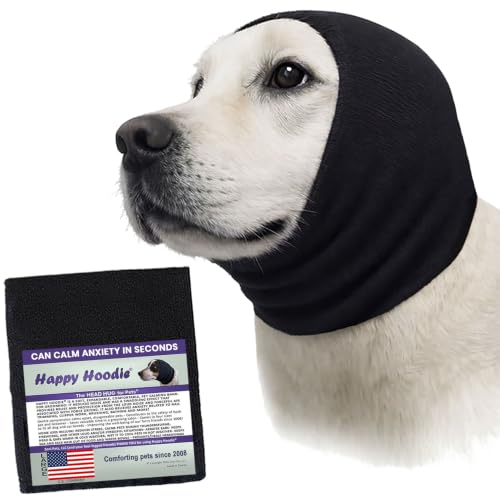
Happy Hoodie The Original Dog & Cat Calming Band for Noise & Anxiety Relief
, . Happy Hoodie was created as a grooming tool to CALM & protect dogs from the loud noise & high-pressured air associated w/ force drying. Happy Hoodie saves valuable time in the Grooming Salon & creates a safer environment by calming upset, disagreeable, aggressive, or sensitive dogs during any p More ...

Geyoga 6 Pcs Neck Gaiter Cooling Face Bandana Mask for Men Classic Color
Classic Color Set: includes 6 lightweight neck gaiters in the exact colors shown, giving you convenient options for daily wear, outdoor work, sports and travel. Lightweight and Breathable: made of soft, stretchable polyester fabric that feels lightweight against the skin and helps wick away moisture More ...
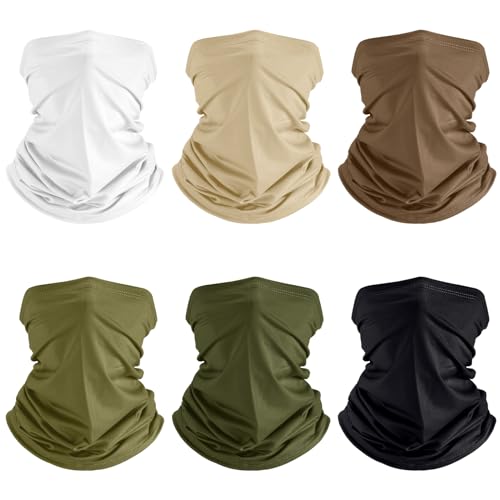
Geyoga 6 Pcs Neck Gaiter Cooling Face Bandana Mask for Men Khaki
Classic Color Set: includes 6 lightweight neck gaiters in the exact colors shown, giving you convenient options for daily wear, outdoor work, sports and travel. Lightweight and Breathable: made of soft, stretchable polyester fabric that feels lightweight against the skin and helps wick away moisture More ...

ProtoArc XK04 Foldable Compact Keyboard for Phone and Tablet, Black
Pocket-Sized Everyday Carry Design: Ultra-compact two-fold bluetooth keyboard at just 7.8 oz folds into a small form with premium PU leather cover, making it the lightweight travel companion for typing anywhere. Specifically for Phones and Tablets: Compact keyboard layout optimized for mobile device More ...

Universal Compatibility: perfect match all PD USB C charger, widely compatible with iPhone 17, 17 Pro, 17 Pro Max, iPhone Air 2025, iPhone 16, 16Pro, 16Plus, 16Pro Max, iPhone 15, 15Pro, 15Plus, 15Pro Max, M1 M2 MacBook Air, Mac Book Retina 12 inch, 2023 2022 2021 2020 2019 2018 MacBook Pro 13 14 15 More ...

BUILT FOR COLLEGE. AND BEYOND MacBook Air with the M5 chip packs blazing speed and powerful AI capabilities into an incredibly portable design. And with up to 18 hours of battery life,* this thin and light powerhouse is ready to take on almost any major, just about anywhere. TEAR THROUGH TOUGH ASSIG More ...

Intel Celeron N4120: 4 Cores & Threads, 1.1GHz Base Clock, Up to 2.6GHz Boost Clock, 4MB Cache, Intel UHD Graphics 600. The perfect combination of performance, power consumption, and value helps your device handle multitasking smoothly and reliably with four processing cores to divide up the work. 1 More ...
Did We Miss Sump'm?
Sixty percent of the time, we're right every time. What would you add to the conversation and why? Your input is invited. Leave a comment and/or write an article!
Share Link ...

Thoughts gone wild? Write an article!