
For kicks, check out our FTC disclosure here ...
Head Case
Listen in as team TRO talks tire plugs, sleeper bikes, kangaroo leather and William Dunlop. Music by Rabid Neon and Otis McDonald. Download our feed here.
Transcript
As legible as we are intelligible ...
Brian: In this episode, we chew on the question of an unreasonable first bike, consider the rights and rules of tire pluggery, and we explore what's lurking in the darker corners of our cavernous headspaces. Scary in there. Whoa. Then Gear Check follows up after exploding Brian's Visa all to pieces, and Jordan Liebman brings us your man Joey Dunlop. Oh, yeah. Oh, yeah. Did you ride today, Robin?
Robin: I did not. I'm supposed to ride tomorrow. I did not ride yesterday. Usually, Tuesday is the, hey, man, what you doing? We'll ride kind of moment. Didn't happen. I actually elected not to because we got a full night of rain here in New Mexico, and I got, my sleep was so good. Oh, nice. Yeah.
Brian: It was great. You needed that. Yeah, it was all right. You're a little sloppy out there. Of course, yeah, you stick to the pavement, but yeah, still. Yeah. Probably gets a little dirty and muddy in the places that shall not be named.
Robin: I am little to zero prepared for this. I do not have a random song in the minute this round, so I was hoping maybe. Oh, no. Do you have anything that comes to mind, a random song in the minute for our listeners?
Brian: I have really lame taste in music. The random YouTube channel of the moment. Look up a cat named Gumbus.
Robin: A cat named Gumbus. Gumbus the cat. Wyoming Wolfpack Press. He's all over the place. This is like a whole thing. What's the deal?
Brian: Gumbus is a cat that doesn't have any teeth. He's walleyed as hell. And she's got these big weird eyes, and the owner is just bug nuts, puts together the weirdest videos featuring Gumbus the cat. Gumbus. That's been my day and a half obsession. I'll move on to something else.
Robin: Long ago, I don't even remember which article it was. I wrote that pointed to combustion, and it had two diagrams. It had the old school suck, squeeze, bang, blow diagram in there. But they were GIFs. They were animated GIFs. And they're good. Somebody has modernized and upped the ante. Shout out to Ari over at RevZilla, because he did the reverse break bleed, which I recorded badly a long time ago for the site. It was like low-grade digital video for ADP. We did it. The point is the instructions are there, but he actually was like, let's get this. Let's bring in the budget and got a really great video of how to do that. And they now make a system that you can order pretty cheap if you go the reverse route. Personally, I'm kind of into the speed bleeders still, but whatever. Complementing that, somebody took the very same graphics that show the combustion process for both two and four strokes side by side. And they've made beautiful Instagram posts that represent those two graphics much more in detail, much better looking for sure. And the animations are spot on. More better. Okay. More better pictures. Yeah, man. Yeah. So I linked those in the thing. That's about it. That's all I got.
Brian: How about you? End of the month, looking forward. Got a trip coming up to Tennessee, North Carolina, Smoky Mountains. It'll be interesting to see. Last year we did dual sport right there. And Hurricane Helene, they were still cleaning up. And I mean, there were entire towns that vanished. Pretty crazy. Hopefully this year it'll be interesting to see how the recovery is going. This time around we're on street bikes because, you know, Tim's got to break in his new Triumph. Got to get that nice and crispy.
Robin: Yeah.
Brian: Be fun to bring some tourist dollars to the area and hoping to see the recovery making good progress. I'm still stalling on my fork seals. And yeah, speaking of bleeding, I need to bleed the front brakes on that bike. Is the root beer colored yet? No, not really. Just a little bit of travel before they really dig in and bite. I have not upgraded that bike to stainless lines yet. And maybe I should. Although it's a giant, giant pain in the butt because it's ABS. And so there's brake lines going back here and through here and down there. And it's a horrible job.
Robin: Does that involve any plug-in, computer, open up the servo for all that? Or is that built into the system? Do you have that access on the dash?
Brian: No, I don't. See, that's the other issue. If you replace the brake lines, then yeah, you're going to have to bleed the ABS unit. And I don't know of a good way to do that on that year without the dealer tool. So, yeah.
Robin: If you stall long enough, the fork seals, they'll fix themselves, man. These things tend to work themselves out. You'll be fine. Sure, they'll be fine. Just show up at the track, wipe it off before you go to tech. It'll be fine. If you save them for when I get there, we can do both.
Brian: Going to need fork oil. Fork fluid, fork seals, it's about 80%, 90% of the work is done with fork fluid. And my FJ is way overdue for fork fluid anyway. Am I reading this right? There's a lot of stuff we used to do that we don't anymore. I don't know if it's because it didn't work or we ran out of material.
Robin: You just got to bring it up. It's your show.
Brian: What I had here is maybe we should dip into the alliteration grab baguette sometime.
Robin: I have a book. I have the Sierra County Artists Directory. It's a listing of artists, art locations, healing arts, artful eateries, artful adventures, hot springs, and spas. This should be perfect for our usage. Go to page 14. Yeah. Okay.
Brian: Got it. Got it. All right. Are there words on this page? There are words on this page. Go 10 lines down and tell me the fourth letter.
Robin: 1, 2, 10. P as in pizza.
Brian: Under P, we have passing perfection. Tales and techniques related to finding the forefront against impediment. You told one of these last time, to be honest.
Robin: I did. I'm going to tell it again. Last week, on a particular day, I was going to ride Road X. I met up with a friend. That friend was like, hey, turns out I can't go. It's like, all right, that's all right. You want me to get you a sandwich? They said yes. So off I went. And as I pulled out of the gas station parking lot, a young gentleman on a blue Kawasaki equivalent of the Bandit 1200 hopped out behind me, proceeded to pass me in the main street on the way to where things get good, and then proceeded to, as one might predict, struggle with cornering. You could say suck here. Anyway. Yeah, well, I could. But then we got stuck behind a car. And before the very first corner, I knew that the road was about to get good. I had a full field of view. I looked deep to my right and had the entire horizon and decided, yes, I am going to pass both of these vehicles on the double yellow. So I did the full rainbow pass right in the corner. As the front bumper of the car touched the entry of that turn, I was in the oncoming lane going around both the rider in front of me and the car ahead of that rider, then brought it back into a delayed apex at the perfect entry point, had it completely straight, and I was gone. That is story number one for me, sir. What about you? It may have been a dumbass pass.
Brian: I don't know. But you were a witness to this. We were in Kentucky. It was just before lunch. We were behind a semi, a tanker truck. I was like, no problem. We're going to be turning off in three minutes at a very small road. There's no conceivable way this truck would need to go down that road. Couldn't possibly happen. Little tiny, very, very twisty road. They'll take us almost all the way to lunch. Sure enough, the tanker truck turned down this road, and there we were. Trying to think of a nice way to say this. But yeah, it's a truck. It sucks. Whatever. They're just there. They got to do what they got to do. It's a job. We came around a certain corner, and then what I could see before me looked like a giant Tupperware bowl. The road we were on went like three-quarters of the way around this bowl and then wiggled off into the distance. And we were at such a vantage point that we could see the entire road for probably a mile, maybe more. Not a soul on it. Yeah. No mailboxes, because nobody lives on the lip of this bowl. It was like this crater. Like something hit the earth here. And yeah, it happened. My right wrist twitched, unreasonably so, and I was gone. For shame. For shame. Yeah, it was a shameful moment. Lost all decency.
Robin: Assumed risk is a big thing. You assumed a certain level of risk. You were confident in your decision. You made the decision. You went for it.
Brian: Well, and the fun part of this was I'm like, wow, okay. I thought about it later. I was like, man, that may have been pretty sketchy. But oh, well, Robin's right there behind me. Never mind. It couldn't have been that bad. Off we go. Couldn't have been that silly.
Robin: In our defense, there was no, are we going? Are we passing? Brian, what are we? There was none of that. Yeah. Maybe I was egging you on a little bit, but I knew, yeah, no, we got this. Boom. We could see. The trick is, do you have a full field of view? Can you predict the wildlife? Is it an open perspective? If it is, yeah, man, you know.
Brian: Well, and here's the thing. That road was so narrow that it didn't have a line in the middle. Uh-huh. No double line. Looked legal to me.
Robin: We thought it was a one-way. It was a one-way street. Trying to think if I have a better one. Let's just say the one time I was riding with Rider A, and I'll be Rider B, and Rider A repeatedly said, yeah, I totally agree. When you go to pass a semi-truck, make sure you get it done. I always do. I always get it done, says Rider A. And Rider B follows Rider A in an expressway environment into the far left lane to go around this truck. And Rider A then hangs out next to the truck. And Rider B is waiting to figure out why that has happened. Curse you, Rider A, said Rider B. And then Rider B rolled off the throttle, bucked back behind this semi-truck, went to the right, passed him on the right, got in front of Rider A, and now Rider B became Rider A.
Brian: Brian, you were Rider A. I don't even remember all this. I don't know. I think I remember somebody complaining. I don't know. There was some reason for this. I don't like hanging around next to trucks. There was some reason. But anyway, that's a fun segment.
Robin: I'm glad that we thought of it with no help from our listeners at all. Moving right along.
Brian: Filled in the entire alphabet. Yeah. All right. Next up is listener questions and or questions from the wild. First of note, if you'd like us to field your questions, visit email.tro.bike in your web browser and send us a message. All right. So questions from the wild. I have no idea what Robin's going to say here. So that's why I think this is interesting. Some guy, SGS, is a new GSX-8R a good first bike? Is it the worst first bike?
Robin: No. Is it the best first bike? No. Here is my experience with the GSX-8R for my first year and beginning my second on it. Fully paid off, 15,000 miles on it. Here's what I can tell you. That bike is very easy to ride. It is also greatly forgiving.
Brian: Yeah.
Robin: That said, there is a certain slope of skill that will change as the RPMs go up. And it's not the lightest bike. It is an 800cc motor hanging from a standard posture. Well, modern standard posture sport bike chassis. Zero to 4,000 RPMs, it will feel almost like a learner bike if you're comfortable in that posture. From about 4,000 RPMs to 6,000 RPMs, you'll begin to realize that it does have power and can go if asked. After 6,000 or 7,000 RPMs, first off, you can start to see your fuel gauge go down because it gets far thirstier. And second off, it begins to explain to you all that you didn't know about it at that one moment. That's when it begins to really pull. Does it have high horsepower? No, not really. But does it get really angry when you have a certain gear ratio going at a certain RPM range? That's when you need to watch out. We don't know who this listener is. I've learned through fellow instructors not to judge what any human being can or can't handle when I don't know that human being. Would I recommend it to just anybody as a good first bike? No, I would recommend something, you know, 650 or less. Quite honestly, I would recommend 300 to 400 CCs for your first bike. And cheap, something you don't have to worry about because you're going to get better and you're going to upgrade soon. But since I'm in the blind here, my answer is, I don't know for you. If I were talking to somebody who's like, yo, then no. If anybody starts their sentence with, hey, yo, bro, then no. It's not a good first bike for you.
Brian: Yeah, you're standing there in Crocs and a T-shirt. And the one thing I would add is it's a rewarding bike. And that's one of the reasons you bought it. It rewards, like if you know what you're doing, it rewards the skill that you have there. So it's not the worst first bike. It's also not the best. I do really support the idea of getting a new or late model bike as a first bike because you can skip a lot of old bike and used bike BS by getting something that's in good shape so you can focus on learning and staying alive, not in that order.
Robin: I will reiterate that it is incredibly easy to ride. The bike is very forgiving. The wheelbase alone and the turning radius and the chassis position is extremely forgiving. So take that where you want. Yeah, good to know. So you got here, KD asks, I picked up a screw in my brand new motorcycle tire. Damn it. Can I plug it and rock on or pony up for a new tire? Asps, very dangerous, Cindy. You go first.
Brian: Okay, first off, a lot of people believe and they'll start harrumphing. Some people believe that you should never plug a tubeless motorcycle tire, that you should always just replace it. You'll die horribly, et cetera, and so on. Robin and I and many others can tell you that we have plugged many motorcycle tires and rocked on without any issues. I've never had an issue. It's a lot. I really attract crap in the tire. People who say replace it are not wrong, but they're also, it's not the whole story. It's a reasonable decision to plug a tire. I always carry the Neely tire plugs, I think are the best ones on the planet. It's spelled N-E-A-L-E-Y, but Neely tire plugs, just Google them up and then get one of their little kits. They're kind of skinny. They're sticky strings, but they're skinny, and you install them in such a way that you tie a knot inside the tire, and then you have four thicknesses of the string in the tire. They do a really good job of sealing weird holes and things like that, but I've never actually had a problem with just normal sticky string plugs. I've used Walmart plugs before, no problem. Basically, yeah, if you've got a hole in your tire that's just a normal hole, it's like a screw or a nail or something like that, and it's straight in, you know where it is, the more straightforward it is, the better your odds of success. I can say that there's these rubber plugs from Stop and Go. They look like a little bitty mushroom, and you put them in from the outside with a special tool. Those do not work in motorcycle tires. Been there, done that, tried it, didn't work. And obviously, I hope it's obvious, if the hole is like near the edge of the tire, your odds of success can get pretty low, or if it's, you know, jagged, things like that. We both carry an electric pump, either a battery-powered one or one you plug into the motorcycle battery. I have one for moto pumps. I spent a few bucks on it, and it's fantastic. It really works well.
Robin: I like that, because that's a reason for me to ride with you, sir, in case anything happens, because you'll have it. I actually have downgraded to a hand pump, like a bicycle hand pump. Yeah. That'll still do the job. It'll take you longer, but it'll get done.
Brian: Yeah. You'll be there. You'll build up some, get your reps in on your arms.
Robin: Somebody said, left arm day.
Brian: Yeah. But yeah, sticky string plug, pump it up however you can, whatever you got. Keep an eye on it. You know, cut it flush with the tire. Don't leave a big string flapping around to get caught. Keep an eye on it, check your pressure for a while, and then kind of forget about it. Usually my pattern, just forget it's there. And then motorcycle tires, when they wear out, are really surprisingly thin. Yeah. The carcass on a lot of them is really thin. We've seen things. The upshot is the thinner the motorcycle tire gets, the more likely it is to pick up more crap and get punctured again. If I'm riding around on a plug, I'll usually lean toward replacing the tire a little sooner before it gets too thin and I have more punctures to deal with. And I don't know if they have this in the tech manual or not, but I think it's obviously not a good idea to ride a plug tire on the track. I think if they saw that, they would tell you to go away.
Robin: They'd send you over to the tire guys and get a tire replacement on there. Yeah. For all the money. It'll be a lot. And it'll be a track tire that you won't want on public roads. The other thing that Brian and I have had this discussion, too. Now, Brian's the one who has taught me most of what I know about tires in general, among other people, but that was a long time ago. You know, the horizon is fairly even now. I will add one of the differences he and I will discuss now and then are I'll use the glue that comes with it. The sticky string, you don't actually need the glue, but there's a rubber cement that they send and I'll still smother in that. So I'll, you know, I'll take the little file and file out the whole thing and I'll put the sticky string in there and then I'll take the tip of the rubber cement, blast that into the outlet while I'm twisting. And then all that do its work. That's just, it's neither here nor there. I've never seen somebody not do that and have a problem. So that's up to you. Whatever. Yeah. Point is, I mean, I would probably ride the tire and then replace it when I felt like I was done thinking about it.
Brian: Yeah.
Robin: If I was sick of thinking about the plug, then screw it. I'll get another tire. Yeah. If it's on your mind, didn't bite the bullet. Certainly metaphysical. It's not going to get you. You could write it out. You're going to be fine.
Brian: It's okay. Yeah. As far as like the Neely's, you don't install them with glue, but most sticky strings that come with glue. So you follow the directions, you know, conversely, if you, if you open it up and your glue is dried out, go ahead, jam it in there. Anyway, it'll be fine.
Robin: Yeah.
Brian: Don't sit by the side of the road and cry.
Robin: What are we getting into with this heavy, heavy segment? One topic, man, heavy, man, but let's keep it light.
Brian: Cause I don't know what, what's scampering around in there. Let's see what, let's drag it out and see what's going on. All right. I labeled this psycho activity. I don't know if that's a good idea. Or maybe something like helmet fire extinguishers. Not sure. Psychosomatic fire extinguishers. Not bad. Headcase. When do we reach for the helmet fire extinguisher?
Robin: If our listeners out there don't know, if you go to the site, click on the search icon and look for helmet fire, you're going to pull up an episode that will introduce you to the concept. But what happens is extreme fatigue, extreme confusion, and then combine that with a little bit of adrenaline. What's going on? What am I doing? This is Brian's complimentary.
Brian: All right. So yeah, and there's a lot of territory. So we'll wander around, see what kind of shiny rocks we can pick up. So like for me, and I think for a lot of us, riding motorcycles is a really important kind of mental self-care, like taking care of your brain, calming down your brain, giving your brain things to do, that kind of thing. We don't need to reiterate that, you know, the focus, the extreme focus on the here and now, the escape from whatever else is going on in life, you know, there's so many aspects to it. We don't need to belabor that. What we're talking about here is a little bit about kind of the mental barriers and things related to riding, what kinds of fears or barriers or like, damn it, I can't get my toes in, you know, what are these things that are going on in the head that affect your riding and what we can do about them? You know, we've all gotten wrapped around the axle, spun up in our thoughts, hung up on our hangups, generally psychologically freaked out and mentally mangled about something. What is that? What do you do about it? So we're not talking about childhood trauma, dating from, you know, when you had to get over sucking your thumb or whatever. We have to get over that? You know, we're talking about things that are talking about, oh man, just keep going. What are the things that affect us mentally when we're riding and what do we do about it? It's a great setup, man, properly loaded without too much overflow.
Robin: You know, what's your take on where you'd like to go? Strangely complimentary and oppositional to it. There have been rides in which I found myself in autopilot mode. I'm still riding at the pace that I would tend to be riding at, and I am still alert to what's ahead of me and all of the controls are coordinated. All the actions are anticipated. I know what I'm doing, but I'm also checked out. It can happen to anybody. It's not the same argument as the dangers of not being alert. It's just that, why am I riding if I'm not present? Good point. Yeah. Oddly different things.
Brian: Yeah. I remember one time you very, very politely, you called me out like around lunch or something. You were like, you came to me with all this concern and you said, are you okay today? You're not like killing it. Like you very politely said, you're slow today. What the hell's wrong with you? But you said it in much nicer words.
Joanne: Yeah.
Brian: You'll never say that. But that's what you said. You know, it's like, you don't look like you're here and I'm like, huh? I didn't say, well, I'll just be more faster in lunch. No, you caution to the wind, endanger this time. Yeah. We're going all the way to 11 today. But yeah, it was like, huh? That's interesting. Yeah. And I think part of what happened is I kind of like, we got some good food, which, you know, we always do. Oh yeah. Gotta have that. Got some good food, got some caffeine going, kind of did a little mental reset, let go of some stuff, got a little more thoughtful about, okay, I'm on this bike today. Not that one, blah, blah, blah, blah, blah. And, and, and really I had a, it was more that I had a much better time in the afternoon. Like it was, I just had more fun. It wasn't about the pace or something like that. But I thought it was really interesting. You know, someone who knows me well and has ridden with me a lot can spot, like your brain is coming out in your, in your lines. It's just like, it was a form of communication. And I thought that was really interesting. It was an interesting conversation. And then later in the day I was like, okay, I feel better after lunch off we go.
Robin: I'll always do that for anybody I know. I know my writing. I know you're writing, Travis, Tim, what's up? Yeah. Yeah. If I see it, but it, you know, it's never going to be what you say. It's always going to be how you say it. And if you can deliver the same message of not necessarily concern, not necessarily bother, just curiosity, choose your words accordingly and understand that you're not talking to somebody who's, you're not witnessing a downgrade. You're witnessing a moment and it's okay to just make sure they're, make sure everybody's cool.
Brian: Well, and that's part of like ride leadership is keeping an eye on your flock. You know, they're rhetorical about it. Yes. Kind of keeping an eye on the people around you is just something we all do for each other. And people will often come up and say, I am not feeling it today, or I'm hungover or my kids being a butt and called me and, you know, I've had people do that and I'm, you know, and just be like, I'm okay, but I'm going to drop back a bit. You know, I've had people say that to me, like for themselves, that's all good. No harm, no foul. It's supposed to be a good scenery.
Robin: Talked about that a couple episodes ago. I had an off day and I just mellowed out and just enjoyed the beauty around me and that is allowed. There are no rules. Oh, look, a dolphin.
Brian: Yeah. Yeah. Right. I'll give an, I'll give an example of a, of a mental barrier that I think may need some work or something like that. Going into turn one on a track. And I think it is, I think anybody feels this diving into turn one on any track is really, that's the one moment I'm like, I am not in full control of what happens here because there's all these idiots behind me, potential idiots. And I don't know what they're going to do. I've got this corner, no problem, but I'm a little skeeved out by, that's the one point on the track, you know, especially on a track day, you know, when you're not in a, whatever's going on in green, but, uh, but, uh, I think that's a legitimate fear, but it's also something that like, I also have to, you know, how do you confront that? I just go faster anyway. What do you think for the first session?
Robin: Maybe the first two sessions get in the back of the slowest group up until we are able to pass. So that may be even the third session, but once they open up passing strategy, you now have the floor to go around, whoever you see fit now, you know what you're doing. You know how to be mindful, respectful, considerate as you're riding around somebody on track day. So now you've got a canvas to paint on. You're going to go around that person, then that person, then it's going to be three Pete, six Pete, 10 people you're getting around. And at some point you're going to catch up to very quickly to people who have bottlenecked everything and they are interacting in a way that is not mindful or respectful. They are the blockade in front of you. So the trick is here you are, you're at your first instance of somebody who's probably going to get a talking to. You are going to focus on when do I pass these people? It should not be just before the main straight. It should not be during the main straight. Maybe you're at a particular corner that's somewhere in the middle of the mix and you know there's no straights coming up. That's a good time to, if you're allowed to pass on the outside, get around them, dust away through the corners and you're off. Anything happens after that. There's just no excuse. Repeat that over and over and over again.
Brian: It's basically controlling your environment and creating space. And it takes, it takes a little, so that's one of those things like it'll take a little more headspace. Like, oh, I need to remember, yeah, oh, the, uh, the, yeah, the guy on the red Ducati or the gold Aprilia. And, and yeah, if you know who you are anyway, yeah. Or the, yeah, the wire stretchers who, who parking in the corners, the ones that don't have that full control that they should. And you know where they are, that's, that's a key. Like I have a lot of fear-based stuff, you know, I've had a lot of crash three times and I got to deal with that fear all the time. And one of the ways you control your environment is with your own skill, building your own skills, having more tools in your toolbox, that kind of thing. And controlling your environment, who's around you. I don't want this person to be around me. The other trick that you had mentioned, and I've seen it happen, the hot pit. Hot pit is a wonderful thing.
Robin: You also don't want to get caught behind this mix of riders who are causing trouble because then you're amidst them and the people behind you don't know what to do about that. When things really get tangled up, when the skill is mixed or the attitudes are poorly blended, the hot pit. Take your lap, find your exit, and just slow your roll, take a nice little journey, and then re-enter the track, stay tight and right for a good long while, and carry on.
Brian: Now you have an open track. I like that. Control your environment. Some interesting ways to do it that I hadn't thought about. Oh, there I am.
Robin: I have no way to appropriately bridge this mention of your article on fear. But one thing Brian would probably get into at this point is how to keep your head clear and if you're not feeling super confident or if there's still residual remnants of fear from an event in the past, then that can be a factor too. You're not fully present until you're fully present. So if you want to read more about that, go to TRO.Bike, click on the search icon, and just type in the word fear or TRO.Bike forward slash motorcycle stories forward slash fear is the article URL. Worth checking out. What's up Brian? Hi Joanne. Which means it's time for the armory brought to you by GearChick.com.
Brian: In your world, what is a riding mental thing that you're working on? What are you doing about it?
Joanne: It's probably just getting comfortable again with going as fast and riding as well as I used to. I mean, just getting comfortable with technical riding again, because I'm not, I mean, I can do it. Yes, I know how to do it and I know how to navigate tight hairpins and I know what I'm supposed to do because I've done it, but getting comfortable doing it at a certain rate of speed is certainly challenging, but just getting used to doing that activity because it's just like any sport, you know, if you're a tennis player, you have to keep playing to keep your skills up and keep getting better and improving, right? And you lose, you know, so my instincts aren't as good, my reflexes aren't as great. I mean, I can still ride, you know, decent and safe, just not as refined and as well as I'd like to be for my comfort and my true skill level. And so, yeah, I just kind of, I need to start over to a degree, you know, and just get out there and practice.
Brian: Saddle time. Yeah, saddle time and even, this was last fall after a very busy season of riding, you know, we took that ARC course and I felt like I polished up quite a bit. And this, again, this was like, we were all like, we'd been riding all year and having a great summer. And even then, you know, just getting a course and focused and polished, I think a lot.
Joanne: Yeah, I need to look at maybe some classes this year. That would be nice. It'd be nice to take like an advanced street class or something along those lines. So, that'll probably be on my list as well, but just even getting on the motorcycle, you know, just being on it, you know, and not being anxious and not carrying the weight of the anxiety, because if you're not used to it on a continuous basis, it can, the fear can creep up to a level that you're not comfortable with because it's been a while. And I know not everybody experienced that. A lot of people are like, oh, I feel fine. And I'm really glad that a lot of people don't experience this, but I am.
Robin: When you do swing a leg over the bike, every instance of it, you never have to convince yourself that you are the same rider on this ride that you were on the previous ride.
Joanne: Yeah.
Robin: That has got to be okay with everyone out there.
Brian: You just are who you are at that time. Yeah.
Joanne: Right. Yeah.
Brian: At a given moment. Yeah.
Joanne: Yeah. Agreed. Forget about what happened last year, last week, last month. It's just right now, you're here now and it has to be, you have to be in it now. That's, yeah, that's part of it. And, you know, I've just kind of lost a little touch with my motorcycle self because I'm not in the same place that I was say 10, 15 years ago as a motorcyclist, even five years ago. I just have very different, my priorities are shifting and I've got other things I'm trying to take care of and my, yeah, it's like my general priorities are kind of.
Robin: We are still in this thing. So one of the things I have a problem with is it's really easy for me to sit here and say, oh yeah, the psychological, it's very easy to navigate this conversation because all you need to do is yada. But personally, I'll, I've had many times when I'm just imploding because I can't find my way to one thing to work on. You know, you think about the array, the minutiae of any given overhead problem and you don't, you focus on all of it at once. It can be very hard to decide on the one thing that is the best thing to focus on in that given moment.
Joanne: Yeah. Just because there's so many different things that you might be worried about thinking about. Totally.
Robin: At the same time, it's also the solution. Find the one thing to work on, right? Well, yeah. You're trying to self-coach basically.
Joanne: You just kind of reminded me, I have a lovely friend, I've mentioned Walt before and I really want to go see him and go riding with him because he's, when I've gone riding with him, he always gives really nice like feedback and I need to do that. And he's also, you know, he and his wife Nancy also just make it really easy and comfortable to go ride. You know, it just, it's a very stress-free, like low key chill ride and it's a very social and positive time. So it makes it a lot easier to be open and also to focus on getting better and working on technique and stuff like that. And at the same time, trying to make sure I'm, you know, impressing him sometimes. I don't know. I do want to go see them. They're on the other side of Colorado and go riding with him. I think that would also be really great too. And just, yeah, just going out on the road, being comfortable with the fact that I'm going 75 miles an hour and I'm not in a car, you know, like that. You know, I'm doing, I've done that where I'm just like cruising, you know, I'm on the freeway or I'm on the highway and I'm like, wow, I'm on a motorcycle right now and there's nothing here and I'm outside. Anything could happen and I could be, you know, all these things could happen and look at what, what am I doing right now?
Robin: Well, that gets right into Brian's article that we just talked about. So there's, there's the cue.
Joanne: Not in like a, I'm so scared kind of way, but in maybe an existential way or like a, wow, I can't believe I'm doing this right now. Am I really doing this right now? Do I really know how to do this?
Brian: Most people don't do this. What's wrong with them?
Joanne: Exactly.
Brian: Right.
Joanne: Like, why am I the only, I'm the only one out here on a motorcycle. What are, you know, what's going, I can't believe I'm riding this right now. Like my 10 year old self would never, ever believe me if I told her like what I do and what I did.
Robin: Oh, that's good.
Joanne: Well, she rode bicycles. She was very, very bicycle heavy and loved riding her bicycle everywhere and all over the place. So it was kind of a precursor.
Brian: That's a gateway drug.
Joanne: Yeah, it was. But I mean, growing up in the culture I grew up in, like, this is not something you do. You know, this is not something that you think about doing or plan on doing or wish to do. It's just like, most likely is not a recommended hobby of any sort. So yeah, yeah. Or profession for that matter.
Brian: You're a rebel. You're defiant.
Joanne: Right. Yeah. Yeah. I mean, right. Or career. It's not something you go and make money doing. And I was very fortunate. I got to do that for a little while.
Brian: That brings us directly to, yeah, Joanne made my visa go out and hurt itself.
Joanne: But anyway, I gave you, you want a recommendations. I gave them to you. Aren't they great?
Brian: They gave me a great recommendation. It's a brand I'd never heard of. High quality gloves from Racer and the model is the Racer High.
Joanne: High Racer.
Brian: High Racer.
Joanne: And it's RacerGlovesUSA.com.
Brian: And they are fantastic, very high quality. And they're very, you know, they're like, they're, they're snug. I'm still adapting to them. Took them for the first ride today. Like I said, I think we're going to be very happy together, but there's still, I'm still adapting. You know, the kangaroo hide is, is getting used to my hide and vice versa. And also this is about four times what I've ever spent on gloves in my life, but I love it and they're great.
Joanne: The company's called Racer. They're from Austria, so they're a European brand and they've been in the United States for like 25, 30 years. But through small dealers here and there, they're not on every e-comm site. They're on some, they work with certain dealers and not, they don't work with everybody necessarily. The distributor is based, I think on the East Coast now. The owner used to be in Oregon, actually the Bay Area, then Oregon. But I've worn these gloves since 2005, I want to say that's the first time, my first pair I bought. And phenomenal because back then a kangaroo palm leather glove was unheard of. It's not something common among glove manufacturers at that time. So all the big names, right, Alpinestars, the Dainese, Revit, they're not doing kangaroo. That no one was doing it. And the minute I tried those on, I fell deeply in love with them. They're so comfortable. They conform so well and they're great. So you can buy them directly, racerglovesusa.com. And how much was the MSRP on those? I forgot.
Brian: $269.95, I think, $270. You can, yeah, you can see where the money went. Every detail is good.
Joanne: They number, it's like their number two track glove. So it is a full track ready race glove. There is one glove above it that has all the stuff. But the reason they're so great is because they do bring all that track protection with street comfort.
Brian: It's one of the most- Little sliders, yeah.
Joanne: And two palm sliders, the double. But just the comfort of it, it doesn't feel like a track glove. You know, when you put it on, it doesn't feel like you're wearing this monstrous Iron Man glove. It's both, there's sure, there's a little bulk because you've got palms, you've got the carbon fiber and the knuckle protection, but it doesn't feel like it. And that's why I love it. I have toured in mine, thousands of miles, and I've done track days in them. And that's why I love them because they're like the perfect balance of both. If you're doing some track days, and look, this isn't good if you're a track junkie. If you're going every month, you may not want to use them as a combo glove, but as some Someone who goes a couple of track days a year, you know, you're doing two or three a year, absolutely use them as a track glove.
Brian: So my question for you, I mean, yeah, I'm happy about these. It was a great recommendation and they ended up fitting my hand shape real well. I'm still getting used to them. Two things, do you have any tips for breaking them in? You know, some people are like, oh yeah, go get them wet and wear them around until they dry. Or I don't know about that, but what are your thoughts on, or just wear them and ride in them and you'll get there in a week.
Joanne: Well, is there any particular aspect of them that is less comfortable than other? Like, is there a particular area of the glove where like, ah, this part is just not great? Or is it the whole thing? It's just the whole glove.
Robin: Basically get a baseball and wrap it in the baseball.
Brian: It's the whole glove. Yeah, the whole thing. And like I said, it's more that the leather, whoever built this glove has not ever seen my hand. They weren't working for a hand print or anything like that. So yeah, there's a little thing, but like the finger length is good and all that stuff. So yeah, they're snug there and I'm still getting a little bit used to them. And I think they'll get there, but I don't know if there's a way to speed it up.
Joanne: Also, probably because how long did you have the pair that you were using before? How long have you been wearing those?
Brian: Oh, like I found them in a parking lot like 10 years ago, seriously.
Joanne: Look, if you've had a broken in pair of gloves for a decade, it's very difficult to get comfortable with a brand new pair out of the box, right?
Brian: Oh yeah.
Joanne: Totally makes sense. So in that situation, what I would really recommend doing is you wear them every day at home. The days you're not riding, give them just 10 minutes. You don't have to spend eight hours in them, but have them on your hand for a good 15, maybe 20 minutes every day, the days you're not riding. So depending on how often you ride, if you're going riding once a week, I'd wear them every day during the week before the day you ride. And then that'll open. If you're out riding every day, then you don't need to do that. But if you're riding, you know, more occasional, give it 15 minutes a day and just leave them on your hand. Watch TV, you know, maybe not eat in them.
Brian: They're no good for typing.
Joanne: No good for typing. Have them on your hand. You know, you can scroll your phone because the kangaroo is conductive.
Robin: Just go get some Chinese food and use chopsticks.
Joanne: Yeah, keep them on your hand so that you spend more time in them so they can conform more. But it does take a good, I'd say a couple thousand miles of seat time to really break them in. And it is worth it. And the really nice thing about the kangaroo is that part of your palm, it already probably does feel broken in. And it's probably the top hand and the wrist that feels less comfortable. The other thing I like to do is if the knuckles feel tight, what I like to do is if I have the glove on, then I'll take my other hand and just kind of squeeze it and conform. Like, you know, the glove is flat right out of the bag. So what I try to do is when it's on the hand, I kind of give it a little squeeze above the knuckle area to help it curve a little bit more around my knuckle.
Robin: For our listeners, what's happening is she's yanking one hand over the yin that is the hand with the glove on and basically compressing the knuckles so that they flex.
Joanne: Well, not compressing them, but I'm kind of curving, I'm cupping them so that they arch a little bit more because the glove, it's flat. And then when you put them on, you're forcing them into this conformed position over around your hand grips, right?
Robin: Which is why with a baseball mitt, we wrap it in a baseball.
Joanne: Yeah.
Brian: Like the knuckle guard, the backing on this needs to break in just a little bit, you know.
Joanne: When you kind of squeeze it so that it arches more, then you're going to help it arch more over your knuckle, right? So when you're sitting on your couch and you relax your hands, they should naturally be doing this. Now that they're on your hand, you just sit there 15, 20 minutes a day and it's going to speed it up a little bit.
Brian: Yeah.
Joanne: But that is the downside to brand new leather and, you know, pants, jackets, boots, it's just part of the process, but so worth it. Now, the caveat is when you start sweating in those, you're going to have to start cleaning them like once a season.
Brian: You mentioned that. How does one do that?
Joanne: Really easy. And you can do this with your goatskin palm gloves, with your cowhide leather gloves, you can absolutely wash them. But the trick is you always do it by hand, all right? We're not talking about washing machines and we're just talking a soak in some lukewarm water. What you can do for the kangaroo gloves, I used to take a little drop, maybe a dime of conditioner that you would use in your hair, kind of dilute it in the water, and then soak the gloves. And if my hands were really sweating, you know, if the palms are like black, then I would use my hands to just gently, you know, work some of the soapy water in and then let it soak for like 15 minutes. Because even just soaking them, some of that salt and a lot of the oils will start to come out. You're never going to get it perfectly clean. That's not the goal, isn't to make it perfectly tan again. But the goal is just to pull as much of the salt and oils out of your skin from the gloves. So kind of watch how much you sweat into them. If you're sweating into them a lot, you might even wash them once a month. No, just, you know, if you're hot blooded.
Brian: Just hold it, yeah.
Joanne: But if it's really humid, you know, and it's a hot summer, it's really hard. But that's the downside, too, of wearing those gloves is when it's like 90 outside. It's a tough glove to wear, I'll be honest. So you do want to be really careful about how and when you wear them and just be conscious of the fact that if you're wearing them every day through 90 degrees, you're going to need to take care of them way more often than that.
Brian: Similar banter at higher revs can be found via the Gear Chick website or by emailing Joanne directly. That email address is help at gearchick.com. Segment three, moments in motorcycle history with Jordan Liebman. This time around, our focus is on your man, Joey Dunlop. Take it away, Jordan.
Jordan: Easily in my top five heroes of all topics in life, Joey Dunlop. William Joseph Dunlop was born February 25th, 1952, in Ballymunny County Antrim in Northern Ireland to William, a.k.a. Willie, and his mum, married, M-A-I-R-E-A-D, a.k.a. Mae Dunlop. They have different names for people in Ireland. Joey was the second oldest of seven kids. He had an older sister, Helen, two brothers, Robert, also a great racer, Jim, and his younger sisters, Linda, Margaret, and Virginia. The family home where Joey was born was in Unshannock, near rural Dunloy, eight miles southeast of Ballymunny, was a sleepy stone cottage and very modest and didn't even have running water. Understandably, many homes didn't require running water as the region historically experienced copious amounts of rain. Access to water really wasn't a big issue as long as you had something in which to collect what came out of the sky for free for almost a third of the year. So yeah, figure four months of the year it rained in Northern Ireland, and probably still does. Nor did they have electricity until Willie, Joey's dad, a mechanic by trade and a very handy tinkerer, rigged up a windmill to a small generator long before the county made electricity available in the area. Joey's dad still heated the cottage in winter by cutting peat from the ground for burning. Have we painted a picture? There were farms all around Dunloy with grazing animals such as dairy cows, pigs, sheep, and poultry, and most people got by working in agriculture or in trades in support of agriculture on farms. But the region was also at a crossroads of the old and the new. By the 60s, with increased access to powered transportation and improvements to existing roads, there was an increase of locals taking jobs in the bigger towns like Ballymoney, Ballymena, and Ballycastle in the manufacturing sector. In Joey's early years, he was mostly quiet and humble, unless someone called him by his middle name Joseph or Joey, which he hated. Interesting that the person known as Joey Dunlop didn't like being called Joey when he was younger. He liked to be called William or Willie. He understood the importance of hard work and family. Joey always tried to help his father with chores and he took to mechanical interests very early. By age 10, he was able to strip and rebuild small engines without the help of his dad. Amongst the available engines were his father's old cobbly motorcycles, Norton's and BSA's that were acquired for cheap or free. When they ran, in his teens, Joey would steal a ride on one or the other when he knew he could get away with it. It was not easy housing nine people in a tiny cottage. At age 7, the family moved a few miles closer to Ballymoney to his grandmother's homestead. The house was still quite small, but it had a farm with pigs. Still, the family moved twice again before Joey left primary school, changing schools twice in the process. Eventually, though, Joey attended Ballymoney High School, where he graduated in 1969. Oddly, Wikipedia does not list Joey as a notable alumni. I tried to send it as an edit to Wikipedia, but I was blocked. C'est la vie. Also, let's get ahead of ourselves here. It is possible, not impossible, that Joey didn't graduate high school. We don't care, but that's not what we're here for. He was an amazing racer and a mechanic, and we don't care if he did or didn't, but that's where he did attend high school. Joey had several jobs as a young man. He was first hired as a mechanic at the automobile garage where his dad worked. He also worked as a carpenter, a welder, and made some money driving trucks. But to the point of this story, there were motorcycle dealers all around the UK, and sales advertisements seemed to be in every newspaper. Mel Murphy had a bike shop at Ballymoney where Joey frequented. Mel later became a mechanic for Joey. Bikes were common and were seen as a perfectly acceptable mode of transportation, with British motorcycles being a part of the culture and as a leading component in the overall world sales and boosting trade for the UK. The fact that bikes were widely available, new and used, with an abundance of support in service and parts and availability, it stands to reason that local kids were eventually showing up on mopeds, scooters, and small motorcycles. Age 17 qualified applicants for the learner license, which allowed for bikes up to 250 cc, and it came with permission for taking advantage of the local roads as well, which increasingly had been paved over with asphalt. They were basically cow paths in the old days, twisty roads around Northern Ireland. You put asphalt on top of it, add young people with motorcycles to the equation, and what do you think happens? So, kids in the area had found that these paved roads were pretty good for riding on. It was only natural that when kids got their hands on all of this newfound freedom, some of them would try to race. Off the streets and onto the track, a local, Mervyn Robinson, and Joey's eventual brother-in-law, ultimately marrying Helen Dunlop, Joey's oldest sister, was a well-known local motorcycle racer and part of what became known as the Armoy Armada. Mervyn, or Merv, took a liking to Joey and let him ride a couple of his bikes and observed that Joey had some skill at riding and saw that he was naturally competitive. Seeing this, Mervyn, who had a few bikes set up for racing, encouraged Joey to give sanctioned ACU, which is the Auto Cycle Union, the British equivalent of AMA under FIM, road racing a try. Pure road racing is held on closed public roads, not unlike what Joey had been cutting his teeth on, only they were legal with a measure of safety. Also, road racing in Northern Ireland was immensely prestigious. Events like the Northwest 200, the Ulster GP, and the Manx GP were among the fastest races in the world and where revered top riders were consistently present and where fledgling racers could race against the best, learn the techniques and tricks to winning, and maybe even make a name for themselves. Joey accepted the challenge. Mervyn had just the bike. So at age 16, Joey had enough money set aside to buy himself his first used race bike, a Triumph T20 Tiger Cub with a single cylinder 200cc overhead valve engine making a whopping 10 brake horsepower, which he purchased for 50 pounds from Merv. With this Triumph, Joey began his racing career, but he raced only short circuits at tracks built on repurposed World War II airfields early on and without any notable success. This is 1969. Joey was born in 52 and at the age of 16, he began racing on this Triumph Tiger Cub that Merv Robinson had set up for racing. No success. Finally, at age 17, Joey entered his first road race on Saturday, May 3rd, 1969 at, this is the name of the place, famous racing place that I can't pronounce, Tandergy, Northern Ireland, taking 10th place in the 200cc class. Not a podium finish, but notable in the top 10. Stop to drink. His second road race also in May, the Cookstown or Cookston 100, Joey placed 8th. His third race at the Carroll Door, C-A-R-R-O-L-L-D-U-R, in September of 1969, he took 5th. So 10th, 8th, and 5th within one year. Not too shabby. But racing was an expensive proposition for a chain-smoking, beer-drinking, ragged, greasy kid, which he was. No running water, lives in a cottage with nine people, finds a hobby of motorcycling. Joey was this guy. To me, he looked like Dudley Moore and Keith Richards had a love child. To me, that's what Joey Dunlop looks like, okay? But maybe a little bit more elfish. Racing was an expensive proposition for a chain-smoking, beer-drinking, ragged, greasy kid who had to do everything himself, including building and tuning, transportation to and from a race, entry fees, parts, tires, and fuel. I mean, back in these days, he brought himself to a race and back and did everything himself from the back of a van or a station wagon. That was 1969. The following year in 1970, a car accident that was not his fault financially prevented him from entering any races. So he didn't race in 1970 because somebody trashed his car. Joey wouldn't have funds to race again until 1971 when Mervin Robinson became his brother-in-law, marrying his sister, Helen. By 1971, Joey had replaced the Tiger Cub with a Suzuki T200 Invader. This is a used bike now. This also came from Merv, the twin two-stroke five-speed. I've built and ridden these and they were shockingly slow. But with tuning and fiddling, Joey and Merv made it competitive and got him his first podium finish, second place in the Tandra G 100. These are basically a couple steps faster and better than what you can buy on the showroom floor. He went from a 10 horsepower Tiger Cub to a approximately 20 horsepower Suzuki T200 Invader. Some people consider it to be the little brother of the Suzuki X6 Hustler, aka T20 or Super 6. I consider it to be a, I don't wanna, it wasn't very good. Anyways, another second place finish at Cookston made 1971 a successful year. So he took two second places in 1971. The following year in 1972, Joey married his sweetheart, Linda Patterson, and moved to Bushside near Merv and Helen. So he moved closer to his mentor, Merv Robinson and his sister, Helen. Family's really tight in Northern Ireland and he wanted to be by them and they lived in the same town. His first year of matrimony may have been a distraction with no racing results besides a third place finish. But he did get some sponsorship from his boss, Danny McCook. So he's still working. He's not making money racing. He's got a day job and he's still working regularly.
Robin: It's about time. Finally got him to show up and do the thing. And that's just the start. I always look for that cause it's like casual business. Business casual, except a reverse.
Brian: Time for the wind down. Let's talk about what's happening next. No idea. No plan. No idea. No plan.
Robin: We'll find out when we get there. I have ideas. Got ideas.
Joanne: How about, I don't know, the last time you've done a talk on planning your trips, specifically route planning and tools, like easy to use tools to do that.
Robin: Been a minute. Yeah, let's make it a tech strategy. Less about brand mention and more about...
Joanne: Method.
Robin: Yeah, it's like...
Joanne: Maybe methodologies. Just getting to basics. Like a couple of apps I would recommend using. A couple of websites I recommend using. A couple of books I can recommend and maps I can recommend.
Robin: I like this. From world school. I wouldn't mind a return to the alphabet soup technique.
Joanne: Which is?
Robin: One sheet on your tank. Yeah. I land on Ride with GPS every time. It's my favorite planning environment. It's my favorite navigation app and it's the one that gives me the most control. Sure. And it's not proprietary, which is why I'm dedicated is because it's open.
Joanne: So you can talk about that. Talk about ways to put it on your tank because not everybody's tank can do it.
Robin: This and many other topics that will probably not make it to the next episode, but are great ideas. We'll get there eventually. Everybody good? Let's get out of here.
The Gist
Brian tees up the GSX-8R as a first bike, tire plug truths and goblins in our helmets. Kit gospel lands fast: use Nealey sticky-string plugs, carry a pump, cut them flush and babysit your pressure. Ride boss mode says control the scene, use the hot-pit and avoid road confetti.
Robin brings cringey pass tales, calls out riders who check out and reminds us that risk is always along for the ride. He turns tech guide, plugs RevZilla reverse-bleed vids, wrestles fork seals and ABS line woes and judges the GSX-8R's forgiving but twitchy 6 to 7k. He caps it with leader tips on headcounts and routes, a RideWithGPS nod and caoching calm with a grin.
Joanne rolls in with empathy and crisp tips, owning the get-comfy-again arc with more saddle time and focused classes. She nerds on gloves, crowns kangaroo and says wear them 15 to 20 minutes daily. Find chill ride pals, try a clinic, love your gear and your confidence sneaks back drama free.
Jordan closes with a Joey Dunlop entry, from peat-warmed cottages and cobbled Triumphs to full road racing stardom. He spotlights Joey's tinkerer brain, bargain bike podiums, mentoring by Mervyn Robinson and a self-funded grind that turned modesty into myth. It's the history fix we need, proving grit and greasy cheap machines still mint heroes, even when Wikipedia clutches pearls.
Kit We're "Blatantly Pushing You To Buy"

Hd tire Plugs with Tool TR1R-21014
Peace of Mind--- Know that you aren't at someone elses mercy when out on the road or out in the field; This product is perfect for teen drivers, college students, soccer moms, outdoorsmen, over the road truckers and farmers. Compact for Easy Storage--- Our sleek tube storage design makes our kit eas More ...

AstroAI L7 Tire Inflator Portable Air Compressor,150 PSI Cordless Bike Pump
ADVANCED TRUEGAUGE SCREEN: This battery tire inflator includes updated sensor technology, capable of collecting pressure data from tire inflators at a frequency of 200 times per second. Its valid data rate is higher than 80%, which is 60% better than the market average. From routine maintenance to r More ...

Tiakia Mini Bike Pump, 260PSI High Pressure for Road & Mountain Bikes
More Time-Saving: Under the condition of high pressure of 260 PSI, our Compact Hand Pump can also ensure sufficient air volume (about 44 ml per pump) to make your inflation faster, which can save you 50% of your time. The volume of the air intake determines the time required for air pumping. Tiakia More ...

Product Information: : This kit includes 2 front fork oil seals and 2 matching dust wiper seals, providing everything needed for a complete front fork seal replacement on compatible motorcycles. The 4 piece set is sufficient for servicing both fork legs. High Quality: Each seal is constructed from h More ...
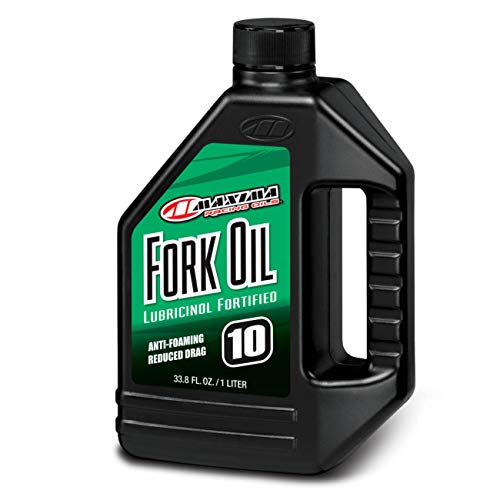
Fork Oil Standard Hydraulic 10wt.
Designed for cartridge and standard-type forks. Lubricinol-fortified formulation reduces overall friction and decreases stiction. Shear stable, high viscosity index formula maintains film strength and reduces wear. Maintains optimal damping performance by minimizing foaming and air entrainment. Keep More ...
Did We Miss Sump'm?
Sixty percent of the time, we're right every time. What would you add to the conversation and why? Your input is invited. Leave a comment and/or write an article!
Share Link ...

Thoughts gone wild? Write an article!