
Buckle up for the FTC disclosure ride here ...
Arc Academy
Listen in as Team TRO talks welding and other crafts with Arc Academy founder Stephen Christena. Music by Rabid Neon and Otis McDonald. Download our feed here.
Transcript
As legible as we are intelligible ...
Robin: In this episode learn to weld and fabricate at Ark Academy. That's Ark Academy.com and the nineteen seventy Daytona two hundred. Real quick here. Opening announcements. News. Corrections. Banter. First announcement welcome back podcast co-founder Trevor Tron five thousand. The one and only Travis Burleson is here is present. Is in the house. Say hello sir.
Travis: Hello, sir. It's nice to be back in the seat here. The, uh, foam shoved in front of my face.
Robin: Uh, so glad to have you. Brian Ringer is indisposed on this particular evening, and we'll be back next week with whatever it is he wants to talk about. We'll get to that as soon as I get the text announcements. Shout out to Lucky Dan, Steve, Barb and Kevin. It was a pleasure meeting in Silver City, and your mostly vintage rides are great talking pieces when they aren't being ridden. I managed to ride uh, Truth or Consequences to Silver City along my favorite route, just to get there on a Sunday morning in the chill and just kind of hang out, have coffee, and look at vintage bikes with people I barely know. But they're all super cool on the website. The transcripts and closed captions for cropped archive episodes are now corrected. Those transcripts have special tags within them that tell our episode compiler where the public start end points are. This changes their synchronized timing and podcast players. New code has been put in place by a devastatingly attractive one man army of a nerd to fix that.
Travis: Devastating is definitely a good descriptor of your looks.
Robin: That boy's got a face for radio. The Street Motorcycles for sale page is also working again, thanks to the always helpful Twisted Road website. Visit mouseover and well, you know, go buy a bike or something. It's been down for quite a minute because I don't know. The eBay interface was always kind of tough.
Travis: Yeah, there's probably some stupid API, or.
Robin: If they don't like what you're doing, they just shut you down. I think I got blocked.
Travis: Yeah. Some are like all your certificates. More than thirty six minutes old.
Robin: You appear to be using this thing successfully. Would you like us to shut that down for you. Uh, corrections. These are fun. These come from Murray Haynes. Shout out to Murray Haynes. What's up man? I can't I want to do Murray's voice, but I think that he wouldn't like it. So he says your history guy Jordan called the Xr750 an overhead cam push rod motor. Not even close. It was an overhead valve pushrod motor utilizing a unique four cam configuration as opposed to a single cam. Just a minor detail. And that is in reference to the first episode about the Daytona two hundred. Be sure and check that out. To which Jordan was pleased with that response. He just says thank you. He loves what he's doing, but if you correct him, he's happy to know because he's learning to.
Travis: Have to have another. What was the last episode with the jargon and.
Robin: Oh, terminology? Dermatology.
Travis: Yeah. So you have to talk about overhead valves versus overhead cams and pushrods and rocker boxes versus valve covers.
Robin: And news BMW has revived its boxer powered sport tourer with the twenty twenty six R thirteen hundred Rs. I've been waiting to see pictures of this thing. It's packing a thirteen hundred cc flat twin makes one hundred and forty five horsepower. I know mine was one hundred and twenty five one hundred and ten foot pounds of torque on the outgoing model. It's got a new chassis, more aggressive ergonomics. Okay, it's got the same USD forks, a slightly revised suspension and a more compact frame. You can feel how much sportier it is just by looking at it, but it still offers tour friendly features and optional luggage. Quote optional luggage for longer rides. It's a tour so optional. It's like because sometimes riders go thousands of miles just wearing nothing but underwear.
Travis: Because BMW, because Honda's new sport Tour, the CB one thousand GT, or whatever they call that, what they call it.
Robin: The tall rounder.
Travis: Yeah, yeah, that one comes with luggage as standard.
Robin: And fifteen foot tall suspension.
Travis: You'll never find a base model BMW.
Robin: No.
Travis: Oh, you wanted wheels? That's an option. Tires are an option. We don't make tires. We're not tire company. Tires are an option. You have to add that on.
Robin: Uh, this next one I handpicked for you. Yamaha has filed two Japanese patents for exhaust systems that use internal valves to redirect gas flow for performance benefits. The designs illustrated on an MTO seven but aimed at high performance track bikes, use butterfly valves to choose different exhaust exits. One system reduces wheelies and improves acceleration by diverting gas to a smaller, high mounted pipe that creates upward angle thrust to push the front wheel down. The other applies similar principles to enhance cornering via direct exhaust thrust. The trade off is reduced peak power when using the smaller pipe, but this is acceptable when traction or wheelie controls limit usable power anyway. At higher speeds, the valve switches back to a larger, low mounted free flow pipe for maximum output. Yamaha's approach adds a dynamic switchable layer to concepts already hinted at by high mounted exhausts in MotoGP and SBK. Preach. This is weird. I've never felt enough exhaust output to cause handling changes in my bike.
Travis: Yeah, I don't know about, like using exhaust as a thruster, I don't think. Maybe that's just experimentation or it's a misdirect about what this technology is for. I mean, obviously like butterfly valves already exist in sportbike exhausts.
Robin: Yeah.
Travis: To change resonance and airflow as the rev range and the engine load changes. So that makes sense. It makes sense to redirect it here and there, or send it through one part of a muffler in a different part of a muffler or a resonator to create exhaust resonance, the the exhaust wave to extract exhaust or provide whatever you need. I don't know about directional thrust, though. I don't think there's enough. It's not a rocket engine. There's not a lot. There's not a lot of mass, you know, like exhaust gases are.
Robin: It's a combustion fart tube.
Travis: It's not a space probe. You know, like that would work on a space probe where it's like, okay, we shot point two milligrams of gas out this direction and over five hundred million miles. That's going to that's going to change our trajectory.
Robin: Whatever it is that they are aiming to do with this, I imagine it has a positive impact or intent. I'm fairly certain it has nothing to do with launch pad use or any of that noise, but.
Travis: I wonder if it's directing it over like a winglet or something like that. Like changing. Changing like the aerodynamic flow over the bike.
Robin: I'm glad that what you have to say has periods on the end of the sentence instead of question marks, because I have no idea.
Travis: It's a it's a crotch warmer.
Robin: Travis, it is fantastic to see you, man. How are you doing?
Travis: I'm all right. It is cold and snowy here in Wisconsin. We got a solid foot a week or two ago, and it just. We keep getting a couple inches here and a couple inches there. So I made sure I finally got around to, like, winterizing the bikes, whatever that means. I reorganized the garage enough to put the bikes in the corner and get the snowblower in the front, but I still see some stuff about and I don't think my Bridgestone S22 hyper sports are quite that plastic. But I did see something on motorcycle Reddit. So you know, it's true about sportbike tires, like freezing the rubbers a lot more. It's a lot more plastic. So not only does it heat up and get softer, but it gets harder when it gets colder. And like a guy had like a tire that basically shattered, froze to the concrete. And when he went to go move it, it like the tire just ripped apart.
Robin: So it was just glued to the ice.
Travis: Yeah. So I made sure to put my Trek bike up on stand so the tires are off the ground, which again, I don't think is going to be I don't think I think it'd be fine otherwise, but it also makes it vertical so I can scoot it in a little bit tighter. And then I've just been, uh, reading, you know, it's winter time. I reread Total Control, which is so dated, maybe there's I don't know if there's an updated version of Total Control. Like, he like references. Some companies I'm pretty sure don't exist. And just like a bunch of some other technology that's like very late nineties, early two thousand.
Robin: Yeah, there's no revised up to date.
Travis: And then I've been reading, uh, just some motorcycle travel logs, like I was reading over the summer, but I finished it this, this fall. The best of Peter Egan.
Robin: Thank you for helping me to it.
Travis: Uh, the new book by Andy Waring called The Fast Bike to Byzantium. And he's got another one that I haven't gotten to yet. And then I started reading Jupiter's Travels.
Robin: Yes.
Travis: More sex in that book than I thought there would be.
Robin: Well, it was the seventies.
Travis: Yeah, it was the seventies. Was like the mid seventies. And then, uh, I bought my track day, my moto vid track tracked a Black Friday package deal, got six track days lined up for next year, so I'm excited about that. Five, uh, Black Hawk Farms and One Road America.
Robin: Congratulations. Was that the package or did you select your tracks?
Travis: You got to select the track in the day. And I bought a another set of tires of the Bridgestone S22's.
Robin: Oh, you also got the Angel seats though I know that for a fact.
Travis: And I got a set of Angels T's because they were the we had that super sick deal. If you watch Road rubber on, uh, digital tools you have over digital tools, and.
Robin: Travis is the third curator of that page. So it's Travis, Brian and myself that are always keeping that thing up to date.
Travis: I'm the weirdo who said that the super cheap condos are surprisingly good. Um.
Robin: I mean, it's not untrue. They are surprisingly good.
Travis: But the the set of pirellis, the streets were like less than a set of the Kennedys or just about the same price, like two hundred and twenty bucks or something like that. What have you been up to?
Robin: Just like old times? Uh, my notes say. According to this, I've been trying to get better with the social media updates. I so wish I had collaborators on this, but I can't bring myself to ask him when he rise to the challenge. Uh, did make the Silver City run this past Sunday so worth it. Venmo is live in New Mexico, even if they aren't calling it that. I'm still sorting through the material of what will be a valve adjustment article for the GSX AR, something nobody's bothered to do. So my chance to be the guy. And lastly, gotta decide on what I'm reading next. Like I said, I'm finishing up on Rick Rubin's The Creative Act. Beautiful, beautiful book. So I'm trying to figure out either I'm going to reread The Relaxation Response, which is the scientific method approach to meditation. But then there's also Peter Egan. I want to read that. That's going to be really good. So I think probably what I'm going to do is do a little bit of code reading and up my credentials and then read that. That's me in a nutshell. What do you say to some questions from the wild?
Travis: Yeah.
Robin: If you'd like us to field your questions, visit email in your web browser and send us a message through the contact form. First question C asks commuting with gear. What are my options when it comes to securing my boots, jacket and pants and changing out of them when I get to school gym slash work? If you go to rowbike, click on the search icon and type in helmet lock. There is a high end luggage lock that is steel cable based, retractable so you can feed it through your helmet, through your jacket sleeve, and through your pants. All of that, and then hang it on the frame of the bike somewhere. I would go the top case route, get a big dumb top case, pull that stuff off, slap it in there, lock it up and walk away.
Travis: So yeah, helmet lock. Run a cable through your gear. Um, it's still out. I mean, there's deterrence, right? Nothing is completely, um, foolproof. Get a helmet lock or a system where you're running a cable through your gear so it's secure so people can't just walk away with it. Keeping it honest, people honest, so to speak. You know, luggage, obviously. But if you're on a CBR six hundred and you're not on a BMW twelve hundred GS, like you're going to have limited luggage options. You could do yes, like a top case or like a rear rack and just like a nice big watertight duffel bag and shove it in the duffel bag that's strapped to the back of the bike and close it up. You know, some of those duffel bags do have, like, some sort of way to to lock them. You know, if someone really wants to cut it open with a knife, they could, I guess. But, like, it's out of sight. Out of mind. Right. There's a bag that's strapped to a thing. People probably aren't going to mess with it.
Robin: And then the B side of that is stuff it in the bag, take the bag in, put that in a locker someplace safe and just let that be the case.
Travis: I mean, you're saying like gym, like gym has lockers. School, I don't know, or work. Yeah. I mean, you know, like, I work an office job. I ride my bike. I just put my crap at my desk.
Robin: Next question RA asks should I ride without health insurance? No, you should not. I say no, you should not do anything in this world without health insurance. Everybody should have health insurance.
Travis: Everybody should have health insurance. But this is America. It's your own risk management, right? What do you think about that? You know, I think everybody should have health insurance. That's a good that's it. A loaded political question. The thing that everyone should have health insurance. And it's up to you. Like what's your writing situation? How many risks do you take? What's your financial situation? I'm assuming if you're like without health insurance, it's not as good as you would like it. What's your mental health worth? Right? Is motorcycling good for you in other ways? Is it keeping you fit? Is it keeping you sane? Is it saving you money on your commute or whatever?
Robin: So if the indifference wells up to where you're just like, I need to do this. I'm losing my dang mind. Go ahead, ride the dang bike.
Travis: Yeah, but if you if you're so scared about the possible financial ruin of it that you're not going to have fun riding your bike, then don't. It's really a you question. And I know like just go get health insurance is a difficult thing in this country if you're this time of the century, if you don't make a lot of money and you don't have health insurance, go to the emergency room. A lot of times they'll just they just write it off.
Robin: Do what you will. Last question TW asks is motorbike insurance a must? Yes.
Travis: Yes.
Robin: Next.
Travis: Legally speaking yes. Financially speaking. Yes. Morality speaking. Yes. Unless it's just. It's like off road only or track only. And, uh, you don't care about any money you've sunk into your machine or anything else.
Robin: Nice.
Travis: If you're riding on the road, though. Yes.
Robin: Segment one. Ark Academy, as in Ark Academy.com. Go check that website out while you're listening to this. Trust me, you will not be disappointed. Our next guest was on a previous episode many years ago. Stephen Christena is the founder and owner of Ark Academy in Chicago, where for over a decade he's been giving writers, makers, craftsmen a space to learn welding and metal fabrication, forge their own ideas and build real projects from steel, aluminum and more. With MiG, Tig stick welding and forging courses and a strong community of fabricators and motorcyclists, Ark Academy isn't just a shop, it's a creative playground. It's been a while since he joined us, so I'm excited to catch up and hear what he has to say, what he's got planned for the shop for twenty twenty six, especially with the cold weather season around the corner. Welcome, Stephen. Christena, thanks for being here.
Stephen: Thank you for having me.
Robin: I listened to that episode just so I could remember what we talked about so long ago. That episode was from March first of twenty seventeen.
Stephen: I knew it was a long time ago, but.
Robin: That's going on ten years ago. I think I've known you for about ten years now.
Stephen: I think a little more than that, man.
Robin: A little bit longer to say what's new after this amount of time is one thing. How are the classes? How's the shop in general? How do you feel about it?
Stephen: I started this whole thing in oh eight, I think. Uh, we've literally taught right around about thirty zero zero zero people out of weld. A good percentage of those people have gone on to be professionals in the industry, get welding jobs, or just change their DIY habits just to expand their abilities to make things. Uh, God knows I get a ton of motorcycle people in here, but also kids. The newer generation are getting more into hands on three dimensional work. We're getting a lot more people that are interested in becoming welders professionally, mostly because the United States has an incredible deficit of professional welders. It's three hundred percent or some BS. That's an actual statistic. That's on the AWS website. There's about two to three hundred thousand positions in welding. On any given day in the United States. And they just can't fill these positions fast enough. And the other problem is the bulk of the professional welders that are in unions right now are of retirement age. And this has been going on for a decade. There's just not enough people taking the positions of the older, more seasoned professionals that are about to retire. So there's that. And I think people are starting to understand, hey, I don't want one hundred and twenty thousand dollars debt for college. I want to go into the trades and I want to work for a union, because I don't want to get screwed over by any fab shop or somebody that's only going to pay me fifteen bucks an hour. A lot of fab shots actually pay pretty well, but what I'm saying is there's a lot of welding out there that, you know, they're underpaid. I'm more of a union guy myself. I push people to go into unions. As you know, I'm from Flint, Michigan, so we were always big supporters of unions growing up, whether it be the teachers union, any kind of automotive union, welders union, pipefitters, all that stuff.
Travis: I mean, the working class are the ones who actually do the work, are the ones who should get paid appropriately for it.
Stephen: Absolutely. I think that's the last forty years has proven that the destruction of our unions has just driven down our wages and has taken more of the wealth out of the middle class. It's crushing us. In nineteen fifty seven, the bulk of the United States, seventy two percent of the labor force, was in a union. Now it's literally less than ten percent. And it's because of politics that have been pushed on us ever since Reagan got into office.
Travis: Corporate leadership, buying the politicians and quote unquote, right to work.
Stephen: Exactly. Right to work for less, as a lot of people say, because that's just what it is.
Travis: Right to be told to work for less.
Stephen: Yeah. And I think people are really starting to figure out that was a bad move. And it was a bad move to reduce our ability to work with our hands and our trade policies. I think people are waking up to that, and now they're getting into stuff that actually makes them happy. I went to college. I got out of college. I was in a corporate environment for almost ten years and I freaking hated it. I couldn't stand being in a corporation. I mean, I always had a fab shop on the side that I was working for or with, or it was my own stuff, but I couldn't tell you. The corporate structure is just not for everyone. Art degree right here. The whole journeyman thing. I had to get my lumps on the job as far as Ark Academy is concerned. What's new? We just spent the last thirteen months becoming a nonprofit. We're now a five hundred one C three. So we take donations. We go to Ark Academy.com and help us out.
Robin: Yeah.
Stephen: Throw some bucks our way. The reason we became a five hundred one C3 is because we were trying to get government grants. During the Biden administration. He passed several bills that allocated about six billion dollars, not exactly to trade education. It was part of the infrastructure bill. There was money allocated to trade education. And we checked every single box that they wanted to give us money, except we weren't a nonprofit. It was a very large sum of money that we were going to get. So we went through the process and spent a lot of money getting rid of the LLC and becoming a five hundred one C three. By the time we actually became a nonprofit, those programs were eliminated by the current administration. So that money that I was going to use to open new locations and provide free welding training for veterans and minors disappeared.
Robin: Wow.
Stephen: That was a big setback, especially after spending a considerable amount of money on lawyers and deconstructing the LLC after seventeen years. One of the big things we're trying to do is we're trying to get art academies in multiple locations. We're probably going to start with larger population areas.
Robin: I'm in Truth or Consequences, New Mexico, if you don't mind.
Stephen: I'm trying to find locations in larger areas like Detroit, LA and not proper. You know, it could be Glendale or.
Travis: Adjacent the greater metropolitan area.
Stephen: Greater metropolitan area where people can actually get to it. So they can take these classes where they can.
Travis: You need to have like a shop space. And those sorts of facilities are typically on the outskirts.
Stephen: Yeah. And all these places that I'm speaking of are extremely expensive to rent at.
Travis: Well, not Detroit.
Stephen: You would be surprised. Detroit is, I would say, where Chicago was in about nineteen ninety eight.
Robin: Wow.
Stephen: So many people are moving there doing all the right things to beautify Detroit.
Robin: Rock city, baby.
Travis: All the cool, creative, artistic, well driven people. They. Yeah, they moved there because it was like a city where you could afford to buy a house.
Stephen: Yes. They're redoing their entire infrastructure right now, opening a like a four billion dollar park along the water. They they are consolidating and grouping all of their sports teams and sports centers in one area so more people come downtown.
Travis: Well, it sounds like they'll need some welders to help build all that stuff.
Stephen: Exactly.
Robin: I like what you did there.
Stephen: Ark Academy is definitely trying to get its stake in the game in a lot of these different areas. I'm thinking about Worcester, Massachusetts for a location just because it's central Boston could get their New York people can get there.
Travis: And it's wicked awesome.
Stephen: It's kind of centralized. It's still relatively inexpensive. And with that and with the Massachusetts to, uh, run a business.
Travis: So, yeah, setting up franchises.
Stephen: Yeah, it's franchises, but. It can't just be metal fabrication. I want to get into plumbing. Electrical. I want to revive the trades.
Robin: Your dad the maker?
Stephen: Exactly. Dad was a huge maker. He did everything himself. He would never pay anyone to do anything he could do. And my dad could do a lot. That's probably the reason I am the way I am. When you're six, holding the flashlight, making sure he has the right wrench.
Travis: It's a very Michigan mentality, and I can relate.
Robin: You're aiming that light at something. You got to see what that something is. You're gonna learn something. You're watching that order.
Stephen: We weren't ever cracking open engines and doing any internal engine stuff. I mean, he would, but not me. But replacing alternator, starter motors, belts, oil changes, anything to do with peripheral parts of the engine. I pretty much did it on all the cars that my family ever owned. I'm procrastinating doing all the fall maintenance on my KTM.
Travis: Yeah, I was going to say, what do you I know you had a Buell Ulysses and then you had an FTR, but now you got a KTM.
Stephen: Yeah, I've had a ton of bikes. I had a pretty bad addiction in my twenties of just going and finding bikes throughout the country and riding them back, fixing them up and selling them.
Robin: No personal investment at all.
Stephen: Now, I actually had a bunch of friends, motorcycle heads, like all of us, literally come to my metal shop and bring a case of beer and have an intervention and told me there are too many motorcycles, man, you're not getting any work done. And I was like, ah, come on. And then they're like, you literally are not making any kind of forward progression in your metal work because you work on bikes so much. And this is like the late nineties, early aughts where I was going and buying like mid to late seventies CBS and K one thousand nine hundred and all that for like three or four hundred bucks.
Robin: Oh, yeah.
Stephen: Barn finds.
Travis: Yeah.
Stephen: Fix them up. You make them look shiny and look nice, and you make sure things work properly. And I was selling them for five times as much as I paid for them. Nice people were happy to buy them off me because they were running really well, and they looked nice. And it was fun for me because I got all my like, kind of creativity out of, like, rebuilding these freaking machines. But that's actually how I got the XR eleven hundred. It was in Pennsylvania and it was in an accident, and it was totaled for seven hundred dollars. Chad that used to work at Moto Works just coincidentally. He's like, you got a motorcycle you need picked up in Pennsylvania? I'm literally going to Pittsburgh. I was like, that's where the bike is. He's like, I'll pick it up for you for one hundred bucks. Deal. So I gave him one hundred bucks cash, and he brings me this XR eleven hundred that just the front end was smashed out. A little bit of issues with the engine, so I tore the whole front end apart, retuned the engine, did a carb clean, rebuilt the front end and then that was my bike for eighteen years.
Robin: It was synonymous with the time I was there. The Stephen Christena bike was that bike.
Stephen: Everybody knows me on that bike.
Travis: When did you do any like big trips or anything fun this year on the KTM or when did you get it?
Stephen: Four or five years ago. Here's what really happened Karen and I, that's my lady. We go motorcycle camping all the time on the Buell is great, but then we got the FTR. I realized very quickly that modern bikes are awesome and fuel injection rocks. Cruise control is awesome. Heated grips are awesome. Comfort is awesome. So all right, I gotta limit the amount of motorcycles I have and I gotta figure out which one that I really want. I was looking at the tannery, the one thousand r X BMW. Or this guy. And everything was pointing in the direction of the KTM. I mean, features for the price. Fuel efficient. Better range. It was more comfortable. I tried them all out. I rented all of them. Kind of bidding out bikes. And then, uh, this guy, once again in Pennsylvania.
Travis: The Mecca for cheap motorcycles.
Stephen: Apparently, it is really this guy out of nowhere at a dealership. He goes, I'll give you full rate for your Indian if you do a trade in for the KTM. I got Tourmaster luggage. I did alter it. I fabricated a quick release mechanism for the mounting hardware for the panniers.
Travis: They're like aluminum. Or is that steel?
Stephen: I don't really do any mods to my motorcycles for aesthetic purposes. It's mostly utilitarian. I took the skid plate and I welded on forward.
Travis: I think highway pegs.
Stephen: Yeah. And then, um, I, uh, took the luggage rack from the back and then moved it back two inches. So my lady had a little bit more space to sit. But besides that, I can't. I usually like stock bikes. I'm not a very flashy guy.
Travis: Yeah, I don't care how it looks, but yeah, I've definitely modded like, I made the luggage for the NC seven hundred out of, like, Harbor Freight stuff and Home Depot Hardware.
Stephen: Yeah.
Robin: It worked. Not only are you a writer, you're an educator. You are well informed and able to provide people with an opportunity to better themselves in the motor. I mean, I'm talking about motorcycling because it's a motorcycle podcast, but winter's setting in. How does the rhythm of Ark Academy change over the winter? Do you see any different projects coming in during the cold months compared to the riding season? You were talking about the winterization things that are winter specific. You know.
Stephen: Ark Academy usually picks up right after the kids go back to school mid-September were typically humming again. It's kind of odd because usually I'm much more busy with metal fabrication in the summertime and then the winter I'm much more busy with the school, and that's how the balance has been for the last eighteen years. This is a very different year, because I think people are getting a little freaked out about the current economic climate in our country. There's not a lot of disposable income out there right now. Most of the people that are coming to Ark Academy now are people that are really looking for jobs. They're trying to trade up really quick. Most of these people, they don't really realize it's like, yeah, I mean, we teach basic and intermediate level. You could take all of our middle classes and probably get an entry level MiG welding position on an assembly line somewhere, but it's not going to quite get you into like a union or anything like that. Something like that would have to be a certification level, trade specific school. But a lot of these unions, if you're competent and you could turn the machine on and you could put down a nice solid bead, they'll take you on as an apprentice. We've had just in the past three or four months, I've had about six people all call me and tell me they got jobs welding and doing metal. Fab.
Travis: Nice.
Stephen: It's a very small percentage of our students that go on to be actual professionals in the trade, but we do get a lot of people going into unions. Our women in welding instructor, Natalie, she left for a year and a half to go work overseas. We needed another female instructor for the women in welding. It just so happens one of the people that apply for the job was a woman that took art academy classes first.
Robin: Yeah.
Stephen: She started at Ark Academy, went through all of our courses and classes and everything, and then she went to Chicago Women in Trades to get her certification. And then she was Ironworkers Local one. That's an amazing story. Incredible. And you're coming back here to teach now? She didn't stick around that long because she moved to, ironically, New Mexico for a little while, and then she moved back and she completely changed her direction in life. I thought that was just an amazing story.
Robin: Yeah, but that's also chalked up on your resume, man. You're just doing what you do. You're helping where you can help. You're providing the education that gets somebody to a level. It sounds like there are circumstances with the people coming in that you may or may not have yet adjusted your response to, in terms of what they can expect to get out of it after they take a class or graduate, or gain a certain caliber of knowledge. Yet you have had people just by not luck of the draw, but by casual process, by doing what you do. That's just where they ended up. They ended up back in the doorways of your place with serious cred behind them. Can everybody expect that? Maybe not. But the point is, it's not like it's not out there and you do provide information. Have you organized a prepared response to those who walk into your doorway and say, I need hope, I can learn something here. Can you help me get there? And your answer is, I don't know. But here's what you need to know.
Stephen: I do have a prepared response, and honestly, I get that question probably six times a day. Most of the people that call in, they usually ask us how much our courses are. We only have three courses that you can take. Those are typically in the off seasons, really. We have one in fall and we have one in spring, and then we'll have one right in the middle of summer. Basically our entire catalog of classes just jammed into one week, five hours a day for five days straight, twenty five hours total. And that's called welding boot camp. It's all the stuff that we teach. But what I tell them is, if you've never done it before, you don't want to just jump right in and try to be a professional. Our classes are more like a senior in high school or college level class that teaches you basics and intermediate level, and then if you feel like you're comfortable with it and you like it, come in to open shop, practice and then try to go into a direction you want to go, and we can point in that direction. If you want to do metal fabrication, if you want to work on cars, there's a fantastic school. Forgot the gentleman's name. His first name is Troy. That started this about the same time I started Ark Academy called the Fab School. It's in California. It's near LA. Fab school is fantastic. It's a certification school that does really custom, high end, typically kind of Baja racer automotive welding and fabrication. And then if you're really good at it and somebody comes in and they just excel at all three stick, Tig and MiG, I usually say, look, you would fit into the apprenticeship program at any one of these unions. You should call this union rep and see if you can get in on the next apprenticeship. I try to help people out as much as possible, finding jobs. It always makes me feel great when somebody learns a new skill and they can find a job, they can make money with it. But it's also just really satisfying for everybody involved because they have this new silver lining. Their outlook on life is much different. Uh, we had this guy named Jeff. Jeff has been coming to us for a really long time. And he took all of our classes MiG, stick, Tig, metal fab, and he was stuck at a very low paying job for a very long time, and he just felt miserable. But he really liked welding. And I was like, well, man, you just gotta keep coming in. I'll try to supervise you as much as possible. And he's making three or four times the money he was making. He's working fab now. He loves his job. He goes in every day, happy as all hell. He still comes in to practice. You could tell when he comes in. He's just much happier about his outlook on life. And we have several people that have done that. And it's just, you know, it makes you feel good. But it's also it just gives people a new direction, a new outlet. I know it sounds cheesy, but.
Robin: I think cheesy is underrated right now in this day and age.
Stephen: The cheese has been taken away from us. Ark Academy just kind of fills that void. We're trying to spread it out so there's more people that have more opportunity. We give them knowledge, we give them the access. We give them a place to come work, feel better about themselves. I'm trying to get a veterans program so we can get veterans in here for free. I haven't done it yet because I've just gotten this ball in motion. I wanted to reach out to the Wounded Warriors project to see what direction they went in. Reach out to the VA to see what kind of programs they could help me with or offer, because our classes are relatively inexpensive, to be honest. I mean, it's only one hundred and twenty bucks for a class.
Robin: Maggie and I took it. We loved it. It was great.
Stephen: Everybody says that. Oh, my God, you guys should raise your rates and all this stuff. I'm like, I'm trying to keep it as chill as possible and as accessible as possible because we need people to spread the interest, even if you're only going to take it to a level where you're just going to be a weekend warrior DIY kind of person, at least you're going to have the vocabulary and the language to say, hey, no, this is really fun, and you can make money doing this, and you should go here or here and try to trade up a little bit and you can have a career in this.
Travis: Or like your kids are going to see you in the garage. Yeah. Fixing your motor, you know, pushing your toolbox back three inches so your wife can get on it and.
Stephen: Hold the flashlight. Build the interest. Try to find the ten millimeter in the engine block somewhere.
Robin: Nobody's gonna find that.
Travis: It's gone.
Robin: It's gone.
Travis: Don't get the ten millimetres from the white van. The creepy man on the white van.
Robin: What do you want to tell our listenership about Ark Academy availability? What you are enjoying most about what you do now, and what you have planned for twenty twenty six, in a way that they might want to hear.
Stephen: I'm going to go back to the beginning of our conversation. Having just converted to the five hundred one C3 and being a nonprofit and going into a twenty twenty six, it's going to be about getting revenue in. It's going to be about trying to expand into new markets. Go to arc Academy.com. Donate. Help us out. We're going to try to get all kids from fourteen to eighteen. I'm here for free to learn the basics and entry level welding knowledge if they want to move forward. We're really going to try to work with vets. One of our welding instructors, Curtis, he's a veteran. He's super psyched about the program. We actually call it the Curtis Payne Veterans Fund. And I mean, it all goes into one fund to help Ark Academy teach these people. But it's just kind of a dedication to him and his commitment to our academy. If you want to help us out, donate. And if you're ever in Chicago and you ever want to learn how to weld, go to Arc Academy.com and just take the first class sign up. I'm telling you right now, even if you don't have any interest in welding and you just want to have a fun night learning and experiencing something new. The first class we teach you how to cut, prep, tack, and weld stuff together. It's just a good time.
Robin: I'll vouch for that. Stephen Christena, thank you for being here. Founder and owner of Arc Academy in Chicago, where over a couple decades now he's been giving riders, makers and craftsmen a space to learn welding and metal fabrication. And now you are a five oh thirteen forty eight nonprofit. That's the word I'm looking for. Go to arc Academy.com contribute. You want to talk about Chicago being a tough town? Make it a little less tough. Give people opportunities to do things. Help make good things happen that help make the world better.
Travis: Also, Stephen literally wrote the book called Learn to Weld. If you want to buy the book.
Stephen: Oh thank you guys.
Robin: Moments in Motorcycle History with Jordan Liebman nineteen seventy Daytona two hundred. If you haven't heard the previous two episodes, be sure and do so. Jordan jumped into Doctor Who's Tardis and parked it directly in the middle of an intersection between Innovation Boulevard and Inept Way. Let's see how uncharted engineering territory makes its moto mark in history. Take it away, Jordan.
Jordan: So now Yamaha comes out with this T three. This three hundred and fifty cc bike that in qualifying against the seven hundred and fifty cc bikes, almost made one hundred and fifty two miles per hour. and they're racing with expansion chambers, which started in sixty one. Expansion chamber is effectively for residents of the exhaust pulse, which basically feeds back on the combustion chamber to maximize the power pulse at a certain RPM. It's based on the V-2 rocket.
Brian: Was that Verner von Braun?
Jordan: Yeah. Von Braun. They took advantage of the power pulses of combustion to increase overall power. Up to that date, they had experimented with different port arrangements. They've experimented with different bores and strokes. They've experimented with rotary valves. The expansion chambers came on, and that changed everything. For a race, if you were going to maximize your power, you could have huge increases in maximum horsepower over a certain Rev range by using expansion chambers that are tuned to your engine. After that, they went to read valves with expansion chambers and that is the seventies. The Yamaha was based on the R3, which was an extension of their massively successful TD series that could trace its roots all the way back to the inaugural showing at the Catalina Islands. Based on the German Adler engine in nineteen fifty eight, the three hundred and fifty cc two stroke twin made an astounding one hundred and fifty one plus mile per hour lap at qualifying, just a few miles per hour, below the best showing from the seven hundred and fifty cc triples from BSA and triumph, and the Honda seven fifty four, which was a late entry and a bit of a sneak attack as Honda had been out of racing since nineteen sixty seven. After regrouping from being denied by the FIM from racing in the very high tech Cd450 in nineteen sixty five. They were banned from racing the Cebu for 50s. And they just said, let's just regroup and not race for a while. So they really hadn't really been racing in this class really at all. They had GP bikes, the ones that aren't allowed in production, racing in the five hundred cc capacity, but for production racing, they didn't have something they could enter because of the rules. I mean, the CD4 fifty had double overhead cams. Nothing in this race had double overhead cams. It had torsion bar valve springs. It had constant velocity carburation hemispherical combustion chambers. There was a lot more to it. And that was all just banned by the FIA and the AMA. So Honda pulled back and said, we're not going to compete unless we compete on our terms. So Honda had been out of racing for years, making in secret the cb750 starting in nineteen sixty seven. So here's the thing. If you're British, you're literally in the same country as your competitors who are building their secret bike. And so corporate espionage is easy. All you got to do is. Hey. Eh, eh, Steve, I'm going to send you over there. You're going to go there as a wrench turner, and you're going to see what they're doing over there. And you report back to me and we'll talk about it. Okay? And I'll. I'll buy your wife a house or something. But when you're all the way in the middle of the Pacific Ocean in a place called Japan, corporate espionage isn't as easy. Not to mention there's a bit of a language barrier. Honda had been building this bike, actually, at the time it was called project three hundred Total Secret. But according to the rulebooks that Harley helped establish by the AMA, this bike qualified as a seven hundred and fifty cc overhead cam, four stroke Kawasaki race team had abandoned the rotary valve three hundred and fifty cc in favor of the new Kawasaki H1 Rs, based on the H1 five hundred cc triple. It had just come out in nineteen sixty nine and maybe it was not ready, despite the street reputation as widowmakers and as super fast production bikes, they were simply not as fast as the three hundred and fifty cc Yamahas in the hands of people like Yvon Duhamel, nor did they have the power band of the Suzuki T500, BSA and triumph. As earlier stated, were campaigning their new rocket three and Trident seven hundred and fifty cc triples. Very fast, very competitive, very capable with the best riders, crew and factory support ever seen. Even though it was based on the T100 five hundred cc vertical twin with a Rephased one hundred and twenty degree crankshaft, very little else on it was trick. It still used pushrods for its overhead cams, which to date was still a route to success. The motto in the British Paddocks was go for broke. They have to do this to keep their entire industry alive. They did so much that it was at the expense. Okay, so this is the other thing. This was at the expense of their Ordinary production to meet the demand of their dealers. The Triumph Trident and the BSA rocket three engines had fifty six different assembly operations that really slowed their production to a grind, so they literally took out a one page, full page article in certain magazines saying, we're sorry, we can't meet demand, but we're working on your orders because what's the word? They sacrificed profit for prestige. What they had to do first was win this race, which is really what was going on. Literally, it was all or nothing. Okay, Norton. Norton had had a seven hundred and fifty cc engine for quite some time. They had it in the Atlas. They had it in the Dominator, they had it in their biggest bikes, and they were known for their featherbed frame and they had handling down. They were still in the production game and they were part of the AJS Matchless Norton organization. But now, in comparison to what was hitting the market, they were kind of antiquated with their seven hundred and fifty cc engines, but they did have advanced frames and suspension and handling. So they had just two bikes in the entire race in the seven hundred and fifty cc capacity. And unfortunately they were not competitive against the top entries. I will just say that they did have bikes in the race, so the bikes at Daytona had to be production, meaning they had to be models available to the public. And the rules stated a minimum production of two hundred units. So basically they had to make two hundred available to the public to be considered production. Although the bikes raced were all based on production units, these were all highly modified. However, this is what I call the Darth Vader effect. You ready? These bikes are supposed to be based on production models, but the Darth Vader effect is where there is very little left of the original entity. and the rest is completely blueprinted redesigned stuff. The Darth Vader Effect to Jordan and the British author with Mick Woollett stated after the race that quote at best the Honda was maximum thirty percent stock. All right, so everyone had to qualify. Top qualifiers were given top spots up front. Due to the sheer number of entrants, the race was to begun in three corrals of rider. This is the first time they did this because there were so many riders separated by fifteen seconds. Now this led to unanswered questions. For instance, if a rider from the third corral paddock passed, a rider from the first paddock was his fifteen or 30s handicap added to or subtracted from his time. That caused a bit of controversy before the race. If you're going to separate the fastest riders from the slowest riders in three fifteen second starts, what happens when the guy from 30s back passes the guy in first place? That's a question that was never answered, however. Luckily that theoretical scenario did not materialize. I guess the thought was that an amateur wasn't going to hit one hundred and sixty miles per hour on their stock bikes and less talented riders. That was a sticky wicket for these guys. These amateurs working out of a van or a trailer without dealer or factory support were generally less modified. Dealer bikes, slightly more modified, benefited from a real pit crew, and sometimes even garage space, and factory bikes were very modified and had the best of everything and top accommodations. Untested models. Harley, trying for a nineteen seventy dynastic trifecta with a new xr750, was certainly a prospect to win again. British triples were effectively untested in the United States, and they had a lot to prove. The Japanese mainly running much smaller displacement two strokes, some of which had been around with few changes in half a decade, many considered to be underdogs. But the riders were all aces. And then there was Honda, and they had fallen into an on again, off again pattern when it came to racing. While Honda always offered race parts for their sport models like the Cb77 and Cb450 two hundred and fifty to four hundred and fifty cc twins, Toyota Honda had decided to pull out of racing motorcycles due to the risk, and because of the FIM ruling against them for the Cb450. If a Honda was to race, they only do it as a complete, fully supported effort, one hundred percent dedicated to winning. Now the back story starts with Bob Hansen famous persona in racing history. Not just Honda. He raced other brands too. He was Honda's most trusted non-Japanese employee. He had been racing Honda's with a team out of California using Honda bikes outfitted with Honda race parts very successfully in the United States and Canada. While Honda was out of racing, Hansen had been asking a reluctant Honda. I mean, this is a guy who has the president owner of Honda Corporation on speed dial. All right, to get back into racing. Since nineteen sixty seven, Hansen was a dealer as well and had experienced difficulties selling the Cb450, which were not permitted to race in AMA or FIM due to too much technology. Bob Hansen coined the phrase win on Sunday, sell on Monday. Bob Hansen himself was beating seven hundred and fifty cc bikes on race kitted cb77 and cd450 motorcycles in Canada, where it was legal. He was beating seven hundred and fifty cc four stroke British bikes in Canada on a three hundred and five cc overhead cam engine, and he approached Honda about racing the new Cb750, to which Honda replied with a firm no. Eventually, Hansen was invited to Honda's Waco, Japan facility in nineteen sixty seven, where he was expecting to be shown what Honda was building for their next machine on the tour. He was told that there was an area where they could not allow him to look, because they were testing a new engine, so that left him distracted throughout the entire visit. What the hell did they got behind curtain number three? What he was thinking was that maybe they adapted the automobile Honda N600 engine, which was a six hundred cc, air cooled overhead cam engine that was put in the first Honda cars that made forty five brake horsepower. He didn't have high hopes for what Honda might have been doing behind the scenes, but he had been pushing Honda to get back into racing. At dinner that night, to which Honda leans over to Bob Hansen and says in his broken English, Mr. Hansen, I want you to know that we are hard at work on a new motorcycle. Big motorcycle that we hope will be known as the King of Motorcycles. This is a famous interaction. Hansen, a brash American, responded with, oh, that's great. I just hope it's not a twin. Thinking the n600 engine from the car, you know, I don't know. There's something gets lost in translation. These very proper and respectful Japanese people in this American with a gun on each hip, whatever was the translators repeated Hansen's response to Mr. Honda. The president inquired, why do you say that? Hansen went on to explain that he thought a twin was outdated. It was an old fashioned design that had gone by the wayside, he said, even stodgy. Triumph was working on a new triple. So this is the thing with the espionage in nineteen sixty seven, Bob Hanssen knew that triumph was building a triple that was going to be raced in the nineteen sixty nine Daytona two hundred. So Hanssen says to Mr. Honda, he says if Honda wants to be the king of motorcycles, it must be a four cylinder. And Mr. Honda leans over to him. He says we have much experience with four cylinders. Of course they did. They've been building the RC one hundred sixty six and RC one seventy two and all the other Honda for super GP bikes. You know, they weren't production, but they kicked ass and take names. Some of them were sexist. After Mr. Honda says to him we have much experience with four cylinder. All Hansen says is exactly and he walks away. That ends up being what they call project three hundred. We get to this point where we have three bobs and four Satos. All right. We have Bob Hansen, Bob young and Bob Jamieson. Uh, Bob Hansen has two guys, Bob young and Bob Jameson, engineer and writer. And he sends them by request to Japan for about a month to try out this new bike, which was previously called project three hundred. It is the Cb750. Nothing like it had ever been released for public consumption. Three bobs and foreshadows. Bob Hansen sends Bob young and Bob Jameson to Japan and they are going to race the Cb750 not against, but with the Harley-davidson's Triumphs and Nortons in Japan on the Suzuka Circuit, which was a famous racetrack back in the day, probably still is now. The fastest rider prior to their arrival was a guy nicknamed Baba. If that translates to something in Japanese with the fastest lap at Suzuka on the Cb750 within one hour of Bob Jameson getting on the Cb750 at Suzuka, he was already going faster than Baba. Their top race rider for Honda have been racing this bike on the Suzuka Circuit for God knows how long. In one hour. Jamieson is going faster than him. It is at this point Honda agrees to race.
Robin: Without Brian here, there's very little I can do to tell you about what's going to happen next episode, but I've already put the feelers out. Hopefully we're going to get Dylan Code of California Superbike School on the show to tell us about his plans for twenty twenty six as well. Just in time for Christmas. Everybody good?
Travis: Yeah.
Stephen: I'm good.
Robin: Let's get out of here.
The Gist
Stephen Christena joins us from Arc Academy, founded in 2008. They've trained ~30,000 students to fight the welder shortage with real shop skills. Now a 501(c)(3), they're expanding to other cities, feeding unions and proving results with hired grads.
As is standard, Robin MCs like a double-espresso foreman. His shout out to Silver City vintage leads to bullying the transcript clock. The motorcycles for-sale page is revived, XR750 myths corrected, BMW news dropped and everyone squints at Yamaha patents.
Travis Burleson returns(!) with his dry wit and engineer logic. He kills "exhaust as thruster" nonsense and explains butterfly valves plainly. Winterizing in Wisconsin, Travatron booked 6 MotoVid tracks days, suggesting locked gear, insured bikes and owning risk.
Jordan is still kickin' out 1970 Daytona 200 history. This time, he hypes Yamaha's 350 two-stroke magic and reed-valves. Honda's CB450 exile ends at Suzuka when the CB750 wins and racing goes full send.
Announce, Acknowledge & Correct
The XR750 is OHV pushrod not OHC. "Thanks, Murrae Haynes!" - Jordan Liebman
Guest Interview
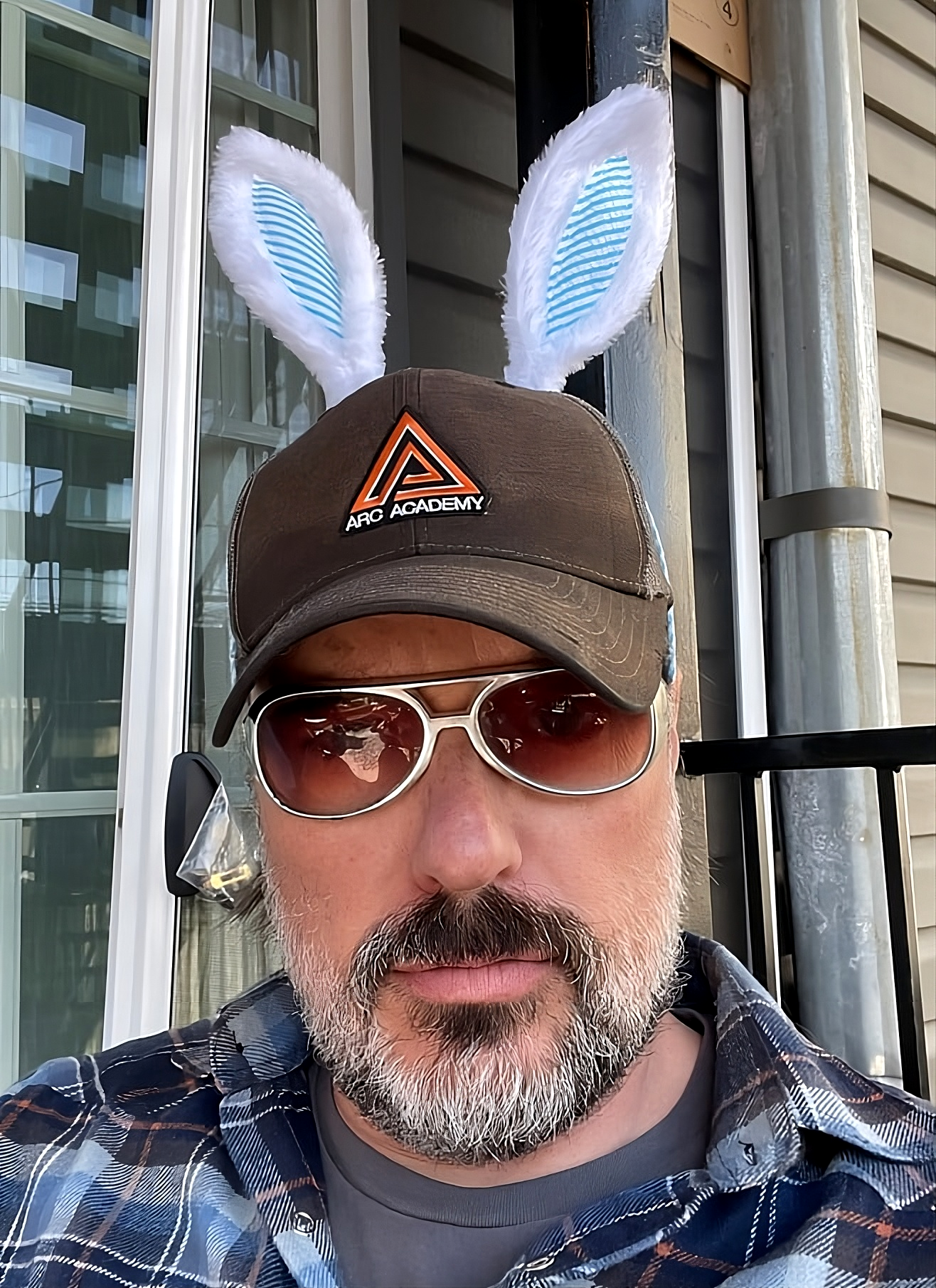
Arc Academy is a Chicago-based metal shop and school founded by Stephen Christena. They offer hands-on instruction in welding, forging and metal fabrication. Their space welcomes anyone interested in learning MIG, TIG and stick welding while building real projects from steel and aluminum.
... and they've got deep roots in the motorcycling community.
Arc Academy blends practical skill-building with creative exploration. It's as much about community and craftsmanship as it is about learning a trade. Today, Arc Academy continues to evolve, expanding its mission to support the next generation of skilled tradespeople and creators.
Did We Miss Sump'm?
Sixty percent of the time, we're right every time. What would you add to the conversation and why? Your input is invited. Leave a comment and/or write an article!
Share Link ...



Thoughts gone wild? Write an article!