
For kicks, check out our FTC disclosure here ...
Cheap 'n' Deep
Team TRO chases mechanical frickin' frack, budget-bike happiness and Joey Dunlop's first Isle of Man homework. Music by Rabid Neon and Otis McDonald. Download our feed here.
Transcript
As legible as we are intelligible ...
Brian: In this episode, we talk about music new and old.
Robin: New and old!
Brian: We recap the Smokies.
Robin: Smokies!
Brian: We grab a baguette from the bag.
Robin: Fuck the Oxford comma!
Brian: And we get cheap and deep.
Robin: Deep!
Brian: That was absolutely ignorant. I love it. Hi, Robin. How you doing, Robin?
Robin: I am good, Brian. What about you, Brian?
Brian: I'm good. Just got back from a great trip. We'll talk about it in a little bit. Okay, under opening announcements, news, corrections, and banter, what do we got?
Robin: Saw a comment on the website that I did not publish. I just deleted it. But the fact was, I was like, that's worthy of a shout out. So shout out to Larry for the typo, double exclamation point regarding, oh, wait, I'll read it verbatim first. I hope this guy talks the way he types. Typo, it route 191, not 491. That's on our Devil's Highway article. If you go to TRO.bike, click on the search icon up top, type in Devil's Highway or Devil highway, whatever you want, you'll see a very long article from the very first time any one of us had ever been on said sphincter clenching dirt road with pavement underneath. What used to be Route 666 in Arizona, aka Devil's Highway, as it were, was relabeled U.S. Route 191, but it is still there. It's still called Devil's Highway. Be safe out there, folks. Bring friends. Bring a tracker.
Brian: There's a good taco stand at the south end.
Robin: Mm-hmm.
Brian: A lot of marbles on that one. A lot of fun. Got to be on your A-game, that's for sure. What's your random song of the minute? Or do you... You said something about Radio.Tro.Bike. What's going on there?
Robin: If you go to Radio.Tro.Bike in your web browser, that'll take you to our YouTube playlist that was supposed to show everything we discussed, but I just like collect all the songs in there. So that's what I've been doing. I got two for you, actually. One came up the other night. Don't Fear the Reaper came on and a friend asked, who wrote this song? Like they were quizzing me. I was like, it's Blue Oyster Cult. He's like, yeah, yeah, all right, cool. But that didn't, that's not the song that I think of when I think of Blue Oyster Cult, believe it or not. The song I think of when I think of Blue Oyster Cult is Veteran of the Psychic Wars. So if you're in the mood for some hyper melodramatic, dark 70s-ish rock noise from the heavy metal soundtrack, the movie Heavy Metal, check out Veteran of the Psychic Wars by Blue Isher Cult. But the one that really dug in to my ear was, This week, got to say, given the mood of the world right now and some interesting things happening in our life here, Pyramid Song by Radiohead.
Brian: Nice.
Robin: But you're leading the show, so you got to up the game. I demand that you not only have a song, random band, Brian. Prove yourself now.
Brian: Random band of the minute. I have just discovered, like this week, a band called Wet Leg from England.
Robin: Okay.
Brian: Isle of Wight, actually, in England is where they're from.
Robin: Oh, she's important.
Brian: Yes.
Robin: Go on.
Brian: So let's talk about the sound. They have a really interesting, unique sound, kind of some stuff I've never heard before. And to this wizened old rock and roll veteran with ringing ears it's really refreshing to me when i hear people and kids you know i mean these are you know these are younger people doing new things with two guitars bass drums and somebody screaming it's as basic as you get it's as old as time but they're doing something new something interesting and they're finding fresh ways to just rock out with the basics i love it very weird very quirky sound you really have to listen like you have to listen to figure out what's going on it's not just three chord blues and you're done and As Robin may have hinted, the lead singer is both insanely hot and kind of scary. Anyway, look up Wet Leg. All you cool kids probably already know about Wet Leg, but all you old heads, all you old rockers, all you old metal heads, you should take a look at these kids and see what they're doing. It's pretty wild.
Robin: Do you have a particular song you approve of most?
Brian: Mangatoo or Mangatoot? You know, make sure you get a video that's a live performance of Mangatoot. It's hilarious. And they've also got some actual videos they put together. Your mom is hilarious. I just think it's creative. They're doing new things. I love to see it. And some of you old farts who listen to Blue Oyster Cult should go check it out.
Robin: That means I got to be hip and trendy next week with something better.
Brian: Oh, I know.
Robin: What else is good?
Brian: Just got back from a trip to the Smoky Mountains, do some street riding down there.
Robin: Damn skippy.
Brian: Three killer days of street riding. What we do is we base in Newport, Tennessee, hanging off the northwest end of the Smoky Mountains National Park. And the cool part about that is this area isn't really known to motorcyclists all that well, so it's not crowded. It's not a lot of that going on. But the hotel, the best western in Newport, we want to give them a shout out. They're fantastic. They've got a huge parking lot, plenty of parking for trailers. Yes, we trailer, we're lame. And I don't have unlimited vacation time. Everybody else I went with is retired. So did around 800 or 900 miles in three days. Met up with our old friend and your friend, Joe, who lives down there now. And we've been going there for years. And we finally gave Joe enough crap about never showing up and riding with us on these trips that he finally showed up. Got to ride with him for a little bit. And again, Tim was able to get some break-in miles and really get to know his new Triumph Tiger Sport 800 with all the touring stuff.
Robin: What's his consensus?
Brian: He kind of likes it. It's all right, from what I hear.
Robin: Do you still have a cigarette dangling out of his mouth?
Brian: Oh, yeah. Like when we're getting ready, you know, that's why he wears a flip-up helmet. You know, got to flip it up, get a fresh one going, and off we go.
Robin: Then close the helmet, let it clam bake the helmet.
Brian: A couple of things we learned during this trip. So one of the couple of mistakes made in the routing, I took care of the routing. You know, I led the rides and all that stuff. None of us really give a crap if we ever ride the dragon again.
Robin: Yeah, no.
Brian: It kind of sucks. You know, you've been there, done that. It's crowded. It's kind of lame.
Robin: It's a trophy for anyone who's never done it or anyone who just doesn't know any better and never got beyond it.
Brian: East of Newport, we're in that area around hot springs and so forth. Helene and all that damage was in the fall of 2024. The spring of 2026, they're still working on it. It's incredible how much devastation there is in some areas.
Robin: Really?
Brian: 19 W is a highway in Tennessee that passes into North Carolina as well. It's an incredible road in the mountains and it's all new because that valley just got scrubbed clean. And it's crazy when you look around there, there's still a lot of damage and you can see where the water was. There's a town called Hot Springs, North Carolina. It's at the northern end of 209. Fantastic road, amazing road. It's got some dipshit name. I don't know what it is. The Rattler or something.
Robin: That's part of Sevens.
Brian: Yeah, 209, fantastic road. Hot Springs is a really cool town, but yeah, it got flooded pretty good during the, in 2024. And the downtown is still rebuilding. You know, they're coming back, but it's slow. It's not a fast process. It's really sobering. So one of the mistakes we made was I kind of had these routes that are kind of like a big stick and then a flower at the end. I don't know what you call those, but where you have to kind of commute over a large area and then you get to some good stuff and ride around and then you come back.
Robin: The dandelion?
Brian: The dandelion. Maybe that's a good word for it, yeah. So we did that from Newport and then over to Gatlinburg and through the park a little bit and then on to the Foothills Parkway, you know, and some other stuff. It's debatable whether it's worthwhile. However, that middle section, the new section of the Foothills Parkway between Townsend and Wears Valley.
Robin: All support is Evans.
Brian: Epic. Unbelievable. believable there's an old section that's from 129 it's kind of you know you come off the dragon in about five miles you you turn on foothills that's been there a long time and then they finally opened up the new section which is an incredible mountain road i mean they should close it down and charge admission i would pay up i mean it's crazy it's so good i'm
Robin: Loading up the sevens route now because i'm wondering how much of the sevens rides did you do you see you already named the rattler.
Brian: We did the dragon stuff yeah yeah yeah Yeah, we came across the park on one day on 441, which sucks because it's all just slow, but it's scenic. So, yeah, you guys probably, you know, you went around on 28, 129, you know, and all that stuff. Came over the foothills and so forth. So then at the end of the foothills, you end up basically right outside of Pigeon Forge, which if you thought Gatlinburg sucked, Pigeon Forge is a degree of suck. So anyway, you got to deal with that. So we're working on that. And next time I think I'm going to put together routes that go a little more north of Newport. We're going to try to avoid Asheville because that's a big suck. But yeah, get a little further east into some of those mountains and maybe not even hit the dragon and all that stuff. Because it's just, we've been there, done that. We all looked at each other and be like, you know, we've been riding down here for 25 years.
Robin: You don't want to shit on it if it's a Monday through a Thursday. You look at Sevens, we're talking about 1,700 miles of...
Brian: Yeah, we were there. We were at the Dragon on Friday.
Robin: Okay.
Brian: So it wasn't bad, bad. And I, you know, we had pretty clean, pretty clean runs. So like we came in that way and then we left that way. We did a little loop on 28, but the construction really screwed that up. That's what, that is what it is. So yeah, we need to figure that out. So, but yeah, there's a lot of stuff where there's very few people out riding. There's no lot of traffic, but getting more into the mountains east of Newport between Newport and Asheville, a little bit north of Newport and stuff like that. So can't wait for next year. We'll get into that. We usually alternate a dual sport year with a street year. So next year for dual sporting, it's going to be interesting. The Foothills Parkway is actually, there's like a third segment that's all by itself over between 32 Cosby and I-40 south of Dewport. And they're supposed to connect that with the other parts. And you can see on maps where the land has been purchased, but there's no construction. So I don't know if that will ever happen in our lifetimes, but it would be absolutely epic. And it'd be a fantastic way to get from, you know, the west to the east. One other note is we saw a lot of car people there. So there was a huge mini rally. So there were mini Coopers everywhere around the Dragon area. And then we also saw the Fast and Furious guys. And they're all, I don't know why they do this. They're like absolutely nose to tail. They're maybe six feet from the car in front of them. or they go driving anyway in these big conga lines. I don't, you don't know why either, do you?
Robin: Well, some of it's just like tourism. I think there is a service nearby that allows you to rent supercars. Where? I don't know.
Brian: Could be.
Robin: But, We were, I've still, I've told this story before where we took a break in the middle of North Carolina, in the middle of nowhere, one of the legs that just sort of pops off of the Blue Ridge Parkway there out in the middle of nothing, just standing there, taking a break. Travis rolls in on a single disc on his NC700X, pours water on the caliper. You can hear it boiling off. So we're taking a long break. And then all of a sudden we hear all this pop, pop, pop, pop, pop, pop, pop, pop, pop, pop, all this noise. So out of nowhere, there's a Bentley, Koenig-Sig, a McLaren, I think it was a Porsche 911 GTR, their Le Mans race car type thing.
Brian: Oh, okay. Yeah.
Robin: A CLK and then a Rubicon. And I would say the Rubicon was the poor guy, but the thing was the Rubicon that actually meant Rubicon. And they drove by, nobody spoke and we kind of watched and they went up the hill and then somebody looked at the others and we're like, well, that happened. Yeah, back to absolute silence.
Brian: We're probably having more fun anyway. So, yeah, we did see a batch of German. So they tend to cluster by nationality for some reason. And we saw a batch of German cars go by while we were stopped, you know, letting people smoke and pee and all that. Yeah, a few miles later, there was a BMW car had like, like, I don't know why it wasn't that, you know, wasn't there was nothing challenging going on in that particular place. But anyway, they decided to spin out, and there's oil all over the place. I don't think anybody was hurt, but the airbags were popped, and the car was definitely done for. And we were far from sell signal. And I'm like, good luck with that. I guess you got plenty of help. Bye. But yeah, overall, great trip. We had great weather. It was a little bit cool. Most of the time. So it wasn't sweaty. So that's always good.
Robin: While listening to you talk about these things, I was just in Ride With GPS, my preferred route planning and mobile navigation turn-by-turn directions app. And I just went to load up Trip 7s. And when I look at Trip 7s in the column view, I can see the line. I can probably use it on my navigation app. But when I tried to load it to figure out where you were in terms of roads you had ridden that were in relation to the trip sevens tour it doesn't show the line it shows all the stops gas and food and lodging but it doesn't show the line and then i looked at the distance i think it was still loading but look at the distance markers it said starts at zero miles ends at zero miles so i may have to have a little chit chat about that issue i'm not sure what's going on fortunately i believe i already have the gpx file downloaded so god forbid i should have to switch over to osmond and for our listeners if you need a fallback for voice turn by turn whatever not that everybody wants that kind of thing if that's your sort of thing that's the what is it brian if that's the sort of thing that's your sort of thing that's.
Brian: The sort of thing that's your sort of thing it's the sort of thing that you might find to be your sort of thing
Robin: Osmond will give you the same thing for free but it's a little more convoluted so.
Brian: Next up we normally have listener questions or questions from the wild and inspiration did not strike our listeners nor did it strike us start the french music We're going to do the alliteration grab baguette and see what we get.
Robin: You got one, two, three, four, five, six, seven, eight, nine. Number nine. Esclamation points after baguette. Well done. In many T's and many E's.
Brian: Is it alliteration or assonance? I don't know. Anyway, it's alliteration and assonance grab baguette. So I'll generate a random letter unless you want to do the honors.
Robin: I don't work. Not when it's your turn to work. I sit.
Brian: We're spinning, we're spinning, we're spinning, we're spinning. And our letter for the week is F as in F word. All right. So the alliteration grab baguette for this week is F equals fricking frack. When you have to helicoil, the helicoils helicoil. So I'm guessing we're talking about those disasters, mechanical stales, those things that make you say naughty things.
Robin: Oh, that's the only thing that's there. It could be anything. So it's when there doesn't need to be a problem, but don't worry, you can make one happen. I know that I wrote the helicoil thing from that time that one of the machined torque screws that just holds a plastic cover over the ignition coils on my previous bike went in diagonally and just augered everything out. So then the gap in communication between Brian and I left out a few very real and very important details about my power drill.
Brian: Yes. Yes, it did.
Robin: I may as well have gone at it with wood screws.
Brian: Stop just grabbing the damn switch. Oh, it's not variable speed.
Robin: There's an episode of The Simpsons where Homer jumps into quicksand. And then I think Marge or somebody else says, Homer, that's quicksand. And he says, that's okay. I'll just pull my feet out with my hands. And now I pull my hands out with my face and bloop and just buries himself in a quick. I've seen this happen to people. I can promise you it's happened to me before where just the domino effect of misfiring reason just arrives you at. And now you don't have a machine anymore. Welcome to the roadside, right?
Brian: Yeah.
Robin: What are your thoughts on this?
Brian: Two things. One of them is when you're doing a valve check or you're reassembling or whatever, where you have to remove the camshafts, there are these little things called dowel pins. They're like a little hollow, precisely made pin. And what these things love to do is come out of the cam cap that they're in. They like to come out of the part they're in and they like to go down deep into your engine, into the depths and the bowels of your crankshaft. And you can't just leave it there. You have to get it out. This has happened to me more than once. I've been very fortunate to be able to fish it out again with a magnet. There was bad language. There was despair. There was touch and go. It was a bit dicey. Second thing is, and this has happened on multiple motorcycles, looking at you, Suzuki, is the crispy critter effect where, oh, here's a bad connection. Here's a fried connection because Suzuki likes to use cheap, crappy connectors. Even on their modern bikes, they like to use cheap, crappy connectors and overload them with electrons. Oh, here's the problem. No, no, no, no. here's a problem keep digging i think the last one i worked on and it was again it was a fairly new suzuki boulevard what
Robin: Is your problem.
Brian: It has just had to keep digging because you know the stator connectors were roached and then there's another connector that connects the stator connectors to the harness for the regulator and those were roached you just had to keep following And then finally to find all the, all the little crispy carbonated critters among the connectors. And it's just like, come on, Suzuki. They've done this for five decades, at least they had the same guy working on the electrical design or something. I don't know what's going on.
Robin: If you found the problem and you think that you've arrived at the entirety of it, you found the starting point. It's, it's the fitted sheet on the bed. You have not pulled the entire sheet until you've pulled the entire sheet. That problem ends somewhere and you need to understand both sides of it. Marshmallow wires.
Brian: It's a little bit like when they take x-rays and they send the image to a radiologist. They don't tell the radiologist anything. The radiologist, she's supposed to look at this image and say, what do you see that's wrong and right here? And describe what you see. you have to really go in like you're looking for problem A, problem A, problem A especially when you know on the older the motorcycle the more overlapping multiple things you you have so especially when you work on an old bike you just have to like okay here is the here's the x-ray look at this and tell me what's wrong okay well there's a broken bone here that's obvious but over here there's a you know there's an enlarged or something you know that you have to keep looking there's
Robin: A mass of suzuki infecting it yeah.
Brian: It's all fixable but you have to know about it. The big freaking frack has been that onion you have to peel.
Robin: Once you buy into a brand because you've decided you wanted to buy that particular machine, you do learn these things, but it takes buying into that brand to eventually understand them. Am I afraid to buy a Suzuki? No, because I know this. I know what you are describing. I understand that. It's also one of those things where if you wait long enough, and affordability is not necessarily a factor. These bikes are pretty affordable. But whatever it is that they installed, it's always one shelf above worst. We're swapping it out for something significantly better or halfway to significantly better is a drastic improvement worth investing in.
Brian: Nice.
Robin: This is a fun thing to war story through, But there's also a positive side of this is that when you buy the bike, know the reputation of what their pitfalls are. You got the top side, you got the low side, the goods, the bads. And then if you know enough about the bads, how to address them, then there's kind of a system for that too. Case in point, braided lines, you know. Or, you know, I actually like my Showa suspension. It's completely non-adjustable. And I don't have enough brain power to care. It just makes me happy to ride the thing. And I'm good. I know that when I replaced the stock seat with the $800 Corbin switch out for both rider and passenger, I'll take a seat on it and I'll know. But ignorance is bliss can apply if you know what you're doing to what you purchased. In the case of what Brian's talking about, that ignorance won't be so blissful if it starts to crap out on you. But knowing that it's going to is something you can probably kind of ready yourself for. So it's still worth it.
Brian: This came from a text that I got while I was on the road. I was in a pickup and we were on the way back from Tennessee to Indiana. I thought it was a really interesting question. And we actually chewed this over quite a bit because there's nothing else to do when you're driving through Kentucky. I'm going to call it hyper hypotheticals. And so this was the question as I understand it. And you may need to correct me on this.
Robin: Go on.
Brian: The premise is such, never mind what happened, but gun to your head. If you had to buy and live with just one brand new motorcycle, not used, brand new, got to buy it, what's the cheapest one you could be happy with? Was that the question?
Robin: That was the question. I will add to it and say, what is the floor?
Brian: Absolute floor.
Robin: You're personally invested in the purchase. You're willing to do it, but it's the absolute rock bottom floor of what will make you be like, yeah, I'm happy and it'll do.
Brian: I'm happy enough. And so you immediately dive into metaphysics with, what is happiness? What is the meaning of happiness?
Robin: What is quality?
Brian: Yeah. And then we go crazy. So you have to think about what you need a motorcycle to do at the absolute minimum. What do you need in order to get through life with a smile on your face occasionally? And the biggest one for me is thinking about, you know, do I want it to work on the dirt, the street, the track, or all three, you know, which is incredibly rare to get. And how you're using it, you know, whether you're just getting back and forth to work, whether you're going to the grocery store, whether you need long-distance highway travel to be in the portfolio, that's a tough one with some of these. And a big one is you just have to be honest and look inward, grasshopper, and decide how much power do you need. Ohm. Ohm, yeah. And the other part of this, okay, you think about happiness. You think through the metaphysics. What does the word cheap mean? So I kind of arbitrarily set a ceiling of $10,000, and most of the ones I was talking about are well under that. Some of them get pretty close. So we had to ponder that a little bit. So for me personally, maybe not so much Robin, the question is, can I do without dirt?
Robin: Oh yeah, because you're only buying one. I didn't think about that.
Brian: So if you're buying one, for whatever reason, your life has become a tabula rasa, a blank slate and a piece of paper. You have nothing else except I've got a credit score that will let me get one new bike and then I can build from there. That's kind of the thing for me I found is I would have to, kind of give up i would have to give up dirt except under some circumstances where i would have to badly compromise street or maybe even track so and one of the things i'll say right up front is everybody's going to say oh you need to get a klr 650 well i don't like the new ones i've got an old one i think it's great i've done god awful amounts of work and money on it to make it into what i want a pretty decent off-roader yeah
Robin: I'd rather road warrior a dr.
Brian: Yeah so it's kind of, I think the newer ones are just too big, too heavy. They've got all this plastic that's all delicate. You know, there's no protection.
Robin: Rubbermaid.
Brian: Rubber made would be an improvement they're the fuel injected they're complicated that's kind of off the table I'm not really interested in a new KLR although a lot of people are a lot of people should be it does a lot of things well enough that kind of thing so anyway let's get into it first thing on the table is we're going to go cheap or we need to look at like Chinese we need to look at CF moto so CF moto is probably the best of the crop of Chinese manufacturers out there and i got a link here so the obvious one that does include some dirt capability is the ibex 450 it's 44 horsepower it's 6400 6500 bucks so it's pretty reasonable for some 44 horsepower which is more than a klr which is a lot less than any street bike but it can do street it can do dirt track days would be kind of hilarious because it'd be so slow for that it might be doable i don't know i
Robin: Think it would be your turn and just changes a lot.
Brian: Yeah I can picture Blackhawk on Nobbies. I can see that happening. And then if you look a little closer at their website, you'll see that the 450NK, it's the same engine, a little more power, a little retuned, 50 horsepower, and a naked bike for $53.99. So $1,100 bucks less. $5,400 bucks, you get a bike that's 50 horsepower and a twin. It can do street. It could do a track day like at a small track. Can't do dirt, that kind of thing. That's kind of interesting. If you really needed to be as cheap as possible, you could get by with that. With each of those, I would really miss something. I looked at some of the others, Suzuki, Yamaha, Triumph even. The rock-bottom new bike at Suzuki is the 2026 model is the SV650 ABS, but that's $8149.
Robin: 2026 SV 650. They have not changed it beyond that. It's the same good news for everybody who owns an SV at this point because, It's the current generation, but that trellis frame and that entire setup is identical across the board. Parts forever.
Brian: Parts forever. A lot of fun. Obviously, it would be a great track bike. Obviously, it'd be a great street bike. 70 horsepower, which is plenty to be entertained. And the other option here with Suzuki is $1,100 more gets you on a GSX-8S, which is kind of the naked version of Robin's bike, the GSX-8R. So, $9,249, 83 horsepower. and, as I put it, pointy penetrating prominent proboscis.
Robin: That!
Brian: That's getting dangerously close to 10,000, but 92.49, he could be pretty happy with that. And the thing is, Robin has already kind of been through this exercise and ended up with the GSX-8R.
Robin: It's true.
Brian: Yeah, like you've already had this conversation with yourself, and that's where you landed. Money versus capability.
Robin: Yes, and comfort and maintainability, and access and simplicity, modular, what power do I want? What handling do I want? If you start with the rider, where do you want to be seated? And then beyond that, it's like, what am I going to go through as an owner of this machine? So far, it's been okay.
Brian: Yeah. Yeah, that's one thing. Like, I don't know what the ergonomics are of any of these. You know, an SV650 just may not work for my legs and knees. I don't know yet. On the Yamaha side, the 700cc engine really is where you land on this, the MT-07 XSR 700. They're both $85.99, getting pretty high there, 74 horsepower. Both are great for street track, no dirt. The Tenera 700 would be really in my happy place, but it's about $11,000. It's $10,999. So then you just have to choose between modern or retro styling. And I'm thinking retro, the XSR, it's got to get the nod here. If it had to be Yamaha.
Robin: It's a very easy to adapt bike.
Brian: Yeah. Well, the XSR has a round headlight, but it's a weird LED thingy. I think you'd get used to it.
Robin: Sure.
Brian: And of course, the Yamaha has the, if you're really, I think we're going to start seeing a lot of those R7s on track. The sport bike based on that same engine. it just makes a lot of sense and the pricing makes a lot of sense i think just real quick here triumph has the trident 660 at 89.95 94 horsepower and all the that triumph detailed goodness that they have the stainless lines the quick shifter you know triumph gives you a little more content a lot of ways so that bike's a hell of a bargain but that's that's pushing the 10k limit a little bit. 94 horsepower, plenty for anybody to be happy with, I think. I rode, I didn't ride a Trident, but I rode the Tiger Sport 660 and it's a fantastic engine. One of the interesting ones I spotted was a Honda CB750 Hornet. And what's interesting is for 2026, they only offer that with what they call the E-clutch. Oh, I'm not entirely sure what that is, but basically you don't need the clutch lever. You shift and the bike handles the clutching bit for you. I don't think I would like that. I don't think I could be happy with that.
Robin: And in fact, I don't want anything that I don't understand right out of the gates. We've invented another new clutch system that's engineering for engineering's sake, or we think it's going to cater to the Americans that don't want to learn how to use a clutch. Dear America, read a book, then also maybe learn to drive a stick shift car. That's all I'm asking for us to improve. We can improve the state of the nation with those two things. Go get three books and start reading one of them and learn to drive a stick shift car. Have a nice day.
Brian: Robin's rant for the day and and the thing is in 2026 it looks like the e-clutch is mandatory on the hornet this year but i think last year's model had a standard clutch so it's weird how they're kind of moving that around it's kind of it's kind of odd why
Robin: Are we even still talking about this it's not on the table.
Brian: Last i'm going to talk about is the kawasaki kle 500 it's getting a lot of press, 6599, 51 horsepower, which is more than a KLR. Okay. It can do, it can do mild dirt. You know, you don't, it doesn't have the ground clearance or whatever to do gnarly, gnarlesome stuff, but you can go bomb around the dirt roads, KLR style, just fine. Fairly lightweight, Yeah, the only thing that would be lacking, it'd be a little tough on a track, but then again, it could also be just a lot of inappropriate fun to go to a shorter track day and just pass people while you're on knobbies, give them those hang loose while you're leaving.
Robin: I like that one a lot, man. That's a good-looking machine. Properly ready for some entry-level ADV, as it would be in my case, but just a cool... It looks capable.
Brian: It can do a lot of things. And, you know, nevermind the Kawasaki's imagery with the rally rider and so forth. But, yeah, there's a lot of interesting things about it. And if you don't, if you're not bombing, I mean, it'll do 80 on the highway. A KLR will do 80 on the highway and it has, you know, 15 less horsepower. It can do it. It probably won't like it. And the other thing is I think the KLE will have a lot of accessories available. I think these are very popular. I think they are and they're becoming very popular. and I think they're going to get a lot of people putting luggage on them and stuff like that. So that's part of it. Same with the SV650. You can get anything you need for them. They've made them for years. They really haven't changed much. You know, something like a Triumph, maybe a lot. CF Moto also has a lot of accessories popping up for it. They're pretty popular. People are taking the money they saved and putting it in the Farkles.
Robin: Disco balls.
Brian: So if you did not end up with the GSX-8R, where would you be? You did this exercise.
Robin: I, yeah, sort of.
Brian: Part of it.
Robin: Let me correct you a little bit on that one. I was still definitely involved with the R1200RS. That bike had done me no wrong. I had sculpted it into my own. Over the course of owning it, there were a lot of things where I was like, am I happy with this bike? Yes, I am. And then every now and then I'd put on a fresh tire and a weak layer. I get a notification about my TPMS battery was gone bad and you can't swap out the batteries and have to order the eBay version because the news were like 125 per wheel or some atrocious. I don't know if that was combined or not. Or like the fact that, no, you can't replace the heated grip gels that wear down from your hands. Can't do that. You have to buy the entire heated grip system, which is about $300 a day.
Brian: So BMW ownership is kind of a thing, isn't it?
Robin: Kind of a thing, especially if you get all the fixings, because it's just more stuff that can break. And I had always collected my thoughts on this over the course of ownership with that. Every bike from then on is going to be a modular build. So... Do you want the jib jorb shabadoo? No, I do not. I want the bare bones machine. I want it to be made of Legos and Lincoln logs.
Brian: And I'll take it from here. Yeah. Yeah.
Robin: I got this right. Nice. So when I arrived at this state of mind, which was basically the day after I bought it, though, I was still like, I'm going to live it up with this thing for over 117,000 miles. All of a sudden, sitting down to record an episode of this show with my then co-hosts, Travis Burleson and Tim Clark, one of them popped up the image, and they said, hey, Robin, they just knew, check this out. And immediately I was like.
Brian: Dreamweaver.
Robin: Yeah, Dreamweaver.
Brian: Swing.
Robin: I was like, I'm going to have this bike. And here we are.
Brian: You didn't go through this process. You went through a different process.
Robin: Very different process i looked at that bike and i said that bike i want the base model and injected bike of course but i definitely want the abs which i think it came to stock anyhow everything beyond that i don't care base model i knew i could turn it into a module build so when this episode tonight started i remembered that i needed to come up with an answer and i remembered that I had, that I had like three on the docket, and then I realized, no, there's only one answer for this, for me personally. One bike, one bike only. We're not talking about an apocalypse. If we deal with an apocalypse, that's a different conversation. We should discuss that at some point. You're stuck with the post-apocalyptic motorcycle. Which one's that going to be?
Brian: Zombies going to eat you. What you're going to ride? Yeah. Okay. Yeah.
Robin: Different question. Maybe the Ibex.
Brian: Yeah.
Robin: Tenere 700, something like that. We're recording this in 2026, so I'll say it that way. 2026 Kawasaki Ninja 650 ABS in lime green. The most Acme motorcycle that I could possibly pick is, strangely enough, my preferred riding posture. It's not an RR in any way. It's a straight-up modern standard with a slightly forward tuck. There's not a lot of work to it. It's just such a simple machine probably simple access they're probably going to make it forever i'll always have parts that's the one i'm going with 650 and how many horsepower it's like 59 what was it i saw the the stats 67 60 67 67 to 68 horsepower at 8 000 rpms parallel twin it's just a good looking piece of bullshit that i know somebody out there is like 8.
Brian: 200 bucks according to kawasaki.com.
Robin: That's what I'm looking at right now. But I would say challenge accepted if we were going to go write some twisties on this thing. That's it. That's my answer.
Brian: Good to know. So do they have a naked version of that? They have a Z650.
Robin: Naked Ninja Kawa. I need to put Kawasaki in there. Otherwise, my search history will show up. We don't need to talk about that.
Brian: They've got the Z650, which is a naked version for $76.99.
Robin: Sure.
Brian: So that's interesting.
Robin: I'd like a windshield and a full fairing. You like a naked, you want clean air.
Brian: Yeah, I want air up my nose. That's interesting. I didn't consider that one. That could be very livable. Again, street track, zero dirt.
Robin: It's just American cheese made in Japan. High calcium.
Brian: There's also something like you went from a bike with 100 and whatever the hell horsepower to a bike with about 80 horsepower.
Robin: Changed nothing.
Brian: And so, yeah, some people are like, oh, you got to go bigger and a hundred horsepower. And it's like, no, you don't.
Robin: I need an $800 seat. That's what I'm going to be buying next for this thing if I get a chance.
Brian: So you're saying your butt hurts.
Robin: I just wouldn't do an iron butt or a tour. I wouldn't do any straight line distance transport on the seat. I wouldn't try to get to your house from New Mexico riding that bike without a seat upgrade interesting but as far as riding the twisties now man I'm busy working you know moving around all good lap.
Brian: Times are probably identical I've chased you on both bikes and there's no difference
Robin: Just us doing our thing yeah I do feel a future bike being another big badass aerodynamic sexy true-to-form low-angle sport tourer, but it will be a base model. And if I can get them to replace the forks with stumps of wood, that's what I'll start with before I start turning it into my machine. Won't be doing the ESA ever again, any of that shit.
Brian: Interesting.
Robin: Are we ready for...
Brian: I'll work with you.
Robin: It's that time again, and we just need to make sure we're filling enough words in to talk while the music gets started because Jordan's on his way. It's time for us to have another sit-down, perhaps a little bit more diagonal than usual, because, you know, good wine, strange liqueurs, whatever he's got in the bottle that happens to be next to him, who knows, it might be urethane. But the point is, I know he's sipping on it, and I know he's chipper about it, and it's time for Jordan to talk to us more about the history of William Dunlop and his amazing career. You ready for this, Brian?
Brian: I'm ready. Let's go for it.
Robin: Take it away, Jordan.
Jordan: 1976 is an important and noteworthy year where Joey won a 250cc race at the International Northwest 200, and Joey got his first international podium, taking third behind Ian Richards and Tony Rutter at the Northwest 200. So this is an international podium for him. So in 1976, he's campaigning a 500cc Yamaha TZ500 in addition to his 250cc and 350cc Yamahas with Ray Racing. Joey took the 500cc Irish Championship. He wins every round he entered and he was completely unbeaten at Mandelo Park. Tandegree, he took first place. These are the first place wins in 1976 in Northern Ireland, in Ireland. He won at Mandelo Park. He won at Tandegree, first place. First place at the Scurries, which is some Irish word. I used to think it was Scarborough, but it's not. It's the Scurries. Bagadoui is another race course he wins first place at. He takes first place at Kirkostown and at Dundrad, he took first place. And basically, he seemed unbeatable. And now the worst of the world is starting to take notice, a little bit. He's setting lap records at these race courses in the process. He competed and won at jerby and the southern 100 meet on the isle of man again not the main mountain course but he would eventually win the high record of 40 wins on the the southern 100 course on the isle of man so you know he won 26 times at the isle of man mountain course he won 40 times on the basically the mini the golf cart course or whatever the four and a quarter mile course uh and at that time he beat Ray McCulloch, which was his hero of the Dramar Destroyers, fair and square for the first time in his life. That's 1976. On the UK mainland, Joey wins at Croft in England and took first place in Scotland at East Fortune. So these are, you know, he's not just winning in Ireland now, and now he's winning in Scotland and England. Despite his successes, he wasn't getting rich because the purse at these races was maybe 20 or 30 pounds UK per win. He's doing it for fun still, You know, and he's got some sponsorship. He's probably making more money with the sponsorship than he is from winning these races. Restaurants make money on Saturday and Sunday, and they pay the overhead on Monday through Friday, right? That's what they say. So the most significant event of 1976 was Joey's debut at the Isle of Man TT. He did race at the Isle of Man TT in 1976. This is his seventh year of racing, technically his sixth year of actually racing, because like we said, 1970 was a dud. In 1972, it was barely anything because he just got married and started trying to make kids. The Isle of Man TT, 1976, was considered the British round of GP racing until 1976. It's a 37.73-mile-long race course. On the Isle of Man, it's got 300 corners and has all the hazards of everyday roads. There are no safety features, just stone walls, houses, trees, street signs, bridges, and you're on your own. It's considered to be the most dangerous race course in the world. And in 1976, this is an interesting side, Giacomo Agostini, Barry Sheen, and Phil Reed, who actually won the race in 1976 petitioned and said that the race was too dangerous. Phil Reed, they considered him to be a hypocrite for voicing against the TT racing and said they stripped the Isle of Man TT as being a GP race. And so they had to promote it in a different way. They switched the British GP to Silverstone, which is in England, and that was all pedigree factory race machines, and so the Island Man was going to stick with the semi-production thing, all right? We're not having machines that the regular run-of-the-mill guy can't buy, close to stock, resembling stock, as we say. The course was stripped of its GP status due to the racer protests of these three, Giacomo Agostini, Barry Sheen, and Phil Reed, and it was replaced by the British Grand Prix at Silverstone in England in 1977. I think there was something political and sketchy about that. I think they were all in on it and somebody got paid, you know, just to move it to Silverstone. It's just too sketchy. And they've been racing the Isle of Man since 1907, I think it was. And all of a sudden they lose their credentials. Many Isle of Man TT fans thought that Phil Reed was a hypocrite for voicing against the TT after racing and winning there in 1976. And as a result, after he spoke out publicly, after winning this race, the Isle of Man police would chase Phil Reed's Rolls Royce off the streets when he parked it in front of their hotel and saying, there's a feeling about here, meaning that If he left his Rolls-Royce parked on the street, something bad might happen to it. Because they just, you know, he basically just took away their main pastime there. In addition to that, some of the gas stations refused to sell Phil Reed gas for his Rolls-Royce. You're not welcome here, effectively, right? Some local Isle of Man residents even threw stones at him. It got ugly. Still, the tourist trophy races carried on without the championship points, and it became a specialist event for pure road racing. It still felt like GP racing, and everybody knew that the Isle of Man lap record by heart Like every year you knew who the top lap record was. And so until 1976, the lap record of the Alamanteet was held by Mick Grant at 109.82 miles per hour, average speed. And that year it was beat in 1976 by John Williams at 112.27 miles per hour. This is 37 some plus miles where the average speed was 112. and 12. And he's going over bridges, hard left and right hand turns, You know, downhills and uphills and whatever. And in the mountain area, his average was a buck 12.77 miles per hour, right? And this is a number that eventually Joey's going to beat. But this is Joey's first year of the Isle of Man. And really, nobody wins their first year of the Isle of Man, no matter how good you did in Northern Ireland and elsewhere. It's cutting your teeth, getting your chops. Joey didn't make the lap record on his first go at the mountain course of course but the first time joey raced the course on his 250 cc yamaha and he didn't even know the course yet and it was in the wet so it was raining okay and they're still racing in the rain he comes up on vala crane which is a area in the race course and he doesn't know where to go left or right so he actually has to slow down to let experienced racers pass him to follow them to find out where to go and then he passes them again once he figures out, you know, the race course. So this is how you end up 18th at your first Isle of Man race because you got to stop to let these guys pass you. Oh, we mean to go right here, right? I mean, he just didn't know. I mean, if you got to go by seeing a pub in Northern Ireland or England or somewhere in between, you're going to be rubbernecking because there's pubs everywhere. After his first rate, he would go out there at night in his car, like we Try to learn the course better. And he'd do as many laps as he could before sunrise. And so after Joey learned the course, he takes out his friend, Johnny Ray, which is the guy, his sponsor, out in his Ford Mondeo. And Joey now knows the course. He learned it. He's a savant for learning courses. And he takes his Ford Mondeo out, going full speed, downhill into Balacrane, smokes the brakes, so his brakes are no longer any good, and failed. He would make this annual habit of taking random people out in his car at night on the race course. He called it the late night lap treatment, right? So you find yourself in the passenger seat of Joey's car going, you know, a hundred some miles per hour around the Isle of Man after several beers and shots. And to him, it was just fun and games. And he scared the shit out of Johnny Ray. Literally at this one point, he turns off the headlights because he knows the course so well now. This is Joey. You know, he's a local boy. He is a good old boy. He's Bowen Luke Duke, right? But he's from Northern Ireland, right? But I mean, for the passengers, it might as well have been a reason to break out the handy wipes, if you know what I mean. So he did the best he could at his first year of the Isle of Man, and the best he could do was at 18th place in the 500cc race on his TZ500. He did a 16th in the 250cc race with a maximum lap speed of 102 miles per hour. So he was still 10 miles per hour short average of the fastest lap. But, I mean, for his first year to do that, That's fine you know his first year there but he loved the experience and he said he'd definitely be back so he went and all he did all these things he's with the armory armada frank kennedy and merv robinson they all come back and his brother jim jim uh dunlop and you'd think nothing big of it because you know they didn't win anything but this is northern ireland they need something to cheer for and they have these local guys they just did the isle of man and they're freaking heroes right and they come back and he was shocked by the publicity that it generated. He called it back home in beer-soaked Northern Ireland in Ulster. The Armoy Armada had become so popular that Joey's sponsor, John Ray Racing, decided to take out ads on local buses to raise support, and there was lots of friendly rivalry between the Armoy Armada and the Deromara Destroyers. The 1977 season was Joey's eighth year of racing, not consecutive, as I said. David Wallace was there to capture it on film, and Joey's accuracy was legendary. When locating a place to film from at a jump over a bridge, David Wallace stopped to ask a race fan nearby where he should set up his camera. The race fan answered him, and it's basically summed up Joey, that he was just this disciplined. Seeing dozens of racers on this race course, he says, they land all over the place except Joey. Wherever you see Joey land on lap one, you could put a coin down on the spot and he'll hit it on every lap after that. So imagine that. He's jumping over a bridge and these guys are flying all over the place. You could never guess where the front wheel is gonna land after jumping over this bridge. And every single time Joey's front tire lands exactly the same spot. That's how Joey raced. Joey was fast and fearless, but he didn't fall off that often. You can't afford to fall off. You're pretty much paying for everything yourself. Mervyn Frank did most of the falling off, and both of the latter spent most of the 1977 season on the sidelines. Joey had to carry the flag for the team. At the 1977 Cookstown 100, Joey beat Ray McCulloch, Joey's hero again, fair and square, in the Premier 500 race. Until then, being ahead of Ray McCulloch made Joey think he was in danger. So it is at this point that Joey's actually beating Ray McCulloch, and it scares the shit out of him. Because if he's beating Ray McCulloch, he's in his mind doing something really fucking dangerous.
Robin: Every word of that was worth it.
Brian: Excellent. Back when men were men and sheep were scared. Yes.
Robin: All right. Afterwards, I don't know what we're going to talk about next time. It'll be a surprise. We'll make it good. It'll be great. Whatever it is. Maybe we'll do an article read if I have to figure something out. Whatever. It's okay. We'll make something good happen. We'll keep you all entertained. Maybe we'll get deep into tires.
Brian: Oh, cool.
Robin: You all set to go?
Brian: Let's get out of here.
The Gist
Brian comes back from the Smokies with three days, 800-ish miles and a Newport base that beats the usual tourist circus by simply not being Gatlinburg. The Dragon gets demoted to been-there hardware. 19W, Hot Springs, NC 209 and the new Foothills Parkway section earn the good ink complete with Helene damage, dandelion-shaped route mistakes and car-club conga lines.
Robin turns the correction desk into Devil's Highway housekeeping, then lets the episode wander into brand loyalty, modular motorcycles and why BMW ownership eventually teaches a person to fear heated grip replacement costs. His cheap-bike floor lands on a [listen and find out], an Acme motorcycle with a full fairing, sensible power and enough parts-bin honesty to stay lovable.
Jordan brings Joey Dunlop to 1976, where the wins multiply faster than the money. Joey takes the 500cc Irish Championship, wins at the Southern 100, beats Ray McCulloch and arrives at the Isle of Man TT just as the course loses GP status. He finishes his first TT by learning the wet mountain course the hard way, then graduates to late-night lap treatment in a Ford Mondeo.
Announce, Acknowledge & Correct
"Larry" caught the Devil's Highway route number typo: U.S. Route 191, not 491.
Kit We're "Blatantly Pushing You To Buy"

Complete 348-Piece Set: Includes everything needed for professional thread restoration drill bits, taps, wire inserts, installation and break-off tools. Covers both Metric and SAE sizes, providing a one-stop solution for repairing stripped or damaged threads in metal components. Premium HSS Drill Bi More ...

4 Set Package: Package comes with 1 piece telescoping magnetic pickup tools in 15 LB ( from 7 inch to 30.5 inch), 1 piece extendable magnetic pick up tools in 1.5LB ( from 5 inch to 25.4 inch), 1 piece 20 inch Flexible Magnet Pick-Up Sweeper Bendable Retriever Stick, 3 x 3 inch Round Magnetic Parts More ...
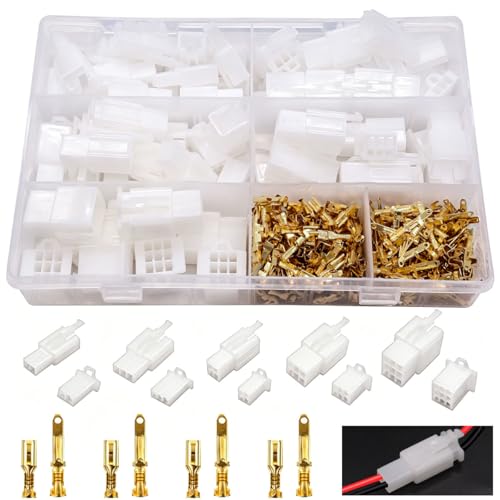
Product material: the white automobile connector is made of high-quality insulating plastic, and the pin plug is tin-plated copper, which is wear-resistant and durable. Specification: terminal width: 2.8 mm. Connector pin size: 2.8 mm. Product features: with a fixed hook, the installation is very co More ...

Customer Service: KAIWEETS provides a lifetime after sale service and technical support. This digital multimeter is included with 2 AAA batteries (pre-installed), comes with a carrying case and 2 decent cable leads. Multi-Function: This multimeter can test AC/DC Voltage, DC current (Can not for AC c More ...
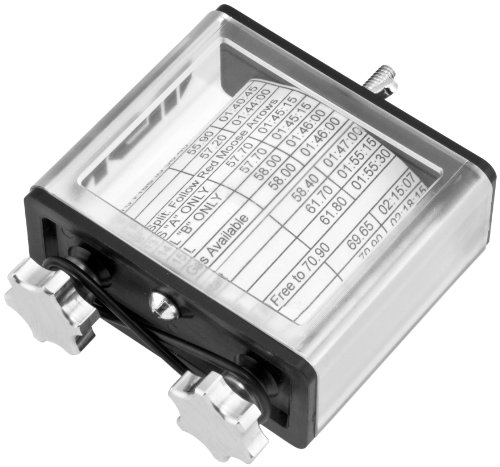
Enduro Engineering Side Load Route Sheet Holder Black Dual Sport | 14-053
Versatile Mounting Options: Two styles to choose from, snap on top or side load design for flexible installation. Designed for Dual Sport and Enduro Riders: Suitable for any dual sport or enduro enthusiast looking for reliable route sheet storage. Durable Construction: New side load design features More ...
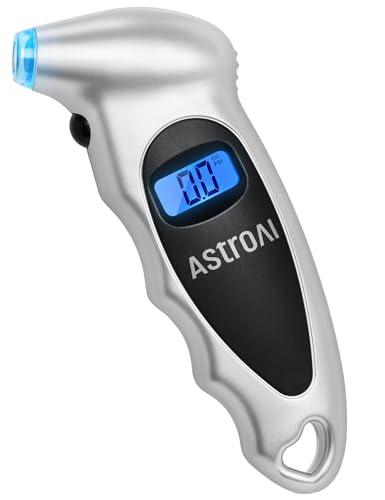
Accurate, Dependable Readings: Factorycalibrated to 1 PSI, so you can confidently match your vehicles recommended PSI (check the door jamb sticker). Ideal for monthly checks and road trips consistent results every time, cold or warm. Bright Backlit Display & Nozzle Light: The illuminated nozzle help More ...

Direct Fit for 20092023 Harley Touring & Tri Glide: This motorcycle seat compatible with most unmodified 20092023 Harley-Davidson Touring and Tri Glide models (Road Glide, CVO Road Glide, Street Glide, CVO Street Glide, Road King, Electra Glide, Tri Glide Ultra Classic). NOTE: For 20092022 Tri Glide More ...

6000 lbs Assembly Break Strength - Heavy duty recessed D ring tie down anchors are made of high-strength steel with zinc coating for rust and corrosion resistance. Premium materials and solid construction ensure reliable strength and durability. Each D ring has a 6,000 lb break strength for cargo se More ...

Powerful and Fast Tire Inflator: The AIRSURE tire inflator portable air compressor delivers 150 PSI30% more powerful and 3X faster than standard tire pumps. Quickly solve a sudden flat tire or low pressure. This portable tire inflator for car restores tires in minutes, saving time and ensuring safet More ...

1. Ultimate Protection from Water:EMSEEK IPX8 waterproof map case Waterproof up to 10m, designed to keep your A4 size maps, Boating Paper/Documents,13 inch Tablets and eReaders,documents, Cosmetic and other valuables safe and Dry from any water damage, whether you're hiking camping, hiking, camping, More ...
Did We Miss Sump'm?
Sixty percent of the time, we're right every time. What would you add to the conversation and why? Your input is invited. Leave a comment and/or write an article!
Share Link ...


Thoughts gone wild? Write an article!