
FTC disclosure tour-de-force here ...
Leading Loved Ones
Listen in as Team TRO discusses leading loved ones, sandwich clamp covers and DOT approved tuxedos. Music by Rabid Neon and Otis McDonald. Download our feed here.
Transcript
As legible as we are intelligible ...
Robin: In this episode, a bit of news, listener questions, leading loved ones, and sandwich clamp covers and or dot-approved tuxedos. Opening announcements, news, corrections, banter, news. All of these sourced from CycleWorld, strangely enough. The algo is working. Let's see. The 2026 Triumph Daytona 660 first look. Triumph's newly revealed Daytona 660 expands the brand's middleweight lineup with a strong road-focused sport bias that edges into sport touring territory. I mean, if you can slap luggage on it and call it a sport bike, that's Robin territory right there. Third person Robin Dean,
Brian: You know what I'm talking about. Yeah, it's starting to sound really familiar. It's starting to rhyme with some of the funk you've been rocking for the last year, yeah.
Robin: I've got a type. It's upright ergonomics, usable triple cylinder power delivery, and everyday comfort. Position it as a practical option for riders who want performance without sacrificing distance capability. The bike reflects a broader trend towards more versatile real world sport machines. 95 horsepower. Thank you for this, Brian. Under 10 grand MSRP.
Brian: Yeah, yeah. I could not believe that. Under 10 grand. That was crazy.
Robin: Deflation is beginning to answer the call. Next up, 2026 Triumph Trident 660, of course, same motor, I imagine, also under $10,000 at $8,995. And the Tiger Sport 660, just slightly over $10,000. That's going to be the luggage speaking, I'm sure. They got some performance updates. So they've updated their 660 platform with refinements that directly benefit the Tiger Sport 660, a legitimate entry-level sport touring machine. improvements centered on rideability and rider aids, reinforcing its role as an accessible road-bias touring option. The update highlights continued investment and smaller displacement support tours designed for everyday usability.
Brian: Yeah, and again, I think they gave the 660 engine a little bit more power as part of the story here. Yeah, from where? If I remember right.
Robin: Like, did they bore it different? From Mars. Is it more pancakes?
Brian: I don't know how they did it, but yeah. So they're knocking on, you know, 95 horsepower. They're knocking on 100 horsepower and under $10,000 for two variants. And then the one with the fairing, the Sport 660, or the one with the tall rounder, I guess, the Sport 660, the Tiger, a little over $10,000. It's crazy.
Robin: It's got to be the luggage. It makes sense.
Brian: It doesn't come with luggage stock. It's just a fairing and a windshield. And it's a little tall. So, yeah, the Tiger Sport. Yeah, if you want to add the luggage, though, you know, that's a little more money. That's how they get you. But I've seen it firsthand and yeah, it's beautiful luggage, gorgeous bikes. Yeah, they're knocking it out of the park, hats off, all that stuff.
Robin: Oh, I have to wonder whether or not with a bike like that, I doubt this. I wouldn't insult them with this comment, but the idea that they, in the first initial motor setting, they actually tune it to its actual maximum. They say like, you know what, dial that back just a notch so that the next generation, you know what I mean? So just dial it back, and then we'll guarantee our sales. That kind of vibe. The 2026 Triumph. This is all Triumph. So the Bonneville Speedmaster got its first ride review. You've been on one of these, I think. Have you not?
Brian: Not the new 2026, but yeah, the 2025 last year.
Robin: Recent first ride review, 2026 Speedmaster focuses on improved comfort. Handling, technology, it's all aimed at longer distance riding. While cruiser-style, the bike demonstrates solid road manners and touring capability, offering an alternative for riders who prioritize relaxed ergonomics. Well, they're talking about forward controls is what they mean, but without giving up real-world performance. The updates emphasize usability over styling. 14.795 for a British cruiser, which I suppose if I were going to do a cruiser, I'd want to do a British cruiser. 77 horsepower, gobs of torque, all on the low end. Two-speed transmission.
Brian: Yeah, two-speed. Yeah, and this one here, I mean, obviously for the likes of us, this is less compelling because it's you know there's there's less power a lot more weight the 660s are really notable for being i think they're under i think they're under 450 pounds so they're nice and light very agile very sporty without beating you up with you know good ergonomics but yeah if you want something different a little more a little more cruisery a little more thump but something different it's not just another harley, But yeah, it's a big jump up in expense and wait, so.
Robin: Okay, then on to the relaxed stuff. So first off, do you have a random song in the minute?
Brian: You take this. Tell us what's good. Tell us what's cool today.
Robin: Let's do another twofer, because I've got one that just popped to mind that I'm in the mood to hear because I'm caffeinated. I've got my black mint tea here.
Brian: Bring it.
Robin: We're going to start the ride on the way. This is going to be fitting. So we start the ride with Garbage, meaning Shirley Manson, the one and only.
Brian: Oh, yeah.
Robin: From one of their newer albums, songs called The Creeps. Start your ride with that. And then when you arrive back home, and when I get home and I see Maggie in front of me, the main song, this is the one I thought of for this round, is Stevie Wonder, I love you more today than yesterday.
Brian: Nice.
Robin: A beautiful earworm just stuck. Check out that link in the outline for the eBay thing. Did you see this?
Brian: I did. I have it here.
Robin: I can't support this enough. If you can, whenever you're perusing eBay, if you arrive at a well-sealed Ziploc bag of random small bolts, fasteners, objects, the works, buy it. It's like under a hundred bucks and you just get a ton of noise that can basically replace rusted out noise or just have a spare. Takes up no space. This one's got both axles, the down tube. Yeah. A bunch of frame bolts and all the bits and pieces and random stuff. Some of that stuff, it's crazy.
Brian: Engine mounts, yeah.
Robin: You ever get space Legos?
Brian: Yeah.
Robin: You open up, well, it doesn't matter, any Legos. You open it up, it's got, you can also build, and it still uses almost every piece, but you can build this or that or this. What's on the cover of the box? Well, you could use some of these fragments of an erector set to possibly brace other things in different ways, create your own custom luggage, whatever is funky. Like I've done that before with various parts. Like, wow, that's a perfect fit. Serves the perfect purpose.
Brian: Yeah. I have boxes. I have like a KLR stuff. I've got, I've got a pile that looks just like this of at least two KLRs worth of all the random hardware and stuff. So yeah, definitely worth having wiring harnesses, stuff like that. You know, just leftover from someone's, someone had a serious issue with this bike and it's, and it's, and it's, and the bike is living on potentially in, in, in other ways.
Robin: So Sunday is yard sale day.
Brian: When they say yard sale, it's literal. I yard sailed my bike. Yes. It's on eBay. It's literally a yard sale.
Robin: Let's hand you the mic. Brian, how are you? Catch me up. It's been a week. What's good? What's new? What's cool?
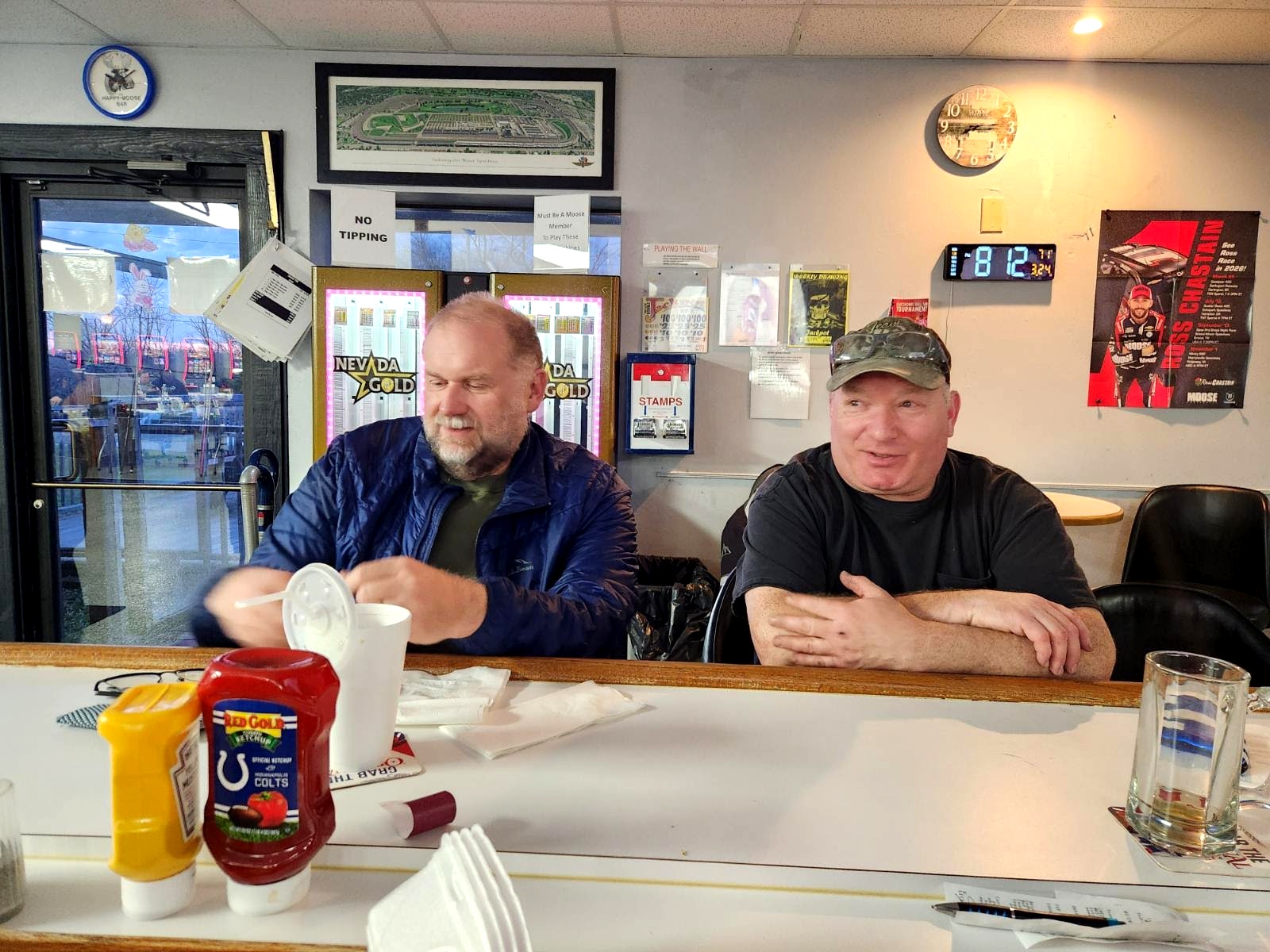
Brian: So we had a meeting of the minds at the Moose yesterday. Actually, the one, the only Jordan Liebman is actually in Indianapolis doing some work. So we made arrangements, you know, we talked about get together. Hey, there's a nice restaurant here, there's a nice restaurant there, blah, blah, blah, blah, blah. And he's like, and then I get a text. Yeah, meet me at the Moose and Speedway. So I'm like, okay. I guess he's a member of the Moose. And so you can go to any Moose.
Robin: Is that that ag-a-a-dack-dack-a-dack-a-dack-a-ack stuff or what?
Brian: Well, yeah, they didn't make me wear the antlers or anything. But yeah, it's just a, I don't know. It's just basically a bar you have to pay to get in every year. But anyway... I'm like, okay, I'll meet you at the Moose and Speedway. And of course it's Moose number 500 because it's Speedway.
Robin: That's a great pick, by the way. That's going to be the cover of this episode. It's got to be. You two chilling at that bar and the racing pictures behind it were cool.
Brian: Yeah, all kinds of, you know, like everything in India that's full of memorabilia and blah, blah, blah. Yeah, a great meeting of the minds. It's wonderful to meet him. You know, and he's got some plans and so forth. But yeah, we talked a little bit about the next segment that he's preparing and prepared. And I don't know if you even want to mention, but yeah, the next time I think we've mentioned this, when he kicks back in, stay tuned, because it's going to be a great segment on Joey Dunlop.
Robin: Well, we can obfuscate Joey Dunlop there.
Brian: Yeah, Joey Dunlop. Nobody will know. He's got some really, really, really deep cuts and some really good information. Joey Dunlop is a little bit of a recluse. He just wanted to ride motorcycles. He didn't want to screw around with it. You know, didn't want to talk to anybody. and nobody could understand him because he's from Northern Ireland. So, so the guy, there's like no interviews, there's books on them, you know, people had to dig and so forth. So it's really, yeah, it should be really interesting. But yeah, we had a great time. I rode my GS850. The oldest bike I have is, see, if you know Jordan, a 1983 bike is like way too new for him. He's, he's got to have, I think the newest bike he has.
Robin: His bike. Yeah.
Brian: It's got fuel infection. I can't have that. But he's got the, yeah, I think he's, the remark was the newest bike I've ever had was an 83.
Robin: I think he was referring to a 1983 Yamaha Vision 550.
Brian: Something like that.
Robin: Yeah, I actually had that bike, the specific one in my garage for a while.
Brian: You're the one you had?
Robin: No, no, no, no.
Brian: So he got rid of it.
Robin: No, it was mutual friends who managed to carefully ride it into a bush at speed. No, go on. Yeah. I ended up in my garage because, yeah.
Brian: It's complicated. We'll just leave it at that. But, yeah. So, yeah. We had a great conversation about that. Looked, you know, had to look over my bike. You know, it's got four whole cylinders.
Robin: Boom.
Brian: I remember when I rode it up to my grandpa's house and, you know, my grandpa was kind of walking around it. You know, he worked in like the AM General Jeep factory during World War II. You know, he's kind of a little bit of a gearhead. and he walked around and he's like four cylinders like yeah they're been doing four cylinders for a while grandpa yeah that's a little bit like jordan was like ah four cylinders wow but yeah we had a great time had a great talk did a little planning did a little talking about uh what's coming up next so yeah i can't wait we might be able to get to dinner get together some other one more time i'm not sure yet but we're working on but uh yeah he might become a permanent fixture more or less somewhere in the area it is good, Got to ride to a lunch meeting today, and I guess I'll, you know, I'll take it anytime I can get on the bike for half an hour. Even if I'm just going, if it's just for work, you know, whatever.
Robin: What's this up and saying about the Distinguished Gentleman's Ride?
Brian: We can get Gear Chicks, Joanne's, input on this. So basically, it's a fundraiser for charity, for like prostate cancer awareness and stuff like that. And it's called the Distinguished Gentleman's Ride. And it's sort of, and you don't have to be a gentleman to ride, but you do have to dress up and dress nice, you know, look like you care. And the idea is you get together in your fanciest clothes and you go for a little ride around town and you raise money. And it happens, I think it's every May in the U.S. It's worldwide. But yeah, part of the whole ethos is that you're, you know, you're putting on your fancy duds. So you're putting on your tuxedo or your best tweeds or a lot of people go really retro. they encourage open face helmets which I'm a little leery of just so they can see your handlebar mustache you know the.
Robin: Thing is when you ride a motorcycle you don't need your face
Brian: True you just need some place for your eyes to look out of as long as at least you have at least one eye looking around, So, yeah, we'll see if GearCheck has advice for, you know, wearing like your granddad's clothes, but still being a little bit protected.
Robin: Very nice. You ready for some listener questions?
Brian: I'm ready.
Robin: All right. So it's time for listener questions and or questions from the wild. And we have all of these in mass. So let's run and gun. If you'd like us to field your questions, visit email.tier at a bike in your web browser and send us a message. KB quote asks, I have a 2022 Tracer 9. GT less than 5,000 miles. Winter storage is in a residential garage in Northern Illinois.
Brian: I'm so sorry.
Robin: My riding style is not aggressive, mostly commuting and day trips with no track days yet. Question on oil changes in winter storage. There are so many opinions in forums on changing oil before winter storage or after winter storage. However, in the long storage section of the owner's manual, there's no reference to changing oil. So basically it is stick to the schedule. your thoughts I have thoughts Brian has thoughts I
Brian: Have thoughts I have thoughts yeah, My first thought is, yeah, pretty much just stick to the mileage schedule and don't worry about it. I think the schedule does also include you should change oil once a year, even if you don't put whatever miles on it. I'm not sure if that's, I don't remember. You know, obviously I have a bike with the same engine. One thing I will say is, so this was more of a problem back in the days of air-cooled engines. So you would actually see, as in, you'd have a sight glass, and in the sight glass you would see like mayonnaise starting to form. because water and acids and so forth, combustion.
Robin: I was hoping you would save that word for me right there, acids.
Brian: Combustion products.
Robin: Buy products.
Brian: Blow buy would end up in the oil and so forth. And so, yeah, you'd actually see this water-based acidic lop mixing with the oil and it would look like mayonnaise in your oil and stuff like that. Quite honestly, that's not really a big problem in a modern motorcycle like this one. It's a liquid-cooled engine. and the tolerances are as tight or tighter than any car engine. You don't really need to worry too much about that. Whatever the manual says is going to be fine. If I remember right, Yamaha's oil change interval is kind of insane. It's something like 8,000 miles. So I'd go a little more frequently than that and change the oil filter every time. And again, I'm going from memory here. I don't have the manual in front of me. But anyway, change it normally. At least make sure you change it once a year. And personally, I would do that in the fall. So if you're, you know, the blizzards are starting, you know, the Sasquatch and the abominable snowmen are starting to invade in northern Illinois.
Robin: Planet Hoth.
Brian: Yeah, just Planet Hoth action there.
Robin: Nerds.
Brian: Change oil before storage. It's one of those things that's just not as big a problem as it used to be.
Robin: I support everything Brian just said, pretty much verbatim,
Brian: But he's wrong.
Robin: For my own bikes, if I were still winterizing, I'm not. I would change the oil. Surprisingly, I might even change it before winterization and after winterization, even though I hadn't ridden it. There's a bit of a backstory to that, but if you're green-minded as I am, despite it being a combustion engine and a pretty loud recreational sport, the only thing that will be affected is your wallet there's no waste if you do it the way i do it which is okay let's say i'm about to winterize drain the oil properly pour that into a container take it to your local auto parts store they're going to recycle it that is what synthetic oil is it's re-refined and strangely improved oil that's based on already used product there's no loss except for at the dollar sign so Before winterization drain it out pour it into a thing take it to the auto parts store hand that off to them they re-refine it bottle it up and then you end up with rotella t6 whatever you're being green and you didn't even know it in some manner speaking there have been times with like my bandit which was a air oil cooled bike where yeah the key word for me was acids and byproducts foreign contaminants that can affect the metal or the combustion even the valves if you're not careful in some ways. I will make sure that for that bike particularly, I would winterize it. And then when it was time to ride it, I would drain that oil out as well and replace it completely. It's just how I decided to do it. No harm, no foul. I think the answer we got is do whatever you want. It's going to be fine.
Brian: Yeah, it'll be fine.
Robin: Perspective opportunities for byproducts doesn't mean that it's literally going to eat your bike over the winter. Do what you will yeah all right we got a couple more here you ready for some fun stuff i'm gonna hand these off to you because this is your baby honestly questions from the wild sws comments i'm 18 and have been riding a 125 cc scooter for years usually at moderate speeds i'm planning to upgrade to a 300 to 400 cc bike and expect to ride up to around 150 to 170 kilometers per hour i don't know what that is in immediate translation in miles per hour but i think it's probably around 80 highway speeds Joe. Okay. So my question is, does full riding gear, jacket and pants actually make a difference in a high speed crash like that? I understand helmets and gloves are important, but I'm unsure how much protection the rest of the gear provides at those speeds. I've seen serious injuries happen even at very low speed. So I'm wondering if it really matters or if the outcomes are mostly down to luck. Am I wrong about this? I've got my answer. You know it. Wear the damn gear. All the gear, all the time.
Brian: Wear the damn gear. And yes, speaking as someone who has experienced a crash, yes, the gear does help a lot. It's not going to keep you from breaking a leg if the physics works out that way, but it will help keep you from being peeled like an orange or turning into a meat crayon. Or like, for example, the knee armor will help make sure that your knees don't explode and increase your problems. So yeah, is it like an Ironman suit that protects you from everything and you just come bouncing to a stop on a pillow? No. Although we did have a little chat about airbag vests, which are also a good idea. And I think they're kind of the next thing. And I bet I'll have a way on airbag vest at some point in my life. Absolutely. Get good armored stuff with its rated well. CE1 or CE2, I think is a better rating. Get the good stuff. It does. And I can firsthand tell you it makes a huge difference. I had doctors, EMTs, nurses coming by my bed to wiggle my knee in sheer wonder that, okay, the leg's broken. Okay, we couldn't prevent that with anything but like an Ironman suit. But he's not bleeding. You know, I didn't leave any skin behind. And the knee is still intact. You know, that kind of thing. Knees, elbows, you know, everything else was intact after those. So, yeah, wear the damn gear.
Robin: I'll give you one dark analogy. That's that there are fabrics out there in which your bones will break before they will tear. Walk away that. You ready for another one?
Brian: Let's do it.
Robin: OW. I got my motorcycle endorsement last year, but haven't had much riding time yet. I'm planning a cross-country trip after I graduate next summer, so I want to start practicing soon. I'm set on getting a Rebel 500. Cool. But I'm unsure about choosing the right gear. I'm 5'10", 170 pounds, and may gain weight, and I prefer a casual-style jeans and a leather jacket. Helmet, gloves, and shoes seem straightforward, but I'm struggling to find a well-fitting jacket that isn't loose. I've heard good things about Revit, but I'm not sure what to go with. Also, do riding jackets and pants come with proper armor, or do I need to buy pads separately? Brian, I'm going to answer this one for you. We're going to move right along. Listen to our previous episode. The episode from last week, we spoke in detail about armor, specifically about gear that will keep you intact. So that's going to be the episode to hear, I would predict. Yeah, would you agree?
Brian: What we were talking about last week was more upgrading armor. So to answer the one question is, yes, jackets and pants do generally come with armor. And what I was talking about was upgrading the armor that came with my track suit, but all my gear comes with armor. And the better gear you buy, the better armor it comes with. Like I have a climb jacket that's very expensive stuff that came with D3O gear, you know, with really good armor that does a really good job.
Robin: Yeah.
Brian: And cheaper stuff comes with cheaper armor that'll help, but, you know, it's not as good and it's not as comfortable. Comfort is kind of the big thing. So, yeah, Joanne goes into armor and comfort and stuff quite a bit in the last episode. And the other question was Revit is an excellent brand.
Robin: Sponsorship!
Brian: In case Revit doesn't have enough sales, you know, buddy, we can help. Yeah, Revit's a good brand. I'm drawing a blank on other names, but yeah. The higher-end stuff, I mentioned Climb is one of them. You'll find that different brands fit differently, and Joanne has talked about this in past episodes. So different brands fit differently. Revit's more of a European cut. Danisa, Alpine Stars are a little more Euro cut. And then you'll have more of an American cut, like for beefy gentlemen.
Robin: Murica.
Brian: So, and things like climb and first gear and stuff like that. So you got to try stuff on motorcyclegear.com and also several of the online retailers do have a way you can, like they'll ship you two different sizes and then you can ship it back at a discount. And the different price levels, what you get is better protection, better construction, stuff that looks better. last point to make is motorcycle jackets and and pants should fit a lot more closely than casual stuff and that may be obvious but it's worth mentioning so whatever you get make sure that it's going to stay and it's going to deliver you and the armor to the same place at the same time and not let everything slip around last.
Robin: One ls i've been riding for a couple of years moped first on yamaha r125 for about 10 months last summer i was comfortable with cornering and roundabouts but recently I've lost confidence. Now, I take turns very slowly because I'm worried the rear might slip if I lean too much, even though my tires and pressures are fine. Has anyone experienced this drop in confidence after a break? Yes, I have.
Brian: Of course.
Robin: Any tips for improving cornering confidence again? Yes, there are. So my tip for improving cornering confidence is to sign up for cornering confidence with...
Brian: Yeah, that's a good point.
Robin: So there's a really great book. If you look up A guy named John Del Vecchio, he basically wrote a book that is dedicated strictly to trail breaking and such in his own terms, on his own terms. It's a good book. He's pretty dedicated to that being, quote, the secret weapon to trail. confident cornering, hence the title Cornering Confidence. If you go to TRO.Bike, click on the search icon up top and type in John Delvecchio or Cornering Confidence, you're going to see something come up. Now, the spelling of his name, that's J-O-N-D-E-L-V-E-C-C-H-I-O. Check that out, and it's a good insight. The other thing is just ride, take your time, go slow, be comfortable, Be calm. Don't make it a goal. Just enjoy the ride.
Brian: I have little or nothing to add to that. Good advice. And if you'd like us to field your questions, visit email.tro.bike in your web browser and send us a message.
Robin: Now it's time for segment one. And as you would expect, it's going to be this metaphorical dynasty of pyramid philosophical discussion with enigmas wrapped in a riddle, wrapped in some kind of like beef jerky or maybe like some elk jerky or... I'm digressing.
Brian: Moose. Moose jerky. Moose jerky.
Robin: Yeah. Yeah.
Brian: I had a moose burger. It was cow though. Yeah, go on.
Robin: We're going to call this Road Bias Leading Loved Ones. Now, you might be able to relate it to this. You might not. But let's just feel our way through this. Quite honestly, I'm going to read this whole bit, and then I'm hoping you can lead me through my own idea because I'm just late to the party on it and figured this out this afternoon. There are those of us who, whether riding our own pace or running with the responsibly misbehaved, can't help but split our attention 50-50, keeping our third eye locked on the rearview mirror. We aren't tracking a tailgater. We're watching someone significant, someone we involuntarily worry about, regardless of their skills or safety gear, simply because of who they are. For me, that's my wife, Maggie. She rides too. Not just any bike either. She calls it the Black Widow, but it's her SV650, current gen, gorgeous bike. I've ridden it, lots of fun. So sure, depending on the conditions, it could be anyone. Yet somehow the riders we care about who don't share our roof or our DNA rarely trigger that same relentless ping on our subconscious radar. It's not that they matter less, not at all. It's about that hot circuit that only arcs when a deeply rooted friend or family member is surfing the exact same asphalt wave behind us. That's when the golden rule of ride your own ride gets a whole lot harder for the person up front.
Brian: Nice. Interesting thesis, yes.
Robin: I just, when I'm riding with Maggie, there's a lot of mirror check. And that's what I was starting to get weird about last episode or two episodes ago when I mentioned, like, you can really ride an entire ride looking at your rearview mirror at the same speed. Wouldn't advise it. There've been countless times when I've already judged the corner. I've already checked the entire forward field of view. And this went ahead and cranked on the gas while watching the rear view mirror to make sure she was all right. And it was, you know, I've just got a lot of saddle time. And I get really nervous about making sure that she's having the best possible time she can and that all dangers have been, you know. knight in napoleon complex armor
Brian: Yeah so like if there's you know like if there's a cow in the road you want to you want to plow it out of the way or you'd be like hey watch the cow you know yeah.
Robin: We always have comms so there's a lot of communication but it's too much sometimes so i have to guard it yeah
Brian: I've been there done that yeah there's a turn.
Robin: There's a turn coming we're on the road
Brian: This goes right yeah shut up and it's a little yeah and i i get that it's a little different marge my wife used to used to ride at a little honda and so forth it's been a while but she's she used to ride and gave it up but the only thing that really ended up working for us was where i would follow her because if i were in front she would she would kind of do what you're talking about where she would get too worried about what i was doing way up there and i'm you know leaned way over and interesting.
Robin: This is a reverse dynamic yeah
Brian: It's a reverse one Yeah, it was a weird reverse thing. So she would actually get a little too worried about what I was doing. And so for a while, we did like where she would be in front and then, you know, there were, we'd have to communicate about what, you know, where to turn and so forth. But most of the time we weren't going far, you know, we both knew where we were. And so, yeah, I had a dynamic. So like, so I'm back there, you know, worried about, you know, hoping she's having a good time, you know, and that's part of it too. You know, are we having a good time? And also, you know, worried about what's going on. I wasn't riding my own ride. Not that, you know, I wasn't like really being challenged that much to be nice about it. But, you know, I was paying a lot more attention to what she was doing than what I was doing, to be honest. I remember there was one incident. I was behind her. It was an uphill curve in the shade and so forth. And there was some gravel that she didn't really see in that corner. And the rear end started to step out. And I was like, you know, so everything clenches. Yeah. And a little wee out. No, she, a little.
Robin: Bit of pee.
Brian: But the cool part is I hear her do exactly the right thing. Brap. Get into the throttle, steer into it and power out of it. You know, it's like she instantly did the right thing, got out of it, wasn't a big deal.
Robin: Nice. So then I've got the opposite situation where I want to know what the hazards are well before my wife, even though she knows how to handle them. Her first track day, which happened on a Nighthawk 250, she went out for her first session in the last group. She went around one lap, and then the next lap, she was at the front of the first group. And it was a wet day at Autobahn Raceway, which I don't even remember what state that's in, but it was just really wet. And so she was fishtailing all over the place to the point where she was fishtailing everywhere. And you're like, calm down. I wasn't riding. I was on the sidelines waiting for my session. But I know that she told me she looked over at another rider, and all she saw was a helmet with eyes looking at her. She'll just unconsciously get through whatever it is, but that doesn't change the fact that she has a certain casual nature about her. It's not about him and her, they, them. It's about the individual. And if you know the person well enough, if you've done battle with them logically in your house, then whatever you... Whatever you're guarded about in their behavior, you're going to be guarded about for sure when you're on a motorcycle. So is she cognitively aware of this corner being a blind where somebody took out the chicane so you don't know? I sure didn't. And I found out the hard way. I've got to ride that well enough that I can also maintain control and communicate the information to her, which, like I said, we got comms, but it still means, yeah, I'm always just like, oh, that happened. Check the mirror. There she is. Cool. Is the distance right? is our line of sight correct for the comms to be connecting properly for us to communicate.
Brian: Yeah.
Robin: Stay in LP1. Watch out for LP3. There's a whole herd of mule deer, the dumbest animals I've ever met, by the way. They are dumb. And we know some dumb animals.
Brian: I don't know. I think whitetail deer, I don't know if they're the same species, you know, just a different variant or what, but they're right there.
Robin: Shout out to Murray Haynes. He'll say elk. are the dumbest because we don't appear to be a threat. Now I'm going to shout out to Murray Haynes on that. And I'm going to shout out to Anders Carlson on that while here in my now hometown of the road that shall not be named was on the road that shall not be named in an Astro van and destroyed it into two elk.
Brian: Oh, geez.
Robin: At like 2 a.m. So there's a whole story there, you know? thinking of these war stories which are no reason they're no inspiration source that's for sure but to consider them it's why I'm like road ahead processing assessing clear field of view okay I've got enough time to look at this mirror just be like where is she at and I'm actually taking multiple corners while I'm checking on her to be like is she good did she make that corner and quite frankly the way she rides I've seen her take corners where I was just like yeah I need to look at my rearview mirror because she's kicking ass so good
Brian: Good you and i've ridden together a lot i ride i ride i'm lucky enough to ride regularly with with people i consider brothers yeah we know each other real well and we know and it's but yeah it's a little different when you know again someone under your roof someone's you have a lifelong connection with and we said something interesting about you having comms i had like a very early version of a helmet communicator Like it had like a big thing and antennas sticking up and this was long before Senna or, or a Cardo or whatever.
Robin: And it would make my head get warm. Yeah.
Brian: Yeah. I lose 10 IQ points. Yeah. The, uh, so one of the things I learned was having a direct line into my ear really did something to Marge's brain. we did not continue the experiment with the intercoms because it was just it wasn't like two riders communicating it was a it was a stream of consciousness the.
Robin: Hard part is then you also have to succeed that with know when to pump the damn brakes and So Maggie and I will be discussing, I don't even know what, because it's all naturally flowing nonsense of, I don't even know if we're speaking, I'm just watching the road. Again, it's an alternate dynamic.
Brian: But yeah, it's kind of like you really got to ride your own ride more. But, you know, you're, again, if anybody has the skills, you do, you know, you're an experienced tool leader, but even with all the anxiety of all these customers behind you, it still doesn't come anywhere close to your wife. So, yeah.
Robin: Yeah. I'm in slightly harder check with my good chosen family, yourself, Burleson, Clark. The list does go on, so don't feel left out. We got a time limit on this, but there are people where I'm in a state of harder check and it works. So, like, I will say also, if the comms are on, Burleson and I have no idea what we're talking about. We are blah, blah, blah. There's so much saddle time that we're just wrecking corners, just murdering roads. And it's almost like it's like an extra exhaust valve.
Brian: You know what I'm saying? I was going to say, yeah, it sounds like a little, yeah, it's like a balloon.
Robin: Now you bring in Maggie and all of a sudden it's that to the fifth pound. Like not the speaking, I'm talking about the concerns. We do communicate. We are in check, but also it's funny because we both speak the same language. Know some basics out there. If you're going to do this, know about LP1, LP2, LP3. Those are your three single track riding positions on a basic lane in any given direction. LP1 to the left, LP3 to the right. Middle, middle, middle is always a safe zone so long as you know what's coming. But you want to communicate, hey, there's a giant rock in LP3. This is a workable thing as long as you're chiming back out and getting back to the music after that.
Brian: It's very useful, yeah.
Robin: The subconscious goes broad and all of a sudden you have this enhanced antenna for what is forward and what is rear view and you're just watching over everyone at the same time. I don't do that when we're reading a group tour.
Brian: Yeah, you kind of get into a state of 360 awareness. you know when it's right and it's just even more more heightened.
Robin: Well do we want to get joanne in here we
Brian: Got questions for gear chick we need gear chick.
Robin: She's on her way brian has some inspiration we want to hear your thoughts i hand you the reins it's time for the night watch the show is yours take us on an adventure's journey
Brian: So we had two topics, Joanne, that I threw at you, and I don't know what stuck.
Joanne: Right. I forgot.
Brian: We can talk about gloves, and we also kind of talked about the Distinguished Gentleman's Ride a little bit, and how you can kind of conceal your ear. What do you got for us?
Joanne: I think the most relevant, well, might be most helpful to your audience is for the DGR, because that's, you know, that's a national event. A lot of people are probably going to be attending that. But I, because I don't have the bike for that, like I don't have anything modern classic. I can't really fit in to that lifestyle very well. It's hard to protect yourself when you're also trying to align with the intent of that ride, right? Distinguished dressing. And I get it. And I think it's really cool. But if you're going to go out and do that, I think really the only thing you can do is wear some body protectors. like you would wear in the dirt or very, very fitted urban riding shirts that you can wear under. But even that's hot and not very comfortable. There's really aren't a lot of options. Like I know Knox makes some really ultra light riding shirts that are zip up and vented. You could also wear some of the off-road. Like I have a Liat Women's Off-Road body protector. Those are really low profile. So something that would probably be the best thing you could do. Otherwise, you're going to be hot. You can't wear a jacket under a suit jacket or like, you know, the really nice dress shirts they wear and how people dress. You kind of have to choose. I don't think there's really a solution necessarily for that.
Brian: And the DGR rides are always just like they're in town, they're low speed, they don't go far, you know, it's not, but you still got to get there and back home. But yeah, so maybe you could stash your gears and then put it back on before you go home. I don't know.
Joanne: I don't know. I think you just have to compromise and decide whether it's for you and whether you want to participate.
Robin: Well, there's that word. Right? You are the master of the word compromise. That is a compass in a conversation with you.
Joanne: That's motorcycling. Yeah. Like if you're talking about motorcycling and you're not talking about compromise, you're in the wrong sport. And I don't care what kind of bike you ride or the type of riding you do, whether it's dirt, not dirt, road, you always have to compromise in every aspect of your motorcycling. That's why I like to call motorcycling like being in a relationship because you have to compromise. There's no way around it. Like you're forced to.
Brian: It's a dance. Yeah, it's a dance.
Joanne: Yeah, you have to, otherwise it could affect your actual mortality. So with themed rides and, you know, these kinds of events like the DGR, they're for a wonderful cause. And by all means, you should participate if that's what you want to do. But if you want to gear up and participate, that's a tough one. It's easier, I think, maybe for your lower half because you can wear maybe a riding pant. I mean, a lot of brands now make really nice cargoes and chino style riding pants so they can blend in a little bit and that's easy. Bottom, you know, you can wear a black bottom, like a black pant and it's pretty much blends in, right? It's really that upper half, like the cute jackets and It's really tough, I think. But if you can, wear your dirt armor underneath. What you could do is wear like, at least wear like an external race back protector, like the one I recommended for you under your tracksuit. You just wear that under your t-shirt. You know, you wear that over a t-shirt and then wear your cute little DGR jacket or whatever stylish fashion.
Brian: Your tweed smoking jacket or whatever.
Joanne: Yeah, because at least your spine will be protected, right?
Robin: Don't prove cigarette extender.
Joanne: Right. So that, you know, but that also, you can also find other armor. You could find like, you know what you could do is you could wear like pull-on sleeve elbow protectors like for bicycling. Those are low profile, but you can also find low profile ones for motorcycling too. So you can slip them on your elbow and then under, wear that under your shirts. Yeah, so I would go that route. or if you can, a full zip-up body protector where the shirt is mesh and then the armor is all built into it. But you will look larger, if that matters to you. It will look like you have a little, you know, some people, aesthetically, that might ruin your outfit. But I think that's just a tough one. You have to decide what's for you.
Robin: It's not about you've been working out.
Joanne: I guess so. Yeah. Yeah, I mean, I...
Brian: We are just here to pump you up. I guess so.
Joanne: So, yeah.
Brian: Do the best you can.
Joanne: You do the best you can with what you're comfortable with and make sure you have health insurance. That's it.
Robin: Yes. Well stated.
Brian: Well stated.
Robin: What about the sandwich clan?
Brian: What is that? I don't know what you're talking about. What about track gloves? I was talking about, yeah.
Joanne: Where do you come up with this stuff?
Brian: Good gauntlet gloves for the track. How the hell? Just hanging out with bizarre people.
Robin: Shout out to Joe Godin who doesn't listen to this show.
Joanne: Well, I would say let's talk more about you, Brian, because throwing out some general options, I mean, there's so many great options out there by all the premier brands, right? Private Alpine Stars, Dainese, Knox, hell, They all make spectacular track gloves. And actually for you, given that you need a wider, like really what we call an American fit when it comes to gloves, just like the rest of your gear, if you need a little bit shorter finger, but you need a wider palm and kind of a bigger hand, you know, so you don't have to size up all the time to get the palms to fit. There's really two brands I can recommend. And to give you also the best protection, Dianese is great because they're offering, their fits generally have been a little bit better in that regard. You can get away with sometimes not having to size up. So they have a few gloves at the top end that work really well for that. But they are European, so you might still have a little bit of, it depends, I mean, I don't know, I don't have any measurements from you, so I really don't know like how short you need them. The alternative is also Held because Held for a long time was offering short and long finger lengths, and they still do. So now's the time. Do you wear a large or an extra large or a 2X?
Brian: I wear an extra large in some brands and a 2X in others.
Joanne: Okay, so the extra large sizes you're probably finding in your American brands, like Joe Rocket. Okay, so if you're an extra large... Bet you can get away with a held in a 10 short. And right now the Phantom 2s are on closeout, at least on Revzilla anyway. And a 10 is an extra large, 11 is a double X. If you can swing it, maybe you order a 10 and 11 short, but that's a shorter finger and a shorter palm. So I would go that route. I would try that. if you have a really wide palm and you're concerned about entry, like the gauntlet being too long, if you are trying to avoid gauntlets that are too long, right? Because the longer the gauntlet, the harder it is for your wide palm to get into that glove. Is that a challenge for you? Is that something you experience?
Brian: Not really.
Joanne: Okay.
Brian: Okay. Yeah. When I take the measurement, it usually comes out about nine and a half, you know, like the health, you know, when you're talking about health.
Joanne: Gloves yeah but then they tell you the measure and it's yeah yes but then your width is moving you up to that extra large right yeah
Brian: It's like the fingers won't go in there apparently yeah.
Joanne: So mutated no no you just need a more relaxed fit for your glove so
Brian: So what was the model of held that you were talking oh.
Joanne: Sorry let me link this for you the fourth circle It's the Phantom 2. Oh, okay. Held Phantom 2. And they make short and long sizes in a couple other styles also. They are very, very good with their lengths. So I would try a 10 short in that one. Interesting. Yeah. And then, and honestly, any of their gloves, their gloves are great. And there's some other gloves... where you don't even have to order a short sometimes. Like mostly their urban styles, Held does a really good job with their finger lengths. They tend to be a little shorter in the, and their palms are a little bit wider too. In their more, like their easier gloves, like the Rodney, that's a spectacular glove that fits really roomy. It's a really an urban glove and a cruising glove. But those I was able to size people who are just like you were like XL in one, 2X in another. I was able to size people down in those because they're a super easy fit, but the protection is going to be lower. They're not a track glove. On the Dionysi side, you probably have to, sure, it will have to excel and then the finger lengths won't be as bad, but they have several good track options. But if track is like once a year and you're mostly going to ride it on the street, I would probably do something like a Steel Pro. So here, I'll link those. In the chat too and do an try and excel in that well you probably have to double in that i'll be i think i'll be honest i think just the palms you're gonna want a double in that but those are a good easier street glove than but they are they have a double you know scaffold like they have all the stuff you want for track but they're just not quite as aggressive and then what you want to avoid when you do have that broader fit it's it gets tighter in the palms the higher up the glove chain you go now held is kind of a weird exception because their fits are just different it's a german brand so their fits are a little bit more german i guess so they're just different well
Brian: I'm german yeah i have german descent so maybe.
Joanne: Right held
Brian: Is where i need to be.
Joanne: Yeah maybe But with Dionysia, if you go up to like their $500 glove, it's going to be the tightest fit. So then you don't want, then you'd have to size up to double X. But if you're, if you just kind of jump in at like their street level gloves, like a carbon, I don't know if they're still making carbons. That was a really good street glove. Those are the most comfortable Dionysia gloves and they're the least, they're not as aggressive. So you get a really good balance of protection for street, but you can totally track in them. You just wouldn't track in them every day or every week. You know, they're not like a dedicated track glove. But I don't know if they're still doing carbons. They were the most popular Dionysia glove that I sold because they were easy. They were really inexpensive, but they offered, yeah, the carbon. I'll link you.
Brian: I only see a few that are on clearance. Yeah. And very few sizes left. Interesting.
Joanne: The clothes out. Right. But, you know, search among your favorite brand, online brands. You might find, you know, you'll probably find your size in some other brands that have inventory. But I would try those. Yeah, I would definitely try those. And then, yeah, you know, try to avoid that long. Remember, the longer the gauntlet, it might be a little harder to get in there. Just depends. But the other brand I'm going to recommend you look at is Racer. Now, racer sounds like it's some cheap, you know, no-name glove. But they're Austrian and they've been around for like 25 years. They're just not in every store, in every website. And they're really a niche brand. And that's what I wear for track gloves as well. Because for the longest time, this brand was the only brand making a women's specific race gauntlet that offered true race and track protection. So here, I'll send you their link. And they're great. And these are kangaroo palm, just like the held.
Brian: They're really nice comfortable.
Joanne: And I've had like three pairs. They're great. Did you say they're Austrian or Australian?
Brian: Austrian. Which one?
Joanne: Austria. Yep.
Brian: Okay. That was all right. Okay.
Joanne: Germany. Yeah. Austria. Close. Close.
Brian: Speaking German. Austria.
Joanne: Austria. So a really good one that's track friendly, but still a great street glove is the High Racer. So I sent you a link to all of them, but the High Racer is the one I wear as a street glove and it's so comfortable. And these, I would think you could do an extra large. I would do an extra large on these. And with, yep. And those are a good balanced glove. And then when you go up another level for another $30 to high speed, then you get really, then you get more aggression, right? You get a bigger knuckle, you get more knuckle sliders, you get a longer gauntlet to go over your suit, you get bigger, you know, you just get more stuff for the track aspect. But the high racer is such a balanced glove. I used to do track days in that one because that glove's been around for a long time. I'd say 15 years that glove's been around. Knock sliders, double sliders. Yeah, back when not a lot of brands had double sliders.
Brian: Yeah, I'd never heard of the racer brand. So as always, mind blown.
Joanne: Yeah, you won't unless you're searching or you find a store that has it.
Brian: So these have like two plastic. I'm looking at the high racer gloves And they've got like two plastic pucks on the heel of the palm there.
Joanne: So those are palm sliders.
Brian: Palm sliders, okay.
Joanne: Knee pucks are for your knees. Palm sliders are for your palms. And those, I believe, I don't know if they're Nox made by Nox anymore. They used to use Nox. I don't know if they still are. I feel like they are and their design has just changed. I'm pretty sure those are Nox sliders. Now, Nox also makes their own glove.
Brian: Oh, okay. All right.
Joanne: I just like the simplicity of the racer glove. I think Knox gloves are way too complicated and they're good for track. I just don't think they make a comfortable street glove.
Robin: Features, look at all the features.
Brian: Yeah, that's a good point though.
Joanne: They do have really good track gloves. Like they're great. I think they're trying to come out with more easier street options, but I don't think they've come out with something that's as balanced as a high racer where it's like, oh, I got really good protection for the track, but it's not crazy and too aggressive for the street.
Robin: I like the idea of the palm protectors basically because it takes a number of falls to know how to fall. Nobody naturally wants to curl up. They want to protect themselves. So they go full Spider-Man trying to save face. Palms are down when ideally you want to tuck in.
Joanne: Unless you do it a lot, it's really difficult for you to think about doing that, right? If you're a track day person, you might practice that and you might get your muscle memory, your body to do that. But the way that our body mechanics are, if you're walking down the street and you trip, you will always put your hands out. You will always do that. And the same applies to motorcycle crashing. If you're separated from your motorcycle, you will put your hands down. It's just, it's going to happen. So you want palm sliders or a reinforced palm of some sort on all your gloves, whether they're track glove or a cruising glove or your summer mesh glove. They should all have some reinforcement on your palm. A slider is the best, right? Because it'll just slide the surface of the plastic.
Brian: And one thing I like about these racer, high racer gloves, and I see this on some and I I do like this feature. I actually have it on my shorty gloves is where it restrains the pinky. Because it basically puts a little bridge. It connects your pinky to your whatever that finger is.
Joanne: Probably more of a track risk than a street risk. You have other things that might go wrong rather than that. But that's really there for track protection. And that's why street gloves don't have that. But Racer also makes really good street gloves. I have their guide gloves, which are adventure. And I use them as a street glove, as a short summer glove too. They're also kangaroo and they're really comfortable. And they were just one of the first brands that I ever used that actually had kangaroo palms, kangaroo leather, because it's pretty expensive. You know, their gloves aren't, you know, $50, $80. So kangaroo leather is thinner. But the really amazing thing about kangaroo leather is the dexterity. Like it feels like second skin. The downside is you have to take care of kangaroo. You do, because the leather is thinner. It is strong, but it can, over time, the salt in your sweat, it can absorb into the glove and you can wear a hole right through the glove if you don't wash them. So you have to hand wash these. So if you get the high racers and you really like them during your summer season, if you're sweating a lot into them, you're going to want to wash them in the sink by hand. You know, you really want to, it's not really the smell so much as you don't want to wear a hole through the palms or the fingers.
Brian: Yeah, it'll make the leather break down. Yeah.
Joanne: Right. You just have to take care of it. And it's not to say it's going to break down when you crash. Yeah. Those are two different things. This is taking care of your product so they don't wear out. It's just a compromise. And pretty much all the top racing gloves at GP level, race level, those are all, a lot of them are kangaroo because the dexterity is supreme. And they feel so good. They're just the most comfortable gloves I've ever worn. And I think you'll really love them. Bonus, I believe this is still true. they don't intentionally put a touch, like, finger on the glove for your phone. But kangaroo leather is connected. So it works with your phone just because it just happens to work.
Brian: That's good and that's bad.
Robin: Robin, I'm in turn four. I'm in turn. I'm in the grass. For the street.
Joanne: Hello. So, yeah. That's the beauty of kangaroo. True. So you can, you know, manage the fancy screens on your fancy new motorcycles.
Brian: So the Racer High Racer, yeah, they need work on their branding is kind of the, and then the next level, the highest level is the Racer High Speed, it looks like.
Joanne: Right, we just go up. Whatever the next, you know, there's like $20, $30 between them, and that's how you know what level you're at. So you go up and step and now you're like a full track. And also you can see the protectors get bigger. The knuckle and the finger protectors are bigger. And then the palm sliders are much bigger than the straight version.
Brian: You have blown my mind, Joanne. You have blown my mind. Thank you very much.
Joanne: You're welcome.
Brian: I need to spend money now.
Joanne: Spend some money. You deserve it. You know, you only live once, right?
Brian: Similar banter at higher revs can be found via the Gear Chick website or by emailing Joanne directly. That email address is help at gearchick.com.
Robin: Normally, at this point, we'd have moments in motorcycle history with Jordan Lieben, but he's still sleeping off the sandwich he ate next to Brian in Indianapolis for the moment. Jordan will be back once we find him.
Brian: He had moose fingers.
Robin: Yeah, but we do have plans for a Joey Dunlop ultra dive that I think he's pretty excited about, which means we should be pretty excited about it because that's good.
Brian: It's going to be good.
Robin: You know it's coming, Brian, so I'll say tail end discussion, wind everything down, full day crescendo, what are some things we want to talk about next time, y'all?
Brian: I honestly have no idea.
Robin: I called it.
Brian: I called it.
Robin: I called it.
Brian: So I'll tell you what.
Robin: Joanne, Joanne, she's the arbiter of this situation. She does not eliminate. She does not judge. She simply balances things and corrects. She validates. What do we talk about next week? What would you make Brian and I discuss next week?
Brian: Oh, God.
Joanne: How about this? Now, it depends where you're living, right? Because the weather is so weird. all across the country. But, you know, how about just getting ready for spring riding, especially if you had to put your bikes away like me and, you know, Brian, like we kind of had to put our bikes away. And it's been like four months or five, six months since you've ridden.
Brian: You can do that.
Joanne: Getting ready for spring is a good one. And I still want us to talk about riding, like as a couple, I want to talk about that. How to ride when you're in relationships, or how does that work if only one of you ride, or how does it work when both of you do?
Robin: Yeah.
Joanne: What's that like? What's that experience like? I'd like to join the conversation on that. And how to bring your partner in to ride with you if they don't.
Robin: That's the one.
Joanne: Bring your partner in is the key. Ideas to bring them in. Not that everybody wants to be brought in, but how can you try to bring them in? to see if they want to come in.
Robin: That's good. We have a known motto. I accidentally created a catchphrase in our GS Resources writing group. Everybody's welcome. Nobody's invited. It's true. You don't want to influence, push somebody into it. So that's a great topic. I think it's excellent.
Brian: That's a great topic. What we need to do, Joanne, is get you in the hole.
Robin: Yes.
Joanne: Sure.
Brian: We'll juggle the time around and make that happen. But yeah, I think that's a good one. And it leads in, it also, that there's some of the stuff we were talking about this week. And it also ties into when we talked to Melissa Holbrook-Pearson. She said that's the question she gets the most. you know, how do I get my wife to ride with me more?
Joanne: And it's the wrong question.
Brian: Yeah. Yeah.
Joanne: And it is a predominantly, and I'm not going to say it's everybody, but it's predominantly a male rider issue because there are far fewer women who have this problem in my experience. And yeah, what's the approach and what is the question you should be asking and the things that you should be thinking about that you're not. Because my experience has also been that a lot of the male riders who are trying to bring their partners in aren't really thinking about it in their partner's best interest. And they're really only thinking about their own best interest. And if you want to bring someone in who doesn't ride motorcycles, well, you have to put it in their best interest in some way, in the ways that make sense for them. Yeah, and have really genuine adult conversations about it. I still have nightmares about the worst, and I'm going to say it, the worst male customer I've ever had who treated his partner like a doll.
Robin: Bring it to next week.
Joanne: I will.
Robin: You have to remember that.
Joanne: It'll be impossible to forget.
Brian: He's impossible to forget. We'll arrange the logistics. We'll bring all our war stories. That's a fantastic idea.
Joanne: Joanne. Sounds great. Let's do it.
Brian: Thanks for getting me off the hook and putting me on another hook.
Joanne: All right.
Brian: You're welcome.
Robin: We good to go?
Joanne: My job is done. Yes.
Brian: Appreciate it. Thank you. Let's get out of here.
The Gist
Robin rockets in, riffing on the Triumph 660, Trident talk, Tiger tweaks and sub-10k stunners that make wallets cackle. He hacks eBay space-Lego hunts, then talks oil, changing it pre and post storage because recycling is hip and useful, albeit neurotic in his case. In leader bias, he cops to mirror checks, comm quirks and LP1/2/3 to shield loved ones w/o running folks off road.
Brian, the spec-sheet whisperer, cheers Triumph near-100 hp value and drops a GS850 lunch tale with Jordan (who tees up a future Joey Dunlop deep dive). A crash-test convert, he yells wear the damn gear, dodging dark fates, then gives oil and filter wisdom plus Revvit, Dainese, Klim fit sanity. He admits intercoms can brain-melt, proving comm management is an art, not a checkbox.
Joanne, Gear Chic supreme, speaks of low profile armor, vented layers or a back protector under tweed to dodge crash-test dummy vibes. Glove nerd time: Held and Racer for tricky fits, kangaroo for second skin you hand wash unless you like holes, plus palm sliders or reinforced palms. She pitches spring prep and partner buy-in, we all put hands down in a spill and says riding is a compromise so sell to their tastes, not just yours.
Announce, Acknowledge & Correct
Random song(s) of the minute are The Creeps by Garbage and I Love You More Today Than Yesterday by Spiral Staircase (we coulda sworn this was by Stevie Wonder but were flat out wrong).
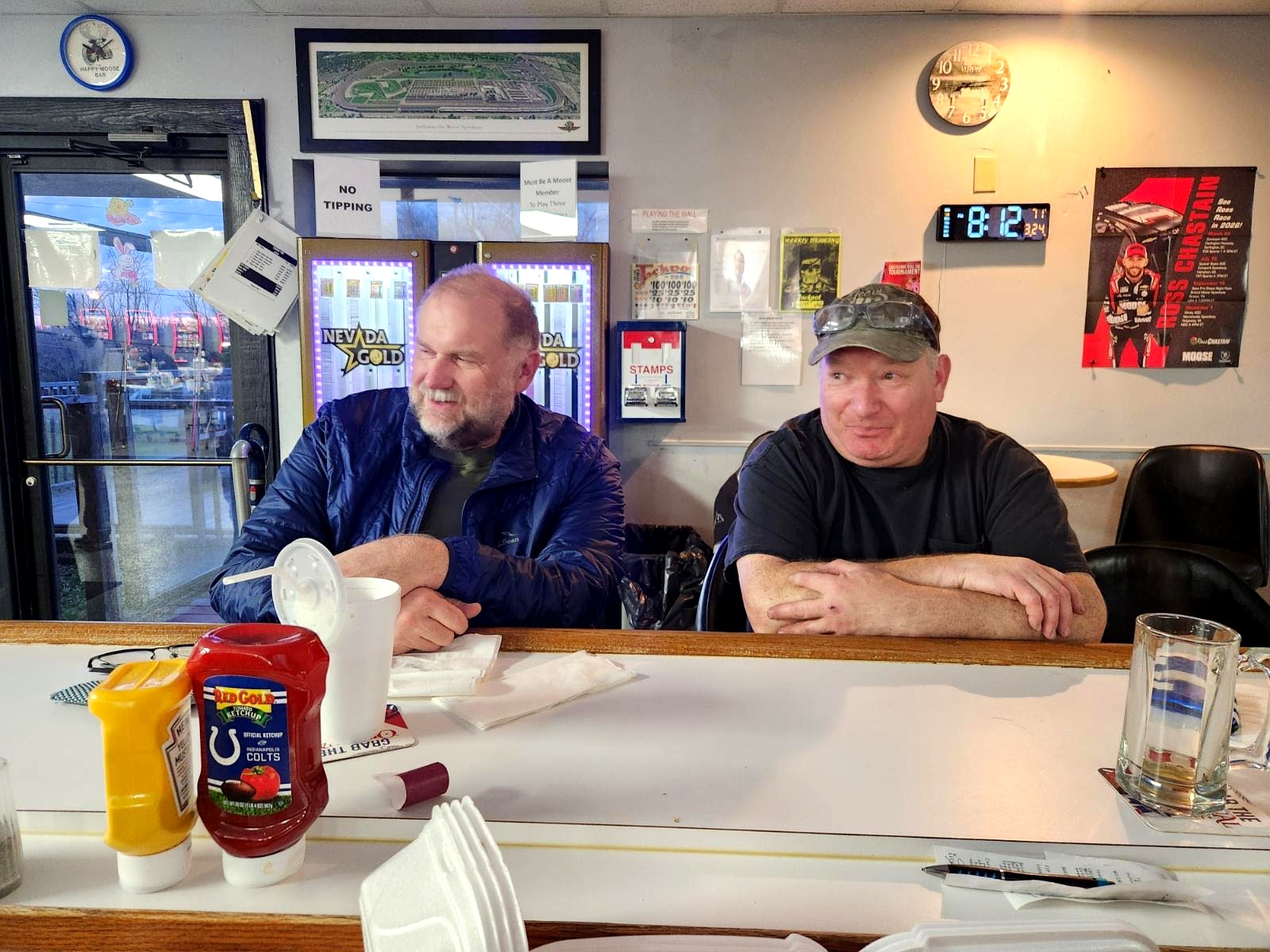
Pictured L2R, Brian 'n' Jordan hit the Indianapolis Moose Lodge (at Jordan's request) for a Moose burger.
Kit We're "Blatantly Pushing You To Buy"

[Solo or 2-4 Rider Group Intercom]: Built for Every Ride! Fodsports FX4 Pro motorcycle Bluetooth headset works for solo use or small groups of 2-4 riders, with smooth intercom and a reliable 1000-meter range. Whether you're riding alone, chatting with a partner, or coordinating a tight-knit crew, ev More ...

Cardo Systems Spirit Motorcycle Bluetooth Communication Headset - Black, Dual Pack
Universal connectivity: SPIRIT connects with any other Bluetooth headset of any brand; Connection is easy and painless. Waterproof: No matter what you throw at it, your waterproof Spirit will take the beating and keep you connected; Rain, shine, mud, dust, or snow. Over-The-Air Software Updates: Alw More ...

Sena 50S Mesh Communication Headset features premium Speakers & Microphone with SOUND BY Harman Kardon. One-Click-to-Connect Mesh Intercom, Robust Reliability. Bluetooth 5 enabled. Voice-activated digital assistant access ("Hey Google"/"Hey Siri"). Fast Charging, 20 minutes of charging equals up to More ...

PRACTICAL DESIGN - Hax motorcycle helmet meets DOT safety standards. The aerodynamic design helps reduce wind resistance and minimize wind noise. Multiple vents can quickly replace the stuffy air. Upgraded hypoallergenic padding for your safety and convenient. PERFECT COMFORT - Motorcycle Street Bik More ...

IMPACT RESISTANCE PROTECTIVE: The riding gloves are designed with microfiber material reinforcement. With the excellent cushioning effect, the skateboard gloves can effectively resist the impact of sharp objects, and protect your hands from scratches and abrasions during tactical or motorcycle cycli More ...

Racing Gloves with Padded Knuckle Our full-finger leather racing motorcycle gloves for men are equipped with padded knuckle protector. They feature a padded wrist adjuster and adjustable wrist strap and sinch closure, providing a customized and secure fit. Expertly crafted gauntlet racing gloves in More ...

SUPERIOR FLEXIBILITY & GRIP: Phantom exam gloves are made from powder-free 6-mil thick latex, offering excellent dexterity and a full-surface micro-texture for enhanced grip in wet and dry conditions. POWDER-FREE & LOW LATEX PROTEIN: Designed to minimize allergic reactions, these latex gloves featur More ...

- [ ATTENTION: GENDER-SPECIFIC FIT] Please select carefully! The PINK variants are tailored specifically for WOMEN'S hands, while the YELLOW & BLACK variants follow standard MEN'S sizing. Always measure your palm and check our dedicated dual-size chart image before ordering to ensure the perfect fit More ...

Method for choosing the size,According to palm Lengthpalm circumference refer to left size chart. Centimeter data has less deviation than inch data.Measure palm Length: Measure the length of your hand from the base of your palm to the tip of your middle finger. Measure palm circumference: Wrap a mea More ...


Quality & UV Protection: These competition polo shirts, made from 88% polyester and 12% spandex, are breathable and soft. With a UPF50, they provide excellent UV coverage. Half-placket & Hidden Snap Collar: Half placket neckline design of this womens show shirt not only ensures effortless donning an More ...

LIGHT WEIGHT: The Moto Airbag Vest is also super light weight making it comfortable while wearing it over your favorite jacket or coat! It is so light, cool and comfortable you will hardly notice that you are wearing it!. MATERIAL: Motorcycle Air-bag Vest Made of 600D polyester Oxford and mesh fabri More ...

PSLER CE Level 2 Back Motorcycle Armor,CE Level 2 Armor Jacket Pads Inserts
DESIGN FEATURES - The CE 2 Level black cloth padding on the back side is designed to prevent cracking, so the product is more durable and you don't have to worry about the black cloth padding affecting the normal breathability, you just need to make sure that it fits with your jacket. UNIQUE DESIGN More ...

BORLENI Certified Armor Pads Set Elbow Shoulder Back for Motorcycle Jackets
CE Certified Armor for Elbows and Shoulders: Our CE Level Approved Armor Pad Set for Motorcycle Jackets, Made with soft PU Memory Foam. Our 5-PC CE armor pad set include 1 CE Level 1 Back protector, 2 CE Level 2 Shoulder protector and 2 CE Level 2 Elbow protector pads,fits both men and women for mot More ...

PSLER 5PCS CE Level 2 Motorcycle Armor,CE Motorcycle Jacket Pads Inserts
DESIGN FEATURES - The CE 2 Level black cloth padding on the back side is designed to prevent cracking, so the product is more durable and you don't have to worry about the black cloth padding affecting the normal breathability, you just need to make sure that it fits with your jacket. UNIQUE DESIGN More ...

REV'IT! Men's Eclipse 2 Mesh Motorcycle Jacket (Silver - X-Large)
Ventilated Design: Strategic mesh panels on front, back, and inner arms create consistent airflow throughout the jacket. Protective Features: SEESMART CE-Level 1 armor at shoulders and elbows, with preparation for SEESOFT CE-Level 2 back protector. Durable Construction: 600D polyester material provi More ...
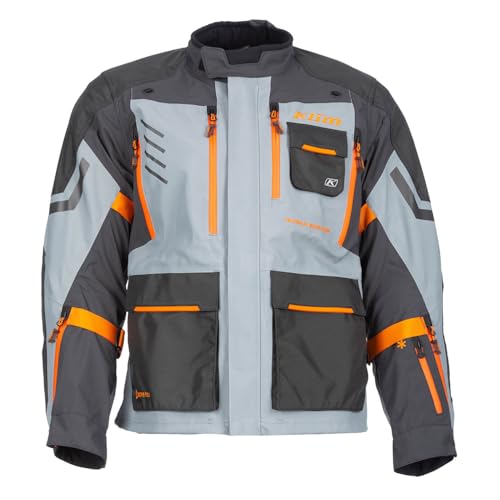
KLIM Men's Carlsbad Adventure Motorcycle Jacket Large - Asphalt - Ember Orange
Crafted with a GORETEX Performance Shell, this jacket features an FPL400 main chassis (same rugged fabric as the Badlands Pro) plus 630D Cordura twistedyarn overlays on shoulders and elbows for industryleading abrasion resistance. Enhanced with 3M Scotchlite Carbon Black reflective material for high More ...

[ARMORED HOODIE FOR REAL STREET RIDING] Milwaukee Leather Streetguard is built for riders who want casual hoodie comfort without giving up motorcycle-ready protection. The outer shell is made from a durable 90% premium cotton denim blend and reinforced with aramid fibers in key abrasion and impact z More ...

Did We Miss Sump'm?
Sixty percent of the time, we're right every time. What would you add to the conversation and why? Your input is invited. Leave a comment and/or write an article!
Share Link ...


Thoughts gone wild? Write an article!