
Take a gander at our FTC disclosure opus here ...
Mentorship, Community, Responsibility
Listen in as Team TRO talks mentorship, liners and the 1970 Daytona 200. Music by Rabid Neon and Otis McDonald. Download our feed here.
Transcript
As legible as we are intelligible ...
Brian: In this episode, mentors, community, responsibility, winter riding materials, and 1970 Daytona re-engineering. Opening announcements, news, corrections, and banter. Robin, what you got? I see some news here.
Robin: Triumph will launch their Tiger Sport 800 Tour for 2026. This bike includes heated grips, handguards, a dual comfort seat, tire pressure monitoring, a center stand, and 106 liters of luggage. That's the big dog right there. It's got side bags. Nice. And a top case. May I say, schwing, it's a beautiful bike. It makes me so happy to look at it, but I'm still overwhelmingly happy and satisfied with what I own.
Brian: What's the word? Vicarious. And I rode the 660 and 800 Sport last year. I have to say this 800 Sport, it's lightweight. It's going to make a fantastic sport touring platform. And having factory hard luggage. And in the photo, it is color-matched factory hard luggage. Oh, yeah. It looks like, are those shad bags or something like that? I kind of recognize them. I'm not sure who makes them. Yeah, they got color-matched color panels in them, and it looks tight.
Robin: They look like the Versys bags, similar to, at least. They got that angular, semi-jagged, semi-smooth, really good profile. But it looks like they actually can hold things. That's just badass.
Brian: Yeah, and coming with a trunk, too, is going to be, that's all that seems to be missing on a lot of these. Or maybe people just don't like trunks. I don't know. This is what we're talking about right here.
Robin: That trapezoidal shape on the top case looks to me to be GV, but don't quote me on that. I've said it so many times, and I'll say it again. They really nailed the tall rounder with this. All they needed to do was put angular, aerodynamic lighting up front, and then place it down low to give it that attack posture. It just looks so good. Makes me happy. And I promptly, shout out to our mutual friend Greg White, who's been on the show before. I immediately sent this to him, which is probably to his holiday devastation. Save up your pennies, buddy. Ha, ha, ha, vicious. That's the news. Banter. Brian, what's going down?
Brian: It's a little bit random. So last time I was recording, looking at the Gulf of Mexico, looking at the beach with a microphone duct taped to a random steel rod I stole from the gas grill. Anyway, yeah, we came back from the beach on Saturday to a snowstorm in Indianapolis. So we stayed in Nashville, Tennessee for an extra day, just to avoid that mess. I've been shoveling snow for the last couple of days. It was a horrible welcome back. I hate it. Don't know what you're talking about. Moving right along. It's usually not too bad around here in the winter, to be honest. Usually you can make it from like, usually you can ride pretty much at least a couple times a week, all the way from Valentine's Day to Thanksgiving Day. Usually you can get out some in December, actually get a few gift days. New Year's Day, Christmas rides. I've done those before. We'll see what happens. Hopefully it turns into its usual slightly milder self. Probably should have put this in news, but we noticed earlier this week that the Pirelli Angel ST sets on Amazon went on sale for $215 a set, down from about $250 a set. I scored a set before I told anybody, then I told Robin, then we added it to the Road Rubber rankings on TRO.Bike. I don't know where this guy gets them. I don't know who he is. I don't know anything about it, but this is the fifth set I've ordered of these tires. Five sets over the last two or three years. They always show up. They're fresh. They're recently manufactured. They're great. They're pristine, perfect quality. They're authentic Pirelli. Usually they're made in Germany and I'll just put them in my office and it'll smell like motorcycle tires for the next four or five months. Just a little shout out to check the Road Rubber rankings on TRO.Bike. It gives you all the poop on sport touring tire pricing and performance. Go to TRO.Bike, mouse over DigiTools at the top, and choose Road Rubber rankings to get there. And if you are someone who makes or sells sport touring tires and you would like a couple of gorillas to abuse them for a while, a very short while, get in touch. You know where to find us. Zero respect, yes. Zero respect. We'll find ways to wear them down quickly. That's all I got, man. What have you been up to?
Robin: We just had Kelly Howard and his lovely wife, Karen, here. Shout out to Kelly and Karen. Kelly's been on the show once or twice before. He's one of the resident authors over at TRO. He's working up a new article about why it is that we love the sound of a combustion motor. I think that's going to be a good read. But anyhow, two of them were here and we just had a good time. Went out to dinner, bowling, just good company. I've just been knocking down site tasks, making room for writing, taking opportunities for writing. Enough said, really. I am finally working on the article about the valve check on the GSX-8R, which nobody's covered. I've got your emails. I've got some other information. I've got all the photos that I took and I'm actually typing. It's already outlined. The photo's already in place, so that's coming soon. To a TRO.bike near you.
Brian: Excellent. Yeah, that's going to be a much needed resource. Technical informationos.
Robin: When that goes live, we should have some discussion on the episode. I'm going to need a reminder of the reverse math for how we ended up with the shrimps we put in, just for my own knowledge's sake. Lister questions. If you'd like us to field your questions, visit email.tro.bike in your web browser and send us a message. AB asks, blah, blah, blah.
Brian: Wanted to ride all my life. Yada, yada. Okay, no experience. Look for the question marks. Planning to take the MSF course in February. Planning on getting a 2025 Honda Rebel 300. That's a good bike. Yeah. Is it possible for me to successfully learn on the Rebel after only completing the MSF course with no experience? Second question. BL asks, just bought a 2025 Ninja 650 as my first bike. Am I going to die or should I get an H2 to start out? Is this a decent starter for a sport bike? QT asks, a related question. My two options at the moment for a first motorcycle are a Kawasaki ER6N or the 2024 Kawasaki Z500SE. I need something that will not leave me stranded by the side of the road since I need to get to my university classes. So these all relate to what's a good first bike? In a manner of speaking, the answer that comes to my mind is, yeah, sure. They're all the above.
Robin: Yeah. I mean, don't get the H2, the longer answer. If they're going to take the MSF course and they find themselves drawn to a semi-cruiser profile in the MSF class, then they're going to be just fine on a Rebel 300 after the fact. So the question's a little bit backwards in that they're thinking, if I take the class on a Rebel, am I going to know how to ride a Rebel after the class when I get my Rebel Rebel? It's going to be fine. A Rebel 300, great bike, especially if that's what you're after. Those things can actually lean as well, so they have clearance. It's a good machine. Sure. Yeah. On the Ninja 650 as my first bike thing, it's not a ZX.
Brian: No, it's basically a Versys engine in a sporty-ish chassis. So yeah, it's a smaller, lighter bike a little bit.
Robin: They slap the word Ninja on so many damn bikes. There's just Ninja this, Ninja that. And it doesn't have much meaning except for it's probably going to be a lot of fun to ride. It's very likely that when you throw a leg over it, you're going to have a damn good time. So the 25 Ninja 650 as a first bike, sure. The thing of it is, is that nobody that answers this question is going to truly know what you are or are not capable of or what you can or cannot handle. It's not really anybody's job to presume this. That's up to you. Sit on a lot of bikes. Yeah. Buy the right tool for the job, so to speak, you know? And then as for the last one, the Netherlands thing, if it was me, I'd go Z500 because it's got ABS.
Brian: Yeah. The other thing is that they were looking at an ER6N, a 2015 model, and the Kawasaki they were looking at was a 2024. And especially because they mentioned reliability, I've said it before, I'll say it again, is that if it's your first bike, it's a really good idea to consider new or close to new if you possibly can, because you just don't need to deal with older bike BS. Gremlins. Yeah. Gremlins and BS. You just don't cheap out, spend a little bit of money and get something that's a little newer, that's going to be a little more reliable, that the dealer is going to be able to support. A lot of dealers won't work on stuff older than 10 years. I don't know how that works in the Netherlands, but that's common in the US. The person looking at a Ninja, that could be a great bike. And it's also one that you're not going to get bored with. That's Travis's track bike is basically the same thing. It is the same thing. Not basically, he's got the Kawasaki ER6N. It's a great engine. Like it's got enough power to do whatever you want to do on the highway to go long distances, etc. It was also very user friendly. It's a very relatively light bike. So yeah, like a 300 or something is a good, is a good first bike. 300, 400 CC around in that area. Those are good first bikes. I'd say if you're, if your average height or a little taller than, then the larger bikes could be fine too. The 650s and so forth. Someone who's smaller might want a little less weight and might want to lean a little more towards a smaller bike. The other thing I will say is that just get through the MSF course and then worry about what bike you want to go sit on a lot of bikes and then worry about what bike you want to deal. If that's the bike they have in the course, you may never want to see one again. It may hurt your butt. You know, I don't know. You don't know. Sit on a lot of bikes, talk to a lot of people. Just ask a lot of questions. Be that puppy dog. People love it. They'll answer your questions. It'll be fine. And then, and then figure it out after you take the course or figure it out closer to the actual time. When you get a little bit of experience, there's no need to jump the gun on it. You know, unless somebody's selling one super cheap or something with bikes like this, you can always get a lot of your money back out of it. You're tying up capital, but you know, they don't really lose much value unless you buy brand, brand new. And even then you, they still hold the value really well. All good choices. All right. You ready to move on to segment one? All right. Segment one. We're going to be talking about mentorship, community, and the responsibilities within. All sounds very deep. You like how I put the within part?
Robin: I felt like that was pretty heavy stuff.
Brian: Yeah.
Robin: Yeah.
Brian: That's heavy, man. All right. It's winter time. Thoughts turn to philosophy, things like that. So maybe that's, maybe that's why this popped into my brain a little bit. Just to kind of set the scene, motorcycling is, it's something you have to take seriously. It's the most fun you can have with your clothes on, but it's also, if you're going to put yourself out there in the world on two wheels, you have to take it seriously. You have to pay attention. You have to pay attention to your bike. You have to get educated. You have to learn. You have to wear the gear. If you don't take it seriously, you stand a much higher chance of unaliving yourself, you know, or whatever the kids are saying now. There's also a little bit of a paradox. The more seriously you take motorcycling, the more fun you have, the more, you know, the more, the better it is really, really applies to motorcycling. Like any good, like any good hobby that can bankrupt you or kill you, the more, you know, the better it gets. So that's part of it too. And so I think that's one of the reasons motorcycling creates such instant and such strong bonds between people who ride. It's a shared, significant, big experience, and it creates just a huge bond between all of us. And there's a real sense of community you get. Kind of what brought this up is Angel was talking about the second she rode away from the dealer, you know, on her new bike, the first time she had a problem, someone popped up and the community took care of her. Oh, right into the web of community. Yeah, I think there's a lot to talk about there because as experienced riders, I, you know, I hate to, anyway, I've ridden more than most people, more places than most people. I don't know. We have a responsibility for each other. All of us do, everyone who rides, whether they're experienced or not, both Robin and I and everybody I know have benefited from all these different people you learn from, whether you call them mentors or whether you call them just people you run into. I don't know. People in your neighborhood. Yeah, the people in your moto neighborhood.
Robin: The people that you meet each day. Sesame Street reference. Come on, really?
Brian: Sesame Street.
Robin: Yeah, nevermind.
Brian: We had three channels on the farm. I, yeah, we didn't always get Sesame Street. We had to go to grandma's house. It was rough out there. So yeah, there's a lot of pieces of community. Like, you know, you, you, if someone's broken down by the side of the road, you stop and see what's up. You know, when you're at the track, people are always helping each other, lending tools, tires, expertise. Somebody was wandering around, they needed boots and boots appeared, you know, things like that are just, that's just normal. That's how, that's how this, how this, how this activity works. It's not a hobby. Yeah. And you watch for each other. You watch for loose bolts. You watch for tires. I've spotted missing master link clips in the middle of nowhere. And, you know, just things like that. You care for each other and you take care of each other.
Robin: I remember somebody spotted a missing motor mount at my first track day.
Brian: That could be an issue. Ta-da!
Robin: Was it a deliberately omitted motor mount? No, it was not. In fact, I'm not sure what the hell point was. It wasn't there. And I was informed by the community that had my back. Everything Brian's saying is spot on. And the thing about mentorship, I've thought about all the people that I've referred to as my mentors, and they might not even think they were that. In some cases, mine for sure, it's not necessarily up to them. When I first began riding, I was hunting around for information. I wanted to know who I could hang out with and start sponging better knowledge off of, and was greatly surprised when I wanted to understand better how many riders were resistant to that. They didn't have time for that. When I became an obstacle to them doing whatever it was they needed to do, just because I wanted to hear about the reasoning behind why you do one thing versus the other. There's a reason that that's a fast track to not hanging out with them. So then you run into a handful of people who are willing to load balance the information as it is distributed, meaning every one of them throws a little bit into the pot one at a time when they have time. And the end result is a pretty mighty bushel full of knowledge. You can get a better understanding of your bike, how to ride it, just from that collective effort of your own making. A little bit here, a little bit there. Keep your ears open. I've said that Brian has been a mentor to me. That is not false. Wasn't one of those things where he's like, come on, Robin, it's time for your apprenticeship. No, I wanted to know information. Brian was willing to sit down with me and discuss it to the extent that I could absorb it and then carry on to the next day and ride together and talk about routes and why we're doing what and little bits of information go a long way. It's up to you as a rider in search of knowledge to determine who you want to gather that information from. And if you decide to refer to them as a mentor in the future, even if it's under your breath so they don't have to deal with it on their own, such as Brian is awkwardly dealing with right now, so be it. I did not hang out with Brian and he said this, this, this, this, this, and this. I hung out with Brian and he said this, I got to go.
Brian: And that was enough. It's also important to note that you have been a mentor to me in many ways as well. And so it's a two-way street. It's not just a, here's someone from the mountain with the stone tablets of motorcycle knowledge. And of course, there's just a lot that's just mutual. Like, oh, wow, that was a fun road. How did we find that? Why, how do we get here? What's going on? You know, we talk about how, oh, well, I follow the terrain and blah, blah, blah. Oh, well, that's cool. I need to do that. I know Robin has followed me for many thousands of miles and I followed Robin for many thousands of miles. You develop an appreciation or a sense of how, you know, how this all goes down, how they're riding, how they're seeing the road, how they're seeing the environment, the weather, et cetera. And you learn from each other quite a bit. So that happens a lot too. Part of it you touched on too was that newer riders have to figure out who your people are, who your tribe is, maybe is a good way to put it, or who your community is. There's also a responsibility all around to be part of a community, to be a good member of the community. And again, you get people who just want to go do their own thing and that's fine. Nobody's required to do anything. That's one of the things Angel was talking about too. And again, it was really inspiring talking with her because one of the things she was talking about was finding community and figuring out who's going to be in that community and figuring out who's full of crap and who's got valuable things to absorb. What am I ready to absorb right now? That kind of thing. It's always kind of interesting to think about it and see that process happen with somebody. It's a conversation. It's bits and pieces over time. It's demonstrating. Yeah, so let's go ride and that's all you talk about. But you communicate a lot more than that. You know, it's not just words. You and Maggie and I think damn near everybody you know are almost what you call professionals. You're instructors of some sort. I mean, obviously you make a little bit of money at it, but I think most of the people are doing that are in it to give back, to make motorcycling better, to help new motorcyclists live through the experience, to be blunt. I mean, is that part of it for you?
Robin: It definitely is. I heard somebody say after I was already way too deep into the idea that maybe I could make a career of this that nobody really makes a living at motorcycling unless you're a massive conglomerate with a media production company that's on retainer videos and travel and transport products and the onslaught, unless you're RevZilla is what I'm really getting at here. If you're not RevZilla, then there's no making a living at it. Although I would bet that Dylan Coe probably has something to say about that. But at any rate, I personally know that TRO is a struggle. It is a hard fight to keep this thing on my shoulders and I'm happy to do so. I'm a one-man army with a lot of people supporting the pyramid scheme of it all, Brian included. Yeah, it's sort of like when you make the big paycheck, quote unquote big, for having coached an MSF course, or if you finally write an article that just blows the hell up, or if you follow your friend's instructions and make a video about how to break a tire bead with the smallest of tire spoons on the roadside, I mean, that video has mad hits. But still, YouTube has not validated us worthy of ads. You know what I mean? It's an impossible journey. One that I don't mind doing, but I'm hoping some massive benefactor will just step right up and be like, here you go, financial mentorship. There you go. A financial community mentor. Bottom line, you're right. I didn't do any of this for some anticipation of a mass profit. It's for the good of getting things wrong and then rewriting them so they're right. Yeah. Letting the general public watch us grow as they do.
Brian: Yeah, and much the same here. I've written a bunch of articles for TRO, for example, and Robin is doing the hard work of production and running a damn website and all that stuff. I get to have a thought and see it through and then throw it at the bathroom wall and he allows it to stay, and it's great. The impulse is, here's something that I have to say that I think no one has said before in motorcycling. Maybe they have. Like the article on fear, that was a big one for me, is one that I really wanted to get out there. I have no idea if anybody's read it or I have no idea what the numbers are and that's not why I wrote it.
Robin: Listeners, please just hold on a second. I have to have a discussion with the staff. You do realize you have login information, right? Oh yeah. But no, that article does well. In fact, it has comments and I think you've responded to some of those comments. It travels about on the net. It's out there.
Brian: Yeah, so I wanted to get it out there to get something out there and it's also part of the community and it's part of the seedy underbelly of motorcycling is, yeah, sometimes you get hurt. I've been hurt and here's how I came back or here's what I don't understand about how I came back. I came back, I have no idea how, to be honest. So that's why that's there. I don't know if I feel a responsibility, but I feel an urge to give back, to be a good part of that community, to spread the word. I think the world is better with more motorcycles and more people riding motorcycles in it. And so I want to spread that around. I don't want it to be, I want to show people there's a really positive, really fun, really interesting world out there of discovery on two wheels. I want to be part of that and help build that community. And I think a lot of people, maybe a lot of people feel that way.
Robin: That's a big deal. What am I writing about right now? The valve check. That's different. But a lot of my articles are, what are people searching for and not getting an answer to? That's basic SEO. Look for the key phrases that people are like, Hey, I want to know about this. And there's no answer to the call. Those articles do well. They're just a nice, simple little answer that might steer them in a direction that's better, safer, product purchases, affiliates, all that shit. But that is throwing potato chips onto the lunch plate of community. Little crumbly bits of information that are brief, but to the point and allow you to find out what you were looking for, find what you were looking for.
Brian: I wrote an article on how to find fun roads to ride if you're in the flatlands. I need this information. I needed it. And I couldn't find it. So I wrote it. That's part of it too, the podcast. And plus it's just a lot of fun to do the podcast. It's a lot of fun to do the articles and stuff like that. So the last question is, how do we avoid traps like mansplaining, douchebaggery, know-it-all crap, nerdery, overbearing proclamations, things like that.
Robin: You're only saying that because Joanne just arrived. You're saying this because she's like, what have I stepped into? And she's playing us through her speakers, which is feeding back.
Joanne: I was gracious.
Robin: I was like, come on in.
Joanne: It's going through my headphones. I don't know what you're, I don't know.
Robin: Now it is. It wasn't. Which brings us to segment two, The Armory, brought to you by GearChick.com.
Joanne: Greetings.
Robin: What would you like to talk about on this fine evening?
Joanne: Earlier today, I had this amazing experience because I have been shopping as much as I can on used marketplaces to save money, but also to find some really good deals. Because people are always selling things that they, you know, people sell things like people sell motorcycles with 400 miles on it, you know, over a five-year period, their bikes they don't ride. People sell all kinds of things like a helmet they bought and they never wore it, you know, or a jacket they bought for their girlfriend, but she doesn't ride anymore, you know. So I scored a pair of these Canadian winter shoes. It's Canadian brand. I've never heard of them until I Googled it called Cougar. So they make incredible outerwear, particularly shoes, footwear, right? We're living in these really cold climates and really cool. You know, they make a hiking boot, you know, snow boots, you know, casual, you know, waterproof shoes. I have been on the hunt for waterproof and snow friendly shoes. Not a boot because I have the boots. I have the whole like knee-high winter boot, blah, blah, blah, blah. But I don't want to trudge in those all the time. I mean, you can find waterproof running shoes. There's a lot of them. Like my favorite ones I wear, my Revit H2O. God, I forgot the name of them already. Like how long I've been so out of it. But every brand makes a waterproof running shoe. That's easy. But to find insulation that's snow level and a shoe and not a boot, it's pretty hard in the casual world. Well, Cougar, they make a beefy, it looks like a beefy high top. And it's like $170 retail. So it's a really, it's a well-made quality shoe. They use brand name materials like my favorite called Primaloft. So Primaloft is this magical insulation. It's fake down. It's not down. It looks like cotton. If you look at Primaloft, it looks like cotton balls that have been shoved in your coat. So you see Primaloft in ski clothes, you know, outerwear, all kinds of shoes, winter gloves. And I'm talking about casual clothes, not yet motorcycle clothes, but I'm going to get there in a minute. The reason I love this Primaloft is because it's really light and it's not bulky. Because remember friends, the way you stay warm regardless of your activity is not weight. It is technology. And that's what Primaloft brings you because the weight of the insulation is light, literally like cotton balls, but it is really warm for how thin it is. And that's the magic of this material. Because we all know how much it sucks to wear a thick, chunky garment under your motorcycle jacket. It's uncomfortable. Like it sucks to have that extra under your armpits and your sleeves. You want to look for Primaloft mid layers that you can wear under your motorcycle jacket. Like I have a mid layer, of course from Revit, and it's a Primaloft lined coat. It looks like a Patagonia down lightweight jacket. Think of your traditional Patagonia-y looking, yeah, little down coat, right? Well, the Primaloft insulation, it makes the jacket feel like a summer coat, but man, it's really warm. It's also the water repellent. So if it starts to rain, I don't get wet quickly. I will get wet, but it takes a little longer because the material is really good at keeping moisture out, but it's also insanely breathable. And so these are the kinds of materials you want to look for in your winter clothes. The same kind of stuff you wear skiing or fishing or hiking or snowboarding, those are the same materials you want in your motorcycle clothes. Primaloft is my favorite, but there are other ones like Thinsulate. That's another popular insulation material. Here's the thing though, you're not going to get these materials in your $99 Amazon motorcycle jacket.
Robin: Saran wrap.
Joanne: Right? You're not going to get these materials in a no-name brand, generic, who knows what it is. These are materials being used by the big names like Alpine Stars, like Revit, Dainese, Ruka, Klim. Of course, these brands are going to use these materials because they work better. And that's why you're spending that money. But hey, if you live in a cool place, right? You live in Denver, you live in Michigan, New York, you're probably already wearing a Polartec fleece, maybe under your heart. Well, wear that under your motorcycle jacket. That's going to be much warmer than any liner that you're jacket might come with, because a lot of the times, it's really, really impossible to find a technical mid-layer that comes with your motorcycle jacket, because they're going to spend money on the outside, right? So if you find a Gore-Tex, right, let's say you buy the latest Klein Gore-Tex, you know, waterproof adventure jacket, yes, you're going to have this bomb-proof, waterproof, windproof shell, but they're not going to give you a $300 Primaloft coat.
Brian: Yeah.
Joanne: So you're looking for technical fabrics like that. Certainly for places that have windshield, you really want a windproof shell, a name brand like Gore-Tex. Now, there's a lot of competitors, though. Like North Face, for example, as we're talking about snow things, they make their own material called Hyvent.
Robin: Yeah, I've got one right here.
Joanne: Right, like proprietary, right?
Robin: Yeah.
Joanne: Even if they don't use a name brand like Gore-Tex, that's okay. Maybe they're developing their own, because a lot of the brands, of course, they spend with Gore, but then they have to offer something less expensive. So they're going to maybe design their own material in between that's less expensive than Gore, but emulates the properties. So it's windproof and waterproof. So you're looking for that. And the other thing you want to look for is if you're jacket shopping and glove shopping, you can find summer or winter waterproof things. There are garments that are designed specifically for summer to be waterproof. Those are not the things to wear in Michigan in October. Right? So those don't work. So you can't complain, no complaining, when your summer weight waterproof gloves are not working in November. You're wearing the wrong product for the season.
Robin: Two tips. One is, if you have made the mistake of only wearing your summer gloves, only define altitude as having a negative effect, just for that one instance where now you're going to go home and buy the right gloves, put on some nitrile gloves underneath them, latex nitrile, put them on another, it will seal in everything.
Joanne: Emergency use. That's a really good emergency. Absolutely. Emergency use is to do that.
Robin: Second tip. Everything that Joanna's talking about right now, if you just put the material name and then motorcycle after it into Google, try that. Material type, motorcycle after it, you're going to find some of the best products.
Joanne: Now to go to really basic wintering, because, okay, those are materials to look for. But generally speaking, if you're going to go out in winter, you really don't want more than three layers. You don't need more than three layers. It's not about having five. Okay. Maybe if we're riding in 10 degrees in Alaska, because you're crazy. It's all about outer, mid and base. Those are the three core layers you need. And we're talking about reasonable winter riding here. I'm talking about like maybe 40s. I'm not talking about 10 degrees, single digits. Nothing is going to keep you warm in single digits. You could have heated and still be freezing in single digits. So I'm talking to the crowd of average winter riding. You want to follow that methodology, outer, mid layer, base layer. A base layer is not a cotton t-shirt. A base layer is not a long sleeve cotton t-shirt. A base layer is some kind of technical layer that's designed to fit close to your body to keep you warm. And it can be like, you know, Cycle Gear or Zilla have a house brand called Axial and they make like a $25 base layer shirt that's a thermal shirt. Again, something you ski in or maybe hike in. We're talking, that's what your base layer should be for winter. Or a smart wool, you know, again, you live in these cold places, we all have cold things we wear. Like no one's living in upstate New York running around in a t-shirt and shorts, unless you're like crazy. But I mean, any one of us who live in winter climates, we have winter clothes, right? We all have a winter coat. We all have our winter fleece. We all have our cozy base. If you don't have a base, if you don't start there, it doesn't matter how great your outer and your mid could be, you may still be, it's still going to be chilly. And your first defense, like the first place is that base. Because keeping that body heat in as much as possible makes a huge difference. You may not even need a winter motorcycle coat. Maybe you have a leather jacket that you love. Let's say the temperatures for your winter, let's say you live in Florida, right? And it's 50 degrees or 55 degrees in winter, and you don't need like an Arctic coat. Maybe all you need is a really good mid layer and base layer or just a base layer under the leather and you're warm. Depending on how hot or cold you run, start with your base, then move to the mid and see if you need that. And then check your outer, because example, leather isn't a winter jacket material. It's skin, it gets cold. You really need to be wearing technical fabrics on the outside of your jacket if you really want winter, like a true winter level coat. That's where I'd at least start depending on what your issue is or kind of what your cold is, right?
Robin: I'll still stand by that, yeah, anything that she's talking about right now, if you look for the material type and then motorcycle after it in Google, you will find a lot of what Joanne's talking about and profit from it. I will also say that anything that you would do that Joanne wouldn't, that means that you are crazy.
Joanne: No. Oh, of course, I forgot to say heated. Oh yes. Duh, there's always heated, but...
Robin: I've still got my guide girbings.
Joanne: Oh my God, but heat isn't for everybody. You don't necessarily need heated, again, depends what level here. If you live in Minnesota, yes, you need some heated. If you live in Southern California, you probably don't, but if you want to, you can. There's also battery heated, like what I call seven volt, where there's a battery in the pocket. Now, here's the thing with seven volt, think of that as a lightweight heated because seven volt is never a fully heated, meaning every surface area of the jacket is heated. That's what a 12 volt plug-in motorcycle liner does for you. If you buy a heated jacket liner from a girbing, which is the big name, Girbing and Warm & Safe, they're the two industry pioneers for motorcycle specific heated layers because they both have fabrics that basically cover the entire jacket in heated element. The power is needed so high, you have to plug it into your motorcycle. There is no plugging into a battery in your pocket. A seven volt product is things you find on Amazon. So if you go on Amazon, I need a heated jacket, or you buy a seven volt product from Girbing, there's only patches of heat, like two chest squares, a back square, maybe a neck, but that's not every inch of surface of the jacket because they're not going, it can't, a little battery in your pocket can't heat that much surface area. Those items are designed for like walking your dog in the snow, going skiing, if you're only going like 10 miles an hour, going outside and working outside. Those are great. And if you just need, you know what? I only need my chest heated. I don't need the sleeves, then do a seven volt. There's a ton of companies out there doing that.
Robin: I can test it. I think that if you do a seven volt, I think it can actually heat everything. Everything can heat everything if you use it wrong enough. So you just set the battery on fire.
Joanne: Well, no, I mean, it can, but it depends how much heat you need. Some people just need their core and that's great. Me, I need more of my core.
Robin: I need my sleeves.
Brian: Oh, sleeves, all that. Yeah.
Joanne: Socks. I need all of it. Right. But yeah, you can do socks.
Brian: Yeah. You need a generator in the back of your bike to, you know.
Joanne: No, your bike is the generator. Oh, that's the other thing. You know, heat is a whole nother thing.
Robin: Your stater would disagree.
Joanne: It's a whole thing. Right. Power is a whole nother episode, maybe. But again, that's really the extreme. And if you haven't exhausted this, the basic, do I have a good base layer? Do I have a good mid-layer? If you haven't even exhausted those, you don't necessarily want to jump straight into heated.
Robin: Similar banter at higher revs can be found through the GearChick website. Visit gearchick.com and dig in.
Brian: And let's move on to segment three, moments in motorcycle history with Jordan Liebman. So this time around, we're in the clouds once again, hovering over Daytona in about 1970. Now Jordan's got plenty of info to explore on how that year brought interesting changes to motorcycle engineering. Some of those mods were tested, tried and true. The rest were a little experimental. It's a dice roll this round with snake eyes and boxcars determining each racer's fate at the podium. Take it away, Jordan.
Jordan: The Isle of Man was approximately a 200-mile race, but it was more turns than straights. So you can make up a lot in turns if you don't have all-out speed. So going back to the handling aspect, racers were won by handling more than they were by top speed. And a famous story is the story of Mike Hailwood, Mike the bike, who won the Isle of Man 12 times to that point, famously getting off of his Honda RC166 at the Suzuka race in Japan, removing the shock absorbers from the bike and throwing them into a pond in front of everybody. That was his editorial on what he thought of the Honda handling at Suzuka, which was a six-cylinder, 250cc race bike. That's how important handling was. So all of the handling expertise to that point was put into the British entries in 1970. Now the BSAs in front of Tridents in 1969 did not win that race. They had issues. It turns out that at Daytona, these bikes that were brand new and had not been really dialed in were going around the circuit and dragging their exhaust. So that was 69. They had it all figured out by 1970. Now instead of having effectively three into two into one or whatever it was on each side, they had a single three into a plenum into a single megaphone on the left side, I believe it was. And it had plenty of clearance to race on this racetrack. They were designed in tune by Doug Helley and Percy Tate, who also raced in this race, of the conglomerate's race team. Both effectively had the same engine and differing names. The Triumph and the BSA had basically the same engine, or they were the same engine, just different names and styling. Despite pushrods, they used stock front forks, meaning that there's the same exact front fork that was on the bike that you could buy in the showroom. Because they were concerned that they could have gone with a Sirianni fork, but with the forces on that bike, they were worried that it was going to twist under the stress and affect their handling. So they stuck with what they knew and left on their stock steel forks. The front drum brakes on the BSA and Triumph were 10-inch, double-sided, double-leading shoe drums, so they're massive. The rear, for some reason, they went with a disc brake, which was a Lockheed disc, reportedly with an aluminum rotor. That to me sounds sketchy as hell, but they were trying to save some weight or something. Lockheed Aeronautics Company was designing some of the very first hydraulic disc brakes, and that's what they had on the rear on these Tridents and Rocket 3s. So the handling on these bikes was tweaked to perfection. 69 was in the rearview mirror, and they were going to do everything they could to win in 1970. It was a factory-backed effort on both brands, and on top of that, they had the widest power band out of any bike on the racetrack. Suzuki, Yamaha, and Honda, the Yamaha power band was about 1,500 RPM at the top of the rev range. The Suzuki was probably in the 2,800 to 3,200 RPM range for the T500-based racers, and the Honda was a complete unknown. The best riders for BSA and Triumph were getting top speeds in the mid-150s, which is a good five miles per hour faster than the best Harley did in 1969. So the bar that Harley set for themselves during qualification was proven to be too low on an untested engine. Harley-Davidson, who had won the past 200s and had a total of 16 wins under their belt in the previous 30 years, more than half of the last 30 years, they won the event, had wielded no small level of influence on the rules of the 1970-200 race, successfully lobbying the AMA to change the rules to favor their new-for-1970 XR750, which replaced the side-valve KR750 side-valve engine, which they had been winning on since 1940. So it's, this is long in the tooth. This engine that they had been winning with, probably could have done really well with in 1970 with, they ditched it and went for a new design. They'd been winning 16 out of 30 years, and they used it to win at Daytona in 1968-69 at the hands of Cal Rayburn. If you watched a movie on any Sunday, which everybody has to watch, it's a rite of passage if you are more than a motorcyclist showing up at the bar and going back home. You have to watch that movie. Almost everybody that I'm talking about in this story are in that movie. You say, like, you haven't seen it yet. So a lot of these guys started out as bloodcrackers. A lot of these guys were dirt riders. And two of the guys that made expert for the Daytona 200 for the British teams had never raced on the GP circuit on a road. Harley was looking for a hat trick, a trifecta, in 1970, but they were not aware of what the competition had been building. In 1969, the top speed of the 200 was on a Harley KR750 in the hands of Roger Riemann, although he did not win. Harley had convinced themselves that the bar had been set at 150 miles per hour. Difference between 150 miles per hour and 160 in 200 miles is about nine miles of distance. Do on that for a second. Five miles per hour in this race wins the race. Prior to 1968, at the Daytona 200, overhead valve engines were limited to 500 cc. Now, Harley had a 750 cc overhead valve engine, but the rules allowed it. Two-strokes were limited to 500 cc, of which there were only two, Suzuki and Kawasaki. Suzuki had the T500 500 cc two-stroke twin. Kawasaki, after graduating from the A7RA, which is a 350 cc rotary valve two-stroke, now they have the H1R, which was a triple, also known on the consumer market as the Widowmaker. The earliest ones had a distributor ignition with a CDI, capacitor discharge ignition, under the seat. Originally, I was looking up to see whether or not Kawasaki was racing the A7RA, which was their fastest bike until 1969, which was a 350 cc rotary valve two-stroke, and it was wicked fast. But it had to compete now against overhead cam 750s, and that's a lot to ask for a 350. Still, they did have some entries that were A7Rs, and Honda, these are privateers that were in the race, were probably still racing CB77s or even private CB450s. They may or may not have been because the FIM and the AMA had banned the CD450 because they had way too much technology. Robin, you know that story. Basically, when you have these guys that are entering motorcycles, 81 riders in this race, we have the expert experts, the top of the heap, all the best riders with factory-supported race teams, and then you have the privateers, and not too many privateers are going to be able to compete against the best of the best. It's almost like in a video game, you know, where you can go along and collect coins for points, and you get gems, or, you know, you can go explore the, you know, the cave system or whatever instead of stampeding straight to the finish line and defeating the big monster. These privateers are basically obstacles for the best racers to lap, all right? And you see that at the end of the race, that a lot of these guys had been lapped repeatedly, yet still placed. So, at best, these privateer entries, most of them were mere obstacles to be lapped by the more modern, bigger capacity factory race bikes. So, in all this, what was Yamaha's entry in this race? Suzuki had a 500cc twin, very competitive. Kawasaki had a three-cylinder two-stroke. Also very competitive. Yamaha had made their name on the TD1, TD2, and now the TD3, based on the YDS1, YDS2, and the YDS3, 250cc two-stroke. In 1968, early 69, Yamaha came out with this production. I think 67 was the first year for the YR1. Now, Yamaha names their bikes based upon displacement and a letter. So, A is 125. There's no B. I don't believe so. D is 250. C is 175 or 180. R is 350, okay? Yamaha had this bike called the YR1. It was a, at this point, now they have, they've gone from vertically split to horizontally split crankcases. They've moved the clutch off of the crank shaft and moved it onto the output shaft, which slows the clutch by 50% effectively. This was a big deal, was a problem for Yamaha in the early days, yet they were very competitive. So, now Yamaha comes out with this TR3, the YR3 of 1969 and 70. It was a two-stroke vertical twin and it had a multi-port system for scavenging the two-stroke charge from the crankcase. Originally, the early Yamaha two-strokes were basically going to be one port in and one port out. This one had seven, okay? So, this was their idea of maximizing the cylinder charge for the most effective combustion. And they're racing with expansion chambers, which started in 61. And they have this 350cc bike that, in qualifying against these 750cc bikes, almost made 152 miles per hour.
Robin: Excellent material. He is just fun to hang out with. It's strange. He always starts out so clear and articulate, and by the end, all the words just sort of mush together.
Brian: I can almost smell 1970 from here. Oh, man. That's rough. That's a rough one.
Robin: Yeah, it's my turn to... You're up next, dude. We're going to be joined by Stephen Christina of ARC Academy. That's arcacademy.com if you want to learn about him. He'll be joining us to discuss all that's happening in fabrication and how you can attend his school and become an informed welder, if not a metal sculptor. Nice. That guy's way too cool for school. He's got no reason to talk to me and yet has made the time to do so. Thank you for that. Are you two ready to get out of here? Yeah, I need to eat something. Let's get out of here.
The Gist
Brian plays tire cop, newbie whisperer and Tiger 800 hype man while nudging everyone toward TRO's Road Rubber rankings. He shrugs at Indy's winter chaos, brags about scoring cheap Angel STs and dares tire makers to let "two gorillas" shred their products. His starter-bike gospel stays the same: finish MSF, try lots of bikes, get ABS and stop pretending you need a rocket when a 300-400 cc or mild 650 will do.
Robin swoons over the Tiger's gadgets, trolls a friend about it for sport and confesses ongoing love for his current bike. He's cranking out a GSX-8R valve-check story, steering newbies toward sensible bikes from the Rebel 300 to the Z500 and lecturing them to find mentors instead of influencers. Next, he slips in a hack or two on how "nitrile gloves solve everything."
Joanne hunts used boots like a thrift-store sniper, using them to roast fake insulation hype. She delivers a winter playbook of non-cotton bases, legit mids, real shells and the eternal reminder that leather is just cold skin pretending to be gear. She also ranks heated gear, some of them seven-volt toys, reminding the guys to Google materials with "motorcycle" in the mix like an adult.
Jordan beams back to Daytona 1970 where handling ruled, Brits fixed their exhaust flop and everyone pretended sketchy brakes were fine. Harley bet on the XR750 and luck, privateers clogged the track and going five MPH faster meant nine extra miles of misery. Meanwhile Yamaha, Suzuki and Kawasaki screamed around at 150-plus and proved engineering beats wishful thinking every time.
Announce, Acknowledge & Correct
Triumph will launch their Tiger Sport 800 Tour for 2026, which includes heated grips, hand guards, a dual-comfort seat, tire-pressure monitoring, a centre stand and 106 litres of luggage.
Kit We're "Blatantly Pushing You To Buy"

Pirelli Angel ST Motorcycle Tire Set 120/70ZR17 58W & 180/55ZR17 73W
Sport Touring Compound: The high silica content compound is specifically engineered for sport touring, providing excellent grip on dry surfaces and ensuring maximum safety on wet surfaces and in low temperatures. Innovative Tread Design: The unique tread pattern combines high mileage capability with More ...
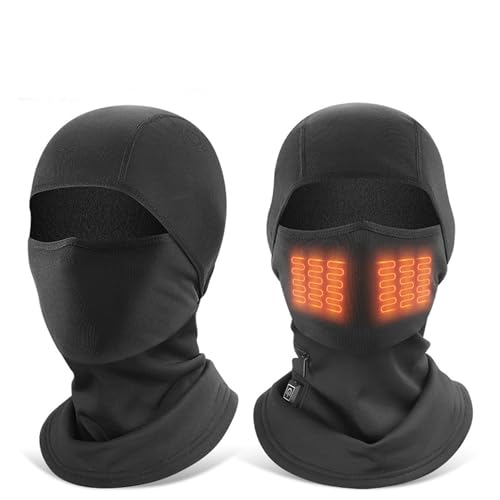
Three speed temperature regulation, intelligent temperature control: The heated hat is equipped with three temperature regulation modes, which can accurately adjust the temperature according to different levels of cold and personal needs, from about 100 F to 150 F, to meet various warmth needs. Taki More ...

Gerbing Heated Jacket Liner - 12V Motorcycle L
MODULAR SYSTEM: Gerbing heated clothing can be powered in a multitude of configurations. For this reason all wire harnesses, controllers, battery packs and accessories are sold separately. FUNCTIONAL DESIGN: The jacket liner is design for a snug fit. If you are on the cusp of a size please order the More ...

MyHalos Heated Eye Mask, Warm Compress for Dry Eyes, Blepharitis & MGD
HELPS SOOTHE & HYDRATE YOUR EYES - Our heat eye mask helps provide soothing dry eye relief, sinus pressure relief and eye strain relief. Designed to release moist heat to help improve hydration, this warm compress helps in blepharitis treatment or eye stye treatment. Our moist heat eye compress can More ...

KLIM Men's Outlander GTX Motorcycle Boots - Size 11 - Stealth Black
Made For Comfort On And Off The Motorcycle. With Gore-Tex To Keep You Dry. Durable Leather Construction. With A BOA Fit System. Aggressive Sole For Traction On Varied Surfaces More ...

Men's North Range Puffy Jacket
INSULATED HUNTING JACKET WITH PRIMALOFT GOLD 133GSM: Primaloft Gold 133gsm synthetic insulation runs through the body, arms, and hood for exceptional warmth-to-weight performance across a 20-45 degree temperature range. This insulated hunting jacket for men delivers reliable cold weather warmth with More ...

3M Thinsulate SM600L Automotive Camper Van Insulation 60 Inch x 120 Inch (5 Feet x 10 Feet)
Ships in 10 linear foot section for easy handling and flexibility. Roll Width & Thickness/Weight: 60" width, 1.65 inches (44mm) thick, 0.95 lbs/cubic foot. R-Value: 5.45 per inch (RSI 0.96) / FMVSS 302 certified Engineered for Vehicles. Moisture Resistance: Exceptional moisture resistance, no need f More ...

The North Face Men's Antora Jacket (Standard & Big Size), Blk-NPF, Small
WHEN THE WEATHER TURNS: Featuring waterproof, breathable & seam-sealed recycled fabric, the Men's Antora Jacket is a classic year-round rain jacket designed to withstand backcountry storms & styled for everyday use. STAY DRY: Made with a seam-sealed DryVent 2L performance tech shell, coated with a n More ...
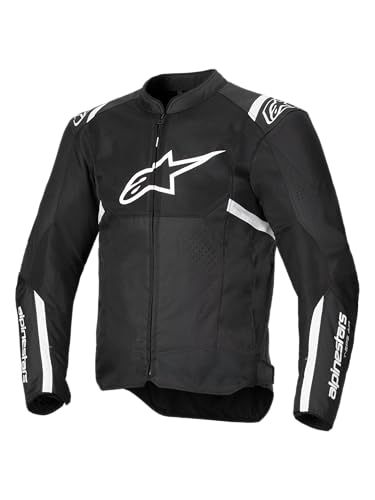
Alpinestars T-Sps Air V2 Jacket XL, Black/White
Strategically perforated 600D zoning allows air to pass through the main shell, enhancing breathability and ventilation. The tech mesh paneling is engineered to deliver maximum airflow on the upper body, ensuring optimum cooling performance, especially with naked sportsbikes. Inner reinforcements ar More ...

REV'IT! Men's Eclipse 2 Mesh Motorcycle Jacket (Silver - X-Large)
Ventilated Design: Strategic mesh panels on front, back, and inner arms create consistent airflow throughout the jacket. Protective Features: SEESMART CE-Level 1 armor at shoulders and elbows, with preparation for SEESOFT CE-Level 2 back protector. Durable Construction: 600D polyester material provi More ...

Durable elastic Mugello fabric and high tenacity mesh vented inserts. Removable Absoluteshell waterproof inner membrane. Integrated chest and back protectors. Aerodynamic spoiler. Breathable lining More ...
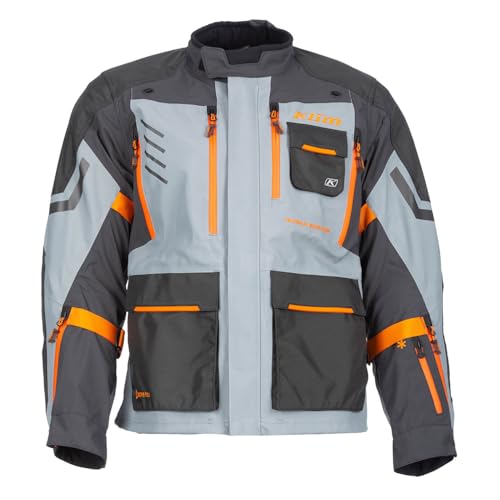
KLIM Men's Carlsbad Adventure Motorcycle Jacket Large - Asphalt - Ember Orange
Crafted with a GORETEX Performance Shell, this jacket features an FPL400 main chassis (same rugged fabric as the Badlands Pro) plus 630D Cordura twistedyarn overlays on shoulders and elbows for industryleading abrasion resistance. Enhanced with 3M Scotchlite Carbon Black reflective material for high More ...
Did We Miss Sump'm?
Sixty percent of the time, we're right every time. What would you add to the conversation and why? Your input is invited. Leave a comment and/or write an article!
Share Link ...



Thoughts gone wild? Write an article!